Category Archives: Vibrio

RASFF Alert- Vibrio vulnificus – Frozen Shrimp

RASFF

Presence of Vibrio vulnificus in frozen aquaculture shrimp (Litopenaeus vannamei) from Ecuador in Italy

Research – Non-O1/Non-O139 Vibrio cholerae—An Underestimated Foodborne Pathogen? An Overview of Its Virulence Genes and Regulatory Systems Involved in Pathogenesis

MDPI

Abstract

In recent years, the number of foodborne infections with non-O1 and non-O139 Vibrio cholerae (NOVC) has increased worldwide. These have ranged from sporadic infection cases to localized outbreaks. The majority of case reports describe self-limiting gastroenteritis. However, severe gastroenteritis and even cholera-like symptoms have also been described. All reported diarrheal cases can be traced back to the consumption of contaminated seafood. As climate change alters the habitats and distribution patterns of aquatic bacteria, there is a possibility that the number of infections and outbreaks caused by Vibrio spp. will further increase, especially in countries where raw or undercooked seafood is consumed or clean drinking water is lacking. Against this background, this review article focuses on a possible infection pathway and how NOVC can survive in the human host after oral ingestion, colonize intestinal epithelial cells, express virulence factors causing diarrhea, and is excreted by the human host to return to the environment.

Research – Biocontrol of multidrug resistant pathogens isolated from fish farms using silver nanoparticles combined with hydrogen peroxide insight to its modulatory effect

Nature

This study was divided into two parts. The first part involved the isolation, and detection of the prevalence and antimicrobial resistance profile of Aeromonas hydrophila, Pseudomonas aeruginosa, and Vibrio species from Nile tilapia fish and marine aquatic water. One hundred freshly dead Nile tilapia fish were collected from freshwater aquaculture fish farms located in Al-Abbassah district, Sharkia Governorate, and 100 samples of marine aquatic water were collected from fish farms in Port Said. The second part of the study focused on determining the in vitro inhibitory effect of dual-combination of AgNPs-H2O2 on bacterial growth and its down regulatory effect on crucial virulence factors using RT-PCR. The highest levels of A. hydrophila and P. aeruginosa were detected in 43%, and 34% of Nile tilapia fish samples, respectively. Meanwhile, the highest level of Vibrio species was found in 37% of marine water samples. Additionally, most of the isolated A. hydrophila, P. aeruginosa and Vibrio species exhibited a multi-drug resistance profile. The MIC and MBC results indicated a bactericidal effect of AgNPs-H2O2. Furthermore, a transcriptional modulation effect of AgNPs-H2O2 on the virulence-associated genes resulted in a significant down-regulation of aerA, exoU, and trh genes in A. hydrophila, P. aeruginosa, and Vibrio spp., respectively. The findings of this study suggest the effectiveness of AgNPs-H2O2 against drug resistant pathogens related to aquaculture.

Hong Kong – Food Safety Files – High risk food – Raw Shrimp Sashimi

CFS

Hong Kong people like delicious food and sashimi is probably one of the most popular foods in recent years. Due to a high market demand, sashimi is available not only in Japanese restaurants, but also in restaurants providing South-East Asian foods. Sashimi is eaten raw and improper preparation and excessive intake can lead to food poisoning. As sashimi is a high risk food, the Food and Environmental Hygiene Department (FEHD) has stringent licensing requirements for food premises preparing and selling sashimi in Hong Kong.

Marine shrimps are commonly used in shrimp sashimi. Their shells are easily contaminated by pathogens, like Vibrio parahaemolyticus and Vibrio cholera. The link above explains why the risk of eating raw shrimp is high. In order to reduce the risk, the public should pay extra attention on the tips in the link.

Research – Assessing Biofilm Formation and Resistance of Vibrio parahaemolyticus on UV-Aged Microplastics in Aquatic Environments

Science Direct

Abstract

UV degradation of marine microplastics (MPs) could increase their vector potential for pathogenic bacteria and threaten human health. However, little is known about how the degree of UV aging affects interactions between MPs and pathogens and how various types of MPs differ in their impact on seafood safety. This study investigated five types of UV-aged MPs and their impact on Vibrio parahaemolyticus, a seafood pathogen. MPs exposed to UV for 60 days showed similar physicochemical changes such as surface cracking and hydrophobicity reduction. Regardless of the type, longer UV exposure of MPs resulted in more biofilm formation on the surface under the same conditions. V. parahaemolyticus types that formed biofilms on the MP surface showed 1.4- to 5.0-fold upregulation of virulence-related genes compared to those that did not form biofilms, independently of UV exposure. However, longer UV exposure increased resistance of V. parahaemolyticus on MPs to chlorine, heat, and human gastrointestinal environment. This study implies that the more UV degradation occurs on MPs, the more microbial biofilm formation is induced, which can significantly increase virulence and environmental resistance of bacteria regardless of the type of MP.

Research – Microbiological and Toxicological Investigations on Bivalve Molluscs Farmed in Sicily

MDPI

Abstract

Bivalves can concentrate biological and chemical pollutants, causing foodborne outbreaks whose occurrence is increasing, due to climatic and anthropic factors that are difficult to reverse, hence the need for improved surveillance. This study aimed to evaluate the hygienic qualities of bivalves sampled along the production and distribution chain in Sicily and collect useful data for consumer safety. Bacteriological and molecular analyses were performed on 254 samples of bivalves for the detection of enteropathogenic VibrioArcobacter spp., Aeromonas spp., Salmonella spp., and beta-glucuronidase-positive Escherichia coli. A total of 96 out of 254 samples, collected in the production areas, were processed for algal biotoxins and heavy metals detection. Bacterial and algal contaminations were also assessed for 21 samples of water from aquaculture implants. Vibrio spp., Arcobacter spp., Aeromonas hydrophilaSalmonella spp., and Escherichia coli were detected in 106/254, 79/254, 12/254, 16/254, and 95/254 molluscs, respectively. A total of 10/96 bivalves tested positive for algal biotoxins, and metals were under the legal limit. V. alginolyticusA. butzleri, and E. coli were detected in 5, 3, and 3 water samples, respectively. Alexandrium minutumDinophysis acuminataLingulodinium polyedra, and Pseudonitzschia spp. were detected in water samples collected with the biotoxin-containing molluscs. Traces of yessotoxins were detected in molluscs from water samples containing the corresponding producing algae. Despite the strict regulation by the European Commission over shellfish supply chain monitoring, our analyses highlighted the need for efficiency improvement.

RASFF Alerts – Vibrio cholerae – Frozen Shrimps

RASFF

Vibrio cholerae in frozen raw shrimps from Ecuador in Sweden

RASFF Alert- Vibrio vulnificus-

RASFF

Vibrio vulnificus in frozen prawns from Ecuador in France

Research – Vibrio metschnikovii as an emergent pathogen: analyses of phylogeny and O-antigen and identification of possible virulence characteristics

PubMed

Vibrio metschnikovii is an emergent pathogen that causes human infections which may be fatal. However, the phylogenetic characteristics and pathogenicity determinants of V. metschnikovii are poorly understood. Here, the whole-genome features of 103 V. metschnikovii strains isolated from different sources are described. On phylogenetic analysis V. metschnikovii populations could be divided into two major lineages, defined as lineage 1 (L1) and 2 (L2), of which L1 was more likely to be associated with human activity. Meanwhile, we defined 29 V. metschnikovii O-genotypes (VMOg, named VMOg1-VMOg29) by analysis of the O-antigen biosynthesis gene clusters (O-AGCs). Most VMOgs (VMOg1 to VMOg28) were assembled by the Wzx/Wzy pathway, while only VMOg29 used the ABC transporter pathway. Based on the sequence variation of the wzx and wzt genes, an in silico O-genotyping system for V. metschnikovii was developed. Furthermore, nineteen virulence-associated factors involving 161 genes were identified within the V. metschnikovii genomes, including genes encoding motility, adherence, toxins, and secretion systems. In particular, V. metschnikovii was found to promote a high level of cytotoxicity through the synergistic action of the lateral flagella and T6SS. The lateral flagellar-associated flhA gene played an important role in the adhesion and colonization of V. metschnikovii during the early stages of infection. Overall, this study provides an enhanced understanding of the genomic evolution, O-AGCs diversity, and potential pathogenic features of V. metschnikovii.

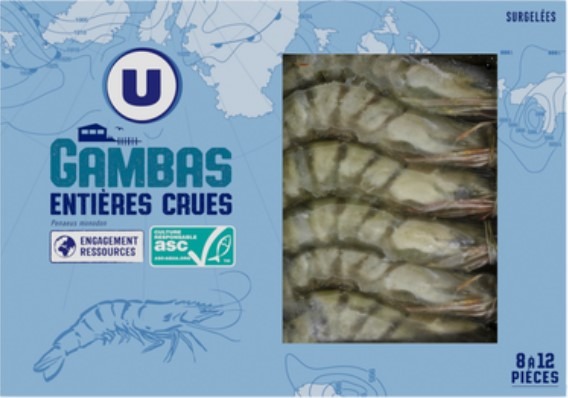
France – WHOLE RAW PRAWNS ASC U 600 G – Vibrio vulnificus

Gov France

Product category
Food
Product subcategory
Fishing and aquaculture products
Product brand name
u
Model names or references
Whole raw prawns ASC U 600 g
Product identification
GTIN Date
3256227108310 Minimum durability date 01/07/2025
3256227108310 Minimum durability date 02/07/2025
3256227108310 Minimum durability date 07/22/2025
Packaging
600 g box
Storage temperature
Product to keep in the freezer
Geographical sales area
Whole France
Distributors
U Stores