Category Archives: Vibrio parahaemolyticus

USA – Pacific Northwest heat wave causes vibrio bacteria outbreak in oysters

SeaFoodSource

Vibrio

A heat wave that sent temperatures into the triple digits for three days in the U.S. Pacific Northwest in late June and early July drove up levels of the vibrio bacteria in area oysters, causing record numbers of illnesses from the bacteria and prompting oyster recalls.

The Washington State Department of Health (DOH) reported 75 lab-confirmed cases of vibriosis as of Wednesday, 29 July, and said there are likely many unreported cases. According to figures provided by DOH, the previous record number of vibriosos cases through 28 July was 48 in 2018.

The outbreak occurred over the holiday weekend of 4 July and coincided with the reopening of many of Washington’s businesses and restaurants. DOH said that several people visiting the area had fallen ill, including tourists from California, Canada, and Mexico. Officials had traced 48 of the cases back to commercial growers, while five of the cases were from recreational catch. The other cases with either unknown or still under investigation.

Vibriosis cases have been traced back to 24 different growing in areas in Washington state, including Samish Bay and Hood Canal, both of which have large tracts of oysters. A recall was issued for all oysters harvested in Samish Bay from 29 June onward, and the area was closed until at least 6 August, pending the results of ongoing tests. Officials were working to gather harvest from the area, while the Interstate Shellfish Sanitation Conference reported that some oysters from the affected spot had been exported to China, Cambodia, and the Philippines.
USA – Oysters and Vibriosis

CDC

What You Need to Know

  • Eating raw oysters and other undercooked seafood can put you at risk for infections, such as vibriosis.
  • Vibriosis is caused by some kinds of Vibrio bacteria.
  • Most Vibrio infections happen during warmer months, but they can happen anytime.
  • An oyster that contains Vibrio doesn’t look, smell, or taste different from any other oyster.
  • A way to kill Vibrio in oysters is to cook them properly.
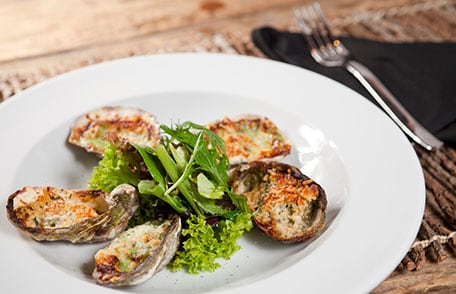
Plate of baked oysters

Many people enjoy eating raw oysters, and raw oyster bars are growing in popularity. But eating raw or undercooked oysters and other shellfish can put you at risk for foodborne illness.

Learn about vibriosis, an illness caused by infection with certain kinds of Vibrio bacteria, and steps you can take to protect your health when it comes to oysters and other shellfish.

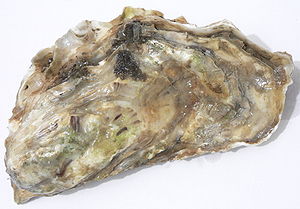
Vibrio bacteria naturally inhabit coastal waters where oysters live. Because oysters feed by filtering water, Vibrio and other harmful bacteria and viruses can concentrate in their tissues. When someone eats raw or undercooked oysters, germs that might be in the oyster can cause illness.

CDC estimates that about 80,000 people get vibriosis—and 100 people die from it—in the United States every year. Most of these illnesses happen from May through October when water temperatures are warmer. However, you can get sick from eating raw or undercooked oysters during any month of the year, and raw oysters from typically colder waters also can cause vibriosis.

An oyster that contains harmful bacteria doesn’t look, smell, or even taste different from any other oyster. You can kill Vibrio in oysters and certain other shellfish, such as mussels and clams, by cooking them properly.

What are the symptoms of vibriosis?

Most Vibrio infections from oysters, such as Vibrio parahaemolyticus infection, result in mild illness, including diarrhea and vomiting. However, people with a Vibrio vulnificus infection can get very sick. As many as 1 in 5 people with a Vibrio vulnificus infection die. This is because Vibrio vulnificus infection can lead to bloodstream infections, severe blistering skin lesions, and limb amputations.

If you develop symptoms of vibriosis, tell your medical provider if you recently ate or touched raw oysters or other raw shellfish or came into contact with salt water or brackish water. Brackish water is a mixture of salt water and fresh water. It is often found where rivers meet the sea.

Who is more likely to get vibriosis?

Anyone can get vibriosis, but you may be more likely to get an infection or severe illness if you:

  • Have liver disease, cancer, diabetes, HIV, or the blood disorder thalassemia
  • Receive immune-suppressing therapy for the treatment of disease
  • Take medicine to lower stomach acid levels
  • Have had recent stomach surgery
  • Are 65 years or older

How do people get vibriosis?

Most people become infected by eating raw or undercooked shellfish, particularly oysters. Other people become infected by:

  • Getting brackish or salt water in a wound, such as when they’re swimming, wading, or fishing.
  • Cutting themselves on an item, such as a rock or pier, that has come into contact with brackish or salt water.
  • Getting raw seafood juices or drippings in a wound.

How can I stay safe?

Follow these tips to reduce your chances of getting an infection when eating or touching shellfish and other seafood:

  • Don’t eat raw or undercooked oysters or other shellfish. Fully cook them before eating, and only order fully cooked oysters at restaurants. Hot sauce and lemon juice don’t kill Vibrio bacteria and neither does alcohol.
    • Some oysters are treated for safety after they are harvested. This treatment can reduce levels of vibriosis in the oyster, but it does not remove all harmful germs. People who are more likely to get vibriosis should not eat any raw or undercooked oysters.
  • Separate cooked seafood from raw seafood and its juices to avoid cross contaminationexternal icon.
  • Wash your hands with soap and water after handling raw seafood.
  • Stay out of salt water or brackish water if you have a wound (including from a recent surgery, piercing, or tattoo).
    • Cover any wounds if they could touch raw seafood or raw seafood juices, or if you might come into contact with brackish or salt water.
  • Wash open wounds and cuts thoroughly with soap and water if they contacted salt water or brackish water or raw seafood or raw seafood juices or drippings.

What are tips for cooking shellfish?

Before cooking, discard any shellfish with open shells.

For shellfish in the shell, either:

  • Boil until the shells open and continue boiling another 3-5 minutes, or
  • Add to a steamer when water is already steaming and cook for another 4–9 minutes.

Only eat shellfish that open during cooking. Throw out any shellfish that do not open fully after cooking.

For shucked oysters, either:

  • Boil for at least 3 minutes,
  • Fry in oil for at least 3 minutes at 375°F,
  • Broil 3 inches from heat for 3 minutes, or
  • Bake at 450°F for 10 minutes.

RASFF Alert – Vibrio parahaemolyticus – Frozen Peeled Shrimp

RASFF

Vibrio parahaemolyticus (toxR+ tdh+ trh+ /25g) in frozen peeled shrimps from India in France

Singapore – Recall of raw oysters linked to Vibrio parahaemolyticusoutbreak in USA

Click to access sfa-media-release—recall-of-raw-oysters-linked-to-vibrio-parahaemolyticus-outbreak-in-usa.pdf

Hong Kong – Trade instructed to suspend importing and selling of ready to eat raw oysters harvested in Samish Bay in US – Vibrio parahaemolyticus

CFS

Vibrio

The Centre for Food Safety (CFS) of the Food and Environmental Hygiene Department today (July 23) instructed the trade to suspend the import of ready to eat raw oysters harvested in Samish Bay of the United States (US). The trade should also stop using or selling the product concerned immediately should they possess it.

A spokesman for the CFS said, “The CFS noticed that the Washington State Department of Health reported that ready to eat raw oysters harvested in Samish Bay of the US, which were suspected to be contaminated with Vibrio parahaemolyticus, were under recall. Upon learning of the incident, the CFS immediately contacted local major importers for follow-up. A preliminary investigation found that the importer, Asia-Taylor (A&T) Finefoods Limited, had imported some of the affected product which was on sale in its retail outlet. For the sake of prudence, the CFS has immediately instructed the trade to suspend the import into and sale within Hong Kong of all ready to eat raw oysters harvested in the abovementioned area in the US, and instructed the importer to stop sale and remove from shelves the affected product.”

The CFS is also tracing the distribution of the product concerned. The trade should also stop using or selling the product concerned immediately should they possess it.

The spokesman pointed out that as oysters feed by filtering a large volume of seawater, pathogens (such as Vibrio parahaemolyticus) can accumulate in them if they are grown in or harvested from contaminated water. Raw or partially cooked oysters are high risk foods. Susceptible groups, such as pregnant women, young children, the elderly and people with weakened immune systems or liver diseases, should avoid eating them.

The CFS will inform the US authorities and will also notify the local trade. It will continue to follow up on the incident and take appropriate action to safeguard food safety and public health. An investigation is ongoing.

Canada – B.C. shellfish warnings issued by the Centre of Disease Control – Vibrio parahaemolyticus

City News

Marlith - Domic Acid ASP Toxin KSWFoodworld

Before digging for clams or harvesting mussels along province’s coast, the BC Centre for Disease Control is warning about a spike in illness associated with shellfish consumption in recent days.

Five people have been sick with V. parahaemolyticus (vibriosis) in the last two weeks, according to the BCCDC.

Symptoms of the foodborne illness associated with shellfish consumption include nausea, diarrhea, and vomiting.

The vibrio bacteria is naturally occurring in the ocean, and grows in molluscan shellfish such as clams, oysters, and mussels. Small amounts are not uncommon, but with warmer water, the bacteria can multiply rapidly. Experts say the recent heatwave created a perfect storm for more infections related to those eating shellfish.

The largest outbreak of vibriosis in B.C. history occurred in 2015, when 62 persons became ill. There are concerns if people don’t follow the latest warnings, this year could also be record-breaking.

USA – Oysters recalled amid Washington’s largest ever Vibrio outbreak

Food Safety News

KSWFOODWORLD

Washington state has initiated a recall of live oysters harvested from the Samish Bay growing area in the Puget Sound area. The recall is in response to multiple cases of Vibrio parahaemolyticus illnesses associated with oysters harvested in the area. 

The outbreak has already surpassed the highest number of cases ever recorded by the state for the month of July, according to the state’s Health Department. Distribution details are incomplete but it is known that some of the oysters have gone to Asian and Canadian buyers as well as customers in the United States.

A recent heat wave, coupled with very low tides at mid-day, are likely to blame for the increased rate of illness, which is associated with eating raw or undercooked shellfish, especially oysters that are contaminated with Vibrio. 

The extremely low tides are part of an 18.6-year tide cycle, which means there will be more to come for a period of time during the cycle.

RASSF Alert – Vibrio parahaemolyticus -Frozen Whole Giant Tiger Shrimps

RASFF

Vibrio parahaemolyticus in frozen whole giant tiger shrimps (Penaeus monodon) from Bangladesh in France.

Czech Republic – CAFIA warns against shrimps which can cause poisoning – Vibrio parahaemolyiticus

SZPI

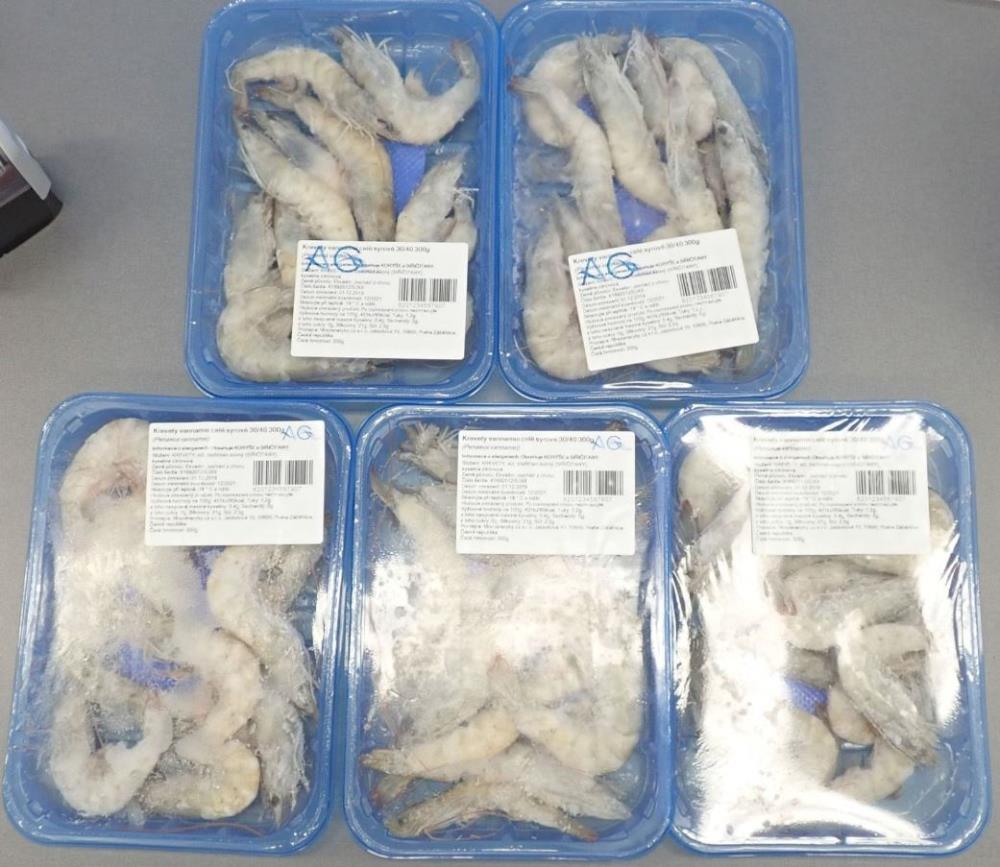
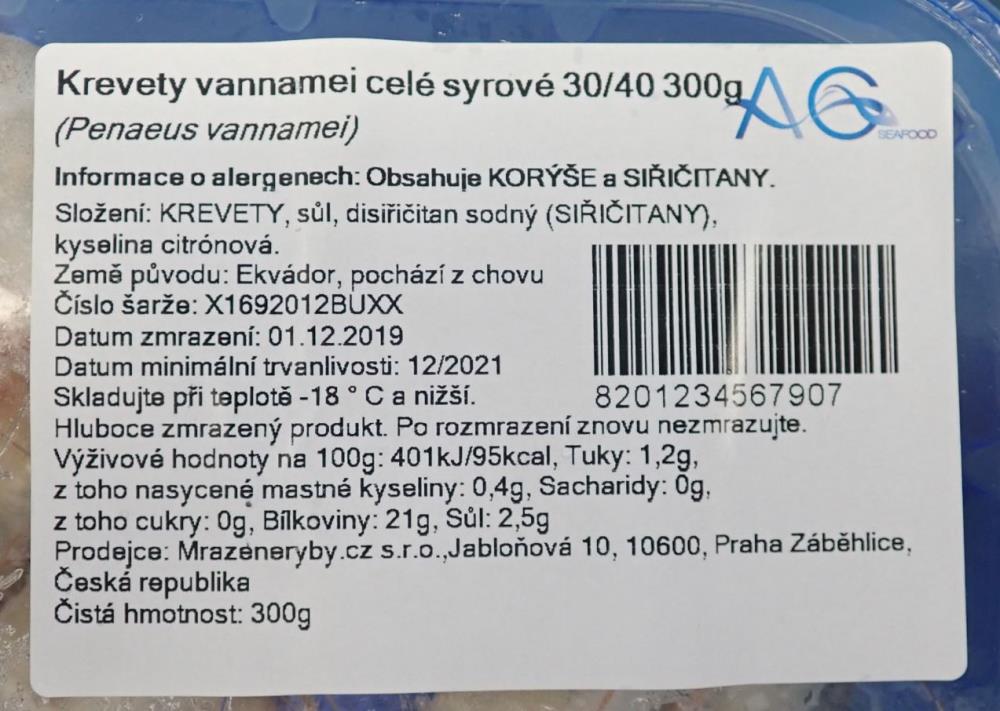
The Czech Agriculture and Food Inspection Authority (CAFIA) warns consumers against consumption of foodstuff Krevety vannamei celé syrové 30/40 (Shrimps – whole and raw), deeply frozen product, packaged à 300 g, lot number: X1692012BUXX, best before date by: 12/2021, country of origin: Ecuador, seller: mrazeneryby.cz s.r.o., Jabloňová 10, 10600, Praha Záběhlice, CR.

Laboratory analysis confirmed presence of bacteria Vibrio paraheamolyticus in the foodstuff in question. This bacteria may cause poisoning manifesting itself by very serious digestive complications. With regard to the mentioned facts, the foodstuff is unsuitable for human consumption and the inspectors ordered immediate withdrawal from the retail network.

The inspectors took the sample at the premises of company mrazeneryby.cz s.r.o., Breitcetlova 6, 198 00 Praha 14 – Černý Most. As regards this shop, the inspectors had already detected sale of other lot of frozen shrimps with expired use by date, which was the reason why that foodstuff had been banned on the spot.

From the reason of the detected violation of legislation, CAFIA will initiate an administrative procedure on imposition of a fine with the operator of the shop.

CAFIA strongly recommends all consumers who may have the food lot in question at home that they do not eat it.

Article by: Mgr. Pavel Kopřiva – CAFIA Spokesperson, phone:+420 542 426 633 

1st June 2021

1 shrimp_2.jpg
2 shrimp_1.jpg

Bahamas – Conch Alert After Cases Of Suspected Poisoning

Tribune 242

KSWFOODWORLD

FOOD safety officials are cautioning against the consumption of fresh conch after several suspected cases of conch poisoning.

Several reports of conch poisoning made the rounds on social media over the past few days before the Bahamas Agricultural Health and Food Safety Authority issued a statement yesterday.

The authority warned consumers to avoid fresh conch until officials are able to determine the source of the contamination.

Conch poisoning is typically caused by the bacterium, Vibrio parahaemolyticus, with contamination attributed to poor hygienic practices during its handling and preparation.

Health Minister Renward Wells said there had been about 10 reported cases of conch poisoning. He said the ministry was concerned that this has risen in recent days. He was unable yesterday to say where the cases originated.

Meanwhile, Bahamas Commercial Fishers Alliance President Adrian Laroda said he would not caution against eating conch because it could have implications on the industry. Instead, he urged handlers to wash the mollusk properly during preparation.