Category Archives: Uncategorized

Canada – Norovirus likely from sewage discharge during herring run

Food Safety News

Public health officials on Vancouver Island, off Canada’s Pacific Coast, suspect that the likely source of a norovirus outbreak associated with the March herring run was from untreated sewage associated with marine operations.

Untreated sewage also was blamed for shellfish farm closures in Baynes Sound this year.

But the Public Health Agency of Canada, working with provincial public health partners in investigating the Norovirus outbreak, noted that the precise cause of the contamination has not been identified.

“There are a number of potential risk factors, one of which is the herring fleet in Deep Bay,” said Greg Thomas, executive director of the Herring Conservation and Research Society.

Canada – Food Recall Warning – Haute Montagne brand raw milk cheese “Reblochon de Savoie (AOP) au lait cru” recalled due to E. coli O26

CFIA CIFA

Recall details

Ottawa, May 14, 2018 – Les Dépendances is recalling Haute Montagne brand raw milk cheese  “Reblochon de Savoie au lait cru” from the marketplace due to possible E. coli O26 contamination. Consumers should not consume the recalled product described below.

Recalled products

Brand Name Common Name Size Code(s) on Product UPC
Haute Montagne Reblochon de Savoie (AOP) au lait cru 450 g – 550 g All lots starting with “8CR” 8 31014 00139 0

USA – Why Are There So Many HUS Complications in the E. coli O157:H7 Romaine Outbreak? An Attorney Answers

Food Poisoning Bulletin 

The hospitalization rate and hemolytic uremic syndrome case count in the deadly E. coli O157:H7 HUS outbreak that is linked to romaine lettuce has been very high. Typically, in an E. coli outbreak, about 30% of patients are hospitalized, and about 5 to 10% develop hemolytic uremic syndrome (HUS).

But in this outbreak, the hospitalization rate is almost 50%, and 13% of those patients have developed HUS. Why is the hospitalization rate and the HUS rate so high in this particular outbreak?

Typically, the group most susceptible to developing HUS is children under the age of 5. The patient age range in this outbreak is from 1 to 88. There could be quite a few children sick, which may explain the high HUS rate.

Another explanation for the high HUS rate and the high hospitalization rate is the type of toxins the E. coli bacteria are producing. Shiga toxin-producing E. coli bacteria make two types of those toxins: Stx1 and Stx2. Unfortunately, the bacteria in this outbreak are making Stx2, which causes more damage to the body.

Another factor could be that the lettuce was contaminated with an unusually high number of bacteria. It takes just 10 E. coli bacteria to make someone sick. More bacteria can release more toxins and cause more damage.”

New Zealand – Updated – Shellfish biotoxin alert issued for parts of Bay of Islands

Map of Cape Wiwiki to Cape Brett shellfish warning.

MPI 

The Ministry for Primary Industries today issued a public health warning against collecting shellfish in the Bay of Islands, extending to the outer heads between Cape Wiwiki and Cape Brett.

Routine tests on shellfish samples taken from the Bay of Islands region have shown levels of Paralytic Shellfish Poisoning (PSP) toxins above the safe limit of 0.8 mg/kg set by MPI. Anyone eating shellfish from this area is potentially at risk of illness.

MPI also strongly advises the public against collecting shellfish in the Hawke’s Bay region due to concerning levels of toxins being detected in shellfish. A warning is also in place for the Kenepuru and Pelorus Sounds.

Mussels, oysters, tuatua, pipi, toheroa, cockles, scallops, cat’s eyes, kina (sea urchin) and all other bivalve shellfish should not be eaten.

Note, cooking shellfish does not remove the toxin.

Pāua, crab and crayfish may still be eaten if the gut has been completely removed prior to cooking, as toxins accumulate in the gut. If the gut is not removed its contents could contaminate the meat during the cooking process.

Symptoms typically appear between 10 minutes and 3 hours after ingestion and may include:

  • numbness and a tingling (prickly feeling) around the mouth, face, and extremities (hands and feet)
  • difficulty swallowing or breathing
  • dizziness
  • headache
  • nausea
  • vomiting
  • diarrhoea
  • paralysis and respiratory failure and in severe cases, death.

If anyone becomes ill after eating shellfish from an area where a public health warning has been issued, phone Healthline for advice on 0800 61 11 16, or seek medical attention immediately. You are also advised to contact your nearest public health unit and keep any leftover shellfish in case it can be tested.

Monitoring of toxin levels will continue and any changes will be communicated accordingly. Commercially harvested shellfish – sold in shops and supermarkets, or exported – is subject to strict water and flesh monitoring programmes by MPI to ensure they are safe to eat.

Find out more

Signs will be erected in the affected areas.

USA – 54 sick from Salmonella at Chicago’s Cook County Jail

Barf Blog

At least five detainees have gotten sick in an apparent salmonella outbreak at a medium-security division of the Cook County Jail in Chicago.

Detainees at the jail’s Division 11, 3015 S. California Boulevard, “began experiencing symptoms of a gastrointestinal illness” last week, according to a statement from the Cook County Sheriff’s Office. Over the weekend, five cases of salmonella were confirmed among the 54 detainees reporting symptoms.

Two of the detainees were hospitalized for their symptoms, the sheriff’s office said. One has since been returned to the jail and the other was expected to be returned to the jail on Tuesday.


Information – HSE Legionella ebulletin

HSE Legionella A

HSE Prosecution

On 20 April 2018, Royal United Hospitals Bath NHS Foundation Trust was fined by Bristol Crown Court for failing to control the risk to patients from exposure to legionella bacteria in its water systems.  After the death of one of its patients from Legionnaires’ disease, HSE started an investigation and found that existing control measures were ineffective.  The Trust pleaded guilty to breaching Section 3 (1) of the Health and Safety at Work etc Act 1974 and has been fined £300,000 and ordered to pay costs of £37,451.78.  Full details of the case may be found at :

http://press.hse.gov.uk/2018/nhs-trust-fined-after-exposing-patients-to-legionella-risk/


Cooling Tower Regulatory Intervention Programme

HM Principal Specialist Inspector of Health & Safety, Mr Duncan Smith will be giving an update on the findings of HSE’s latest cooling tower intervention programme to the Water Management Society Conference on 19 June 2018.  Details of the conference and how to register may be found at:

https://www.wmsoc.org.uk/conferences.php?id=627.

Azerbaijan – to strengthen food safety

Azernews

The State Customs Committee (SCC) of Azerbaijan and the Food Safety Agency signed a Memorandum of Understanding (MoU).

The Memorandum implies the exchange of information between the two structures based on the results of examinations of exported and imported products, as well as the exchange of experience. In addition, both structures commit to conduct joint seminars on food safety.

The Memorandum was signed by Chairman of State Customs Committee Safar Mehdiyev and Head of the Food Safety Agency Goshgar Tahmazli.

Establishment of Food Safety Agency, as one of the multiple steps for effective implementation of measures set by the Strategic Road Map, will play significant role in adapting the food safety system of the Republic of Azerbaijan with the requirements of international standards.

The Food Safety Agency was established by the decree of the President of Azerbaijan Ilham Aliyev on additional measures to improve the food safety system in the country from February 10, 2017.

Canada -Food Safety Warning – Certain Four Seasons Marketplace brand refrigerated packaged smoked salmon products may be unsafe due to potential presence of dangerous bacteria – Clostridium botulinum

CFIA

Advisory details

Ottawa, May 13, 2018 – The Canadian Food Inspection Agency (CFIA) is warning the public not to consume the products described below because they may permit the growth of Clostridium botulinum.

The following products have been sold from Four Seasons Marketplace Inc., 4099 Erin Mills Parkway, Mississauga, Ontario.

Products

Brand Name Common Name Size Code(s) on Product UPC
Four Seasons Marketplace Apple Cider Smoked Salmon Variable Best Before:
2018MA23
2018MA29
Starts with
0204051
Four Seasons Marketplace Vodka Smoked Salmon Variable Best Before:
2018MA23
Starts with
0204028

Research – Canada – Veal Liver as Food Vehicle for Human Campylobacter Infections

CDC  


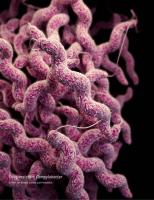
A matched case–control study in Quebec, Canada, evaluated consumption of veal liver as a risk factor for campylobacteriosis. Campylobacter was identified in 28 of 97 veal livers collected concurrently from slaughterhouses and retailers. Veal liver was associated with human Campylobacter infection, particularly when consumed undercooked.

Recent investigations conducted in Quebec, Canada, after an increased number of sporadic campylobacteriosis illnesses suggested that consumption of veal liver may be a risk factor for campylobacteriosis. Many of the persons infected reported eating veal liver, and many of those had eaten it pink or undercooked. The association between campylobacteriosis and the consumption of meat products, including chicken liver and offal from different animal species, has been previously described (1–5). We designed an epidemiologic study to examine the relationship between veal liver consumption and campylobacteriosis.

Switzerland – Switzerland: the cost of food poisoning

Poultry Med 

More than 10,000 cases of food poisoning are reported each year in Switzerland. Most cases are caused by campylobacter or salmonella-type bacteria with the former costing CHF50 million ($49.9 million) in medical costs last year.
The Food Safety and Veterinary Office (FSVO) wants to see a durable decline in the number of food poisoning cases, especially campylobacter infections which cause diarrhoea, it said at a press conference. A study by Professor Michael Siegrist of the Federal Institute of Technology in Zurich (ETHZ) shows that this kind of infection affects mainly men aged 18 to 30.
A website external link is central to the “Savour in Safety” campaign that targets young men.  The campaign was first launched in 2016, and the number of campylobacter-type infections dropped slightly in 2017, according to the FSVO. However, there are still many cases especially during the barbecue season and during end of year celebrations.
Correct handling of poultry, which is the cause of many infections, is especially important, says the FSVO.