Category Archives: Uncategorized

RASFF Alert – Animal Feed – Enterobacteriaceae -Fishmeal

kswfoodworld food safety poisoning

RASFF-too high count of Enterobacteriaceae (160; 970 CFU/g) in fishmeal from Mauritania in Greece

RASFF Alert – Animal Feed -Aflatoxin – Groundnuts

kswfoodworld food safety poisoning

RASFF-aflatoxins (B1 = 76 µg/kg – ppb) in groundnuts from Nicaragua in the UK

USA -FDA Investigated Multistate Outbreak of Salmonella Adelaide Infections Linked to Pre-Cut Melons

FDA 

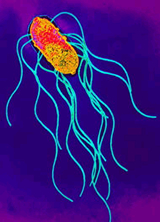
Salmonella kswfoodworld

Image CDC Enter a caption

July 26, 2018 Update

As of July 24, 2018, CDC reports that there were 77 cases in nine states with 36 hospitalizations. Illnesses occurred from April 30, 2018, to July 2, 2018. Ill people ranged in age from less than 1 year to 97, with a median age of 67. Sixty-seven percent were female. Out of 70 people with information available, 36 (51%) were hospitalized. No deaths were reported.

USA -FDA Investigates Multistate Outbreak of Cyclospora Illnesses Likely Linked to Salads from Fast Food Chain

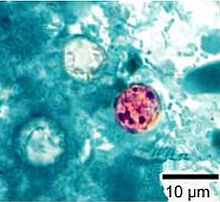
FDA 220px-Cyclospora_cayetanensis_stained

Fast Facts

  • The FDA, CDC, along with state and local officials are investigating a multi-state outbreak of cyclosporiasis illnesses likely linked to salads from McDonald’s restaurants.
  • The CDC reports that 286 people in 15 states have become ill. There have been 11 hospitalizations and no deaths.
  • As this is an ongoing investigation, the FDA will update this page as more information becomes available, such as product information, epidemiological results, and recalls.
  • The FDA is working with McDonald’s to identify the common ingredients in the salads identified by those who became sick and to trace back those ingredients through the supply chain.
  • As of July 13, 2018, McDonald’s has decided to voluntarily stop selling salads at impacted restaurants in IL, IA, IN, WI, MI, OH, MN, NE, SD, MT, ND, KY, WV, and MO until they are able to switch to another salad supplier. More information can be found in McDonald’s Statement.
  • Consumers who have symptoms of cyclosporiasis should contact their health care provider to report their symptoms and receive care. Most people infected with Cyclospora develop diarrhea, with frequent, sometimes explosive, bowel movements. Other common symptoms include loss of appetite, weight loss, stomach cramps/pain, bloating, increased gas, nausea, and fatigue. Vomiting, body aches, headache, fever, and other flu-like symptoms may be noted. Some people who are infected with Cyclospora do not have any symptoms. If not treated, the illness may last from a few days to a month or longer. Symptoms may seem to go away and then return one or more times (relapse).
  • At this time, we do not have evidence to suggest that this cluster of illnesses is related to the ongoing Cyclospora outbreak linked to Del Monte vegetable trays.

USA -Kraft Heinz Voluntarily Recalls Taco Bell Salsa Con Queso Mild Cheese Dip Distributed to Retailers

FDA

As a precaution, approximately 7,000 cases of Taco Bell Salsa Con Queso Mild Cheese Dip are being voluntarily recalled because the affected product is showing signs of product separation which can lead to a potential health hazard.

This could create conditions that could allow for the growth of Clostridium botulinum (C. botulinum), a bacterium which can cause life-threatening illness or death. Consumers are warned not to use the product even if it does not look or smell spoiled.

Botulism, a potentially fatal form of food poisoning, can cause the following symptoms: general weakness, dizziness, double vision, and trouble with speaking or swallowing. Difficulty in breathing, weakness of other muscles, abdominal distension and constipation may also be common symptoms. People experiencing these problems should seek immediate medical attention.
There have been no consumer complaints or reports of illness related to this issue to date.

Research -Influence of Storage Temperature, Moisture Content, and Physical Impurities on the Distribution and Survival of Salmonella enterica in Poultry Fat Intended for Pet Food Use

Journal of Food Protection 

Salmonellaa

Image CDC Enter a caption

Contamination of rendered products with Salmonella is a concern for the rendering industry, particularly when those products are intended for use in other foodstuffs, such as pet food. This study was conducted to understand the influence of compositional variation on the location and survivability of Salmonella in a poultry fat matrix. Specifically, this study aimed to (i) assess the influence of postinoculation time and moisture content on the distribution of Salmonella in rendered poultry fat and (ii) evaluate the impact of postinoculation time and physical parameters (i.e., impurity level and moisture content) on survival of three Salmonella strains in rendered poultry fat stored at two different temperatures. Three studies, designated as study I(a), I(b), and II, respectively, were conducted to address these objectives. In study I(a), a green fluorescent protein–expressing strain of Salmonella Typhimurium was used to map the organism within warmed (45°C) poultry fat containing various levels of moisture. In study I(b), the influence of storage temperature on the survivability of green fluorescent protein–expressing Salmonella was evaluated. In study II, the impacts of physical impurities, moisture content, and storage temperature on the survivability of three Salmonella strains (Enteritidis, Senftenberg, and Typhimurium) were assessed. The results of this study demonstrated that composition (i.e., moisture and impurity contents) influences the survivability of Salmonella in poultry fat; specifically, Salmonella is more persistent in poultry fat with a greater moisture content and water activity. Nonetheless, although composition impacts the distribution and survivability of Salmonella in poultry fat, Salmonella generally does not survive in poultry fat maintained at high temperatures (45°C and above).

Research -Salmonella enterica Serotype Javiana Infections Linked to a Seafood Restaurant in Maricopa County, Arizona, 2016

Journal of Food Protection

On 10 August 2016, the Maricopa County Department of Public Health identified culture-confirmed Salmonella enterica serotype Javiana isolates from two persons who reported eating at a seafood restaurant; seven additional cases were reported by 15 August. We investigated to identify a source and prevent further illness. We interviewed persons with laboratory-reported Salmonella Javiana infection. Pulsed-field gel electrophoresis (PFGE) and whole genome sequencing of isolates were performed. A case was defined as diarrheal illness in a person during July to September 2016; confirmed cases had Salmonella Javiana isolate yielding outbreak-related PFGE patterns; probable cases had diarrheal illness and an epidemiologic link to a confirmed case. Case finding was performed (passive surveillance and identification of ill meal companions). A case-control study assessed risk factors for Salmonella Javiana infection among restaurant diners; control subjects were chosen among meal companions. No restaurant workers reported illness. Foods were reportedly cooked according to the Food Code. Food and environmental samples were collected and cultured; Salmonella Javiana with an indistinguishable PFGE pattern was isolated from portioned repackaged raw shrimp, halibut, and a freezer door handle. We identified 50 Salmonella Javiana cases (40 confirmed and 10 probable); illness onset range was from 22 July to 17 September 2016. Isolates from 40 patients had highly related PFGE patterns. Thirty-three (73%) of 45 patients interviewed reported eating at the restaurant. Among 21 case patients and 31 control subjects, unfried cooked shrimp was associated with illness (odds ratio, 6.7; 95% confidence interval, 1.8 to 24.9; P = 0.004). Among restaurant diners, laboratory and case-control evidence indicated shrimp as the possible outbreak source; poor thermal inactivation of Salmonella on shrimp is theorized as a possible cause. Cross-contamination might have prolonged this outbreak; however, the source was not identified and highlights limitations that can arise during these types of investigations.

USA -Fayette Mall food court closes as health department receives 150 illness reports

WKYT

LEXINGTON, Ky. (WKYT) – The Lexington-Fayette County Health Department says it has received more reports of illnesses stemming from the Fayette Mall food court.

Caitlin Centner/Twitter

Fayette Mall announced it is closing the food court as a result of the reported illnesses out of an abundance of caution. The health department recommended it closed.

The health department says more than 150 reports of illnesses are known at this time, but it is unsure what the actual cause of the illness is. Officials believe it is related to a stomach bug because of the symptoms.

“These are folks who got sick relatively quickly after eating there,” health department commissioner Dr. Kraig Humbaugh said.

UK -Analysis shows source of E. coli outbreak was leafy greens – O157 – 2016

Food Safety News 

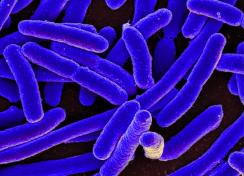
CDC E.coli

Image CDC Enter a caption

Increased use of ingredient-based analyses is being promoted by researchers after the method was used to identify the source of infection in an E. coli outbreak. 

Public Health England was alerted to an outbreak of Shiga toxin-producing E. coli (STEC) O157 phage type (PT) 34 in July 2016 involving 56 cases in England and Wales. The source of infection was baby-mixed leaf salad, which was an ingredient in multiple dishes.

“A traditional analysis may have resulted in multiple menu items being associated with illness, thereby failing to identify the true source of infection,” said researchers.


Ireland -12 cases of E.Coli now confirmed at Dunmore creche

Connach Tribune

12 cases of E.Coli have now been confirmed following an outbreak last week at Dun Beag creche in Dunmore.
The HSE’s multidisciplinary Outbreak Control Team says four cases have involved hospitalisation.
E.Coli VTEC can spread in a number of ways including contact with infected animals, contaminated soil, water or certain foods, and can be spread among toddlers who are not toilet trained.
The majority of cases of VTEC get better with no treatment and without hospitalisation.
However the most serious complication is Haemolytic Uraemic Syndrome or HUS which occurs in up to 10% of VTEC cases.
This can lead to anaemia and kidney failure and requires intensive medical treatment.
The number of cases of VTEC notified in Ireland each year is increasing with 927 cases confirmed in 2017.