Category Archives: Uncategorized

Research – Food additives – Protection against microorganisms, extension to shelf life

FNB News

Food additives have been used in food preparations from prehistoric times to perform various functions. Processing of food into variety of products involves use of various food ingredients called as additives. Technological developments in food processing have greatly encouraged the use of these additives but most of these additives and colourants are synthetic in nature.

Food additives are used to provide protection against microorganisms, increase quality and extend shelf life in many stages, from production to consumption of food (Branen et al. 2001). The use of these additives is a well-acquired practice but may be associated with certain risks. Used judiciously, food additives promote food safety, maintain nutritional quality and improve the texture, taste and appearance of foods.
Every food additive has been allotted a unique number in the International Numbering System (INS), adopted and extended by the Codex Alimentarius used to uniquely identify a food additive in legislation and for labelling purposes. Number ranges have been pre-assigned to food additive classifications, so as to give information about the main purpose of the additive, even without knowing the name of the additive (Tomaska & Taylor 2014).
Research – Effects of Lactobacillus plantarum, Pediococcus acidilactici, and Pediococcus pentosaceus on the Growth of Listeria monocytogenes and Salmonella on Alfalfa Sprouts

Journal of Food Protection alfalfa

ABSTRACT

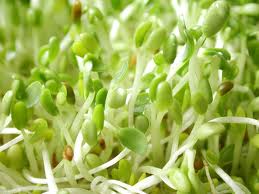
The germination conditions of sprouted vegetables consisting of relatively high temperatures and humidity, low light, and abundance of nutrients are ideal for pathogen survival and growth. The continual occurrence of outbreaks and recalls associated with sprout vegetables indicate additional measures are needed to improve product safety. The objective of this study was to evaluate the efficacy of a mixture of Lactobacillus plantarum, Pediococcus acidilactici, and Pediococcus pentosaceus (LPP) against Listeria monocytogenes and Salmonella on alfalfa sprouts during 5 days of sprouting at 20°C and its influence on sprout quality. Alfalfa seeds were inoculated with L. monocytogenes or Salmonella (each at 1 and 3 log CFU/g) and LPP (7 log CFU/g). Populations of LPP were maintained at 7.5 to 8.0 log CFU/g throughout sprouting. LPP had a significant effect on the growth of L. monocytogenes and Salmonella (P < 0.05). After 5 days of sprouting, populations of L. monocytogenes at an initial concentration of 1 and 3 log CFU/g of seeds treated with LPP were approximately 4.5 and 1.0 log CFU/g less than the untreated seeds, respectively. Populations of Salmonella at an initial concentration of 1 and 3 log CFU/g were 1.0 log CFU/g less than the control. LPP did not compromise the yield, seedling length, or pH of the sprouts.

HIGHLIGHTS
  • Listeria populations on LPP-treated sprouts were 4.5 log less than untreated seeds.

  • LPP treatment reduced Salmonella populations by 1 log compared with controls.

  • LPP did not influence sprout quality.

Australia -Did health-types get it wrong or a Canberra court: Ricardo’s Café cleared of Salmonella charges

Barf Blog

The owner of a popular Canberra cafe has had charges against him dropped, relating to a salmonella outbreak that saw more than 100 people fall ill in 2017, and has also escaped conviction on an unrelated charge.

The owner of Ricardo’s, Rick DeMarco, 32, was cleared of the most serious charges spanning from an investigation in February 2017, which began after customers complained of food poisoning on social media.

The restaurant in Jamison was immediately closed after the reports and, in a statement at the time, Mr DeMarco admitted salmonella was found on a used dishcloth and tea towel, but nothing was found in any food or on any cafe equipment.

USA -Sunstone Organics Issues Voluntary Nationwide Recall of Select Kratom Products Due to Potential Contamination by Salmonella

FDA

Sunstone Organics is voluntarily recalling two lots of Sunstone Organics Kratom. These two lots include Sunstone Organics White Vein Kratom Lot 119 and Sunstone Organics Maeng Da Kratom Lot 124A in both capsules and powder form and in all sizes. The products have been found to potentially be contaminated with salmonella.

Risk Statement: The product potentially could result in contracting salmonella. Symptoms of salmonella can include illness, vomiting, and some cases even death. This risk is higher for users a compromised or weak immune system, including elderly and young children. Sunstone Organics has not received any reports of adverse events to date related to this recall.

The product is used as a tea or supplement and is packaged in kraft stand-up pouches in both capsule form and powder form, in 3 different size bags, for a total of 12 products. The affected Sunstone Organics Kratom lots include the following lot numbers: Sunstone Organics White Vein Lot 119 and Sunstone Organics Maeng Da Lot 124A in Powder form and package sizes 25 grams, 50 grams, and 100 grams, and in capsule form in sizes 20 count, 60 count, and 150 count.

Research – Study: Food-borne diseases cost India $15 billion a year

Times of India

NEW DELHI: Unsafe food still costs India as high as $15 billion annually, even though it has almost halved from $28  billion estimated last year, a recent World Bank report says underlining the “unnecessarily high” economic burden caused by food borne diseases.


USA – Like eggs over easy warning letters follow last year’s violations

Food Safety News


Shell egg farms in Alabama and New York inspected last year by the Food and Drug Administration were recently warned about the serious violations FDA discovered.

In the warning letters, FDA discloses more details about a previously reported outbreak and reports  that the  Salmonella Enteritidis or SE outbreak caused a cage-free egg producer to cease operations.

Alabama’s Gravel Ridge Farms in Cullman was the likely source of a multi-state SE outbreak that last year sickened 44 people in 11 states, FDA says in the recently released warning letter dated Feb. 12, 2019.

As consequence, Gravel Ridge recalled 660,000 shell eggs between May 22 and Aug. 29, 2018. It was one of two large shell egg recalls that occurred last year.   The other involved a Salmonella Braenderup outbreak.

FDA’s Coordinated Outbreak Response and Evaluation (CORE) Network and the federal Centers for Disease Control and Prevention investigated the outbreak. A match to the outbreak strain was turned up from an environmental swab in laying house 2 at Gravel Ridge Farms.

USA – Norovirus Outbreak at Tijuana Taco and California Tacos

Food Poisoning Journal Norwalk_Caspid

From Tacoma/Piece County Department of Health:

Update March 1, 2019

Since our last update, 13 more people have reported norovirus-like illness to the Health Department after they said they ate at Tijuana Taco. As of today, 51 customers have contacted us with reports of illness from this suspected norovirus outbreak.

We’ve collected samples from ill customers and restaurant employees for testing. We’ll report the findings of those lab tests once we have them, which could be in the next week or two.

USA – Campylobacter Outbreak in 2017 Associated with Well Water Supply in Nebraska

Food Poisoning Bulletin

The February 22, 2019 issue of the CDC’s Morbidity and Morftality Weekly Report had a study about a Campylobacter outbreak in 2017 that was associated with the municipal water supply in Nebraska. At least 39 people were sickened after they drank untreated city water. The city was not named, just called “City A.”

Apparently, a center pivot irrigation system, that was supposed to pump livestock waste into farmland malfunctioned. Runoff collected in a road ditch near two wells that fed the water supply.

There were 33 probable and 6 confirmed cases in this outbreak. Untreated unboiled city A tap water was the only exposure that was significantly associated with illness.

The city is served by four untreated wells and an interconnected distribution system. After the wells were removed from service, no further illnesses were reported.

Canada – Breaded Chicken Salmonella Outbreak in Canada Has Sickened 534

Food Poisoning Bulletin

kswfoodworld salmonella

Image CDC

A breaded chicken Salmonella outbreak in Canada has sickened at least 534 people in 13 provinces. There are actually 15 national outbreaks linked to raw chicken, including raw breaded chicken products. Food recalls have been issued for twelve products that are linked to some of these outbreak investigations.

Research – Toxoplasma gondii and Other Zoonotic Protozoans in Mediterranean Mussel (Mytilus galloprovincialis) and Blue Mussel (Mytilus edulis): A Food Safety Concern?

Journal of Food Protection 

Mediterranean mussels (Mytilus galloprovincialis) and blue mussels (Mytilus edulis) are among the most consumed fishery products, but they are frequent vehicles of foodborne infection worldwide. In this study, we investigated the occurrence and seasonality of zoonotic protozoans in mussels farmed or sold at retail outlets in Italy. We collected and tested 1,440 M. galloprovincialis and 180 M. edulis. Pooled samples were molecularly tested for Giardia duodenalis, Cryptosporidium spp., and Toxoplasma gondii and then sequenced. Sixty-two (45.9%; 95% confidence interval, 37.5 to 54.3%) mussel pools tested positive for one or more of the investigated pathogens. Both Mytilus species and samples from all the investigated areas harbored pathogens. Mussels were statistically more contaminated by Cryptosporidium spp., followed by T. gondii and G. duodenalis assemblage A, and M. galloprovincialis was more contaminated than M. edulis (P < 0.01). Contamination was more likely in mussels at retail outlets (P < 0.05) than in those from farms and in mussels collected in spring (P < 0.01) than in other seasons. This is the first report of T. gondii found in M. galloprovincialis in Italy and in M. edulis in Europe. The detection of zoonotic protozoans in a widely consumed food source indicates the need for a more detailed microbiological risk analysis, especially considering that bivalve mollusks are often consumed raw worldwide.