Salmonella Abaetetuba in organic soya press cake from China in Belgium, Germany and Netherlands
Salmonella Infantis in raw petfood for cats from the Netherlands in Belgium and France

Salmonella Abaetetuba in organic soya press cake from China in Belgium, Germany and Netherlands
Salmonella Infantis in raw petfood for cats from the Netherlands in Belgium and France
This March 6, the Secretary of Health of Boyacá, Luz Marina Estupiñán, announced that a series of investigations are being carried out on the intoxications that occurred in the municipal schools of Sáchica and Belén, on March 3 and 4.
The official told Caracol Radio that there were 16 children who were poisoned with food and had to be taken to the Villa de Leyva health centers “The children reported abdominal pain, vomiting and headaches from the Nueva Granada institution,” she said.
The technical team travels to inspect the hygienic-sanitary situation in the place where the events occurred, background versions are verified where the directors and coordinators state that when classes start on March 3, in the morning hours, the children requested permission to be absent from the classrooms because they felt abdominal pain
Likewise, the authorities took samples from the dining room of the School Feeding Program (PAE) and gave a favorability rating greater than 77.5%, but they continue to track foods such as powdered milk, the same one that was served to intoxicated minors.
“We do not know specifically the real cause if it was the food consumed or the powdered milk, we are doing the traceability of previous events,” Estupiñán signed.
In addition, samples were taken of the water used to cook and the boiled water consumed by minors. For now, the children are recovering satisfactorily and have been discharged as they show improvement in their health.
Posted in Uncategorized
How does a food alert work in France? What is the organizational scheme? Public Health France traces in infographics the system of consultation of the patient on the alert.
Infographic in French
Posted in Uncategorized

The village of Petersburg is recovering from a suspected outbreak of a unique disease after problems with its water tower.
“I’m the poop driver, taking samples back and forth. The more evidence we have, the more we can make our case,” said Mary Thieman.
The CDC’s Division of Foodborne, Waterborne, and Environmental Diseases explained the issue further in an email to NCN, December 30th:
“Starting in September, CDC has supported state and local health authorities with a Campylobacter outbreak in Petersburg associated with the municipal drinking water system. Water testing from the system identified molecular evidence of bird feces in the same drinking water sample as Campylobacter spp. DNA and culturable coliforms, suggesting bird fecal contamination of the water system led to the outbreak,” they stated. “The state water authority is responding to these results by requiring a thorough inspection of the water tower.”
Posted in Uncategorized
A previously conducted national survey of restaurant inspection programs associated the practice of disclosing inspection results to consumers at the restaurant point-of-service (POS) with fewer foodborne outbreaks. We used data from the national Foodborne Disease Outbreak Surveillance System (FDOSS) to assess the reproducibility of the survey results. Programs that participated in the survey accounted for approximately 23% of the single state, foodborne illness outbreaks in restaurant settings reported to FDOSS during 2016 – 2018. Agencies that disclosed inspection results at the POS reported fewer outbreaks (mean = 0.29 outbreaks per 1,000 establishments) than those that disclosed results online (0.7) or not at all (1.0). Having any grading method for inspections was associated with fewer reported outbreaks than having no grading method. Agencies that used letter grades had the lowest numbers of outbreaks per 1,000 establishments. There was a positive association (correlation coefficient, r= 0.54) between the mean number of foodborne illness complaints per 1,000 establishments, per the survey, and the mean number of restaurant outbreaks reported to FDOSS (R2= 0.29). This association was stronger for bacterial toxin-mediated outbreaks (R2= 0.35) than for norovirus (R2= 0.10) or Salmonella (R2= 0.01) outbreaks. Our cross-sectional study findings are consistent with previous observations that linked the practice of posting graded inspection results at the POS with reduced occurrence of foodborne illnesses and outbreaks associated with restaurants. Support for foodborne illness surveillance programs and food regulatory activities at local health agencies is foundational for food safety systems coordinated at state and federal levels.
Posted in Uncategorized
A 19-year-old college student developed sepsis and lost his legs and fingers after eating leftover Chinese takeout food in what a doctor described as a “perfect storm” of events.
Dr. Bernard Hsu, a licensed toxicologist, described how the young man became severely ill after eating tainted leftovers, including lo mein, chicken and rice.
“This was a freak accident happening in a perfect storm sequence of events,” Hsu, who did not treat the man, said in a YouTube video on Feb 16.
The teen’s case was first reported in March 2021 in the New England Journal of Medicine, which detailed how he was admitted to Massachusetts General Hospital as he was suffering from “shock, multiple organ failure, skin mottling, and a rapidly progressive reticular rash.”
“The patient had been well until 20 hours before this admission, when diffuse abdominal pain and nausea developed after he ate rice, chicken, and lo mein leftovers from a restaurant meal,” the outlet said.
Posted in Uncategorized
19 February 2022: Abbott Laboratories NZ Ltd is recalling specific batches of its Similac, Alimentum and EleCare brands of infant formula products for special dietary use due to the possible presence of Cronobacter and Salmonella Newport.
| Product identification | |
|---|---|
| Product type | Infant formula products for special dietary use |
| Name of product (size) | Similac, Alimentum and EleCare brands of infant formula products for special dietary use (various sizes) |
| Batch and date marking | The products under recall have a multidigit number on the bottom of the container:
are affected by this recall. |
| Package size and description | The products are sold in various sizes of metal tins with plastic lid or plastic containers. |
| Distribution | The products are manufactured in Abbott Nutrition’s facility in Sturgis, Michigan, United States of America.
The affected products may have been sold to members of the public in New Zealand via online shopping platforms. The products have not been re-exported. |
| Notes | This recall does not affect any other Similac, Alimentum and EleCare brands of products or any other products from Abbott Laboratories NZ Ltd or Abbott Nutrition.
Only these brands of infant formula products for special dietary use in the powder form are affected by this recall. The liquid form is not affected. EleCare brand products are not available for direct purchase from supermarkets by members of the public in New Zealand and are mainly available via health professionals, including chemists. The batches purchased in New Zealand via these channels are not affected by this recall. Similac and Alimentum brands of products are not sold in New Zealand, however members of the public in New Zealand may have purchased them via online shopping platforms from overseas. |
Customers are asked to check the batch number and date marking on the bottom of the products, and refer to the recall notice on the website of U.S. Food & Drug Administration for further information.
Affected products should not be consumed. There have been 4 reports of associated illness in the United States of America and no reports of associated illness in New Zealand. If your infant has consumed any of these products and you have any concerns, contact your health professional.
Customers should return the products to their retailer for a full refund.
Cronobacter, formerly known as Enterobacter sakazakii, is a germ found naturally in the environment. The germ can live in dry foods, such as powdered infant formula, powdered milk, herbal teas, and starches. Cronobacter can cause diarrhoea and urinary tract infections in immunocompromised adults.
Cronobacter infections in infants are rare, but can be very serious. Infants 2 months of age and younger, and those born premature are most likely to develop dangerous blood infection (sepsis) or meningitis if they get infected with Cronobacter.
Further information on Salmonella
If you have questions, contact Abbott Laboratories NZ Ltd:
Posted in Uncategorized
Posted in Cronobacter sakazakii, cross contamination, food contamination, food handler, Food Hazard, Food Hygiene, Food Inspections, Food Micro Blog, Food Microbiology, Food Microbiology Blog, Food Microbiology Testing, Food Pathogen, food recall, Food Safety, Food Safety Alert, Food Testing, Salmonella, Uncategorized
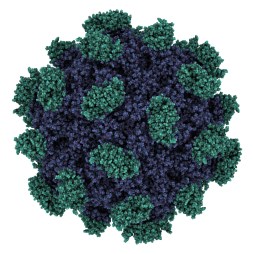
The hepatitis E virus (HEV) can cause serious liver inflammation and is the most common cause of acute virus-mediated hepatitis worldwide. Infection can be prevented through appropriate hygiene measures. Scientists from TWINCORE, Centre for Experimental and Clinical Infection Research, the Hannover Medical School (MHH) and the Ruhr Universität Bochum (RUB), together with partners from industry, have investigated the effectiveness of various common hand disinfectants against HEV. They were able to show that most formulations do not completely inactivate the virus.
In Germany and Europe, HEV has its natural reservoir in pigs. The infection can spread from animals to humans, which is called a zoonosis. This often happens through incompletely heated or raw meat products such as minced meat. In tropical regions of the world, infections occur via contaminated water, sometimes causing large outbreaks. “Some of these infections could possibly be prevented with the right hygiene measures,” says Dr. Patrick Behrendt, physician in the Department of Gastroenterology, Hepatology and Endocrinology at the MHH and head of the junior research group “Translational Virology” at TWINCORE. This includes, above all, correct hygienic hand disinfection in everyday clinical practice when dealing with hepatitis E patients and infected animals.
Together with the team of Professor Eike Steinmann, head of the Department of Molecular and Medical Virology at RUB, Behrendt has investigated whether common hand disinfectants can render the virus harmless. “We tested the effect of the alcohols ethanol and propanol, both individually and in the mixing ratios recommended by the WHO, and also commercial hand disinfectants,” says Steinmann. “However, only one product that contained another component was effective.”

Product recall Dr. Oetker Schoko Ausstech Cookies
Opinion of the Dr. Oetker GmbH on the test report of the Innsbruck Institute for Food Safety with the order number 2112838
.
Oetker Schoko Ausstechkätzchen
lot/ batch/ BBD: L169
During a sample taken by the Innsbruck Institute for Food Safety, Vero/Shiga toxin-producing Escherichia coli were detected in the above-mentioned test object.
Although according to the Federal Institute for Risk Assessment (BfR) in its statement no. Oetker, which learned of the test results on November 26, 2021, batch L 169 from Dr. Oetker chocolate cookie cutters back.
We would like to point out that E.Coli detection would only be possible in raw dough, but baked biscuits can be enjoyed without hesitation.
Item No. 1-01-870700
GTIN EVE 4000521013288 Item
description Chocolate cookie
cutter Best before 02.2023
The goods concerned were placed on the Austrian market from September 2021. He was informed immediately. To avoid health risks, consumers are asked to return the recalled goods to the point of sale where the product was purchased. The purchase price will be refunded. dr Oetker apologizes to its customers for any inconvenience caused.
More info
Posted in AGES, food contamination, Food Hazard, Food Hygiene, Food Inspections, Food Micro Blog, Food Microbiology, Food Microbiology Blog, Food Microbiology Testing, Food Pathogen, Food Poisoning, food recall, Food Safety, Food Safety Alert, Food Testing, Food Toxin, STEC, STEC E.coli, Uncategorized, VTEC

 FoodWorld