Category Archives: STEC

USA – Clover Sprouts E. coli O103 Outbreak Updated: 39 Sick, 2 Hospitalized

Food Poisoning Bulletin

The Centers for Disease Control and Prevention (CDC) has updated the clover sprouts E. coli O103 outbreak that is associated with Jimmy John’s restaurants and Chicago Indoor Garden raw clover sprouts. Since the last update on February 26, 2020, 25 more patients who live in two states have been identified. Twenty-four of the new patients live in Utah, and Florida has been added to the state count.

RASFF Alert- STEC E.coli – Chilled Boneless Beef VP

RASFF-Logo

RASFF – shigatoxin-producing Escherichia coli in chilled boneless beef vacuum packed from Argentina in Germany


Research – Compatibility of commercially produced protective cultures with common cheesemaking cultures and their antagonistic effect on foodborne pathogens

JFP

The documented survival of pathogenic bacteria including Listeria monocytogenes (LM), shiga toxin-producing Escherichia coli (STEC), and Salmonella during the manufacture and aging of some cheeses highlights the need for additional interventions to enhance food safety. Unfortunately, few interventions are compliant with the Standards of Identity for cheese. Protective bacterial cultures (PC) represent actionable, natural interventions. However, supportive data for commercially produced PCs regarding their efficacy against pathogens and potential antagonism with each other and cheesemaking cultures are scant, thereby impeding their potential use by the cheese industry. The overall objective of this study was to identify commercially produced PCs that exert antimicrobial activity towards pathogens with minimal impact on beneficial cheese microbes. Direct antagonism and agar well diffusion assays were used to determine the impact of 10 commercially produced PCs on the growth of starter cultures and cultures of ripening bacteria and fungi. Deferred antagonism was used to evaluate the potential for antimicrobial effects against LM, STEC, and Salmonella. PCs and starter cultures were co-cultured in UHT milk to determine the effects of co-culture on starter acidification profiles when incubated according to a simulated cheese-making temperature profile (4 h at 35°C followed by 20 h at 20°C). Compatibility assays suggest that PC antagonism is microbe and strain specific. Only one PC negatively impacted the acidification of the starters tested. PC antagonism of ripening bacteria and fungi growth varied but was consistent within species. All PCs displayed deferred inhibition of LM, STEC, and Salmonella growth but to varying degrees. These data identify commercial PCs with potential for the control of pathogens and characterize their compatibility with cheesemaking cultures for future use by cheesemakers and investigations of their efficacy in the production of cheese.

USA – Outbreak Investigation of E. coli O103: Clover Sprouts (February 2020)

FDA

March 17, 2020

Recommendation

Chicago Indoor Garden is recalling all products containing Red Clover sprouts. FDA is recommending that consumers not eat the following recalled items with “Best By” dates between 12/1/2019 and 3/12/2020 that were distributed to Whole Foods throughout the Midwest, Coosemans Chicago Inc., Battaglia Distributing, and Living Waters Farms:

  • Red Clover 4oz. clamshell
  • Red Clover 2lb. boxes
  • Sprout Salad 6oz. clamshell
  • Mixed Greens 4oz. clamshell
  • Spring Salad 6oz. clamshell
Sample Labels of Chicago Indoor Garden Sprout Products

(PDF: 849 KB)

The FDA’s analysis of a sample of this firm’s product identified the presence of E. coli O103. Whole Genome Sequencing of this bacteria showed that it matches the outbreak strain.

Generally, it is recommended that children, the elderly, pregnant women, and persons with weakened immune systems should avoid eating raw sprouts of any kind.

Background

FDA, along with CDC and state and local partners, are investigating an outbreak of 14 illnesses caused by E. coli O103 in Iowa, Illinois, Missouri, Texas and Utah likely linked to clover sprouts.

As the outbreak investigation progresses, the FDA will continue in its traceback investigation to determine where implicated sprouts have been distributed and will continue monitoring for additional illnesses associated with this outbreak.

Research – Inactivation of Shiga Toxin-Producing Escherichia coli and Listeria monocytogenes Within Plant Versus Beef Burgers in Response to High Pressure Processing

JFP

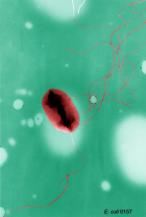
kswfoodworld E.coli O157

Image CDC

We evaluated high pressure processing to lower levels of Shiga toxin-producing Escherichia coli (STEC) and Listeria monocytogenes inoculated into samples of plant or beef burgers. Multi-strain cocktails of STEC and L. monocytogenes were separately inoculated (ca. 7.0 log CFU/g) into plant burgers or ground beef. Refrigerated (i.e., 4°C) or frozen (i.e., -20°C) samples (25-g each) were subsequently exposed to 350 MPa for up to 9 or 18 min or 600 MPa for up to 4.5 or 12 min, respectively. When refrigerated plant or beef burger samples were treated at 350 MPa for up to 9 min, levels of STEC were reduced by ca. 0.7 to 1.3 log CFU/g. However, when refrigerated plant or beef burger samples were treated at 350 MPa for up to 9 min, levels of L. monocytogenes remained relatively unchanged (ca. ≤0.3 log CFU/g decrease) in plant burger samples, but were reduced by ca. 0.3 to 2.0 log CFU/g in ground beef. When refrigerated plant or beef burger samples were treated at 600 MPa for up to 4.5 min, levels of STEC and L. monocytogenes were reduced by ca. 0.7 to 4.1 and ca. 0.3 to 5.6 log CFU/g, respectively. Similarly, when frozen plant and beef burger samples were treated at 350 MPa up to 18 min, reductions of ca. 1.7 to 3.6 and ca. 0.6 to 3.6 log CFU/g in STEC and L. monocytogenes numbers, respectively, were observed. Exposure of frozen plant or beef burger samples to 600 MPa for up to 12 min resulted in reductions of ca. 2.4 to 4.4 log and ca. 1.8 to 3.4 log CFU/g in levels of STEC and L. monocytogenes, respectively. Via empirical observation, pressurization did not adversely affect the color of plant burger samples, whereas appreciable changes in color were observed in pressurized ground beef. These data confirm that time and pressure levels already validated for control of STEC and L. monocytogenes in ground beef will likely be equally effective towards these same pathogens in plant burgers without causing untoward effects on product color.

RASFF Alert – STEC E.coli – Organic Raw Milk Goats Cheese – Soft Cheese – Raw Milk Goats Cheese

RASFF-Logo

RASFF – shigatoxin-producing Escherichia coli (Stx1-, Stx2+, eae+, O103) in organic raw milk goat’s cheese from Belgium in Belgium

RASFF – shigatoxin-producing Escherichia coli (stx1+ stx2+ eae+ /25g) in soft cheese from Italy in the Netherlands

RASFF – shigatoxin-producing Escherichia coli (stx2a+ and stx2d+ /25g) in goat cheese with raw milk from France in Switzerland


RASFF Alert – STEC E.coli – Chilled Boneless Beef

RASFF-Logo

RASFF – shigatoxin-producing Escherichia coli (presence /25g) in chilled bonless beef from Argentina in Germany

USA – WARNING LETTER Sprouts Unlimited Inc MARCS-CMS 603883 — FEBRUARY 21, 2020 – E.coli O103

FDA

Dear Mr. Beach:

The U.S. Food and Drug Administration (FDA) inspected your sprouting operation located at 799 51st Street, Marion, Iowa, from December 31, 2019, to January 9, 2020.  FDA conducted this inspection because sprouts grown at your operation were linked by the state of Iowa Department of Inspections and Appeals, Department of Public Health, and the (b)(4) to an outbreak of human infections with Shiga toxin-producing Escherichia coli O103 (E. coli O103) in the state of Iowa.  This outbreak sickened 22 people between November 21 and December 14, 2019.  Shiga toxin-producing E. coli is a pathogenic bacterium that can cause serious illness in humans, including diarrhea, often with bloody stools.  Although most healthy adults can recover completely within a week, some people can develop a form of kidney failure called hemolytic uremic syndrome (HUS).  HUS is most likely to occur in young children and the elderly.  This condition can lead to serious kidney damage and death.

USA – Outbreak Investigation of E. coli O103: Clover Sprouts (February 2020)

FDA

February 26, 2020

Case Counts

Total Illnesses: 14
Hospitalizations: 0
Deaths: 0
Last illness onset: February 11, 2020
States with Cases: IA (3), IL (6), MO (1), TX (1), UT (3)

Recommendation

FDA, along with CDC and state and local partners, are investigating an outbreak of 14 illnesses caused by E. coli O103 in Iowa, Illinois, Missouri, Texas and Utah. CDC is reporting that the epidemiologic evidence indicates that clover sprouts from Jimmy John’s restaurants are a likely source of this outbreak.

The CDC is recommending that consumers who have recently eaten clover sprouts on a sandwich from Jimmy John’s restaurants and who are experiencing symptoms of E. coli infection, such as severe stomach cramps, diarrhea, fever, nausea, and/or vomiting, should contact their doctor and report their illness to their local health department. If consumers have a leftover sandwich with clover sprouts from Jimmy John’s, do not eat it and throw it away.

Generally, it is recommended that children, the elderly, pregnant women, and persons with weakened immune systems should avoid eating raw sprouts of any kind.

Jimmy John’s LLC reported that all of its restaurants stopped serving clover sprouts on February 24, 2020. At this time, clover sprouts should not be available at Jimmy John’s.

FDA has activated a team to coordinate this outbreak investigation. This team is currently collecting records and initiating a traceback investigation to determine the source of the clover sprouts. Authorities are investigating whether implicated sprouts have been distributed elsewhere and will continue monitoring for additional illnesses.

Background

On February 21, 2020, the FDA issued a warning letter to Jimmy John’s Franchise LLC for engaging in a pattern of receiving and offering for sale adulterated fresh produce, specifically clover sprouts and cucumbers. On February 24, 2020, Jimmy John’s reported to FDA that they had removed sprouts from their restaurants.

The warning letter lays out evidence from five outbreaks, including recent outbreaks in the state of Iowa during November and December 2019, of human infections with Escherichia coli O103, a Shiga toxin producing Escherichia coli (STEC) linked to sprouts.

These 14 illnesses are new and are not associated with the outbreaks mentioned in the Jimmy Johns warning letter. FDA will continue its investigation and provide updates as more information becomes available.


RASFF Alert – STEC E.coli – Organic Leak Seeds for Sprouting

RASFF-Logo

RASFF – enteropathogenic Escherichia coli (stx- eae+ /25g) in organic leek seeds for sprouting from China, via Italy in Norway