
RASFF – shigatoxin-producing Escherichia coli (stx1+ stx2+ /25g) and too high counts of coliforms (>150000 /g) and of Escherichia coli (>150000 /g) in black pepper cheese from Italy in Germany

RASFF – shigatoxin-producing Escherichia coli (stx1+ stx2+ /25g) and too high counts of coliforms (>150000 /g) and of Escherichia coli (>150000 /g) in black pepper cheese from Italy in Germany
Fromagerie Alpine is recalling all batches of the below Saint-Marcellin unpasteurised cheeses due to the possible presence of Shiga toxin-producing Escherichia coli (STEC) O26. Point-of-sale recall notices will be displayed in retailers that sold the affected batches advising consumers not to eat the affected cheese.
Shiga toxin-producing Escherichia coli (STEC), also known as Verocytotoxigenic E. coli (VTEC), are a specific group of E. coli. While most E. coli are harmless and live in the intestines of healthy humans, STEC produce a powerful toxin which can cause severe illness. Symptoms include abdominal cramps and diarrhoea which is sometimes bloody. Usually there is little or no fever, and patients recover within 5 to 10 days. In some people however, particularly children under 5 years of age and the elderly, the infection can cause a complication called haemolytic uraemic syndrome (HUS), in which the red blood cells are destroyed and the kidneys can stop working properly. The time between the initial infection and the first symptoms appearing is typically between 3 and 4 days but can range between 1 and 8 days.
.jpg "Implicated Cheeses")

Tesco is recalling all batches of Tesco Finest St Félicien Du Dauphiné unpasteurised cheese, due to the possible presence of Shiga toxin-producing Eschericia coli. Point-of-sale recall notices will be displayed in Tesco stores advising consumers not to eat the affected cheese.
Shiga toxin-producing Escherichia coli (STEC), also known as Verocytotoxigenic E. coli (VTEC), are a specific group of E. coli. While most E. coli are harmless and live in the intestines of healthy humans, STEC produce a powerful toxin which can cause severe illness. Symptoms include abdominal cramps and diarrhoea which is sometimes bloody. Usually there is little or no fever, and patients recover within 5 to 10 days. In some people however, particularly children under 5 years of age and the elderly, the infection can cause a complication called haemolytic uraemic syndrome (HUS), in which the red blood cells are destroyed and the kidneys can stop working properly. The time between the initial infection and the first symptoms appearing is typically between 3 and 4 days but can range between 1 and 8 days.

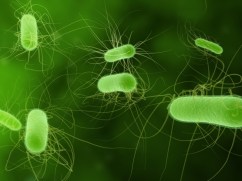
Image CDC
Canada is one of a number of countries that has received raw milk cheese linked to an outbreak of E. coli O26 in France.
French authorities reported 13 cases of hemolytic uremic syndrome (HUS) in young children since March 21. HUS is a severe complication of E. coli infection that causes kidney failure and can occur a week or more after the onset of diarrhea.
Two types of French cheese have been recalled in Germany over fears they could be contaminated with E.coli O26, just a few days after a similar scare in France, the German food safety authority announced on Tuesday.
French cheesemaker, Fromagerie Alpine, has been asked to recall its cheeses Saint-Felicien and Saint-Marcellin, sold in Germany under the name “Xavier David, tradition of good cheese, Alpine”, the authority said.
The decision was a precaution over concerns the brands could have been contaminated with the bacteria E.coli type 026, commonly found in the intestines of humans, livestock and other animals.
Ottawa, April 29, 2019 – La Fromagerie Hamel is recalling Le Pic brand “Saint-Félicien” cheese from the marketplace due to possible E. coli O26 contamination. Consumers should not consume the recalled product described below.
| Brand Name | Common Name | Size | Code(s) on Product | UPC |
|---|---|---|---|---|
| Le Pic | Saint-Félicien | 180 g | All codes up to and including April 29, 2019 | 0 20060641300 0 |
Public Health investigated an outbreak of Shiga toxin-producing E. coli (STEC) associated with I Love Sushi and Café Mario at Nintendo of America campus in Redmond. Café Mario is operated by Sodexo and is not open to the public. I Love Sushi is a food establishment that operates out of Café Mario once a week.
This outbreak appears to be over. After a thorough investigation, we do not have enough evidence to connect I Love Sushi to this outbreak.. No single food item prepared by Café Mario has been identified as the source of the illnesses. Everyone who reported illness has recovered.
As of this week, a total of 156 people infected with the outbreak strain of E. coli O103 have been reported from 10 states – Minnesota, Illinois, Indiana, Ohio, Kentucky, Tennessee, Virginia, Mississippi, Georgia and Florida.
To date there have been two recalls. Link between two producers of meat and the recalls remain unclear (How are the two connected? Presumably a common supplier?) except that both recalls were prompted by positive E. coli O103 tests on “Unopened, intact, packages of ground beef collected as part of the ongoing investigation tested positive for E. coli O103 at an FSIS laboratory.”
It is likely that more recalls will happen as FSIS, CDC and state health authorities continue their efforts to find the source.
What we know is that illnesses began March 1 and it is now almost May 1 – why did it take so long to figure out that 177 people with E. coli O103 were linked to ground beef? Why do we do not yet know the original source of the contamination? Why is the public not being told the location where known illnesses occurred? Finally, are more people going to get sick?
Posted in E.coli, E.coli O103, food bourne outbreak, Food Hygiene, Food Illness, Food Inspections, Food Micro Blog, Food Microbiology, Food Microbiology Blog, Food Poisoning, food recall, Food Safety, Food Safety Alert, Food Testing, Food Toxin, foodborne outbreak, foodbourne outbreak, outbreak, STEC, Uncategorized
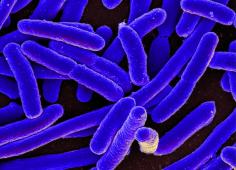
Image CDC
According to press reports and French health authorities, the cheeses Saint-Félicien and Saint-Marcellin, both made by the Société Fromagerie Alpine in Romans-sur-Isère in the Drôme department, were pulled from shelves yesterday (Saturday April 27) due to the likely link to an E. coli outbreak.
The brands are mainly sold in large supermarkets such as Leclerc, Lidl and Auchan.
The recall was a “precautionary measure”, said the ministers for health and agriculture, after 13 children in several regions were reported to have contracted cases of hemolytic uremic syndrome (HUS) due to an E. coli infection, since March 21. In the US, only about 5% of outbreak victims develop HUS, raising the question that this outbreak may impact a significant number of people.
Investigations revealed that several of the children had eaten these cheeses before symptoms appeared.
Anyone who still has cheese from this brand is advised not to eat the product.
The purpose of this study was to compare the efficacy of different antimicrobial interventions applied via either conventional spray (CS) or handheld electrostatic spray (ESS) to reduce Shiga toxin–producing Escherichia coli (STEC) on fresh beef surfaces. Hot-boned outside rounds (ORs) were inoculated within 1 h after harvest with a cocktail of eight isolates consisting of 8 O157 and non-O157 serogroups of STEC (STEC8). ORs were hung on sterile meat hooks at 4°C for 36 h to simulate a contaminated full carcass side in the chiller. ORs were then treated with lactic acid (LA; 4.5%, w/v), 3.0% lauric arginate ester (LAE), 0.8% cetylpyridinium chloride, 200 mg/L peracetic acid, 3 mg/L chlorine dioxide, 5 mg/L ClO2, or tap water by using CS or ESS. Temperatures of LA and peracetic acid were set at 55 and 42°C before spraying, whereas all other solutions were applied at room temperature (25°C). Pretreatment and posttreatment STEC8-inoculated beef tissue samples were aseptically collected to evaluate the efficacy of interventions by application method (CS or ESS). LA applied with CS achieved the greatest reduction in STEC8 numbers (3.3 log CFU/cm2) compared with all other treatments: 0.2 log CFU/cm2 (tap water) to 2.3 log CFU/cm2 (LAE). Only for LA did a significant difference arise in mean STEC8 reductions between CS and ESS applications (3.2 versus 1.7 log CFU/cm2, respectively). Among the treatments applied with ESS, LAE produced the greatest reduction of STEC8. Antimicrobial interventions applied via conventional wand or cabinet-applied technologies can reduce the O157 and non-O157 STEC on fresh beef carcass surfaces, reducing transmission to beef consumers.
| HIGHLIGHTS |
|---|
We found no advantage in the use of electrostatic spray to reduce STEC8 on cold beef.
Greatest reductions in STEC8 were achieved by lactic acid with conventional spray.
Lauric arginate ester was the second best antimicrobial agent at reducing STEC8.
Lactic acid reduced pH on the beef surface significantly.
There was no effect of antimicrobial solution on temperature increase on beef outside rounds.
RASFF – shigatoxin-producing Escherichia coli (stx1-, stx2+, eae+, O157+) in chilled cow carcasses from Belgium in Belgium


