Category Archives: STEC E.coli

USA – Elkhorn Valley Packing Recalls Boneless Beef Chuck Product Due to Possible E. coli O103 Contamination

FSIS USDA

WASHINGTON, March 24, 2023 – Elkhorn Valley Packing, a Harper, Kan. establishment, is recalling approximately 3,436 pounds of boneless beef chuck product that may be contaminated with Shiga toxin-producing E. coli (STEC) O103, the U.S. Department of Agriculture’s Food Safety and Inspection Service (FSIS) announced today.

The boneless beef chuck items were packed on Feb. 16, 2023. The following product is subject to recall [view label]:

  • Various weights corrugated boxes containing “Elkhorn Valley Pride Angus Beef 61226 BEEF CHUCK 2PC BNLS; Packed on 2/16/23.” The complete list of serial numbers and box count numbers for the boneless beef chuck product that are subject to recall can be found here.

The product subject to recall bears establishment number “EST. M-19549” inside the USDA mark of inspection. These items were shipped to distributors, federal establishments, retail locations, and wholesale locations, which includes hotels, restaurants, and institutions, in Connecticut, Illinois, Indiana, Maryland, Massachusetts, Michigan, New Jersey, New York and Pennsylvania.

The problem was discovered when FSIS was conducting routine FSIS testing of ground beef derived from this product and the sample confirmed positive for STEC O103. There have been no confirmed reports of adverse reactions due to consumption of these products.

Many clinical laboratories do not test for non-O157 STEC, such as O103, because it is harder to identify than STEC O157:H7. People can become ill from STECs 2–8 days (average of 3–4 days) after consuming the organism.

Most people infected with STEC O103 develop diarrhea (often bloody) and vomiting. Some illnesses last longer and can be more severe. Infection is usually diagnosed by testing of a stool sample. Vigorous rehydration and other supportive care is the usual treatment; antibiotic treatment is generally not recommended. Most people recover within a week, but, rarely, some develop a more severe infection. Hemolytic uremic syndrome (HUS), a type of kidney failure, is uncommon with STEC O103 infection. HUS can occur in people of any age but is most common in children under 5 years old, older adults and persons with weakened immune systems. It is marked by easy bruising, pallor and decreased urine output. Persons who experience these symptoms should seek emergency medical care immediately.

Distributors and other customers who have purchased these products for further processing should not use them or further distribute them. These products should be thrown away or returned to the place of purchase.

FSIS routinely conducts recall effectiveness checks to verify recalling firms notify their customers of the recall and that steps are taken to make certain that the product is no longer available to consumers. When available, the retail distribution list(s) will be posted on the FSIS website at www.fsis.usda.gov/recalls.

FSIS advises all consumers to safely prepare their raw meat products, including fresh and frozen, and only consume ground beef product that has been cooked to a temperature of 160°F. The only way to confirm that ground beef is cooked to a temperature high enough to kill harmful bacteria is to use a food thermometer that measures internal temperature, https://www.fsis.usda.gov/safetempchart.

Media and consumers with questions regarding the recall can contact Dallas Kenney, Director of Operations, Elkhorn Valley Packing, at 620-243-3308 or email at dallas@elkhornvalleypacking.com.

Consumers with food safety questions can call the toll-free USDA Meat and Poultry Hotline at 888-MPHotline (888-674-6854) or live chat via Ask USDA from 10 a.m. to 6 p.m. (Eastern Time) Monday through Friday. Consumers can also browse food safety messages at Ask USDA or send a question via email to MPHotline@usda.gov. For consumers that need to report a problem with a meat, poultry, or egg product, the online Electronic Consumer Complaint Monitoring System can be accessed 24 hours a day at https://foodcomplaint.fsis.usda.gov/eCCF/.

Product Images

France – COULOMMIERS WITH RAW MILK – STEC E.coli

RASFF

Identification information of the recalled product

  • Product category Feed
  • Product subcategory Milk and dairy products
  • Product brand name REFLECTIONS OF FRANCE
  • Model names or references COULOMMIERS WITH RAW MILK Reflets de France – Box of 350G
  • Identification of products
    GTIN Batch Date
    3560071411381 018 551 Date of minimum durability 03/24/2023
  • Packaging Box of 350G
  • Marketing start/end date From 07/02/2023 to 21/03/2023
  • Storage temperature Product to be stored in the refrigerator
  • Health mark FR 61 402 001 EC
  • Geographic area of ​​sale Whole France
  • Distributors CROSSROADS

Practical information regarding the recall

  • Reason for recall Suspicion of the presence of Shigatoxin-producing Escherichia coli (STEC).
  • Risks incurred by the consumer Toxigenic Shiga Escherichia coli (STEC)

RASFF Alert -STEC E.coli – Cheese

RASFF

STEC in cheese from France in Austria, Belgium, France, Germany, Luxembourg, Netherlands, Spain

Research – CFA Briefing – Relevance of generic E coli (inc testing issues) to food safety

Chilled Food Assoc

Escherichia coli (E. coli) is a bacterium commonly found in the gut of humans and warm-blooded
animals. Most strains of E. coli are harmless and some provide many health benefits to the host; for example,
they prevent colonization of the gut by harmful pathogens.

However, there are small groups of E.coli, referred to as pathogenic E.coli, that can cause severe disease in
humans, which are well known to be transmitted by food and/or water and have been implicated in major
food borne outbreaks worldwide e.g. radish sprouts in Japan, Sprouted seeds in Germany, raw / undercooked
beef products UK and USA.

This briefing note looks at the relevance of generic E coli to food safety referring to fresh produce and is also relevent to all food types.

With sections including transmisson, testing and prevention it concludes:

  • A positive for E.coli O157 alone may not cause illness.
  • The isolation of stx (Shiga toxins) gene has to be isolate in an E.coli, usually with a gene for attachment for the isolate to cause serious illness.
  • All parties agree with the confirmed stage of the method, but FSA’s decision to call isolation of stx alone as presumptive is misleading.
  • Action required in the event of a presumptive result is inappropriate and not possible for the industry.
  • Food safety can only be controlled by routinely testing for indicator organisms e.g. generic E. coli and monitoring trends to proactively prompt investigation.
  • HACCP and PRP’s are paramount, supported by environmental and product monitoring.

CFA 057 22 Briefing paper – relevance of generic E coli (inc testing issues) to food safety

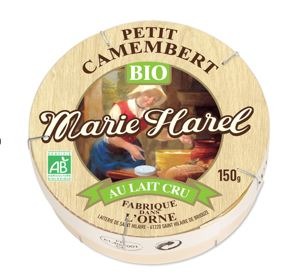
France – Small organic raw milk camembert – STEC E.coli

Gov france

Identification information of the recalled product

  • Product category Feed
  • Product subcategory Milk and dairy products
  • Product brand name Marie-Harel
  • Model names or references Small organic raw milk camembert Marie Harel
  • Identification of products
    GTIN Batch Date
    3267031601003 018551 Date of minimum durability 19/03/2023
  • Products List Traca_lot_018551_Petit_cam_Bio_150_g_Marie_Harel.pdfAttachment
  • Marketing start/end date From 02/10/2023 to 03/19/2023
  • Storage temperature Product to be stored in the refrigerator
  • Health mark FR 61 402 001 EC
  • Geographic area of ​​sale Whole France
  • Distributors Carrefour / Cora / System U / Leclerc / Auchan / Intermarché

Practical information regarding the recall

  • Reason for recall Strong suspicion of STEC
  • Risks incurred by the consumer Toxigenic Shiga Escherichia coli (STEC)

Luxembourg – SMALL CAMEMBERT WITH RAW MILK 150G FROM THE GILLOT BRAND – STEC E.coli

SAP

Gillot SAS is recalling the following product in Luxembourg:

Nom Small Camembert with raw milk
Marque GILLOT
Unit  150g
Code barre 3 26703 1 60101 0
Date of minimum durability (MDD) 23/03/2023
Lot 018551

Danger: Possible presence of E. coli STEC – Escherichia coli likely to produce toxins (shigatoxins)

E. coli STEC can cause food poisoning which can occur within a week after consumption and result in gastrointestinal disorders often accompanied by cramps. These symptoms may be aggravated in young children, immunocompromised subjects and the elderly. People who have consumed these products and have these symptoms are invited to consult a doctor and report this consumption to him.

Click to access prp10-cen-rf21-communiqu-de-presse-recall-gillot-petit-camembert-bio-fr.pdf

Confirmed sale in Luxembourg by: Delhaize

A sale by other operators cannot be excluded.

Source of information: Gillot SAS recall notification

Research – Detection of Escherichia coli O157:H7 in imported meat products from Saudi Arabian ports in 2017

Nature.com

Escherichia coli O157:H7 is a foodborne pathogen, which causes various health conditions in humans, including fatigue, nausea, bloody diarrhoea and in some cases, even death. In 2017, 15.71% of the total imported food products in Saudi Arabia (SA) were meat-based. India and Brazil are two of the top five countries from where SA imports meat. According to the Saudi Food and Drug Authority, in 2017, at least 562, 280, and 50 samples of imported beef, chicken and sheep meat, respectively, were tested for the presence of E. coli O157:H7. Amongst these, E. coli O157:H7 was detected in respectively 6.80% and 2.20% of the tested beef meat samples imported from India and Brazil as well as in respectively 6.96% and 3.57% of the tested chicken samples imported from Brazil and Ukraine. Moreover, the pathogen was detected in 2.13% of the tested sheep meat samples imported from India. The present report provides evidence that imported meat can serve as the carrier of E. coli O157:H7, which may lead to epidemics within the Kingdom of Saudi Arabia.

RASFF Alert- STEC E.coli – Beef Tartar

RASFF

Verotoxin E.coli in beef tartar from Poland in Lithuania

Italy – Cheese Fontina DOP – STEC E.coli

Salute

rand : Fontina DOP 250 G Pascoli Italiani – expiry 10/04/2023

Denomination : Fontina DOP

Reason for reporting : Reminder for microbiological risk

Publication date : 10 March 2023

Documentation

Documentation

Research – Italy sees most HUS cases for decades – STEC E.coli

Food Safety News

Italy has reported the highest annual total of Hemolytic Uremic Syndrome (HUS) cases since records began.

From January to December 2022, 91 cases were recorded. This is the most observed in a single year since the start of surveillance in 1988. HUS is a severe complication associated with E. coli infection that causes kidney failure and can result in lifelong, serious health problems and death.

The number is still lower than in France, which recorded 128 HUS cases in 2021. This was the lowest figure since 2017 and was down from 167 in 2020. Data for 2022 is not yet available but a rise is expected due to an outbreak linked to Nestlé Buitoni Fraîch’Up brand frozen pizzas.