Category Archives: Staphylococcus aureus

USA – Luigi Guffanti Taleggio Cheese Recalled For Possible Staphylococcus aureus

Food Poisoning Bulletin

Staph

One type of Luigi Guffanti Taleggio cheese is being recalled for possible Staphylococcus aureus contamination. The recalled product is Luigi Guffanti Cheese Taleggio Dop a Latte Crudo Incarto Verde. No illnesses have been reported to date in connection with the consumption of this product. The recalling company is Taste for Luxury.

Research – Combined Hurdle Technologies Using UVC Waterproof LED for Inactivating Foodborne Pathogens on Fresh-Cut Fruits

MDPI

This study investigated the combined bactericidal efficacy of slightly acidic electrolyzed water (SAEW), fumaric acid (FA), and ultravioletC waterproof light-emitting diodes (UVC W-LED) for the control of Staphylococcus aureus and Listeria monocytogenes in fresh-cut fruits. Cherry tomato, grape, apple, and pineapple were inoculated with S. aureus and L. monocytogenes and then washed with 30 ppm SAEW containing 0.5% FA in a container equipped with two UVC W-LEDs. Behaviors of S. aureus and L. monocytogenes and quality properties of fresh-cut fruits were monitored after storage at 10 °C and 15 °C for 7 days. The most effective reductions of S. aureus (1.65 log CFU/g) and L. monocytogenes (2.63 log CFU/g) were observed in the group with the combined treatment of SAEW + FA and UVC W-LED. At 10 °C and 15 °C, populations of both pathogens in the combined treatment group were lower than those in a control. Combined treatment showed no negative effect on moisture retention in the fruit. Moreover, visual changes were less significant than in the control. These results demonstrate that the combined treatment can improve the microbial safety and the quality of fruits. If it is properly used in the sanitizing step of the fresh produce industry, a positive effect can be expected.

Vietnam Research – Microbiological safety of ready-to-eat foods in hospital and university canteens in Hanoi, Vietnam

Journal of Food Protection

The aim of this study is to analyze and document the microbiological safety and quality of ready-to-eat foods in hospital and university canteens in Hanoi, Vietnam. A total of 420 ready-to-eat food products from 21 canteens were sampled in July 2018 and May 2019. The ratio of samples exceeding the unsatisfactory level for Total Plate Count (TPC) was 31%. Escherichia coli, Listeria and Staphylococcus aureus were detected in 35 (8.3%), 99 (24%), 46 (11%) samples, with 3%, 10% and 0% exceeding the unsatisfactory level, respectively. The Total Plate Count (TPC), Listeria, Bacillus cereus, E. coli, S. aureus ranged from below detection limit to 5×10 9 , 4.6×10 5 , 6.2×10 3 , 3.4×10 3 , 7.6×10 3 CFU/g, respectively. Listeria monocytogenes was isolated from 3/420 samples (0.7%). In addition, there were 21 out of 410 samples (5%) contaminated with Salmonella. Overall, our data indicate frequent problems with the microbiological quality and safety of these canteen foods in Hanoi, and provide a baseline measurement that will allow environmental health officers and food microbiologists to develop targeted intervention strategies to reduce the economical and public health risk associated with these foods.

Ukraine – Dozens sickened after consuming sushi

Outbreak News Today

The Kharkiv Regional Center for Disease Control and Prevention has reported 89 people, including 19 children, have been hospitalized for food poisoning.

Two patients, registered on June 22, are residents of Lugansk, who were on a business trip in the city of Kharkov and ate sushi in the Yakitoria restaurant.

It is noted that according to the results of bacteriological examination of patients, 42 people, incl. two employees of the institution, the culture of the genus Salmonella is highlighted. Pathogenic staphylococcus was found in six workers, pathogenic E. coli was isolated in one, and opportunistic pathogens were isolated in six more.

Research – Lactic Starter Dose Shapes S. aureus and STEC O26:H11 Growth, and Bacterial Community Patterns in Raw Milk Uncooked Pressed Cheeses

MDPI

Adding massive amounts of lactic starters to raw milk to manage the sanitary risk in the cheese-making process could be detrimental to microbial diversity. Adjusting the amount of the lactic starter used could be a key to manage these adverse impacts. In uncooked pressed cheeses, we investigated the impacts of varying the doses of a lactic starter (the recommended one, 1×, a 0.1× lower and a 2× higher) on acidification, growth of Staphylococcus aureus SA15 and Shiga-toxin-producing Escherichia coli (STEC) O26:H11 F43368, as well as on the bacterial community patterns. We observed a delayed acidification and an increase in the levels of pathogens with the 0.1× dose. This dose was associated with increased richness and evenness of cheese bacterial community and higher relative abundance of potential opportunistic bacteria or desirable species involved in cheese production. No effect of the increased lactic starter dose was observed. Given that sanitary criteria were paramount to our study, the increase in the pathogen levels observed at the 0.1× dose justified proscribing such a reduction in the tested cheese-making process. Despite this, the effects of adjusting the lactic starter dose on the balance of microbial populations of potential interest for cheese production deserve an in-depth evaluation. View Full-Text

Research – Staphylococcal Infections: Host and Pathogenic Factors

MDPI

Staph

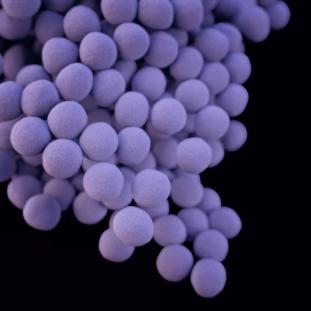
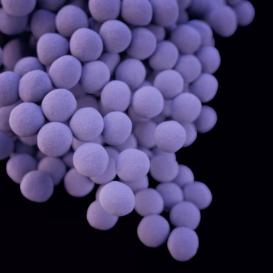
In 1880, the Scottish surgeon Sir Alexander Ogston first described staphylococci in pus from a surgical abscess in a knee joint: “The masses looked like bunches of grapes” [1]. In 1884, the German physician Friedrich Julius Rosenbach differentiated the staphylococci by the color of their colonies: S. aureus (from the Latin aurum, gold) [2]. For another 20 years, very little was known on the pathophysiology of this bug. Based on a PubMed search record, the first Staphylococcal paper was published in 1900 on a case report [3]. More and more scientists gradually engaged to study diseases caused by this bacterium.
There were some 10 publications recorded during the period 1900–1910, which translate in average to one publication/year. Research on this bug exploded in the 20th century, which is reflected in a recent PubMed search. It yields 47,974 publications records when searched using the keyword “Staphylococcus” in the title. During the period 2010–2020, the average publication was 2000 articles/year. This record makes Staphylococcus the single most researched bacterium based on this publication track record.
Over time, numerous Staphylococcus species were discovered, consisting of more than 45 staphylococcal species and 24 subspecies classified using molecular methods [4]. These various species of Staphylococcus are clinically important as 30% of the healthy human population is colonized with various Staphylococcus spp. Some strains are opportunistic pathogens and can cause a minor infection to life-threatening diseases. Pathogenicity of these different strains depends on several virulence factors: Level of protein expression as well as the robustness of the regulatory networks expressing these virulence factors.
These factors consist of numerous toxins, enterotoxins (some of which act as superantigens), enzymes, and proteins with other functions (cytoplasmic, extracellular, and surface) that are tightly regulated by two-components (TC), transcriptional and translational regulators, as well as quorum-sensing (QS) regulatory networks [5]. This Special Issue is dedicated to the studies and recent advancements in our understanding of staphylococcal virulence mechanisms that enable Staphylococcus spp. either to successfully establish themselves as a colonizer or to overcome the host’s defense system to cause infection.

Research – Identification of Microorganisms from Several Surfaces by MALDI-TOF MS: P. aeruginosa Is Leading in Biofilm Formation

MDPI

New ecological trends and changes in consumer behavior are known to favor biofilm formation in household appliances, increasing the need for new antimicrobial materials and surfaces. Their development requires laboratory-cultivated biofilms, or biofilm model systems (BMS), which allow for accelerated growth and offer better understanding of the underlying formation mechanisms. Here, we identified bacterial strains in wildtype biofilms from a variety of materials from domestic appliances using matrix-assisted laser desorption/ionization-time of flight mass spectroscopy (MALDI-TOF-MS). Staphylococci and pseudomonads were identified by MALDI-TOF-MS as the main genera in the habitats and were analyzed for biofilm formation using various in vitro methods. Standard quantitative biofilm assays were combined with scanning electron microscopy (SEM) to characterize biofilm formation. While Pseudomonas putida, a published lead germ, was not identified in any of the collected samples, Pseudomonas aeruginosa was found to be the most dominant biofilm producer. Water-born Pseudomonads were dominantly found in compartments with water contact only, such as in detergent compartment and detergent enemata. Furthermore, materials in contact with the washing load are predominantly colonized with bacteria from the human. View Full-Text

Research – Antibacterial activity of sweet orange (Citrus sinensis) juice extract on selected bacteria

AJMR

Plants have potentials to be developed into many new drugs yet to be discovered because of the countless chemical compositions in them. The investigation is targeted at the antibacterial activity of sweet orange juice extract on some bacteria using ethanol and ethyl ethanoate solvent to extract juice. Ditch method was used for the sensitivity testing against Escherichia coliStaphylococcus aureusKlebsiella pneumoniae and Neisseria gonorrheae with a dilution factor of 10-10 for inoculation from pure culture of each selected bacteria. Disc method was used to test streptomycin, ciprofloxacin, gentamycin and penicillin G against test organisms as positive controls. There was no significant difference in the effect of different concentrations of the same extract on test organisms. However, there was a significant difference in the ethyl ethanoate and alcohol extracts. The ethyl ethanoate extract showed minimum inhibitory concentration at 300 mg/ml on E. coli (31.5 ± 0.5 mm); Ngonorrheae (21 ± 0.0 mm) at 200 mg/ml; Saureus (22 ± 0.0 mm) and Kpneumoniae (37 ± 3.0 mm) at 100 mg/ml; while ethanol extract at 100 mg/ml on E. coli (23.5 ± 1.5 mm) and Kpneumoniae (25 ± 5.0 mm);  N. gonorrheae (13.5 ± 1.0 mm) and S. aureus (12.5 ± 2.5 mm) at 300 mg/ml and 200 mg/ml respectively. The zones of inhibition exhibited by streptomycin ranges from Ngonorrheae (14-24 mm) E. coli; ciprofloxacin varies from 15- 21 mm on K. pneumoniae and S. aureus respectively. Gentamycin ranges from 14-20 mm on N. gonorrheae and S. aureus respectively; and penicillin G on N. gonorrheae (14 mm) and Saureus (28 mm). It can be concluded that sweet orange juice of ethyl ethanoate extract was more effective than the ethanol extract and the positive control.

Research – Staphylococcal (Staph) Food Poisoning

CDC

MRSA Staphylococcus KSW Food World

Staph food poisoning is a gastrointestinal illness caused by eating foods contaminated with toxins produced by the bacterium Staphylococcus aureus (Staph) bacteria.

About 25% of people and animals have Staph on their skin and in their nose. It usually does not cause illness in healthy people, but Staph has the ability to make toxins that can cause food poisoning.

People who carry Staph can contaminate food if they don’t wash their hands before touching it. If food is contaminated with Staph, the bacteria can multiply in the food and produce toxins that can make people ill. Staph bacteria are killed by cooking, but the toxins are not destroyed and will still be able to cause illness.

Foods that are not cooked after handling, such as sliced meats, puddings, pastries, and sandwiches, are especially risky if contaminated with Staph.

Food contaminated with Staph toxin may not smell bad or look spoiled.

What are the symptoms of Staph food poisoning?

  • Staph food poisoning is characterized by a sudden start of nausea, vomiting, and stomach cramps. Most people also have diarrhea.
  • Symptoms usually develop within 30 minutes to 8 hours after eating or drinking an item containing Staph toxin, and last no longer than 1 day. Severe illness is rare.
  • The illness cannot be passed from one person to another.

How do I know if I have Staph food poisoning?

You can suspect Staph food poisoning based on the type of symptoms and their fast resolution. Although laboratory tests can detect toxin-producing Staph in stool, vomit, and foods, these tests are usually not ordered except during an outbreak. If you think you might have Staph food poisoning and are experiencing severe symptoms, contact your health care provider.

USA – Maryland recalls cheeses due to Staphylococcus aureus (Staph) and E.coli

Food Poison Journal

The Maryland Department of Health (MDH) is warning consumers not to eat the following cheeses under the brand names La Cieba, La Colonia, and Selectos Latinos until further notice, as they may be contaminated with Staphylococcus aureus (Staph) and E.coli bacteria:

  • Cuajada el Terron
  • Queso Morolique con Chile
  • Queso Con Loroco
  • Queso Con Chile
  • Queso Frijolero
  • Queso Duro Blando Salvadoreno
  • Queso Salvadoreno
  • Queso Seco Salvadoreno

Marylanders are advised not to consume these products. If you have purchased one or more of these products, throw them away. If you consumed one or more of these products, watch for symptoms such as stomach cramps, diarrhea, vomiting, nausea, or fever. If symptoms occur, contact your healthcare provider.