
Category Archives: Salmonella

Canada – Updated Food Recall Warning – Soom brand tahini products recalled due to Salmonella

CFIA

Salmonella kswfoodworld

Recall details

Ottawa, November 29, 2018 – The food recall warning issued on November 28, 2018 has been updated to include additional product information. This additional information was identified during the Canadian Food Inspection Agency’s (CFIA) food safety investigation.

The Chef’s Warehouse is recalling Soom brand tahini products from the marketplace due to possible Salmonella contamination. Consumers should not consume the recalled products described below.

Recalled products

Brand Name Common Name Size Code(s) on Product UPC
Soom Chocolate Sweet Tahini Halva Spread 340 g 071318CH 7 91154 34932 8
Soom Sesame Premium Tahini 454 g 18-109, 18-121, and 18-123 7 18088 34741 1
Soom Sesame Premium Tahini 39.6 lb 18-109, 18-121, and 18-123 7 18088 34732 9

Research – Disposition of Salmonella and Escherichia coli O157:H7 following Spraying of Contaminated Water on Cucumber Fruit and Flowers in the Field

Journal of Food Protection cucumber

Cucumbers are frequently consumed raw and have been implicated in several recent foodborne outbreaks. Because this item may become contaminated at the farm, it is vital to explore the fate of attenuated Salmonella Typhimurium or Escherichia coli O157:H7 sprayed onto foliage, flowers, and fruit in fields and determine whether pre- or postcontamination spray interventions could minimize contamination. After spraying cucumber plants with contaminated irrigation water (3.8 log CFU/mL of Salmonella Typhimurium and E. coli O157:H7), 60 to 78% of cucumber fruit were not contaminated because the plant’s canopy likely prevented many of the underlying fruit from being exposed to the water. Subsequent exposure of contaminated cucumber plants to a simulated shower event did not appear to dislodge pathogens from contaminated foliage onto the fruit, nor did it appear to consistently wash either pathogen from the fruit. Spraying flowers and attached ovaries directly with a pathogen inoculum (4.6 log CFU/mL) initially led to 100% and 65 to 90% contamination, respectively. Within 3 days, 30 to 40% of the flowers were still contaminated; however, contamination of ovaries was minimal (≤10%), suggesting it was unlikely that internalization occurred through the flower to the ovary with these pathogen strains. In another study, both pathogens were found on a withered flower but not on the fruit to which the flower was attached, suggesting that this contaminated flower could serve as a source of cross-contamination in a storage bin if harvested with the fruit. Because pre- and postcontamination acetic acid–based spray treatments failed to reduce pathogen prevalence, the probability that fruit initially contaminated at 1.3 to 2.8 log CFU of Salmonella Typhimurium or E. coli O157:H7 per cucumber would be positive by enrichment culture decreased by a factor of 1.6 and 1.9 for Salmonella Typhimurium and E. coli O157:H7, respectively, for every day the fruit was held in the field (P ≤ 0.0001). Hence, to reduce the prevalence of Salmonella Typhimurium on cucumbers below 5%, more than 1 week would be required.

Research – Genetic Diversity of Salmonella and Listeria Isolates from Food Facilities

Journal of Food Protection

Food production–related facilities (farms, packing houses, etc.) are monitored for foodborne pathogens, and data from these facilities can provide a rich source of information about the population structure and genetic diversity of Salmonella and Listeria. This information is of both academic interest for understanding the evolutionary forces acting on these organisms and of practical interest to those responsible for controlling pathogens in facilities and to those analyzing data from facilities in the context of public health decision making. We have collected information about all positive isolates from facility inspections performed by the U.S. Food and Drug Administration for which whole genome sequencing data are available. The within- and between-facilities observed genetic diversity of isolates was computed and related to the common origin of isolates (as the common collected facility). This relationship provides quantification for assessing the relationship between isolates based on their genetic similarity quantified by single-nucleotide polymorphisms (SNPs). Our results show that if the genetic distance (D) between two isolates is low, then more likely than not they are from the same facility or have some overlap in their supply chain. For example, if the genetic distance is no more than 20 SNPs, the probability (P) that two isolates come from the same facility = 0.66 for Salmonella and 0.70 for Listeria. However, if two isolates come from different facilities, their genetic distance is likely large (for Salmonella, P(D > 20 SNPs) = 0.99982; for Listeria, P(D > 20 SNPs) = 0.99949); even if two isolates come from the same facility, their genetic distance is also very likely large (for Salmonella, P(D > 20 SNPs) = 0.794; for Listeria, P(D > 20 SNPs) = 0.692). These results provide insight into what SNP thresholds might be appropriate when determining whether two isolates are from the same facility and thus would be of interest to those investigating foodborne outbreaks and conducting traceback investigations.

Research – Characterization of Salmonella isolated from organically reared poultry located in the same longitude with three distinct seasonal characteristics

Wiley Online

Abstract

This study is designed to determine Salmonella prevalence in organic poultry farms and slaughterhouse in three different regions with distinct seasonal characteristics. Salmonella strains were isolated from organic reared poultry farm environment (water, feed, and feces) and poultry meat samples (neck skin and breast meat). Antibiotic resistance and 16S rRNA profiles were demonstrated with alignment scores. Salmonella spp. prevalences according to regions were, 51 of 200 (25.50%) samples taken from Region A, 77 of 200 (38.50%) samples taken from Region B, 105 of 200 (52.50%) samples taken from Region C. Serotyping of the strains revealed that S. Typhimurium and S. Enteritidis are the most dormant strains among all strains. Antibiotic susceptibility of the strains revealed that major resistance against ampicillin. This study is held for an awareness rising about the possible impact of seasonality related with food borne pathogens prevalence.

Practical applications

Poultry meat and meat products account for approximately one‐third of all Salmonella infections in humans. The relation between environmental temperature and foodborne pathogens is a complex matter, which has not been investigated widely and is hard to predict. The data obtained in this study indicate a significant high prevalence in warm region, which may be evaluated as a possible key for environmental temperature effect on foodborne pathogens distribution in organically reared poultry. In addition, this study provides important information to show the sources of contamination steps ranging from farm to fork in organically reared poultry

RASFF Alerts – Animal Feed – Salmonella – Pet Food – Dog Chew – Chicken Legs – Chicken Feet

RASFF-Logo

RASFF-Salmonella enterica ser. Derby (presence /25g) and Salmonella enterica ser. Infantis (presence /25g) and high count of Enterobacteriaceae (54000, 5200, 69000, 950 CFU/g) in pet food from Poland in Austria

RASFF-Salmonella enterica ser. Indiana (present /25g) and too high count of Enterobacteriaceae (up to 72000 CFU/g) in dog chew from Poland in Austria

RASFF-Salmonella enterica ser. Gold Coast (presence /25g) and too high count of Enterobacteriaceae (670 CFU/g) in chicken legs from Poland, via Denmark in Austria

RASFF-Salmonella enterica ser. Amsterdam (presence /25g) and Salmonella enterica ser. Cerro (presence /25g) in raw material for pet food from the Czech Republic in Italy

RASFF-Salmonella enterica ser. Münster (present /25g) in chicken feet from Germany in Austria

Canada – Food Recall Warning – Achva and S&F brand tahini products recalled due to Salmonella

CFIA kswfoodworld Salmonella

Recall details

Ottawa, November 28, 2018 – Industry is recalling Achva and S&F brand tahini products from the marketplace due to possible Salmonella contamination. Consumers should not consume the recalled products described below.

The following products have been sold in Alberta, British Columbia, Manitoba, New Brunswick, Nova Scotia, Ontario and Quebec and maybe have been distributed in other provinces.

Recalled products

Brand Name Common Name Size Code(s) on Product UPC
Achva Whole Sesame Tahini 500 g LOT 18-099 7 290000 572796
Achva Organic Tahini 500 g LOT 18-099 7 290000 572086
Achva Tahini 500 g LOT 18-106 8 14968 02002 0
Achva Whole Tahini 500 g LOT 18-106 8 14968 02003 7
Achva Seasoned Tahini 500 g LOT 18-128 7 290000 572123
Achva Tahini – Crushed Sesame Seeds 500 g LOT 18-130 7 290000 572109
Achva Tahini 18 kg LOT 18-106 7 290000 572116
S&F Pure Tahini 18 kg Lot. 18-099 7 290000 572116

USA -FDA Investigating a Multistate Outbreak of Salmonella Concord Linked to Tahini Produced by Achdut Ltd

FDA

Salmonella


November 27, 2018

United States Food and Drug Administration, along with the Centers for Disease Control and Prevention (CDC), and state and local partners, is investigating a multistate outbreak of Salmonella Concord illnesses linked to tahini imported from an Israeli manufacturer, Achdut Ltd., located in Ari’el, Israel.

Achdut Ltd. has voluntarily recalled all brands of tahini products manufactured from April 7, 2018 to May 21, 2018 with expiration dates of April 7, 2020 to May 21, 2020.

Recommendations

The FDA is advising consumers not to eat recalled Achva, Achdut, Soom, S&F, Pepperwood, and Baron’s brand tahini with expiration dates ranging from April 7, 2020 to May 21, 2020. The product lot codes range from 18-097 to 18-141. Consumers should discard the product or return the product to the store for a refund.

Some brands of tahini manufactured by Achdut Ltd. may lack specific dates or may have labels that are written in Hebrew. Consumers who have purchased a tahini product and are uncertain of where the product was manufactured or cannot identify the brand by lot codes or expiration dates should use caution and discard the product or return the food to the store for a refund. More product information and pictures of the recalled product labels can be found in the firm’s recall announcement.

Retailers and restaurants should not use any of the recalled tahini manufactured by Achdut Ltd. at their establishments. Retailers and restaurants should throw the product out.

Firms that may have used the recalled tahini (either repacked or used as an ingredient in a food without a kill step) should consider recalling their products. Recalls should be reported to your local FDA office. A list of recall coordinators can be found here.

Consumers who have symptoms of salmonellosis should contact their health care provider to report their symptoms and receive care.

Background

CDC identified five ill people in the U.S. infected with Salmonella Concord that had the same genetic fingerprint as the Salmonella Concord found in tahini sampled at the point of import into the United States. Of the five U.S. cases interviewed, all five reported consuming hummus made with tahini; three people reported eating tahini or hummus made with tahini in a restaurant in the U.S., while the other two people reported consuming tahini or hummus made with tahini during international travel.

A sample of imported tahini collected by FDA at the point of import tested positive for Salmonella Concord. The tahini was Baron’s brand manufactured by Achdut Ltd. This manufacturer was placed on an FDA Import Alert, detaining additional product from the firm at the U.S. border until evidence is presented demonstrating that Salmonella is not present in the product. Whole genome sequencing analysis has indicated the positive sample of imported Baron’s brand tahini is highly related to clinical isolates from ill people in the U.S.

Vietnam – Food safety still a problem in school canteens

Vietnamnet

VietNamNet Bridge – Several food poisoning cases reported at public canteens, including a number in schools, across the country in recent months have raised concerns among parents and the public about food safety.

In the latest incident, hundreds of students at Xuan Non Kindergarten in Dong Anh District suffered food poisoning after attending a party at their school on November 14.

Days later, nearly 200 students were taken to local medical facilities for emergency treatment after experiencing stomach aches, headaches, vomiting and high fevers.

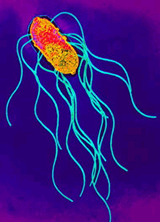
One of 13 food samples tested positive for Salmonella type 2 – a bacteria that causes intestinal infection, fever, abdominal pain and diarrhoea.

In October, more than 300 students from Dinh Tien Hoang Primary School in Ninh Binh Province also suffered food poisoning.

Health authorities confirmed that bacteria was to blame for the mass poisoning that affected hundreds of children at the schools after they ate chicken floss.

The samples taken from the food and victims’ vomit tested positive for microbes and bacteria, according to Dr Cao Van Trung, deputy director of the Food Poisoning Supervision Office at the Food Safety Department.

Results of the investigation showed the samples contained Staphylococcus aureus, also known as golden staph, or a type of bacteria frequently found in the nose, along the respiratory tract, and on the skin in humans. It is a common cause of skin infections including abscesses, respiratory infections, and food poisoning.

South Africa – Salmonella outbreak reported in KwaZulu-Natal

Outbreak News Today

South African health officials reported recently an increase in Salmonella cases in KwaZulu-Natal Province over the past two months and say Salmonella was also the most likely cause of two recent foodborne disease outbreaks reported from eThekwini Municipality.

Two weeks ago, local media reported at least 20 people have been hospitalized in Durban.

The National Institute for Communicable Diseases (NICD) is assisting the district and provincial health department outbreak response teams’ ongoing investigations. Teams are gathering additional information about the outbreaks and other reported cases, and also collecting food and environmental samples to investigate the source/s of the outbreaks.

Sweden – Salmonella outbreak in Sweden with 33 ill

Food Safety News

kswfoodworld Salmonella

Swedish officials are investigating a national outbreak of Salmonella that has sickened 33 people.

Local counties, Livsmedelsverket (National Food Agency) and Folkhälsomyndigheten (Public Health Agency) are working together to investigate the illnesses and identify the source of infection.

The outbreak of Salmonella Enteritidis with multiple locus variable number of tandem repeat analysis (MLVA) type 2-10-7-3-2 was detected by Folkhälsomyndigheten’s monitoring program using Whole Genome Sequencing (WGS) in October.