Category Archives: Salmonella

Research – Lactic acid fermentation of legume seed sprouts as a method of increasing the content of isoflavones and reducing microbial contamination

Science Direct

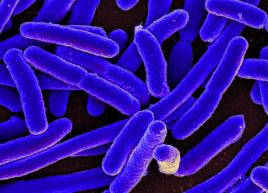
CDC Klebsiella

Image CDC

Legume seeds and sprouts are a rich source of phytoestrogens in the form of isoflavonoids. For the first time, lactic acid fermentation of four types of legume sprouts was used to increase the content of isoflavonoids and microbiological safety. After germination, the highest content of isoflavonoids was observed in the clover and chickpea sprouts, which amounted to 1.1 g/100 g dw., whereas the lactic acid fermentation allowed the increase to as much as 5.5 g/100 g dw. The most beneficial properties were shown by fermented chickpea sprouts germinated in blue light. During fermentation the number of lactic acid bacteria increased by 2 Log10CFU/mL (LU), whereas mold decreased by 1 LU, E.coli and Klebsiellasp. by 2 LU, Salmonella sp. and Shigella sp did not occur after fermentation, similar to Staphylococcus epidermidis, while S. aureus and S. saprophyticus decreased by 3 LU and in some trials were not detected.

UK – Scotland – Annual summary of Salmonella infections, 2018

HPS Scotland 

During 2018, the Scottish Salmonella, Shigella and Clostridium difficile Reference Laboratory (SSSCDRL) reported 751 cases of human non-typhoidal Salmonella to Health Protection Scotland. This represented a 10% decrease on the 840 cases reported in 2017, and the 839 cases reported in 2016.

France – More babies infected with Salmonella in outbreak linked to rice milk formula

Food Safety News Salmonella kswfoodworld

French authorities are investigating more than a dozen cases of Salmonella infection in babies less than 19 months old. The illnesses are linked to a rice milk formula made in Spain.

Of the 14 babies involved in the investigation, the French National Public Health Agency (Santé publique France) reports five have been confirmed and nine are under investigation. Seven of the babies were hospitalized for salmonellosis but have since recovered.

Luxembourg and Belgium have reported one case each linked to the outbreak.

Canada – No Name recalls all raw, frozen chicken products ‘out of an abundance of caution’ – Salmonella

Kelownanow News

There have been several recalls around frozen chicken products due to an outbreak of salmonella contamination in Canada.

Out of an abundance of caution, the brand No Name is voluntarily recalling all breaded frozen chicken products.

he company also announced that they will only be producing cooked chicken products from now on.

“Understanding the potential risk of illness associated with frozen raw chicken products, moving forward No Name® will introduce only 100% fully cooked frozen chicken nuggets, strips and burgers,” said the company.

This voluntary recall includes all lot codes, sold on or before February 8, 2019 from the following products:

  • No Name Chicken Nuggets: 907g, 2.0kg, and 3.0kg boxes
  • No Name Chicken Strips: 907g and 2.0kg boxes
  • No Name Chicken Burgers: 1.0kg, 2.0kg, and 3.0kg boxes
  • $10 Chicken Fries: 1.8kg bags

USA – FDA Investigating a Multistate Outbreak of Salmonella Concord Linked to Tahini Produced by Achdut Ltd.

FDA

Update: February 08, 2019

United States Food and Drug Administration, along with the Centers for Disease Control and Prevention (CDC), and state and local partners, is investigating a multistate outbreak of Salmonella Concord illnesses linked to tahini imported from an Israeli manufacturer, Achdut Ltd., located in Ari’el, Israel.

On November 28, 2018, in response to the on-going investigation, Soom Foods voluntarily recalled the following additional products:

  • 12 oz. Chocolate Sweet Tahini Halva Spread 071318CH. Packed from tahini lot 18-123.

And tahini in the following sizes and types:

  • 40 lb. Organic Tahini.
  • 40 lb. Premium Tahini.
  • 16 oz. Premium Tahini.
  • 16 oz. Organic Tahini.
  • 11 oz. Premium Tahini.

The tahini product lot codes range from 18-097 through 18-141.

Some of the above listed products were included in the original voluntary recall by Achdut Ltd. on November 27, 2018. The FDA is posting this information to ensure the widest possible dissemination to the public.

Recommendations

The FDA is advising consumers not to eat recalled Achva, Achdut, Soom, S&F, and Pepperwood brand tahini and Soom brand Chocolate Sweet Tahini Halva Spread (lot code 071318CH) with expiration dates ranging from April 7, 2020 to May 21, 2020 and Baron’s brand tahini with the expiration date of May 5, 2021. The product lot codes range from 18-097 to 18-141. Consumers should discard the product or return the product to the store for a refund.

Some brands of tahini manufactured by Achdut Ltd. may lack specific dates or may have labels that are written in Hebrew. Consumers who have purchased a tahini product and are uncertain of where the product was manufactured or cannot identify the brand by lot codes or expiration dates should discard the product or return the food to the store for a refund. More product information and pictures of the recalled product labels can be found in Achdut ‘s recall announcement. View Soom Foods’ recall announcement.

Retailers and restaurants should not use any of the recalled tahini manufactured by Achdut Ltd. at their establishments. Retailers and restaurants should throw the product out.

Firms that may have used the recalled tahini (either repacked or used as an ingredient in a food without a kill step) should consider recalling their products. Recalls should be reported to your local FDA office. View a list of FDA recall coordinators.

RASFF Alerts – Salmonella – Frozen Turkey Breast – Meat Preparation – Frozen Kebab – Beetroot Sprouts – Chilled Mussels -Frozen Whole Duck – Sesame Seeds – Fuet Sausages

RASFF-Logo

RASFF – Salmonella (present /25g) in frozen turkey breast preparations from Chile in Germany

RASFF – Salmonella (presence /10g) in meat preparation from Poland in Slovenia

RASFF – Salmonella (presence /25g) in beetroot sprouts from Sweden in Sweden

RASFF – Salmonella group D (presence /10g) in frozen kebab from Poland in Slovenia

RASFF – Salmonella (presence /25g) in chilled mussels from Spain, purified in Italy in Italy

RASFF – Salmonella enterica ser. Typhimurium (presence /25g) in frozen whole duck with giblets from Hungary, via Austria in Italy

RASFF – Salmonella (presence /25g) in raw sesame seeds from Nigeria in Poland

RASFF – Salmonella (presence /25g) in frozen chicken half breasts from Brazil in Netherlands

RASFF – Salmonella (present /25g) in fuet sausage from Spain in Spain

RASFF Alerts – Animal Feed – Salmonella – Organic Sunflower Press Cake – Rape Seed Meal -Dog Chews – Raw Petfood – Fish Meal – Sunflower Seed Flakes – Soya Cake

RASFF-Logo

RASFF – Salmonella (present /25g) in organic sunflower seed press cake for feed from Turkey, via the United Kingdom in Germany

RASFF – Salmonella enterica ser. Münster (presence /25g) in rape seed meal from Luxembourg in Sweden

RASFF – Salmonella (presence /25g) and too high count of Enterobacteriaceae (>300, 990, 2200 CFU/g) in dog chews from Turkey in Germany

RASFF – Salmonella (presence /25g) and too high count of Enterobacteriaceae (>49000 CFU/g) in raw petfood from the Netherlands in Belgium

RASFF – Salmonella (presence /25g) in fishmeal from Mauritania in Spain

RASFF – Salmonella enterica ser. Senftenberg (presence /25g) in sunflower seed flakes from the Netherlands in Belgium

RASFF – Salmonella enterica ser. Typhimurium (presence /25g) in organic soya cake from China, via the Netherlands in Sweden


Africa – A look at how Africa is tackling foodborne illness

DW.COM

CDC E.coli

Image CDC


Contaminated food poses a major health and economic threat to sub-Saharan Africa. While efforts are taken to provide safe food for exports, governments are reijigging the system to do more for domestic markets.

Small flies can be seen buzzing around many food markets. But the threat they bring is not visible to the naked eye.

Houseflies, infected with salmonella, E. coli and other bacteria, can contaminate food and cause serious gastro-intestinal illnesses. In Uganda’s popular pork snack bars, for example, one-third of raw pork sampled for a study by the International Livestock Research Institute tested positive for salmonella.

Foodborne diseases, either caused by pests, pesticides or improper storage, pose a major health threat to sub-Saharan Africa, which suffers the highest levels of foodborne illness anywhere in the world.

More than 91 million people in the region fall ill every year from eating contaminated food and 137,000 die as a result, according to the World Health Organization.


Research – Zoonotic Source Attribution of Salmonella enterica Serotype Typhimurium Using Genomic Surveillance Data, United States

CDC

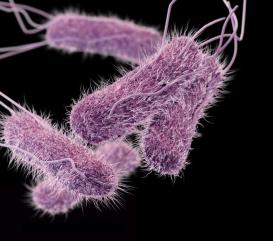
Salmonellaa

Image CDC

Increasingly, routine surveillance and monitoring of foodborne pathogens using whole-genome sequencing is creating opportunities to study foodborne illness epidemiology beyond routine outbreak investigations and case–control studies. Using a global phylogeny of Salmonella entericaserotype Typhimurium, we found that major livestock sources of the pathogen in the United States can be predicted through whole-genome sequencing data. Relatively steady rates of sequence divergence in livestock lineages enabled the inference of their recent origins. Elevated accumulation of lineage-specific pseudogenes after divergence from generalist populations and possible metabolic acclimation in a representative swine isolate indicates possible emergence of host adaptation. We developed and retrospectively applied a machine learning Random Forest classifier for genomic source prediction of Salmonella Typhimurium that correctly attributed 7 of 8 major zoonotic outbreaks in the United States during 1998–2013. We further identified 50 key genetic features that were sufficient for robust livestock source prediction.

Research – Prevalence of Salmonella Dublin in veal liver in Québec, Canada from a public health perspective

IJID

Purpose: Salmonella enterica is one of the principal causes of foodborne zoonotic enteritis. Among the different serovars, Dublin (S. Dublin) is of particular importance due to its propensity to progress to an invasive infection in humans and due to the high proportion of multi-drug resistant strains in Canada. Cattle are considered as the main reservoir of S. Dublin. This serotype has emerged since 2011 in the province of Quebec, Canada, in both cattle and human populations. First animal cases have been reported in calf production. White veal are valued for the quality of their meat, offal and liver. The liver is usually consumed mildly cooked and is considered as a probable source of foodborne exposure to S. Dublin in humans. The objective of this study was to estimate the prevalence of S. Dublin positive liver after slaughtering and the seroprevalence against S. Dublin at the calf level.

Methods & Materials: Samples were collected from 75 batches in two slaughterhouses from August 2016 to October 2017. For each batch, a liver sample was collected from 8 calves after evisceration and additionally, a blood sample from 15 calves. Liver samples were screened by PCR and then cultured, and serums were tested using an indirect ELISA (PrioCHECK® Salmonella Ab bovine Dublin).

Results: Salmonella was detected by PCR in 20 of the 547 veal livers. Typical isolates were obtained from 14 livers; all were serotyped and identified as S. Dublin, for a prevalence estimate of 3.1% (IC95%: 0.0%-7.45%). At least one seropositive calf was detected in 128 (24%) of the 75 batches. At the calf level, seroprevalence was estimated at 6.97% (IC95%: 2.83%-11.11%). S. Dublin was detected in liver of 14.0% of seropositive calves compared to 1.2% of seronegative ones (p < 0.001).

Conclusion: Our results show that veal liver can be a source of foodborne exposure to S. Dublin in humans, especially when veal liver is consumed mildly cooked. Surveillance and prevention measures associated with calf production and veal meat, including cooking recommendations could help reduce the burden associated with S. Dublin in humans. Serology could be potentially used in surveillance effort as an indicator to assess the risk of contamination.