Category Archives: Salmonella

Research – Occurrence and Antimicrobial Profile of Bacterial Pathogens in Former Foodstuff Meat Products Used for Pet Diets

Journal of Protection

European legislation stipulates that food no longer intended for human consumption, due to commercial reasons, manufacturing problems, or some defect, can be used in pet feed. However, the presence of former foodstuffs in pet diets could constitute a public health issue because pets can act as reservoirs of antimicrobial resistance genes. In this study, for the first time, biological hazards due to the presence of Escherichia coli and Salmonella in former foodstuff meat products were evaluated. Among the 112 samples of packaged fresh meat (poultry, pork, and beef) collected from cold storage warehouses of a mass market retailer, the overall prevalence of E. coli and Salmonella, the prevalence of strains with multidrug resistance, the phenotypic and genotypic characteristics of strains that produce extended-spectrum β-lactamase, and the presence of biofilm producers were assessed. A high prevalence of E. coli was observed in former foodstuffs of poultry (100%), pork (100%), and beef (93.3%). Salmonella Derby and Salmonella Typhimurium were found in 11.5% of the poultry samples, and Salmonella Typhimurium was found in 13.3% of the pork samples. Salmonella was not recovered from the beef samples. Multidrug resistance was found in E. coli and Salmonella isolates from poultry, pork, and beef. Overall, 18.2% of E. coli isolates and 20% of Salmonella isolates were resistant to various types of antibiotics with various mechanisms of action. Salmonella isolates from pork are an important source of extended-spectrum β-lactamase production. Both E. coli and Salmonella were carriers of antibiotic resistance marker genes (blaTEM, blaSHV, and blaCTX-M) associated with β-lactamase production in poultry and pork. Approximately 30% of the E. coli isolates from the various types of meat were phenotypically biofilm producers, and all carried the fimH gene. These findings indicate that the use of former foodstuff meat products in pet diets can represent a risk for public health.
Research – Growth and Survival of Listeria monocytogenes and Salmonella on Whole and Sliced Cucumbers

Journal of Food Protection cucumber

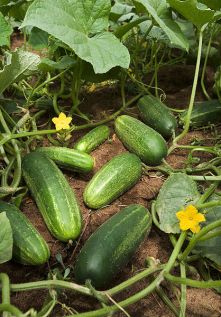
Cucumbers were associated with four multistate outbreaks of Salmonella in the United States between 2013 and 2016. This study evaluated the fate of Listeria monocytogenes and Salmonella on whole and sliced cucumbers at various storage temperatures. Cucumbers were inoculated with five-strain cocktails of L. monocytogenes or Salmonella, air dried, and stored at 23 ± 2, 4 ± 2, and −18 ± 2°C. Whole and sliced cucumber samples were enumerated on nonselective and selective media at 0, 0.21, 1, 2, 3, and 4 days (23 ± 2°C); 0, 1, 2, 3, 7, 14, and 21 days (4 ± 2°C); and 0, 7, 28, 60, 90, and 120 days (−18 ± 2°C). For Salmonella, additional time points were added at 8 and 17 h (23 ± 2°C) and at 17 h (4 ± 2°C). Population levels were calculated for whole (CFU per cucumber) and sliced (CFU per gram) cucumbers. Both pathogens grew on whole and sliced cucumbers held at ambient temperatures. At 23 ± 2°C, L. monocytogenes and Salmonella populations significantly increased on whole (2.3 and 3.4 log CFU per cucumber, respectively) and sliced (1.7 and 3.2 log CFU/g, respectively) cucumbers within 1 day. Salmonella populations significantly increased on whole and sliced cucumbers after only 5 h (2.1 log CFU per cucumber and 1.5 log CFU/g, respectively), whereas L. monocytogenes populations were not significantly different on whole and sliced cucumbers at 5 h. L. monocytogenes and Salmonella populations survived up to 21 days on refrigerated whole and sliced cucumbers. At 4 ± 2°C, L. monocytogenes populations significantly increased on whole (2.8 log CFU per cucumber) and sliced (2.9 log CFU/g) cucumbers, whereas Salmonella populations significantly decreased on whole (0.6 log CFU per cucumber) and sliced (1.3 log CFU/g) cucumbers over 21 days. Both pathogens survived on frozen whole and sliced cucumbers for at least 120 days. The ability of L. monocytogenes and Salmonella to grow on whole and sliced cucumbers in short amounts of time at ambient temperatures, and to survive on whole and sliced cucumbers past the recommended shelf life at refrigeration temperatures, highlights the need to reduce the likelihood of contamination events throughout the cucumber supply chain.

Canada – Raw Chicken Salmonella Outbreak in Canada Grows to 529 Sick

Food Poisoning Bulletin


A raw chicken Salmonella outbreak in Canada has grown to include 529 laboratory-confirmed illnesses. Ninety people have been hospitalized, and three people have died. However, Salmonella was not the case of death for two of those patients, and it was not determined whether this illness contributed to the death of the third person.

USA – Outbreak of Multidrug-Resistant Salmonella Infections Linked to Raw Turkey Products – Update

CDC

Latest Outbreak Information

Illustration of a megaphone.

At A Glance

  • Since the last update on November 8, 2018, 52 ill people from 26 states and the District of Columbia have been added to this investigation.
  • As of December 18, 2018, 216 people infected with the outbreak strain of SalmonellaReading have been reported from 38 states and the District of Columbia.
    • 84 people have been hospitalized, and one death has been reported from California.
  • Epidemiologic and laboratory evidence indicates that raw turkey products from a variety of sources are contaminated with Salmonella Reading and are making people sick.
  • In interviews, ill people report eating different types and brands of turkey products purchased from many different locations. Three ill people lived in households where raw turkey pet food was fed to pets.
  • The outbreak strain has been identified in samples taken from raw turkey pet food, raw turkey products, and live turkeys.
    • On November 15, 2018, Jennie-O Turkey Store Sales in Barron, Wisconsin recalled approximately 91,388 pounds of raw ground turkey products.
    • On December 21, 2018, Jennie-O Turkey Store Sales, LLC, in Faribault, Minnesota recalled approximately 164,210 pounds of raw ground turkey products.
    • On January 28, 2019, Woody’s Pet Food Deli in Minnesota recalled raw turkey pet food. The recalled product was sold in 5-pound plastic containers labeled “Woody’s Pet Food Deli Raw Free Range Turkey” and was sold in Minnesota.
    • A single, common supplier of raw turkey products or of live turkeys has not been identified that could account for the whole outbreak.
  • The Public Health Agency of Canada has identified ill people infected with the same DNA fingerprint of Salmonella Reading bacteria in Canada.
  • The outbreak strain of Salmonella Reading is present in live turkeys and in many types of raw turkey products, indicating it might be widespread in the turkey industry. CDC and USDA-FSIS have shared this information with representatives from the turkey industry and asked about steps that they may be taking to reduce Salmonella contamination.

USA – FDA Investigated Recalled Duncan Hines Cake Mixes Potentially Linked to Salmonella Agbeni Illnesses

FDA

Update: January 31, 2019

On January 14, 2019, CDC reported that this outbreak appears to be over. The FDA, CDC, public health and regulatory officials in several states worked together to investigate this multistate outbreak of SalmonellaAgbeni infections. In early November, FDA investigated the facility that produced the recalled cake mix; however, product and environmental samples collected at that time were negative for Salmonella. There was not enough epidemiologic and traceback information available to determine if the ill people in this outbreak had eaten the contaminated cake mix produced by Duncan Hines.

Recommendation:

The FDA recommends consumers to not bake with or eat the recalled product. Additionally, consumers should not eat uncooked batter, flour, or cake mix powder.

Case Counts

Total Illnesses: 7
Hospitalizations: 0
Deaths: 0
Last illness onset: October 5, 2018
States with Cases: FL (1), MD (2), MO (1), OH (2), WI (1)

Conagra Brands reports that the products covered by this recall were distributed for retail sale in the U.S. and limited international exports; the specific product information is listed below. These products may be available in grocery stores around the U.S., and consumers should check their labels carefully.

RASFF Alerts – Salmonella – Fuet Sausage – Paprika – Sesame Seeds – Turkey Breast with Pepper – White Pepper – Chilled Minced Beef

RASFF-Logo

RASFF – Salmonella (present /25g) in fuet sausage from Spain in Spain

RASFF – Salmonella (presence /25g) in paprika from China, via Hong Kong in the UK

RASFF – Salmonella enterica ser. Havana (presence /25g) in hulled sesame seeds from Tanzania, via Turkey in Greece

RASFF – Salmonella enterica ser. Ouakam (presence (1 out of 5 samples)) in hulled sesame seeds from India in Greece

RASFF – Salmonella (present /25g) in hulled sesame seeds from India in the Netherlands

RASFF – Salmonella enterica ser. Agona (presence /25g) in frozen turkey breasts with pepper from Chile in Germany

RASFF – Salmonella (present) in white pepper from China in the Netherlands

RASFF – Salmonella enterica ser. Typhimurium monophasic (1 ,4, [5], 12:i:-) (present /25g) and high count of Escherichia coli (550 CFU/g) in chilled minced beef produced in the Netherlands, with raw material from Germany, packaged in Denmark in Finland

RASFF Alerts – Animal Feed – Salmonella – Fish Meal – Rapeseed Cake

RASFF-Logo

RASFF – Salmonella (presence /25g) in fish meal from Morocco in Spain

RASFF – Salmonella (presence /25g) in rapeseed cake from Germany in Germany

Australia – Salmonella warning – check your eggs

Food Authority NSW Salmonella Eggs Food Poisoning Food Safety

The NSW Food Authority is urging people to check their kitchens for any eggs that are marked with the identifying stamp BEC or BEC115 because they may be contaminated with a particular type of Salmonella.

The stamp BEC or BEC115 will be found on the shell of individual eggs, not on the carton.

NSW Food Authority CEO Dr Lisa Szabo said thanks to mandatory egg stamping required in NSW, the Food Authority has been able to isolate the particular batch of eggs.

“All other eggs are safe to eat, provided people exercise the usual caution required for a special care food like eggs such as washing your hands and avoiding raw egg products particularly if you are a vulnerable population such as the immune compromised, under two or over 70 years of age or pregnant,” Dr Szabo said.

“It is important to know that not all eggs are impacted but if you have any stamped with BEC or BEC115 we recommend as a precaution that you discard them.

“We typically see a rise in Salmonella during the warmer summer months, so this is an opportune time to remind people to practice good hygiene generally when preparing food and to always keep their hands, surfaces and utensils clean and dry before and after handling eggs.”

Salmonellosis symptoms include fever, headache, diarrhoea, abdominal pain, nausea and vomiting. Symptoms usually start around six to 72 hours after the contaminated food is eaten and usually last for four to seven days but can continue for much longer.

If you have immediate health concerns contact your medical professional in the first instance.

NSW Health data indicates that during January 2019, 412 cases of Salmonella infection have been notified, which is similar to the number notified during January in recent years. Children under 5 years of age account for most cases notified this month, although all age groups are affected.

The NSW Food Authority placed a Prohibition Order on the business that produced the eggs earlier in January preventing them from selling eggs while the possible Salmonella contamination was investigated.

“While it is likely that most affected eggs are no longer in the supply chain, it is possible that people may have purchased them earlier and still have some at home in the fridge or pantry,” Dr Szabo said.

“We’d just like people to check and if they do have any eggs stamped BEC or BEC115 to throw them out to avoid any risk of food poisoning.”

Further information about how to reduce your food safety risk when consuming eggs can be found at www.foodauthority.nsw.gov.au/eggs

Research – Understanding the Relation between Establishment Food Safety Management and Salmonella Risk Factor Violations Cited during Routine Inspections

Journal of Food Protection

Restaurants are a frequent setting for outbreaks and sporadic cases of Salmonella. The relationship among food safety management characteristics, compliance with procedures to reduce Salmonella-associated risk factors (as found during routine inspections), and the likelihood that an establishment has experienced a sporadic Salmonella case was assessed. Individual risk factor violations associated with Salmonella transmission pathways were identified by a literature review. Data from 546 routine inspection reports collected from July 2016 to June 2017, including 25 from restaurants that had experienced a sporadic case of Salmonella, were evaluated. In restaurants with certified food managers, there were fewer observations of Salmonella risk factor reduction procedures that were not in compliance. For establishments that had experienced sporadic cases of Salmonella, the person in charge at the time of an inspection was less likely to have been the establishment’s official certified food manager of record (rate ratio = 0.4, 95% confidence interval = 0.2 to 0.8; P = 0.01), and there was increased likelihood of being found out of compliance for prevention of contamination by hands (rate ratio = 3.7, 95% confidence interval = 1.4 to 8.1; P = 0.001). The results of this study warrant future research on the dynamics of food safety management systems, the effect they have on risk factor violations cited on routine inspection results, and the risk for transmission of Salmonella. Analyzing routine inspection data as hazard surveillance may be useful to identify food establishments at a greater risk for transmitting Salmonella infections.

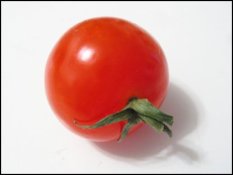
Research – Predicting the Growth of Listeria monocytogenes and Salmonella Typhimurium in Diced Celery, Onions, and Tomatoes during Simulated Commercial Transport, Retail Storage, and Display

Journal of Food Protection cherry-tomato-pristine-variety

Temperature is arguably the most important factor affecting microbial proliferation in fresh-cut produce. In this study, growth of Listeria monocytogenes in diced onions and celery and Salmonella Typhimurium in diced tomatoes was determined in modified atmosphere packages and snap-fit containers using three fluctuating temperature scenarios for transport, retail storage, and display. As expected, L. monocytogenes growth in diced onions and celery varied depending on the extent of temperature abuse, with exposure to high and intermediate temperature-abuse scenarios generally being growth supportive. A Baranyi primary model with a square-root secondary model for maximum growth rate, and a linear model for maximum population density, were used to estimate Listeria growth under fluctuating temperature. Accuracy and acceptability of the model prediction were evaluated in terms of root mean square error (RMSE) and acceptable prediction zone (APZ), respectively. Overall, growth predictions for L. monocytogenes were more accurate for celery (RMSE, 0.28 to 0.47) than onions (RMSE, 0.42 to 1.53) under the fluctuating temperature scenarios tested. However, both predictions yielded APZ values that ranged from 82 to 100% for celery and 36 to 78% for onions. In contrast, Salmonella Typhimurium populations increased more than 1 log CFU/g in diced tomatoes under the three fluctuating temperature scenarios studied. Overall, these diced products packaged under a high-oxygen atmosphere showed decreased pathogen growth compared with product stored in a passive modified atmosphere. Findings from this study will be particularly useful in assessing the risk associated with consumption of diced celery, tomatoes, and onions and in designing effective packaging strategies to minimize pathogen growth in fresh-cut produce.