Category Archives: Salmonella

Singapore – 3 children hospitalised after outbreak of Salmonella and stomach flu at Newton pre-school

Straits Times

SINGAPORE – Three children from a pre-school in Newton were hospitalised following an outbreak of salmonella and stomach flu among its charges aged between 18 months and six years old.

One of them was discharged on Tuesday (Dec 8), said the Early Childhood Development Agency (ECDA) in a statement later in the day.

Its spokesman also said it is working with the Health Ministry on the case at Kiddiwinkie Schoolhouse @ Newton.

France – Product recall: Roquette and Mesclun salads from Auchan brand – Salmonella

Oulah

Product recall: Roquette and Mesclun salads from Auchan brand

ENCOUNTERED PROBLEM

Presence of Salmonella

PROPOSED SOLUTION

Those in possession of this product are asked not to consume it and to return it to the point of sale where it was purchased for reimbursement.

Foodborne illness caused by salmonella results in gastrointestinal disturbances, diarrhea, vomiting and abdominal pain, often accompanied by fever; these symptoms may be more severe in young children, immunocompromised individuals and the elderly. The incubation period can range from 6 to 72 hours.
People who have consumed the products mentioned below and who have these symptoms are invited to consult their doctor, notifying him of this consumption.

FURTHER INFORMATION

▸ Arugula 125g
• Barcode: 3596710294947
• Lot: 27631324 – 27631325
• BBD: 12/10/2020

▸ Mesclun 125g
• Barcode: 3596710294961
• Lot: 27631328
• BBE: 12/10/2020

▸ Consumer service contact
Bonduelle makes itself available to consumers to answer any questions at the following telephone number: 0 800 081 081 Free service and calls

▸ Source
https://www.auchan.fr/

France – Product recall: Young shoots salad and Bonduelle brand Arugula – Salmonella

Oulah

Product recall: Young shoots salad and Bonduelle brand Arugula

ENCOUNTERED PROBLEM

Presence of Salmonella

PROPOSED SOLUTION

Those in possession of this product are asked not to consume it and to return it to the point of sale where it was purchased for reimbursement.

Foodborne illness caused by salmonella results in gastrointestinal disturbances, diarrhea, vomiting and abdominal pain, often accompanied by fever; these symptoms may be more severe in young children, immunocompromised individuals and the elderly. The incubation period can range from 6 to 72 hours.
People who have consumed the products mentioned below and who have these symptoms are invited to consult their doctor, notifying him of this consumption.

FURTHER INFORMATION

▸ Barcode
3083681013146

▸ Lot
27631359

▸ DLC
12/11/2020

▸ Consumer service contact
Bonduelle makes itself available to consumers to answer any questions at the following telephone number: 0 800 081 081 Free service and calls

▸ Source
https://www.auchan.fr/

Norway – Infectious substances in lettuce and herbs 2017-2019

Mattilsynet

Lettuce and herbs on the Norwegian market mainly have good hygienic quality, the Norwegian Food Safety Authority’s monitoring program shows. However, the samples analysed make up a small proportion of the total amount of lettuce and herbs sold.

What did we investigate? Imported and Norwegian-produced salad and fresh imported herbs

A total of 580 samples – 426 of lettuce and 154 of herbs

Period: 2017 -2019
What were we looking for? E. coli, Salmonella, Cryptosporidium , hepatitis A virus and norovirus.

Not all analyses were performed on all samples.

What did we find? In the 575 samples analysed for E. coli , was detected E. coli in low numbers (<100 cfu / g) in 57 samples and E. coli ≥100 cfu / g in 36 samples. 13 samples contained such high values ​​of E. coli that the products were withdrawn from the market. 10 of these were imported herbs from Southeast Asia.

Salmonella, Cryptosporidium , hepatitis A virus or norovirus were not detected in any of the samples analysed for these infectious agents.

Findings of high values ​​of E. coli in lettuce and herbs indicate a fresh faecal contamination, which may indicate that the product may also be contaminated with pathogenic bacteria, viruses and parasites. Herbs from Southeast Asia are a known risk product for Salmonella . The Norwegian Food Safety Authority recommends that such herbs be heat-treated before they are eaten.

Who performed the assignment? The bacterial analyses were performed at the Veterinary Institute and the parasite and virus analyses at NMBU Veterinary College.

Belgium – Carrefour brand turkey thighs and turkey drumsticks – Salmonella

AFSCA

Recall of Carrefour
Product: Carrefour brand turkey thighs and turkey drumsticks.
Problem: possible presence of Salmonella.


Brussels, December 08, 2020 – Following a control and in order to guarantee the safety of the consumer, CARRFOUR asks to withdraw from the trade the TURKEY LEGS 4X + -750G and TURKEY PILONS 4X + -1.3KG sold in the BUTCHER department of certain Carrefour stores in Belgium and recalls them to consumers following a possible presence of Salmonella.

Product description:

Name: Carrefour Turkey Thighs
EAN: 2726258000000
Expiry date ( BBD ): 09/12/2020
Batch number: 053283280540

Name: Carrefour Pilons de Dinde
EAN: 2726771000000
Expiration date (DLC): 09/12/2020
Batch number: 053283280540

All products have been withdrawn from sale. Some of these products were, however, marketed on the Belgian market before the withdrawal measure. Consumers who have in their possession the aforementioned products are requested not to consume them and to return them to the point of sale, where they will be reimbursed.

Foodborne illnesses caused by salmonella result in gastrointestinal disturbances often accompanied by fever within 12 to 72 hours of consuming the contaminated products. These symptoms may be aggravated in young children, immunocompromised individuals and the elderly.
People who have consumed one of the aforementioned products and who present these symptoms are invited to consult their attending physician, notifying him of this consumption.

For any further information, you can contact the Carrefour Belgium consumer service by dialing the free number 0800.9.10.11,
from 8:30 am to 8:00 pm, Monday to Saturday.

We apologize to our customers for the inconvenience caused.

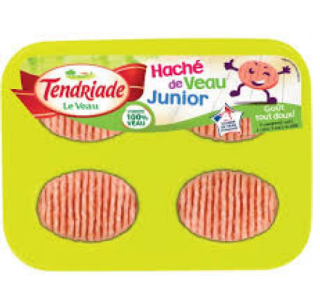
Luxembourg – Recall: TENDRIADE BRAND JUNIOR VEAL MINCE – Salmonella

SAP

Last name Junior minced veal
Mark Tendriade
Unit 4×50 g
Bar code 3384480010511
Best before date (DLC) 09/12/2020
Lot 73483511

Hazard description:  

Salmonella can cause symptoms such as nausea, vomiting, abdominal cramps, diarrhea, fever and headache within 6 to 72 hours after consumption. These symptoms may be aggravated in young children, immunocompromised individuals and the elderly. People who have consumed these products and who present these symptoms are advised to consult a doctor, notifying him of this consumption.

Sale in Luxembourg by: Auchan

A sale by other operators cannot be excluded.

Source of information: Auchan recall notification

Communicated by: Government Commission for Quality, Fraud and Food Safety .

Research – Consumer knowledge and behaviors regarding food safety risks associated with wheat flour

Journal of Food Protection

Consumers do not consider flour, a low-moisture food product, a high-risk for microbial contamination. In the past ten years, however, flour has been identified as a source of pathogenic bacteria, including Salmonella and E. coli . Online surveys were conducted to study consumers’ flour-handling practices and their knowledge about food safety risks related to flour. The survey also evaluated message impact on three food safety messages in communicating information and convincing consumers to adopt safe flour handling practices. Flour-using consumers (n = 1,045) from the United States reported they used flour to make cakes, cookies, and bread. Most consumers stored flour in sealed containers. Less than 1% kept a record of product identification numbers, like lot numbers, and less than 11% kept brand and use-by-date information. Many consumers (85%) were unaware of flour recalls, or outbreaks, and few (17%) believed they would be affected by flour recalls or outbreaks. If the recall affected the flour they bought, nearly half of the consumers (47%) would buy the same product from a different brand for a few months before they returned to the recalled brand. Among consumers who use flour to bake, 66% said they ate raw cookie dough or batter. Raw dough “eaters” were more difficult to convince to avoid eating and playing raw flour than “non-eaters.” Food safety messages were less impactful on those raw dough “eaters” than “non-eaters.” Compared with the food safety message with only recommendations, those messages with recommendations and an explanation as to the benefits of the practice were more effective in convincing consumers to change their practices. These findings provide insight into effective consumer education about safe flour-handling practices and could assist in the accurate development of risk assessment models related to flour handling.

Research – Growth and Survival of Foodborne Pathogens during Soaking and Drying of Almond (Prunus dulcis) Kernels

Journal of Food Protection

ABSTRACT

The practice of soaking almonds prior to consumption is popular both commercially and at home. The food safety implications of soaking almonds was investigated through analysis of blogs and videos (n = 85 recipes) to identify both the reasons for soaking almonds and the common practices employed. Among the recipes analyzed, the most common reasons for soaking almonds (94.1%) were perceived benefits such as improved digestion and nutrient uptake. Most recipes (34.1%) suggested soaking at “room temperature” for times that ranged from 4 to 24 h or, more commonly, “overnight” (51.8%). Postsoaking drying instructions were provided in 40 recipes (47.1%). Among those providing a drying temperature (31.8%), 85% specified 66°C and lower. To evaluate the growth of foodborne pathogens during almond soaking, separate cocktails of Escherichia coli O157:H7, Listeria monocytogenes, and Salmonella enterica were inoculated onto raw almonds or into the soak water (almonds-to-water ratios of 1:1 and 1:3 [w/v]). Populations were monitored during soaking at 15, 18, and 23°C for up to 24 h, and during postsoak drying at 66°C for 14 h (for Salmonella only). At 15°C and a 1:1 almond:water ratio, no significant population increase (P > 0.05) was observed between 0 and 24 h for any of the pathogens. At 18°C, increases of 0.63, 1.70, and 0.88 log CFU per sample were observed over 24 h for populations of E. coli O157:H7, L. monocytogenes, and Salmonella, respectively. Populations of E. coli O157:H7, L. monocytogenes, and Salmonella increased by 3.48, 3.22, and 3.94 log CFU per sample, respectively, after 24 h at 23°C. When soaked almonds were dried for 14 h at 66°C, moisture and water activity decreased from 40 to ∼6% and 0.99 to 0.60, respectively, but no significant reduction in Salmonella populations was observed. Recommendations for using shorter times (<8 h) and cooler temperatures (≤15°C) should reduce the potential for foodborne pathogens, if present, to grow during soaking of almonds.

HIGHLIGHTS
  • Online recipes described soaking conditions that would support growth of pathogens.
  • Foodborne pathogens were able to multiply in almonds soaked at 18 and 23°C.
  • Pathogen populations significantly increased after 8 h of soaking at 23°C.
  • Foodborne pathogens did not multiply in almonds soaked at 15°C for 24 h.
  • Drying soaked almonds at 66°C for 14 h did not reduce populations of Salmonella.

Research – Use of a Novel Sanitizer To Inactivate Salmonella Typhimurium and Spoilage Microorganisms during Flume Washing of Diced Tomatoes

Journal of Food Protection

ABSTRACT

As demand for fresh-cut produce increases, minimizing the risk of salmonellosis becomes critical for the produce industry. Sanitizers are routinely used during commercial flume washing of fresh-cut produce to minimize cross-contamination from the wash water. This study assessed the efficacy of a novel sanitizer blend consisting of peracetic acid (PAA; OxypHresh 15) with a sulfuric acid–surfactant (SS) antimicrobial (PAA-SS; ProduceShield Plus) against Salmonella during simulated commercial washing of diced tomatoes. Triplicate 9.1-kg batches of Roma tomatoes were dip inoculated in a two-strain avirulent Salmonella cocktail (Salmonella Typhimurium LT2 and MHM112) to achieve 5 to 6 log CFU per tomato and air dried for 2 h. After mechanical dicing, the tomatoes were washed in a pilot-scale processing line for 60 s with or without an added organic load in 90 ppm of PAA-SS (pH 1.8), SS at pH 1.8, 90 ppm of PAA, 5 or 10 ppm of free chlorine or sanitizer-free water as the control. Overall, PAA-SS (1.75 ± 0.75 log CFU/g) was significantly (P ≤ 0.05) more effective than water (0.69 ± 0.42 log CFU/g), chlorine (0.35 ± 0.36 log CFU/g), or SS (0.36 ± 0.19 log CFU/g) in reducing Salmonella. After washing for 20 s, PAA-SS was the only sanitizer to show a significant (P ≤ 0.05) reduction (1.93 ±0.59 log CFU/g) in Salmonella. All wash water samples were negative for Salmonella, except for 5 and 10 ppm of chlorine and the water control. Using PAA-SS with an organic load, yeast and mold populations were below the limit of detection (1.40 log CFU/g) and significantly (P ≤ 0.05) lower on diced tomatoes after 14 days of refrigerated storage compared with the other treatments (8.37 ± 0.08 log CFU/g), with SS at pH 1.8 (3.91 ± 0.93 log CFU/g) most effective against yeast and mold in the absence of an organic load. On the basis of these findings, the safety and shelf life of commercially washed diced tomatoes can be improved with PAA-SS.

HIGHLIGHTS
  • PAA-SS yielded lower Salmonella populations in diced tomatoes than did chlorine (P ≤ 0.05).
  • Salmonella was not detected in the wash water using PAA-SS.
  • PAA-SS decreased Salmonella 1.93 log after 20 s of washing.
  • PAA-SS yielded lower (P ≤ 0.05) yeast and mold populations after 14 days of storage.

Ireland – Three Salmonella outbreaks revealed in Ireland

Food Safety News

Irish public health officials have reported three Salmonella outbreaks that have affected at least 34 people.

Two of the three outbreaks were caused by Salmonella Enteritidis and one by Salmonella Mikawasima. Two of the incidents remain unsolved while the third has been linked to chicken products.

Twenty three of the infections have been laboratory confirmed, according to the Health Protection Surveillance Centre (HPSC), Ireland’s agency for surveillance of communicable diseases and part of the Health Service Executive (HSE).

Six people were sickened in the first Salmonella Enteritidis outbreak. Four women and two men had illness onset dates ranging from early June to Oct. 21. Two patients were aged 1 to 2 years old, one was 15-19 years old and three were over the age of 25.

HSE officials told Food Safety News that an investigation has not identified any potential method of transmission including foodborne or source including food.