Category Archives: Salmonella

RASFF Alerts – Salmonella – Polish Chicken Products – Black Pepper – Chicken Meat

RASFF

Salmonella Oranienburg, Salmonella Matadi and Salmonella Saintpaul in black pepper from Brazil in Germany

RASFF

Salmonella Saintpaul in black pepper from Brazil in Germany and Netherlands

RASFF

Salmonella Poona, Salmonella Javiana and Salmonella Saintpaul in black pepper from Brazil in Germany and Netherlands

RASFF

Salmonella Newport, Salmonella Javiana and Salmonella Denver in black pepper from Brazil in Germany

RASFF

Salmonella Sandiego and Salmonella Miami in black pepper from Brazil in Germany and Netherlands

RASFF

Salmonella Javiana and Salmonella Saintpaul in black pepper from Brazil in Germany

RASFF

Salmonella Matadi, Salmonella Rubislaw, Salmonella Saintpaul and Salmonella Poona in black pepper from Brazil in Germany

RASFF

Salmonella Glostrup, Salmonella Oranienburg, Salmonella Gaminara and Salmonella Minnesota in black pepper from Brazil in Germany

RASFF

Salmonella Infantis, Salmonella Saintpaul and Salmonella Newport in black pepper from Brazil in Germany

RASFF

Skinless chicken breast contaminated with Salmonella Enteritidis from Poland in the Netherlands
RASFF

Salmonella Morehead, S. Javiana, S. Braenderup, S. Saintpaul, S. Kiambu and S. Minnesota in black pepper from Brazil in Germany

RASFF

Salmonella Morehead and Salmonella Rubislaw in black pepper from Brazil in Germany

RASFF

Salmonella en pimienta negra de Brasil/ Salmonella in black pepper from Brazil in Spain

RASFF

Salmonella Enteritidis in fresh poultry meat from Poland in Italy

RASFF

Salmonella (present /25g) in black pepper from Brazil in the Netherlands

RASFF

Salmonella en pimienta negra en Brasil/ Salmonella in black pepper from Brazil in Spain

RASFF

Salmonella in chicken meat from Brazil in the Netherlands and Switzerland

RASFF

Skinless chicken breast contaminated with Salmonella Enteritidis from Poland in the Netherlands
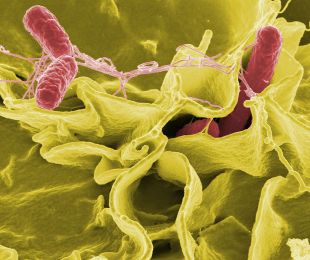
Denmark – Danish pork main source of Salmonella infections

Food Safety News

Danish pork replaced travel abroad as the main source of Salmonella infections in 2020, according to figures from the Technical University of Denmark’s National Food Institute.

Danes travelled far less this past year because of COVID-19 restrictions, so going abroad was linked to just less than 20 percent of 614 Salmonella cases. Normally, about half of registered infections are travel related.

Danish pork was estimated to have caused 22 percent of illnesses followed by imported pork and duck meat with 9 percent and 6 percent of cases respectively.

A data management issue prevented the statistics being published earlier this year at the same time as the 2020 zoonoses report.

Canada – Alasko brand IQF (Individually Quick Frozen) Whole Kernel Corn recalled due to Salmonella

CFIA

Summary

Product
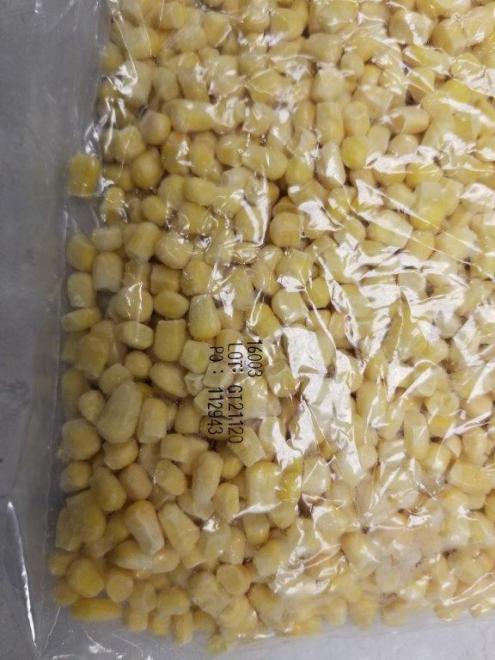
Individually Quick Frozen (IQF) whole kernel corn
Issue
Food » Microbial Contamination » Salmonella
What to do

Do not consume, use, sell, serve, or distribute the recalled product

Audience
Hotels, restaurants and institutions
Manufacturers

Affected products

Brand Product Size UPC Codes
Alasko IQF whole kernel corn 12 kg (6×2 kg) 1 069505
816003 4
Lot: GT21120
P.O: 112943

Issue

New Alasko Limited Partnership is recalling Alasko brand IQF whole kernel corn from the marketplace due to possible Salmonella contamination.

The recalled product has been sold in British Columbia, Alberta and Manitoba and may have been distributed in other provinces and territories.

What you should do

  • If you think you became sick from consuming a recalled product, call your doctor
  • Check to see if you have the recalled product in your establishment
  • Do not consume the recalled product
  • Do not serve, use, sell, or distribute the recalled product
  • Recalled products should be thrown out or returned to the location where they were purchased

Sweden – Salmonella outbreak over.

Food Safety News

Salmonella

An outbreak of Salmonella has ended in Sweden with officials unable to find the source of infection.

In October, 40 people became ill with monophasic Salmonella Typhimurium with the majority falling sick in the first half of the month. An earlier update identified 33 patients. Cases were linked by whole genome sequencing.

As no new illnesses have been recorded after late October, the outbreak was recently judged to be over by authorities.

Sick people were 2 to 92 years old with a median age of 44. They lived in eight different regions.

Spain – Alert for the presence of Listeria monocytogenes in “Urechi Snacks” pork snacks from Romania

asca

The Spanish Food Safety and Nutrition Agency has been informed through the European Food Alert Network (RASFF), of an alert notification issued by the Romanian health authorities regarding the presence of Listeria monocytogenes in “Urechi Snacks”.

AESAN has informed us of this alert to the Autonomous Communities through the Coordinated System for the Rapid Exchange of Information (WRITE).

The manufacturing company has initiated the withdrawal of the product for sale and the recovery of the product of the consumers.

The data of the product involved are:

  • Product name (on label): Urechi Snacks
  • Brand: Marcel
  • Lot number: 076181121
  • Expiry date: 02/01/2022
  • Unit weight: 200 g

The product has been distributed in several Member States, including Spain, in the Autonomous Communities of Madrid, Valencia, Andalusia and Aragon.

For now, there is no evidence that it has been distributed in Catalonia. According to AESAN, investigations are continuing, and it is not ruled out that there may be subsequent distributions to other autonomous communities.

With the information available, there is no evidence in Spain of any reported cases associated with this alert.

People who have products affected by this alert at home are advised to refrain from consuming them and return them to the point of purchase.

If you have consumed these types of products from the affected batches and have any symptoms compatible with listeriosis (vomiting, diarrhea or fever), it is recommended to go to a health center.

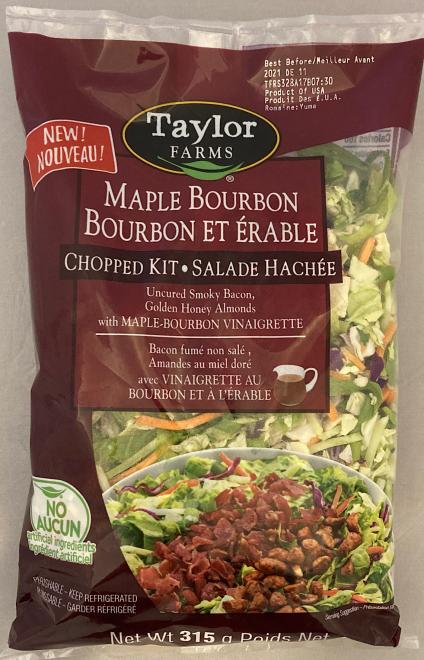
Canada – Taylor Farms brand Maple Bourbon Chopped Kit (salad) recalled due to Salmonella

CFIA

Summary

Product
Maple Bourbon Chopped Kit
Issue
Food » Microbial Contamination » Salmonella
What to do

Do not consume the recalled product

Affected products

Brand Product Size UPC Codes
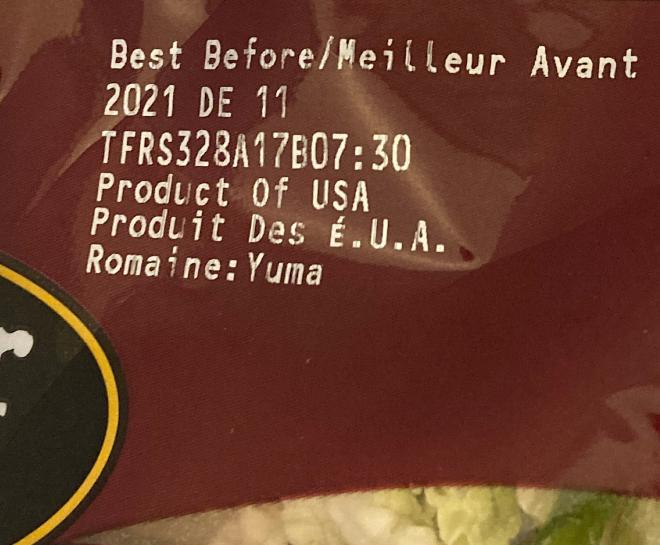
Taylor Farms Maple Bourbon Chopped Kit (salad) 315 g 0 30223 06038 3 Best Before
2021 DE 11
TFRS328A17

Issue

Taylor Fresh Foods Inc. is recalling Taylor Farms brand Maple Bourbon Chopped Kit (salad) from the marketplace due to possible Salmonella contamination.

The recalled product has been sold in British Columbia, Alberta, Saskatchewan, Manitoba, and Ontario and may have been distributed in other provinces and territories.

What you should do

  • If you think you became sick from consuming a recalled product, call your doctor
  • Check to see if you have the recalled product in your home
  • Do not consume the recalled product
  • Recalled products should be thrown out or returned to the location where they were purchased

Food contaminated with Salmonella may not look or smell spoiled but can still make you sick. Young children, pregnant women, the elderly and people with weakened immune systems may contract serious and sometimes deadly infections. Healthy people may experience short-term symptoms such as fever, headache, vomiting, nausea, abdominal cramps and diarrhea. Long-term complications may include severe arthritis.

Research – Research Note: Contamination of eggs by Salmonella Enteritidis and Salmonella Typhimurium in experimentally infected laying hens in indoor cage-free housing

NCBI

hazegg.jpg

Contaminated eggs are a leading source of human Salmonella infections and this problem continues to challenge public health authorities and egg industries around the world. Salmonella invasion of the ovaries and oviducts of infected laying hens can result in bacterial deposition inside the edible portions of developing eggs. The introduction, persistence, and transmission of salmonellae in commercial egg-laying flocks are influenced by flock management practices, but the food safety ramifications of different types of laying hen housing remain unresolved. The present study assessed the frequency of internal contamination of eggs after experimental Salmonella Enteritidis and S. Typhimurium infection of laying hens in indoor cage-free housing. Groups of 72 hens were housed on wood shavings in isolation rooms simulating commercial cage-free barns with community kick-out nest boxes and perches and 1/3 of the hens in each room were orally inoculated with 8.0 × 107 cfu of 2-strain mixtures of either S. Enteritidis (2 rooms) or S. Typhimurium (2 rooms), and the entire internal contents of all eggs laid 5 to 30 d postinoculation in nest boxes or on the flooring substrate were cultured to detect Salmonella. Contaminated eggs were laid between 8 and 28 d postinoculation. The overall incidence of S. Enteritidis isolation from eggs (3.41%) was significantly (P = 0.0005) greater than S. Typhimurium (1.19%). The contamination frequencies associated with the 2 egg collection locations were not significantly different (P > 0.05). These results demonstrate that oral infection of a relatively small proportion of laying hens in indoor cage-free housing with invasive Salmonella serovars can result in the production of internally contaminated eggs at low frequencies over a period of nearly a month postinoculation.

Canada – Avocados are possible link in Canada Salmonella Outbreak

Food Poison Journal

Food Safety News reports that in a public health notice, officials report a Salmonella Enteritidis outbreak of unknown origin is continuing to grow, with patients spread across five Canadian provinces.

As of Dec. 9, there were 16 new confirmed patients, bringing the tally to 79, according to the Public Health Agency of Canada. Four people have been hospitalized. No deaths have been reported.

“Many of the individuals who became sick reported eating fresh avocados purchased from grocery stores or served at restaurants before their illness. Investigation findings to date have identified that these avocados have been distributed in British Columbia, Alberta, Saskatchewan and Manitoba. More information is needed to confirm the source of the outbreak. The outbreak appears to be ongoing, as illnesses continue to be reported,” according to public health officials.

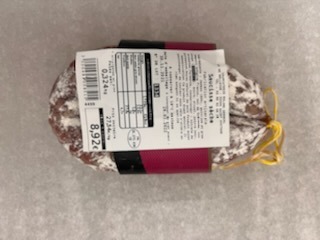
France – Dried sausage – Salmonella

Gov france

Identifying information for the recalled product

  • Product category Food
  • Product sub-category Meats
  • Product brand name The Delights of Belle Noë
  • Names of models or references Dried sausage
  • Product identification
    GTIN Lot Dated
    220049900000 All lots Date of minimum durability between 01/31/2022 and 02/15/2022
  • Packaging Bulk
  • Start date / End of marketing From 11/02/2021 to 11/17/2021
  • Storage temperature Product to be stored at room temperature
  • Health mark FR 22.272.026 CE
  • Further information Product sold in bulk with a sheath
  • Geographical sales area Departments: COTES-D’ARMOR (22), ILLE-ET-VILAINE (35), YVELINES (78)
  • Distributors Spar, Farmers, Convenience Stores, Bars, Wholesalers, Carrefour city
  • List of points of sale Contact details_saucisse_sèche.pdf

Practical information regarding the recall

  • Reason for recall As a precautionary measure, product withdrawal and recall because there is a risk of cross-contamination with a batch containing salmonella
  • Risks incurred by the consumer Salmonella spp (causative agent of salmonellosis)

Argentina – More Salmonella cases reported in Salta, Nearly half in young children

Outbreak News Today

kswfoodworld salmonella

In a follow-up on the Salmonella situation in Salta province, Argentina, the Ministry of Public Health reported that from the beginning of 2021 and until the end of last week, 1,283 cases of salmonellosis were confirmed in the province.

In the first months of the year, a greater number of cases comprised in the first nine epidemiological weeks was observed. Then, between weeks 10 and 38, isolated infections occurred. And, from week 32 that began on August 8 until today, 665 laboratory-confirmed cases were reported.