Category Archives: Salmonella

RASFF Alerts – Salmonella – Sesame Seeds – Polish Chicken Products – Chicken Burger – Sesame Paste – Chicken Breast – Salted Chicken

RASFF

Salmonella enterica ser. Enteritidis detected in chilled boneless skinless chicken breast from Poland in Romania

RASFF

Salmonella spp in frozen chicken burgers from Greece in Bulgaria and the Czech Republic

RASFF

Salmonella spp. in sesame paste from Turkey in Austria, France, Germany, Slovenia

RASFF

SALMONELLA IN SESAME SEEDS FROM TURKEY in Greece

RASFF

SALMONELLA IN SESAME SEEDS FROM TURKEY in Greece

RASFF

SALMONELLA IN SESAME SEEDS FROM TURKEY in Greece

RASFF

SALMONELLA IN SESAME SEEDS FROM TURKEY in Greece

RASFF

SALMONELLA IN SESAME SEEDS FROM TURKEY in Greece

RASFF

SALMONELLA IN SESAME SEEDS FROM TURKEY in Greece

RASFF

SALMONELLA IN SESAME SEEDS FROM TURKEY in Greece

RASFF

SALMONELLA IN SESAME SEEDS FROM TURKEY in Greece

RASFF

Salmonella enteritidis in Chicken breast from the Netherlands in the UK and Northern Ireland

RASFF

Salmonella (presence /25g) in frozen salted chicken from Thailand in the Netherlands

RASFF

Salmonella (presence /25g) in frozen salted chicken from Thailand in the Netherlands

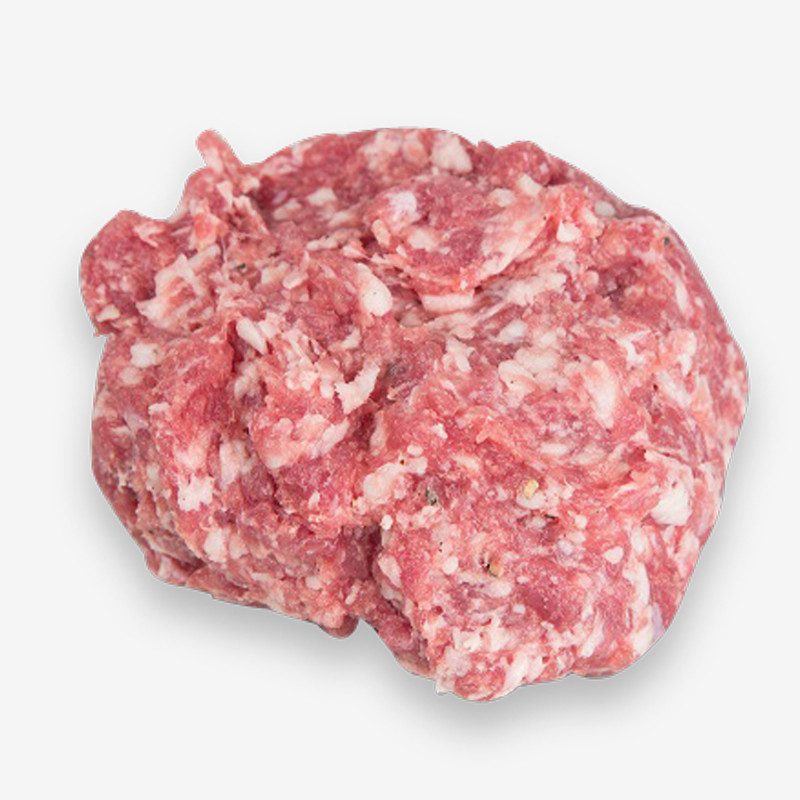
France – SAUSAGE – Salmonella

Gov france

Identification information of the recalled product

  • Product category Feed
  • Product subcategory Meats
  • Product brand name LECLERC Montval Sur Loir
  • Model names or references Sausage
  • Identification of products
    GTIN Batch
    0219172000000 Purchase on September 17, 19 and 20, 2022
  • Products List18c_-_QCR-ENR-12_-_Model_poster_RAP_Chair.pdfAttachment
  • Packaging Bulk
  • Marketing start/end date From 09/17/2022 to 09/20/2022
  • Storage temperature Product to be stored in the refrigerator
  • Health mark Leclerc Montval Sur Loir
  • Further information Sold in the Traditional Butcher’s section Non-contractual photo
  • Geographic area of ​​sale Departments: INDRE-ET-LOIRE (37), SARTHE (72)
  • Distributors Leclerc Montval Sur Loir

Practical information regarding the recall

  • Reason for recall Risk of presence of salmonella

Research-Sources and trends of human Salmonellosis in Europe, 2015-2019: an analysis of outbreak data

asca

Study published in the International Journal of Food Microbiology. The aim of this study was to determine the main food sources and recent trends of  Salmonella outbreaks in Europe. Data from outbreaks in 34 European countries during the 2015-2019 period are taken into account. 

In general, the most important food source of the salmonellosis outbreaks were eggs, pork series and meat products in general. While eggs were the most important source of infection in all regions, pork was the second most common source in Northern and Western Europe, and meat products (in general) in Eastern and Southern Europe. 

There were 939 outbreaks caused by Salmonella enteritidis , 130 by Salmonella typhimurium and its monophasic variant, 107 by other known serotypes, and 332 by other unknown types.

Complex food categories such as baked goods, buffet meals, mixed foods, sweets and chocolate, canned food products, and beverages were grouped as unknown sources in the analysis because it was not possible to identify the exact components responsible for the infection.

In total, 1,508 salmonella outbreaks were included in the analysis. Of these, 1,040 were caused by simple foods and 468 by unknown food sources. Most of the outbreaks were reported in Eastern Europe, followed by Southern, Western and Northern Europe.

Outbreaks caused by S. enteritidis (SE) and other known serotypes (other than SE and S. typhimurium and its monophasic variant [STM]) were attributed primarily to eggs, whereas outbreaks caused by STM were primarily attributed to the Pork Meat. In general, there was a significant increase in the number of reported outbreaks between 2015 and 2019, mainly due to the increase in outbreaks in Eastern Europe while, in Northern and Southern Europe, outbreaks caused by SE decreased significantly between the years 2015 and 2019. Outbreaks related to the consumption of cheese and fish are steadily declining.

Research – Summary of FDA’s Strategy to Help Prevent Salmonellosis Outbreaks Associated with Bulb Onions

FDA

Background

Onions are one of the most commonly consumed vegetables in the United States. Grown in more than 170 countries, they are also one of the most important horticultural crops worldwide. Bulb onions are characterized by having hollow, tubular, blue-green leaves and can be purchased fresh or frozen to use in cooked dishes or consumed raw as an ingredient or garnish. Bulb onions are typically dried or cured to reduce decay and increase shelf life.

In 2020 and 2021Salmonella outbreaks associated with the consumption of bulb onions produced in the U.S. and Mexico caused more than 2,100 confirmed cases of foodborne illness in the United States. The 2020 outbreak in the U.S. cost an estimated $203 million in consumer health-related losses. The 2021 outbreak in the U.S. cost an estimated $188 million in consumer health-related losses. [1]

Overview of Salmonellosis Outbreaks Associated with Bulb Onions

In 2020, the FDA’s Coordinated Outbreak Response & Evaluation (CORE) Network, in collaboration with the Centers for Disease Control and Prevention (CDC) and state and local partners, investigated a multistate outbreak of Salmonella Newport infections linked to the consumption of domestically grown red bulb onions. While no conclusive root cause could be identified, the agency’s investigation report identified several plausible opportunities for contamination including irrigation water, sheep grazing on adjacent land, and signs of animal intrusion, such as scat and large flocks of birds that may spread contamination.

In 2021, the FDA led investigations of a multistate outbreak of Salmonella Oranienberg infections linked to the consumption of red, white, and yellow bulb onions imported from the State of Chihuahua, Mexico. The FDA worked closely with Mexican competent authorities through the established Food Safety Partnership to investigate potential source(s) of contamination within the implicated region.  However, the agency was unable to conduct an on-farm investigation at the time, and no conclusive root-cause was determined.

Summary of FDA’s Strategy to Help Prevent Future Outbreaks of Salmonellosis linked to Bulb Onions[2]

Food safety is a shared responsibility. The bulb onion industry is responsible for meeting applicable food safety requirements. In addition, the FDA believes it is imperative that we share data, knowledge, and information and work collaboratively with industry and state regulators to enhance food safety and advance the goals and objectives of FDA’s Strategy for the Safety of Imported Food. Based on review of the outbreak investigational findings, historical data, and engagements with industry and other stakeholders, the agency has identified several measures that can be taken to reduce future incidences of foodborne illness related to bulb onions, including:

  • Engaging domestic and foreign industry and government partners to promote a broad understanding of the outbreak investigation findings, applicable Produce Safety Rule requirements, and the importance of root cause analysis after outbreaks.
  • Prioritizing inspections of bulb onion farms in the United States and Mexico that are covered by the FDA’s Produce Safety Rule.
  • Identifying and assessing practices and conditions associated with onion curing.
  • Supporting research efforts to better understand bulb onion production practices, including the impact of different soil conditions and curing practices on the safety of bulb onions.
  • Supporting industry-led efforts to develop and implement best practices for bulb onion production.

The agency has also identified the following additional actions specific to imported bulb onions:

  • Prioritizing Foreign Supplier Verification Program inspections of bulb onion importers to ensure that onion importers are verifying that foreign suppliers follow processes and procedures that provide the same level of public health protection as U.S. food safety requirements.
  • Increasing strategic and targeted sample collection and testing of imported bulb onions from the State of Chihuahua, Mexico.
  • Continuing to collaborate with Mexican competent authorities through the established Food Safety Partnership to help ensure the safe production of bulb onions in the State of Chihuahua, Mexico.

By implementing these activities, the FDA seeks to:

  • Encourage high rates of compliance with the applicable FDA food safety requirements across the bulb onion supply chain through education, outreach, and technical assistance to the growers, distributers, and importers of bulb onions.
  • Verify and measure the rate of industry compliance through inspections and sampling.
  • Broaden scientific knowledge about production methods that can reduce future incidences of foodborne illness related to bulb onions.

Belgium – Protein chips cheese from the Organic Crave brand.- Salmonella

AFSCA

Recall by Albert Heijn
Product: Protein chips cheese from the Organic Crave brand.
Problem: Possible presence of Salmonella.


In agreement with the FASFC, Albert Heijn withdraws from sale the product “protein chips cheese with DDM 08/05/2023” of the Organic Crave brand and recalls it to consumers following the possible presence of Salmonella.

Albert Heijn asks its customers not to consume this product and to return it to the point of sale where it was purchased. The product will be refunded or exchanged there.

Product description

• Product category: appetizer
• Product name: protein cheese chips
• Brand: Organic Crave
• Date of minimum durability (BDD): 08/05/2023
• Period of sale: until 28/09/2022 inclusive
• Type of packaging: sachet
• Weight: 30 g

Consumption of this product can potentially cause food poisoning and therefore pose a health risk – especially to young children, the elderly, people with weakened immune systems and pregnant women. Please contact a doctor in case of any health problem.

For further information , please contact Albert Heijn via 0800 777 05 .

USA – FDA Core Outbreak Investigation Table

FDA

What’s New

  • For the Cyclospora outbreak in a not yet identified food (reference #1080), sample collection and analysis has been initiated and an on-site inspection has been initiated.
  • For the Salmonella Mississippi outbreak in a not identified food (reference #1097), the investigation is closed, and the outbreak has ended.
  • A new outbreak has been added to the table: Salmonella Litchfield (reference #1105) in a not yet identified food. Traceback has been initiated.
  • For the Salmonella Typhimurium outbreak in a not yet identified food (reference #1095), the case count has increased from 84 cases to 86 cases.

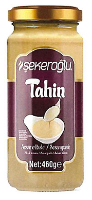
Germany – SEKEROGLU TAHINI 460G -Salmonella

LMW

Product Image.png

Alert type: Food
Date of first publication:

09/27/2022

Product name:

SEKEROGLU TAHIN 460G

Manufacturer (distributor):

Akar Ltd

Reason for warning:

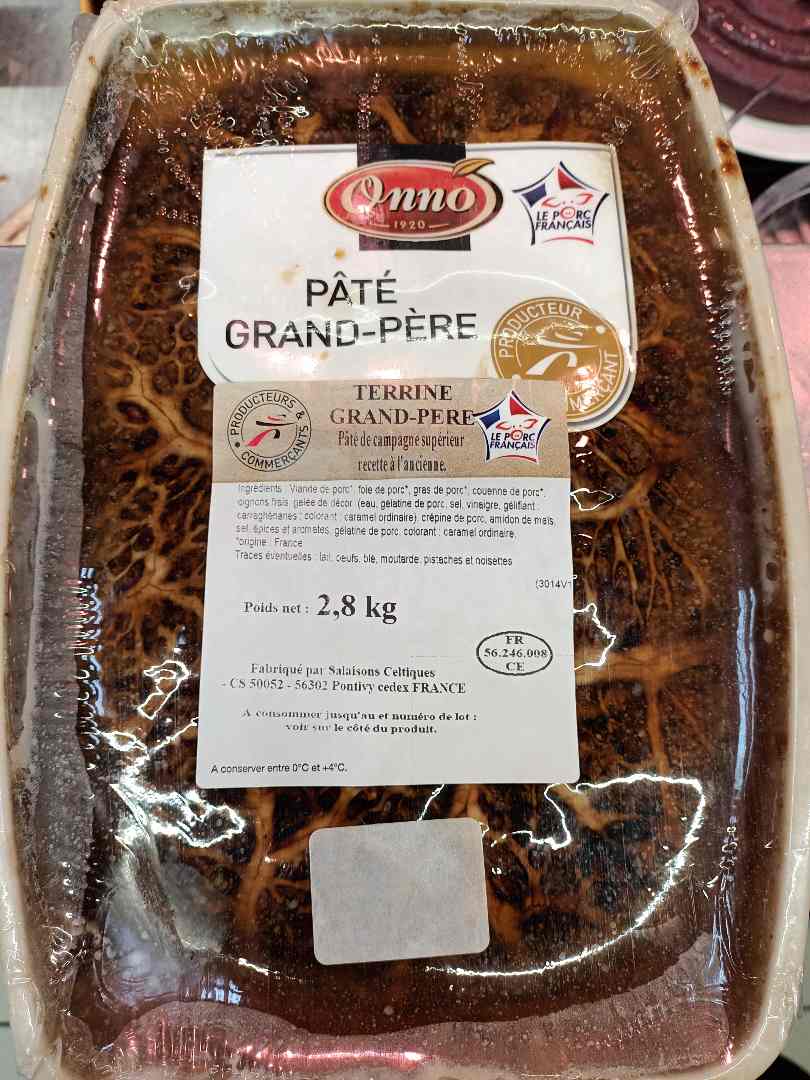
France – GRAND FATHER TERRINE – Salmonella

Gov france

Identification information of the recalled product

  • Product category Feed
  • Product subcategory Others
  • Product brand name ONNO
  • Model names or references Batch number: PY01200235 Use by date: 06/10/2022 Packer code/stamp: FR 56246008 CE
  • Identification of products
    Batch Date
    PY01200235 Use-by date 06/10/2022
  • Marketing start/end date From 09/14/2022 to 09/19/2022
  • Storage temperature Product to be stored in the refrigerator
  • Geographic area of ​​sale Whole France
  • Distributors Intermarché CHALLUY 58000

Practical information regarding the recall

  • Reason for recall Presence of salmonella
  • Risks incurred by the consumer Salmonella spp (causative agent of salmonellosis)

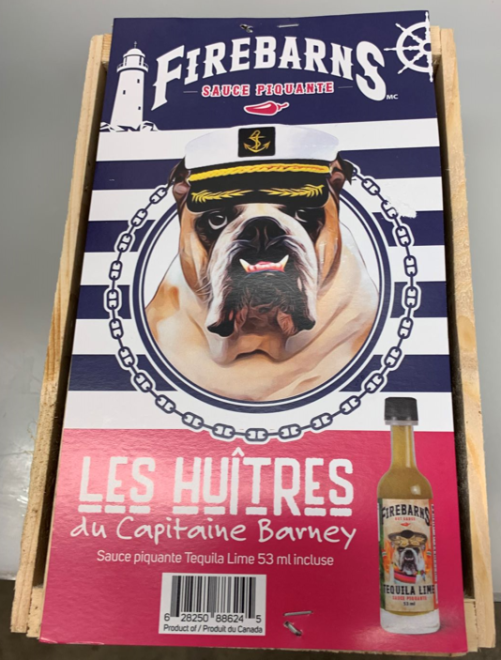
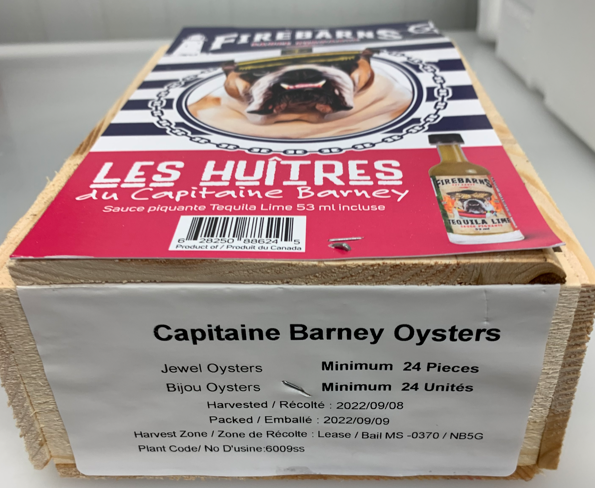
Canada – Various brands of oysters recalled by Oyster Kings Inc. due to Salmonella

CFIA

Summary

Product
Oysters
Issue
Food – Microbial Contamination – Salmonella
What to do

Do not consume, use, sell, serve, or distribute recalled products

Affected products

Issue

The affected products are being recalled from the marketplace due to possible Salmonella contamination.

The recalled products have been sold in Ontario and Quebec and may have been distributed in other provinces and territories.

These products may have been sold clerk-served from counters with or without a label or coding. Consumers who are unsure if they have purchased the affected product are advised to contact their retailer.

What you should do

  • If you think you became sick from consuming a recalled product, contact your healthcare provider
  • Check to see if you have recalled products
  • Do not consume, serve, use, sell, or distribute recalled products
  • Recalled products should be thrown out or returned to the location where they were purchased

Food contaminated with Salmonella may not look or smell spoiled but can still make you sick. Young children, pregnant women, the elderly and people with weakened immune systems may contract serious and sometimes deadly infections. Healthy people may experience short-term symptoms such as fever, headache, vomiting, nausea, abdominal cramps and diarrhea. Long-term complications may include severe arthritis.

USA – 60 Potential Illnesses Linked to a Salmonella Outbreak in Spring Branch County – Possibly from an Event at Lost Mission?

Food Poisoning News

According to one victim in what is alleged to be an outbreak of 60+ patrons, a food poisoning outbreak (she contracted salmonella) is currently being investigated by the Bexar/Comal County Health Departments in Texas. According to one source, multiple food items were served, including Whataburger and cake, among other things.   The victim who has come forward, Sarah Castillo, however, ate chicken piccata, a Caesar salad, angel hair pasta, and green beans. According to Ms. Castillo, she began experiencing symptoms of salmonella shortly after attending a wedding at a local, and very popular, venue called Lost Mission.  Lost Mission is located in Spring Branch Texas.

The beautiful wedding, unfortunately, turned into a dismal affair for Ms. Castillo after she became ill with the symptoms and side-effects of salmonellosis. She was compelled to seek medical treatment from the Texas MedClinic Urgent Care, and then when her condition deteriorated, University Hospital in San Antonio.