Category Archives: Salmonella

Research – Human Pathogens in Primary Production Systems

MDPI

Human pathogenic micro-organisms can contaminate plants. Plants whose products can be consumed freshly or after minimal processing are of specific concern. It is under debate whether contaminations only occur at harvest or the after harvest processing of crops, or if they can already occur at the primary plant production stages.
Plants may be considered as secondary habitats for human pathogens [1], and, although they do not possess the full capacity to invade and colonize internal tissues of plants, like plant pathogens and endophytes do [2], they are still capable of maintaining themselves in the neighborhood of, and even inside, plants [3], and to proliferate in these ecosystems. Human pathogens can respond to chemical signals from plants [4] and, from that perspective, human pathogens may share properties with other micro-organisms commonly present in plant microbiomes. From an evolutionary perspective, it make sense that particular groups of zoonotic species are able to use plants as secondary habitats. These microbes can be transferred via feces among different flocks that graze on the same land [5]. Longer persistence on grazed plants may contribute to a wider distribution over different flocks. It is an important message for plant production that microbial interconnectivity will exist between ecosystems and that human pathogens can circulate between animals and plants when animal manure is applied to soil for fertilization [6]. Water used for irrigation is another human pathogen source in agricultural production systems, especially when derived from surface water bodies [7]. Human pathogens can contaminate surface water via drainage from arable fields recently fertilized with animal manure [8], but also from sewage overflow after severe precipitation [9] and wildlife [10].
The contamination of plant-derived products with human pathogens thus does not only result from harvest and post-harvest handlings, but can also occur at the primary production stage. The network activities of the EU COST Action on the control of human pathogens in plant production systems (HUPLANTcontrol) comprehended important aspects that were intended to gain a better understanding on the role of human pathogens in plant microbiomes in relation to ecology, taxonomical identity, and presumed virulence to humans. This information was relevant for the formulation of recommendations and guidelines to growers, but also to provide public information on the consequences of the presence of human pathogens in plant production systems. This Special Issue was dedicated to the main objectives of our network activities and resulted in seven manuscripts that are related to the topic of human pathogens in their relationship with plants.
It was shown that Escherichia coli, introduced via manure and seeds in production systems, had a higher preference for the root zone (roots and rhizosphere soil) than for the above-soil compartments [11,12]. Although different E. coli strains were incidentally found in stem parts shortly after their introduction, their abundance rapidly declined to levels below detection, whereas near, on, and inside roots, the introduced strains remained present up to plant senescence. As both experiments were performed under field-realistic circumstances, the key message derived from both manuscripts is critical for practice, because it would imply that plant roots are potential carriers of human pathogens once they are disseminated into production systems via external sources. The ability for microbial species to jump over from plant to animal kingdoms was indicated for two taxonomically distinct micro-organisms, Fusarium musae [13] and Bacillus cereus [14]. Namely, F. musae strains with the same genetic profile could infect both humans and plants (banana fruit), whereas B. cereus strains derived from 17 different agricultural soils sampled across Europe possessed genes that are potentially involved in human pathogenicity. Both studies made clear that human pathogens in plant production systems do not necessarily originate from external sources, but can be intrinsic members of soil and plant ecosystems. Soil treatment with composted sewage sludge resulted in a shift in the soil microbiome composition [15]. Salmonella enterica survived longer when simultaneously applied with composted sewage sludge to soil than when applied separately via irrigation. Changes in microbiomes as a result of soil amendments may thus influence the persistence of human pathogens in food production soils, and this information is relevant for understanding the mechanisms behind the soil persistence of human pathogens. Finally, it revealed that plants themselves can influence the behavior of human pathogens. Upon plant inoculation, flagellin expression was down-regulated in a vast majority of S. enterica cells, whereas high expression was found in a subfraction of the introduced population [16]. Heterogenous flagellin expression is an adaptational strategy of S. enterica inside plants. Plants defend themselves upon colonization by human pathogens via activating defensive networks [17]. Bioactive compounds produced by plants antagonize human pathogens in plants, offering new opportunities for the control of human pathogens in plant production systems.
The seven manuscripts in this Special Issue provide new and important information on the ecological behavior of human pathogens in the plant–soil environment and the roles that microbiomes play. They also demonstrated that plant microbiomes themselves harbor species that can potentially cross plant–animal frontiers and that the plant environment is a specific ecosystem where human pathogens are able to adapt to local prevailing circumstances. Valuable information was provided for further translation into practical recommendations, which is needed for the control of human pathogens in, or nearby, growing plants. Finally, the information provided is relevant for the transition towards extensive and circular agricultural production systems. The use of animal manure and other organic waste streams and reclaimed water as alternatives for fertilizers and irrigation water will become more opportune in this transition, affecting the introduction of human pathogens into plant production systems.

Sweden – No cases yet linked to most recent Salmonella finding in Sweden

Food Safety News

hazegg.jpg

A second alert for Salmonella at an egg producer in Sweden does not appear to have resulted in more people getting sick, according to health officials.

The Public Health Agency of Sweden (Folkhälsomyndigheten) said new findings of Salmonella at the site of the same company were made in mid-February. This prompted another wave of recalls in February and March.

In late December 2022, Salmonella Enteritidis was identified at CA Cedergren, a major producer, in one of the egg-laying stables during a routine environmental sampling check. Eggs were then recalled by Coop, Axfood, ICA, Lidl, and Kronägg. 

Investigations found Salmonella from the production environment in December was identical to isolates from sick people.

Hong Kong – CFS urges public not to consume a kind of imported tahini product suspected to be contaminated with Salmonella

CFS

Issue Date 13.3.2023
Source of Information The International Food Safety Authorities Network (INFOSAN)
Food Product Prepackaged tahini product
Product Name and Description Product name: Organic Hulled Tahini
Brand: Ceres Organics
Pack size: 300 grams
Place of origin: Product of Mexico or Israel, packed in New Zealand
Best-before date: May 25, 2023
Importer: The Dairy Farm Company Limited
Reason For Issuing Alert
  • The Centre for Food Safety (CFS) received a notification from the International Food Safety Authorities Network (INFOSAN) that the above-mentioned product might have been contaminated by Salmonella. According to the information provided by INFOSAN, the affected product has been imported into Hong Kong.
  • Upon learning of the incident, the CFS immediately contacted local importers for follow-up. A preliminary investigation found that the above-mentioned importer had imported into Hong Kong the affected batch of the product concerned.
Action Taken by the Centre for Food Safety
  • The importer concerned has stopped sales, removed from shelves the affected product and has initiated a recall according to the CFS’s instructions.
  • The CFS will alert the trade to the incident, and will continue to follow up and take appropriate action. The investigation is ongoing.
Advice to the Trade
  • Stop using or selling the product concerned immediately if they possess it.
Advice to Consumers
  • Not to consume the affected product if they have bought any.
Further Information The CFS press release

Members of the public may call the hotline of the importer at 2299 1133 during office hours for enquiries.

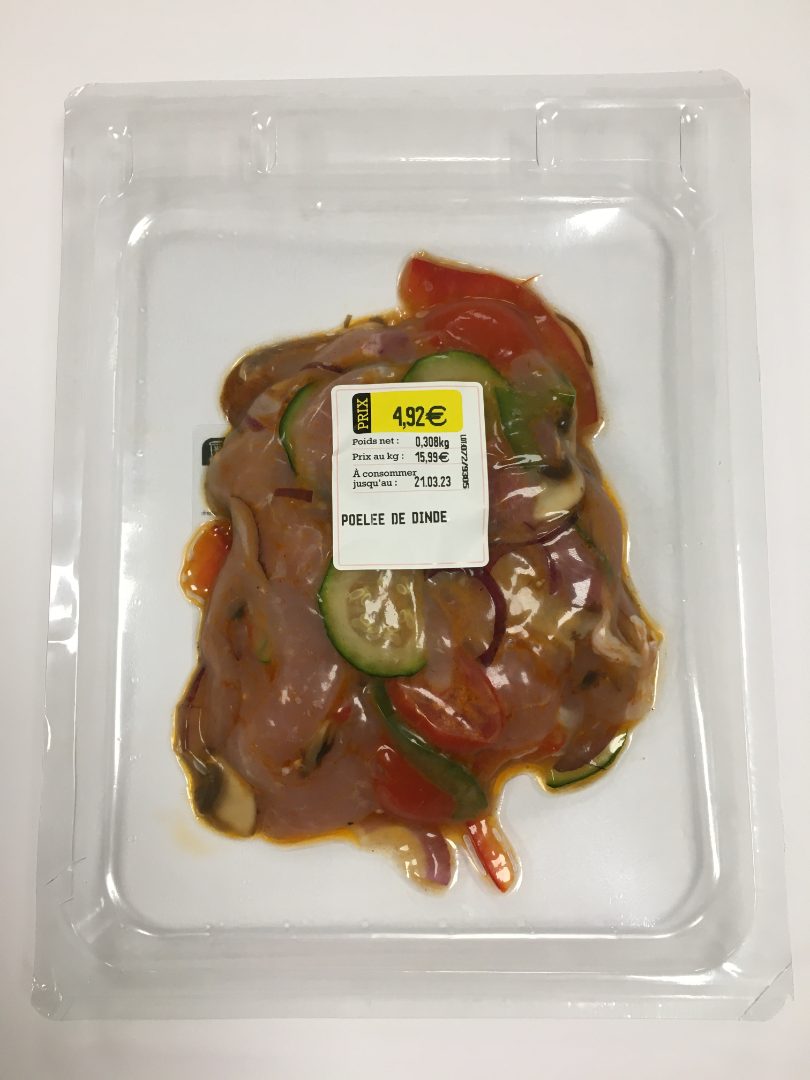
France – TURKEY PAN – Salmonella

Gov france

Identification information of the recalled product

  • Product category Feed
  • Product subcategory Meats
  • Product brand name EXPENSES
  • Model names or references EXPENSES
  • Identification of products
    Batch Date
    066/9305 Use-by date 03/15/2023
  • Packaging VACUUM SKIN packaging
  • Marketing start/end date From 07/03/2023 to 10/03/2023
  • Storage temperature Product to be stored in the refrigerator
  • Health mark FR 42 305 003CE
  • Geographic area of ​​sale Departments: ARDECHE (07), HAUTE-GARONNE (31)
  • Distributors EAT FRESH
  • List of points of saleLIST_OF_STORES.pdf

Practical information regarding the recall

  • Reason for recall Salmonella presence detection

France – DEVIL PALETTE (LS) – Salmonella

Gov france

Identification information of the recalled product

  • Product category Feed
  • Product subcategory Meats
  • Product brand name COSME BUTCHER
  • Model names or references DEVIL PALLETS (Quantity = 9 units)
  • Identification of products
    Batch Date
    231010 Use-by date 03/16/2023
    231030 Use-by date 03/18/2023
  • Packaging TRAY
  • Marketing start/end date From 06/03/2023 to 09/03/2023
  • Storage temperature Product to be stored in the refrigerator
  • Health mark EN 72.181.005 EC
  • Geographic area of ​​sale Departments: ORNE (61), SARTHE (72), YVELINES (78)
  • Distributors E LECLERC – SUPER U
  • List of points of sale List_of_clients.pdf

Practical information regarding the recall

  • Reason for recall Suspicion of the presence of Salmonella
  • Risks incurred by the consumer Salmonella spp (causative agent of salmonellosis)

New Zealand – Little Bird Organics brand Good Breakfast Cookie Apple Cinnamon Almond Hemp – Salmonella

MPI

11 March 2023: Little Bird Organics Ltd is recalling specific batches of its Little Bird Organics brand Good Breakfast Cookie Apple Cinnamon Almond Hemp due to the possible presence of Salmonella.

Product identification
Product type Cookie
Name of product (size) Little Bird Organics brand Good Breakfast Cookie Apple Cinnamon Almond Hemp (70g)
Batch marking 60301
Date marking Best Before: 02NOV23 and 16NOV23
Package size and description The product is sold in a single pouch (70g) or box of 12 (may be mixed with other flavours)
Distribution The products include tahini imported from Turkey.

The products are sold online, at the Little Bird Kitchen, New World supermarkets, selected retail outlets and health food stores throughout New Zealand.

The products have not been exported.

Notes This recall does not affect any other Little Bird Organics brand products.

Point of sale notice for retailers

If you are a retailer of the product in this recall, download a copy of the point of sale notice. You need to display it in your store for one month.

Point of sale notice – Little Bird Organics Ltd [PDF, 59 KB]

Consumer advice

Customers are asked to check the batch number and best before date written on the back of the packaging.

Affected products should not be consumed. There have been no reports of associated illness, however if you have consumed any of these products and have any concerns about your health, seek medical advice.

Customers should return the products to Little Bird Organics Ltd or where the products were purchased from for a full refund and any further enquiries.

New Zealand – Tahini products recalled over Salmonella fears

MPI

New Zealand Food Safety is supporting the further recall of a range of products containing tahini imported from Turkey due to the possible presence of Salmonella.

Tahini from a Turkish manufacturer was used as an ingredient in a range of New Zealand hummus and tahini products that were recalled from shelves last week due to the possible presence of Salmonella.

Large recall of products containing tahini

“As part of our investigation into that recall, we looked at any other product imported from the Turkish manufacturer that was not included in the original recall,” says New Zealand Food Safety (NZFS) deputy director-general Vincent Arbuckle.

“Testing has today identified the possible presence of Salmonella in the Turkish manufacturers’ line of organic tahini imported by Ceres Enterprises Ltd.”

Following receipt of this information, Ceres Enterprises Ltd brand is undertaking a consumer-level recall of the following products:

  1. Ceres Organics brand Organic Hulled Tahini (300g) with best-before dates of 25/05/2023, 22/08/2023 and 01/08/2024
  2. Ceres Organics brand Organic Unhulled Tahini (300g) with best-before dates of 25/05/2023 and 22/08/2023
  3. Ceres Organics brand Organic Hulled (18kg or bulk dispensed) purchased between 13 July 2022 and 10 March 2023 with batch numbers RE2022-00135, RE2022-00050-1 and ORG-3789-211-1
  4. Ceres Organics brand Organic Unhulled (18kg or bulk dispensed) purchased between 9 June 2022 and 10 March 2023 with batch numbers ORG-3789-211-2 and RE2022-00050-2

Consumers should be aware the product is incorrectly labelled “Product of Mexico or Israel”.

Ceres Enterprises Ltd also supplied this product to a small number of food businesses. These businesses are being alerted and NZFS is currently working with them to determine whether they need to recall their products.

We expect further recalls will take place.

Up-to-date information about all products affected by the recall will be published on our recall page as it becomes available, here:

“All products containing this tahini are urgently being removed from shelves and are subject to a consumer recall. No further product from the Turkish manufacturer will be released for sale while the matter is being investigated,” says Mr Arbuckle.

“Salmonellosis can be serious, so it is important that people do not eat these products.

“Symptoms appear within 12 to 72 hours and include abdominal cramps, diarrhoea, fever, headache, nausea, and vomiting. Illness usually lasts between 4 and 7 days but, in more severe cases, it can go on for up to 10 days and cause more serious illness.

“People with symptoms should drink lots of fluids and get plenty of rest.

“Anyone who has consumed this product and has severe symptoms – such as dehydration, severe diarrhoea or feeling sick for more than 7 days – should talk to their health professional or call Healthline on 0800 611 116.

“These products can be returned to the place of purchase for a refund.”

We continue to work with the Te Whatu Ora to identify any cases of salmonellosis related to the recall. As this is a complicated investigative process and genome sequencing may be required to confirm the association, there have been no confirmed cases so far.

This is a complex recall as it involves imported organic tahini used as an ingredient in other products.

Food importers are responsible for the safety of the food they bring in to sell in New Zealand.

Tahini is a known high-risk food, and it is implicated in detections of Salmonella from time to time around the world.

This is why tahini is subject to a more stringent process in New Zealand, requiring food safety border clearance, on top of all importers being legally responsible for assessing and confirming safety of imported food and ingredients before they sell them.

“As is our usual practice, New Zealand Food Safety will be working to understand how the contamination occurred and prevent its recurrence,” Mr Arbuckle says.

“We have informed food safety authorities in Turkey and will work together with them to identify and manage any further risk.”

New Zealand – She Universe brand Open Sesame – Almond & Sesame Batons and GoodFor brand Sugar Free Spheres – Salmonella

MPI

10 March 2023: She Universe Ltd is recalling specific batches of its Open Sesame – Almond & Sesame Batons and GoodFor brand Sugar Free Spheres due to the possible presence of Salmonella.

Product identification

Product type Chocolate
Name of product (size) GoodFor brand Sugar Free Spheres (12g)

She Universe brand Open Sesame – Almond & Sesame Batons (100g)

Date marking GoodFor brand Sugar Free Spheres:

  • Purchased instore between 4 August 2022 and 10 March 2023.

She Universe brand Open Sesame – Almond & Sesame Batons:

  • Best Before:  30/03/2023, 12/04/2023, 27/04/2023, 01/06/2023, 22/06/2023, 23/08/2023
Package size and description The products are sold in a 100g carboard box and for bulk dispense in various weights.
Distribution The products are sold at GoodFor stores, selected retail outlets and health food stores throughout New Zealand.

The products are not exported.

Notes This recall does not affect any other She Universe brand products.

Point of sale notice for retailers

Point of sale notice – She Universe Limited [PDF, 48 KB]

Point of salef notice – GoodFor brand [PDF, 40 KB]

Consumer advice

Customers are asked to check the date mark on the product.

Affected products should not be consumed. There have been no reports of associated illness, however if you have consumed any of these products and have any concerns about your health, seek medical advice.

Customers should return the products to their retailer for a full refund.

Who to contact

If you have questions, contact She Universe Ltd:

  • Phone: 027 629 9825
  • Address: 30 Governors Bay Teddington Road, Governors Bay.

New Zealand – Forty Thieves brand Organic Tahini Hulled – Salmonella

MPI

10 March 2023: Forty Thieves Ltd is recalling specific batches of its Forty Thieves brand Organic Tahini Hulled due to the possible presence of Salmonella.

Product identification
Product type Tahini
Name of product (size) Forty Thieves brand Organic Tahini Hulled (500g)
Date marking BB 10102023, BB 05122023, BB 17012024 and BB 22022024
Package size and description The product is sold in a 500g glass jar.
Distribution The product is imported from Turkey.

The affected product is sold at Huckleberry stores throughout the North Island, selected New World and Fresh Choice stores throughout the South Island and other retail outlets throughout New Zealand.

The product is not exported.

Notes This recall does not affect any other Forty Thieves brand products.

Point of sale notice for retailers

If you are a retailer of the product in this recall, download a copy of the point of sale notice. You need to display it in your store for one month.

Point of sale notice – Forty Thieves Ltd [PDF, 39 KB]

Consumer advice

Customers are asked to check the date mark located on the side of the jar.

Affected products should not be consumed. There have been no reports of associated illness, however if you have consumed any of these products and have any concerns about your health, seek medical advice.

New Zealand – Bin Inn brand Hulled and Unhulled Organic Tahini – Salmonella

MPI

10 March 2023: Bin Inn Retail Group Ltd is recalling all batches and all dates of its Bin Inn brand Hulled and Unhulled Organic Tahini sold from its Bin Inn stores due to the possible presence of Salmonella.

Product identification
Product type Tahini
Name of product (size) Bin Inn brand Hulled Organic Tahini (500g)

Bin Inn brand Unhulled Organic Tahini (500g)

Bin Inn brand Organic Tahini (various weights, approximately 500g)

Batch marking All batches
Date marking All dates
Package size and description The products are packaged in 500g plastic containers or glass jars.
Distribution The products are repackaged from tahini imported from Turkey.

The products are sold at the below Bin Inn stores:

  • Bin Inn Kamo, 1/386 Kamo Road, Whangarei
  • Bin Inn Nelson, 16 Bridge Street, Nelson
  • Bin Inn Richmond, 271 Queen Street, Richmond
  • Bin Inn Blenheim, 32 Maxwell Road, Blenheim

The products have not been re-exported.

Notes This recall does not affect any other products sold from Bin Inn stores.

Consumer advice

Affected products should not be consumed. There have been no reports of associated illness, however if you have consumed any of these products and have any concerns about your health, seek medical advice.

Customers should return the products to the Bin Inn stores where the products were purchased from for a full refund and any further enquiries.