Category Archives: Salmonella in Eggs

RASFF Alerts – Salmonella – Polish Poultry Products – Eggs – Seaweed Salad – Sesame Paste – Poultry Meat Preparation – Chicken Wings – Duck Meat – Boiled Eggs – Samoussa halal chicken – Powdered Egg – Basil – Sesame Seeds – Moringa Powder

RASFF

Monitoring eggs contaminated with Salmonella from the Netherlands in Belgium

RASFF

Salmonella in ginger powder from India in  Austria, Belgium, Cyprus, Czech Republic, France,) Germany, Hungary, Lithuania, Netherlands, Poland, Romania, Sweden.

RASFF

Salmonella Enteritidis in egg from the Netherlands in Germany

RASFF

Salmonella enterica in chilled chicken quarters, raw material from Poland in the Czech Republic

RASFF

Salmonella spp. in seaweed salad from Taiwan, via Germany in Austria, Finland, France and Germany

RASFF

Salmonella in poultry meat preparation from The Netherlands in Luxembourg and Belgium

RASFF

Salmonella Infantis (in 4 out of 5 units) in frozen chicken wings from Hungary via Lithuania in Latvia

RASFF

Salmonella spp. in sesame paste from Turkey, via the Netherlands in Germany

RASFF

Salmonella Newport (in 1 out of 5 units) in minced chicken meat from Poland in Latvia

RASFF

Duck meat, Salmonella enteritidis, origin Poland in Romania

RASFF

S.derby in chicken meat from Poland in Bulgaria

RASFF

Salmonella spp in egg products (boiled eggs) from Spain in Portugal

RASFF

S. Infantis in poultry meat from Poland in Bulgaria

RASFF

Salmonella spp. in powdered eggs from Ukraine in Latvia and Poland

RASFF

Salmonella in Samoussa halal chicken from Poland in France

RASFF

Presence of Salmonella spp in basil from Egypt in Spain

RASFF

Salmonella Infantis (in 2 out of 5 units) and Salmonella Enteritidis (in 3 out of 5 units) in fresh chicken thighs from Poland in Latvia

RASFF

Salmonella spp in sesame seeds from Nigeria in Greece

RASFF

Salmonella spp. in poultry meat preparation from Belgium in the Netherlands

RASFF

Fresh poultry meat used to make kebab from Poland in Romania and Germany

RASFF

Salmonella Infantis (in 4 out of 5 samples) in frozen chicken breast fillet from Poland in Lithuania

RASFF

Salmonella spp. in organic moringa powder from Sri Lanka in Austria, Belgium, Denmark, France, Germany, Italy, Luxembourg.

Research – Inhibition of Salmonella enteritidis in homemade mayonnaise using oregano essential oil (Origanum vulgare)

Research Gate

The potential of oregano essential oil (OEO) as a natural antimicrobial agent to mitigate Salmonella spp. contamination in homemade mayonnaise made from raw eggs should be explored. This study aimed to assess the viability of Salmonella Enteritidis in homemade mayonnaise supplemented with OEO while also examining key quality parameters, including pH, titratable acidity, and the count of mesophilic aerobic microorganisms. In vitro experiments determined the Minimum Inhibitory Concentration (MIC) and Minimum Bactericidal Concentration (MBC) of OEO against two strains of Salmonella Enteritidis and one of Salmonella Typhimurium. Subsequently, homemade mayonnaise, intentionally contaminated with a Salmonella Enteritidis strain, was prepared, and OEO was added at concentrations of 0.5% and 1.0%. Bacterial plate counts for Salmonella spp. and mesophilic microorganisms, as well as acidity levels, were assessed at 0, 4, 8, and 24 hours of incubation at 30°C. The results indicated the in vitro efficacy of OEO, with an MIC of 0.5% and an MBC of 0.0625% against all strains. However, in homemade mayonnaise, Salmonella counts averaged 6.0 log CFU/g over the 24 hours at 30°C. Mesophilic microorganism counts also averaged 6.0 log CFU/g over 24 hours, similar to those of Salmonella. The pH values ranged from 4.5 to 5.1, and acidity levels remained between 0.31% and 0.39% throughout the 24 hours. In conclusion, oregano essential oil exhibited a bacteriostatic effect, effectively limiting the growth of Salmonella Enteritidis in homemade mayonnaise at the evaluated concentrations and time intervals.

Research – USDA Develops Egg Pasteurization Technology That Rapidly Kills 99.999 Percent of Salmonella

Food Safety.com

Researchers at the U.S. Department of Agriculture’s Agricultural Research Service (USDA’s ARS) have developed a thermal pasteurization method based on Radio Frequency (RF) technology that effectively reduces the presence of Salmonella in intact eggs, in a fraction of the time required for traditional pasteurization.

Although thermal pasteurization is proven to inactivate pathogens in intact eggs, less than 3 percent of commercial eggs are pasteurized in the U.S., as the process can take more than 57 minutes, according to ARS. Conventional thermal pasteurization involves submerging the eggs fully in hot water.

South Korea Ramps Up Shellfish, Egg Inspections to Combat Norovirus, Salmonella Outbreaks

BNN Breaking

South Korea’s Ministry of Food and Drug Safety (MFDS) has unveiled a comprehensive strategy for 2024, aimed at curtailing food poisoning outbreaks, specifically those caused by norovirus and salmonella. This initiative draws together 34 public organizations, including central administrative agencies and local governments, in a unified effort to enhance food safety management and outbreak prevention measures.

Research – New Zealand reassesses Salmonella risk after outbreak

Food Safety News

The risk of Salmonella Enteritidis from eggs in New Zealand remains low despite an outbreak, according to the country’s food safety agency.

The original risk profile for Salmonella in and on chicken eggs in New Zealand was published in 2004, with updates in 2011 and 2016. Human illness attributed to New Zealand-grown poultry from Salmonella Enteritidis was not considered. The 2023 update looked at any potential change in the risk of salmonellosis from eggs produced in New Zealand following an outbreak.

New Zealand Food Safety said that while the risk associated with Salmonella Enteritidis is no longer negligible, it is still low. The risk from other Salmonella serotypes also remains low.

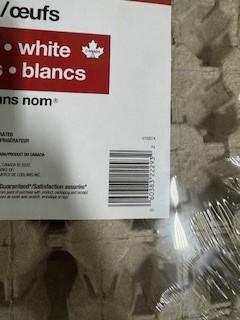
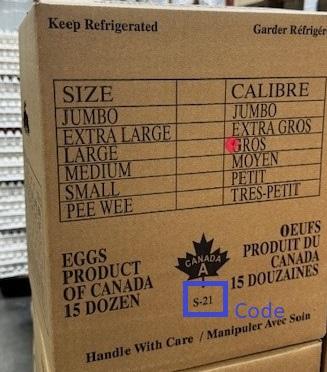
Canada – Certain brands of eggs recalled due to Salmonella

CFIA

Product
Eggs
Issue
Food – Microbial Contamination – Salmonella
What to do

Do not consume, use, sell, serve, or distribute recalled products

Distribution
Saskatchewan

The affected products are being recalled from the marketplace due to possible Salmonella contamination.

Only eggs with the specific lot code information in the table above are affected.

What you should do

  • If you think you became sick from consuming a recalled product, contact your healthcare provider
  • Check to see if you have recalled products
  • Consumers who are unsure if they have purchased the recalled product are advised to contact their retailer
  • Do not consume, serve, use, sell, or distribute recalled products
  • Recalled products should be thrown out or returned to the location where they were purchased

USA – Iowa Egg Company Inc. – Warning Letter – Salmonella

FDA

On June 28-29, 2023, the Iowa Department of Agriculture, under contract with the Food and Drug Administration (FDA), inspected your shell egg farm and egg processing facility, where your eggs are washed, graded, and packed, located at 3407 Kirkwood Ave., Osage, IA 50461. The inspection revealed serious violations of the Prevention of Salmonella Enteritidis in Shell Eggs During Production, Storage, and Transportation regulation (the Shell Egg regulation), Title 21, Code of Federal Regulations, Part 118 (21 CFR Part 118). Failure to comply with the provisions of 21 CFR 118 causes your shell eggs to be in violation of section 361(a) of the Public Health Service Act (the PHS Act), 42 U.S.C. § 264(a). In addition, these violations render your shell eggs adulterated within the meaning of section 402(a)(4) of the Federal Food, Drug, and Cosmetic Act (the Act), 21 U.S.C. § 342(a)(4), in that they have been prepared, packed, or held under insanitary conditions whereby they may have become contaminated with filth, or whereby they may have been rendered injurious to health. You may find the Act, the PHS Act and Shell Egg regulation through links on FDA’s home page at http://www.fda.gov.

At the conclusion of the inspection, Iowa Department of Agriculture State inspectors issued Mr. Jose Hernandez, Site Manager, an FDA Form 483 (FDA-483), Inspectional Observations. To date, FDA has not received a response describing corrective actions. Based on our review of the inspectional findings, we are issuing this letter to advise you of our concerns and to provide detailed information describing the findings at your farm. Your significant violations are as follows:

1.  You did not have and implement a written Salmonella Enteritidis (SE) Prevention Plan that includes, at minimum, the SE prevention measures required by 21 CFR118.4. You have a document titled “SE Prevention Plan”; however, as describedbelow, this plan is inadequate in that it does not address all required SE prevention measures.

Italy – Packed eggs of 6/10 and cartons of 180/200/360 “S”, “M”, “L”, “XL” – Salmonella

Salute

Brand : ALICOM

Name : Packed eggs of 6/10 and cartons of 180/200/360 “S”, “M”, “L”, “XL”

Reason for reporting : Recall due to microbiological risk

Publication date : 8 January 2024

Documentation

Documentation

Research – UK – FSA steps up response to Salmonella in Polish poultry products

Food Safety News

More information has been shared by the Food Standards Agency (FSA) about Salmonella in poultry meat and eggs from Poland.

There have been 200 cases of salmonellosis this year in the United Kingdom caused by different strains of Salmonella Enteritidis linked to such products.

FSA has investigated more than 90 incidents in the past two years, with two outbreaks linked to eggs and three to poultry meat from Poland this year.

The FSA, Food Standards Scotland (FSS), and the UK Health Security Agency (UKHSA) recently told consumers to take care when handling and cooking chicken, turkey, and duck products at home. Catering sites are using the majority of imported eggs.

Research – New sanitiser kills Salmonella in seconds

Adelaide Edu

Food poisoning outbreaks caused by bacteria such as salmonella could be significantly reduced if a new sanitiser is proven to be successful in the next stage of trials.

University of Adelaide researchers are developing plasma-activated water as an environmentally friendly food sanitiser that can kill foodborne superbugs in seconds.

“The results of our prototype trials are really exciting and showed that our sanitiser destroyed salmonella on chicken meat and eggs in just five seconds,” said lead researcher Dr Katharina Richter, a Future Making Fellow from the University of Adelaide’s Institute for Photonics and Advanced Sensing and Adelaide Medical School.

“We envisage that this sanitiser could be used as a spray or dip for at-risk foods such as eggs, meats, poultry and plant-based products during the manufacturing process, potentially providing a chemical-free alternative to current sanitisers and preventing disease.”

More than four million cases of foodborne disease are estimated to occur in Australia each year. Symptoms can range from mild to severe and include diarrhoea, vomiting, fever, aches, and pains.

“Vulnerable people such as young children, the elderly, pregnant women and people with weakened immune systems are most at risk of severe consequences and could even die of foodborne illnesses,” said Dr Richter.