Category Archives: raw milk cheese

Quebec – Absence of information necessary for the safe consumption of cheeses packaged and sold by Gourmet Laurier – Raw Milk

Quebec

The Ministry of Agriculture, Fisheries and Food (MAPAQ), in collaboration with the Food Inspection Division of the City of Montreal and the company Gourmet Laurier inc. located at 1042, avenue Laurier Ouest in Montreal, advises people considered vulnerable (pregnant women, people with weakened immune systems, children and the elderly) not to consume the products indicated in the table below , because they do not include the statement “made from raw milk” which is required.

Product name

Format

Affected batch

“COMTOMME”

Variable

Units sold until May 12, 2022

“HIGH MOUNTAIN SUMMER BEAUFORT”

“OSSAU-IRATY”

“GRUYERE KALTBACH AOP KING”

“COUNTY LE POLIGNY”

The products that are the subject of this warning were offered for sale until May 12, 2022 inclusive, only at the establishment designated above. They were wrapped in clear plastic wrap and cut to order.

The retailer is voluntarily recalling the products in question. It has agreed with MAPAQ and the Food Inspection Division of the City of Montreal to distribute this warning as a precautionary measure. In addition, people deemed vulnerable (designated above) who have one of these products in their possession are advised not to consume it. They should return it to the establishment where they bought it, use it in a cooked dish that will be cooked until it reaches a safe cooking temperature of 74°C or throw it away. However, no case of disease associated with the consumption of this food has been reported to MAPAQ to date.

Research – Raw-milk cheeses: What are the associated health risks and what preventive measures can be taken?

ANSES

Salmonella, enterohaemorrhagic E. coli, Listeria monocytogenes – a wide range of bacteria can be found in the raw-milk cheeses and other raw-milk dairy products we consume. These are sometimes involved in cases of food poisoning, leading them to be recalled or withdrawn from the market. In order to further improve the control of these risks, ANSES has identified the types of raw-milk cheeses on which efforts should focus as a priority.

ANSES received a request from the Directorate General for Food to identify and classify the main bacterial hazards associated with the various types of raw-milk cheeses and other dairy products made from raw milk. The aim was also to assess the main sources of contamination and the means implemented to control the associated risks.

The main microbiological hazards in raw-milk cheeses and dairy products

In France over the last decade, 34%, 37% and 60% of outbreaks of salmonellosis, listeriosis and enterohaemorrhagic E. coli (EHEC) infections respectively have been linked to the consumption of raw-milk cheeses. While some bacteria can cause gastroenteritis symptoms (Salmonella spp. and Staphylococcus aureus), others can have much more serious consequences such as kidney failure (EHEC) or even death (L. monocytogenes, EHEC).

The main sources of these hazards are soft cheeses with a surface mould (such as Camembert, Brie and Crottin) and short-ripened uncooked pressed cheeses (such as Morbier, Reblochon and Saint-Nectaire). Next come soft washed-rind cheeses such as Munster and Maroilles.

Continue efforts to prevent microbiological risks, from farm to consumer

The means implemented to control microbiological risks in the main dairy sectors (cattle, sheep, goats), from the rearing stage to the consumption stage, were studied by the Agency. It concluded that:

At farm level, good animal husbandry and hygiene practices are well known in the various sectors. The efforts already well under way in terms of hygiene during milking and the management of mastitis should be continued;
At the production stage, levels of risk control are also very high; the Agency recommends continuing to implement good hygiene practices and to carry out self-checks in order to best anticipate any risk of an outbreak;
At consumer level, in order to avoid a foodborne infectious disease, it is essential to comply with the information on the packaging or that given by the seller concerning the temperature at which the cheese should be stored in the refrigerator and its use-by date. Lastly, ANSES reiterates its recommendation that pregnant women, immunocompromised individuals, people over the age of 65 and young children should avoid consuming raw-milk cheeses, with the exception of hard pressed cheeses such as Gruyère and Comté.

“For several years now, we have been seeing a strong commitment on the part of the various raw-milk cheese sectors to preventing microbiological risks. Thanks to the actions taken, levels of hygiene and risk control are now very high on farms. The self-checks implemented at the processing stage are able to identify a large number of problematic batches. However, there is still a residual risk and it is important to identify new ways of optimising the current control measures. For example, this could involve improving epidemiological investigations, identifying poor hygiene practices at an earlier stage, or communicating more with consumers”, explains Laurent Guillier, who coordinated ANSES’s expert appraisal.

Did you know?

Contrary to popular belief, removing the rind from a raw-milk cheese is not enough to protect yourself against bacteria, as these can be found everywhere in the cheese.

On the other hand, when raw-milk cheeses are well cooked, as in an oven-baked recipe, they no longer pose a health risk.

A new forthcoming expert appraisal
This work to classify raw-milk cheeses was a first step in responding to the formal request. The expert appraisal work is continuing, to evaluate the effectiveness of the various health measures such as the sorting of milk at farm level and self-checks at the production stage. The next step will be to identify priority work areas for further reducing microbiological risks.

Click to access BIORISK2019SA0033.pdf

France – Semi-salted Raw Milk Farm Butter – Salmonella

Gov france

Identification information of the recalled product

  • Product category Food
  • Product subcategory Milk and dairy products
  • Product brand name DUMESNIL FARM
  • Model names or references Semi-salted farm butter, made at the Castillon farm, with raw milk
  • Identification of products
    GTIN Lot Dated
    0656272471057 bds270122 Use-by date 02/21/2022
  • Packaging Whole butter wrapped in food packaging foil
  • Marketing start/end date From 01/28/2022 to 02/02/2022
  • Storage temperature Product to be stored in the refrigerator
  • Health mark EN 76.658.003 EC
  • Geographic area of ​​sale Regions: Normandy
  • Distributors See table List of points of sale below
  • List of points of saletraceability_of_butter_from_27.01.22.pdf

Practical information regarding the recall

  • Reason for recall presence of Salmonella
  • Risks incurred by the consumer Salmonella spp (causative agent of salmonellosis)

France – Soft Raw Milk Farm Butter – Salmonella

Gov france

Identification information of the recalled product

  • Product category Food
  • Product subcategory Milk and dairy products
  • Product brand name DUMESNIL FARM
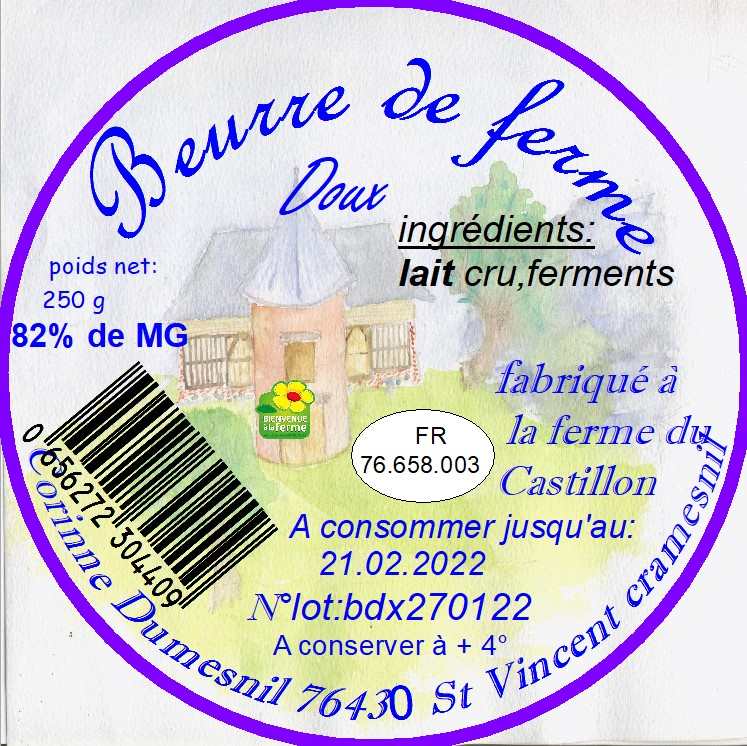
  • Model names or references Soft farm butter, made at the Castillon farm, with raw milk
  • Identification of products
    GTIN Lot Dated
    0656272304409 bdx270122 Use-by date 02/21/2022
  • Packaging Whole butter wrapped in food packaging foil
  • Marketing start/end date From 01/28/2022 to 02/02/2022
  • Storage temperature Product to be stored in the refrigerator
  • Health mark EN 76.658.003 EC
  • Geographic area of ​​sale Regions: Normandy
  • Distributors See table List of points of sale below
  • List of points of saletraceability_of_butter_from_27.01.22.pdf

Practical information regarding the recall

  • Reason for recall presence of Salmonella
  • Risks incurred by the consumer Salmonella spp (causative agent of salmonellosis)

France – The 76 pie chart – Raw Milk Cheese- Salmonella

Gov france

Identification information of the recalled product

  • Product category Food
  • Product subcategory Milk and dairy products
  • Product brand name DUMESNIL FARM
  • Model names or references The 76 camembert, creamy & powerful, with raw milk from Normandy
  • Identification of products
    GTIN Lot Dated
    0656272919924 le76250122 Use-by date 03/26/2022
  • Packaging Whole camembert wrapped in food packaging foil
  • Marketing start/end date From 02/14/2022 to 02/16/2022
  • Storage temperature Product to be stored in the refrigerator
  • Health mark EN 76.658.003 EC
  • Geographic area of ​​sale Regions: Normandy
  • Distributors See table List of points of sale below
  • List of points of saleTRACABILITE_CAMEMBERT_LE_76__du_25.01.22.pdf

Practical information regarding the recall

  • Reason for recall presence of Salmonella
  • Risks incurred by the consumer Salmonella spp (causative agent of salmonellosis)

France – Le Carré Fécampois – Raw Milk Cheese -Salmonella

Gov france

Identification information of the recalled product

  • Product category Food
  • Product subcategory Milk and dairy products
  • Product brand name THE FARM DUMESNIL
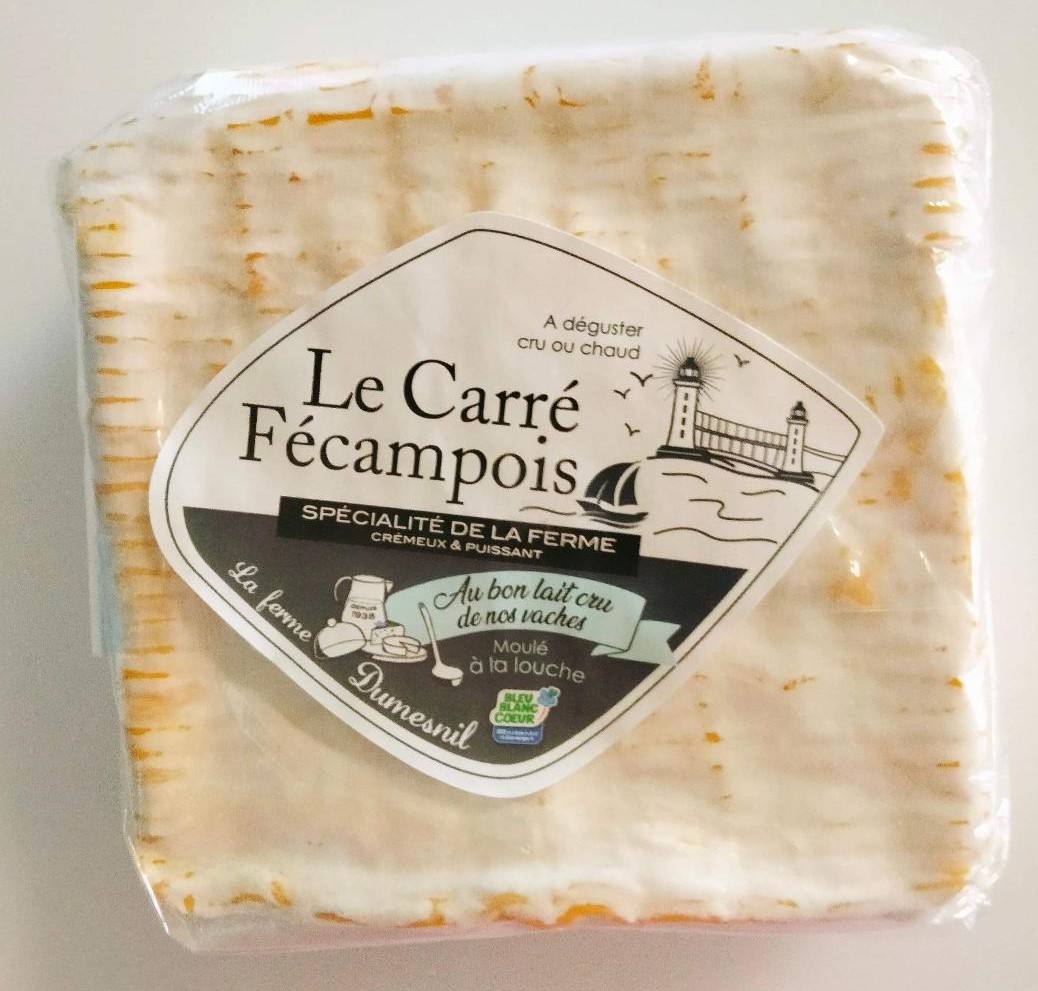
  • Model names or references The Carré Fécampois, specialty of the farm, creamy & powerful, with raw milk from our cows
  • Identification of products
    Lot Date
    carr250122 Use-by date 03/26/2022
  • Packaging Whole cheese wrapped in food wrap
  • Marketing start/end date From 02/21/2022 to 02/24/2022
  • Storage temperature Product to be stored in the refrigerator
  • Health mark FR 76,658,003 CE
  • Geographic area of ​​sale Regions: Normandy
  • Distributors See table List of points of sale below
  • List of points of saleTRACABILITE_CARRE_du_25.01.22.pdf

Practical information regarding the recall

  • Reason for recall presence of Salmonella
  • Risks incurred by the consumer Salmonella spp (causative agent of salmonellosis)

France – La Parceye – Raw Milk Cheese -Salmonella

Gov france

Identification information of the recalled product

  • Product category Food
  • Product subcategory Milk and dairy products
  • Product brand name THE FARM DUMESNIL
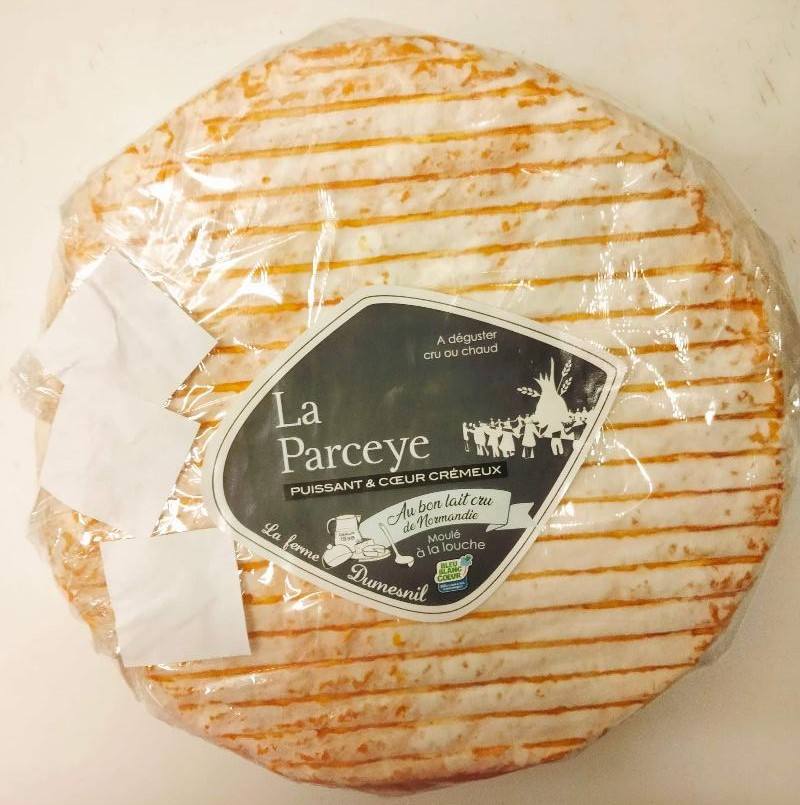
  • Model names or references La Parceye, powerful & creamy heart, with raw milk from Normandy
  • Identification of products
    GTIN Lot Date
    0656272158231 py250122 Use-by date 04/15/2022
  • Packaging Whole cheese wrapped in food wrap
  • Marketing start/end date From 07/02/2022 to 02/03/2022
  • Storage temperature Product to be stored in the refrigerator
  • Health mark FR 76,658,003 CE
  • Geographic area of ​​sale Regions: Normandy
  • Distributors See table List of points of sale below
  • List of points of saleTRACABILITE_PARCEYE_du_25.01.22.pdf

Practical information regarding the recall

  • Reason for recall presence of Salmonella
  • Risks incurred by the consumer Salmonella spp (causative agent of salmonellosis)

France- Le P’tit Havrais – Raw Milk Cheese – Salmonella

Gov france

Identification information of the recalled product

  • Product category Food
  • Product subcategory Milk and dairy products
  • Product brand name THE FARM DUMESNIL
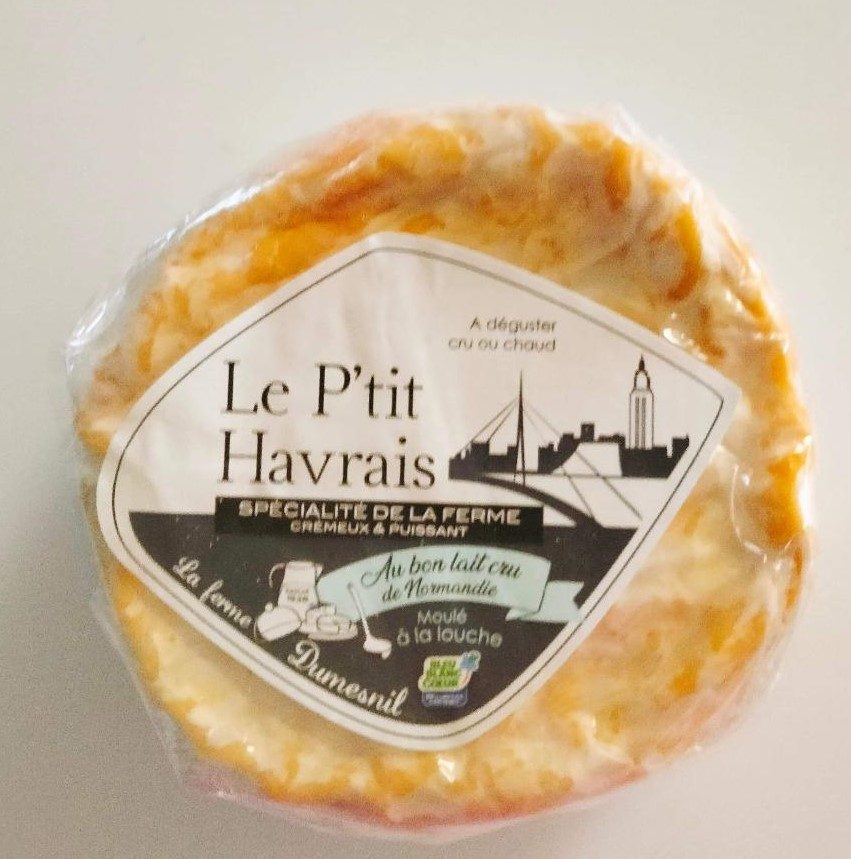
  • Model names or references Le P’tit Havrais, specialty of the farm, powerful & creamy heart, with raw milk from Normandy
  • Identification of products
    GTIN Lot Date
    0656272139568 pth250122 ou gh250122 Use-by date 03/26/2022
  • Packaging Whole cheese wrapped in food wrap
  • Marketing start/end date From 08/02/2022 to 10/02/2022
  • Storage temperature Product to be stored in the refrigerator
  • Health mark FR 76,658,003 CE
  • Geographic area of ​​sale Regions: Normandy
  • Distributors See table List of points of sale below
  • List of points of saleTRACABILITE_P_TIT_HAVRAIS_du_25.01.22.pdf

Practical information regarding the recall

  • Reason for recall presence of Salmonella
  • Risks incurred by the consumer Salmonella spp (causative agent of salmonellosis)

Research – Assessment of the Microbiological Quality and Safety of Unpasteurized Milk Cheese for Sale in England between 2019 and 2020

Journal of Food Protection

Cheese made with unpasteurized milk has been associated with outbreaks of illness. However, there are limited data on the prevalence of Shiga toxin–producing Escherichia coli (STEC) in these products and a lack of clarity over the significance of E. coli as a general indicator of hygiene in raw milk cheeses. The aim of this study was to provide further data to address both of these issues, as well as assessing the overall microbiological quality of raw milk cheeses available to consumers in England. A total of 629 samples of cheese were collected from retailers, catering premises, and manufacturers throughout England. The majority (80%) were made using cow’s milk, with 14% made from sheep’s milk and 5% from goat’s milk. Samples were from 18 different countries of origin, with the majority originating from either the United Kingdom (40%) or France (35%). When interpreted against European Union microbiological criteria and United Kingdom guidance, 82% were considered to be of satisfactory microbiological quality, 5% were borderline, and 12% were unsatisfactory. Four samples (0.6%) were potentially injurious to health due to the isolation of STEC from one, >104 CFU/g of coagulase-positive staphylococci in two, and >100 CFU/g of Listeria monocytogenes in the fourth sample. Indicator E. coli and Listeria species were detected more frequently in soft compared with hard cheese. Higher levels of indicator E. coli were significantly associated with a greater likelihood of detecting Shiga toxin genes (stx1 and/or stx2).

RASFF Alert – STEC E.coli – Raw Milk Cheese – Bovine Meat – Frozen Lamb

RASFF

Shiga toxin-producing Escherichia coli in raw milk cheese from France in Belgium and Luxembourg

RASFF

Presence E. coli STEC in Bovine meat from Brazil in Spain

RASFF

Shiga toxin-producing Escherichia coli in frozen lamb meat from New Zealand in Italy