Category Archives: Pseudomonas fluorescens

Research – Recent Advances in the Mechanisms and Regulation of QS in Dairy Spoilage by Pseudomonas spp.

MDPI

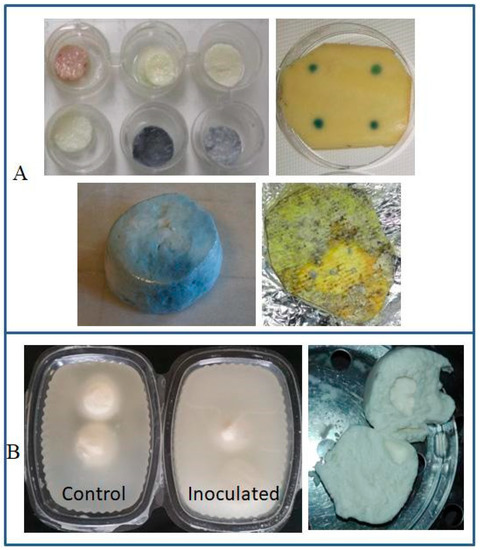
Food spoilage is a serious issue dramatically impacting the worldwide need to counteract food insecurity. Despite the very expensive application of low temperatures, the proper conservation of fresh dairy products is continuously threatened at different stages of production and commercialization by psychrotrophic populations mainly belonging to the Pseudomonas genus. These bacteria cause discolouration, loss of structure, and off-flavours, with fatal implications on the quality and shelf-life of products. While the effects of pseudomonad decay have been widely reported, the mechanisms responsible for the activation and regulation of spoilage pathways are still poorly explored. Recently, molecule signals and regulators involved in quorum sensing (QS), such as homoserine lactones, the luxR/luxI system, hdtS, and psoR, have been detected in spoiled products and bacterial spoiler species; this evidence suggests the role of bacterial cross talk in dairy spoilage and paves the way towards the search for novel preservation strategies based on QS inhibition. The aim of this review was to investigate the advancements achieved by the application of omic approaches in deciphering the molecular mechanisms controlled by QS systems in pseudomonads, by focusing on the regulators and metabolic pathways responsible for spoilage of fresh dairy products. In addition, due the ability of pseudomonads to quickly spread in the environment as biofilm communities, which may also include pathogenic and multidrug-resistant (MDR) species, the risk derived from the gaps in clearly defined and regulated sanitization actions is underlined. View Full-Text

USA – Estimate of Burden and Direct Healthcare Cost of Infectious Waterborne Disease in the United States

CDC

Provision of safe drinking water in the United States is a great public health achievement. However, new waterborne disease challenges have emerged (e.g., aging infrastructure, chlorine-tolerant and biofilm-related pathogens, increased recreational water use). Comprehensive estimates of the health burden for all water exposure routes (ingestion, contact, inhalation) and sources (drinking, recreational, environmental) are needed. We estimated total illnesses, emergency department (ED) visits, hospitalizations, deaths, and direct healthcare costs for 17 waterborne infectious diseases. About 7.15 million waterborne illnesses occur annually (95% credible interval [CrI] 3.88 million–12.0 million), results in 601,000 ED visits (95% CrI 364,000–866,000), 118,000 hospitalizations (95% CrI 86,800–150,000), and 6,630 deaths (95% CrI 4,520–8,870) and incurring US $3.33 billion (95% CrI 1.37 billion–8.77 billion) in direct healthcare costs. Otitis externa and norovirus infection were the most common illnesses. Most hospitalizations and deaths were caused by biofilm-associated pathogens (nontuberculous mycobacteria, PseudomonasLegionella), costing US $2.39 billion annually.

At the beginning of the 20th century, diseases commonly transmitted by water, such as cholera and typhoid, were major causes of death in the United States (1). Reliable provision of treated, safe drinking water dramatically reduced the burden of these diseases and has been recognized as one of the greatest public health achievements of the 20th century (2). Despite this achievement, waterborne disease in the United States persists (35).

In the United States, outbreaks associated with large public drinking water systems have sharply declined in the past 40 years (3,6), likely the result of improvements in regulation and operation. However, transmission of disease via drinking water systems still occurs, often attributable to aging infrastructure, operational challenges, and the private or unregulated water systems (e.g., private wells) that serve an estimated 43 million persons (7). At the same time, the complexity and scope of water use has increased; drinking, sanitation, hygiene, cooling, and heating needs are supported by 6 million miles of plumbing inside US buildings (i.e., premise plumbing) (8,9). Premise plumbing water quality can be compromised by long water residency times, reduced disinfectant levels, and inadequate hot water temperatures, creating environments where pathogens (e.g., nontuberculous mycobacteria [NTM], Pseudomonas, and Legionella) can amplify in biofilms (10). People can be exposed to these pathogens through contact, ingestion, or inhalation of aerosols (e.g., from showerheads, building cooling towers, or decorative fountains).

As leisure time has increased, swimming pools, waterparks, water playgrounds, and hot tubs have proliferated (5). These venues rely largely on chlorination as the major barrier against disease transmission. Cryptosporidium has emerged as the major cause of outbreaks associated with treated aquatic venues because it is extremely chlorine resistant and has a low infectious dose (5,11,12). Warmer oceans have led to Vibrio-associated wound infections farther north than previously documented (13).

Estimates of the overall burden of foodborne disease in the United States, including both known and unknown agents, have been useful in directing prevention activities and setting public health goals (14,15). Quantifying the burden of infectious waterborne disease in the United States would also be beneficial.

Previous studies have attempted to estimate the burden of gastrointestinal illness (16,17) or all illness associated with drinking water (18) and untreated recreational water (19) in the United States, but the burden of disease from all water sources (drinking, recreational, environmental) and exposure routes (ingestion, contact, inhalation) has not been estimated. We present an estimate of the burden of waterborne disease in the United States that includes gastrointestinal, respiratory, and systemic disease; accounts for underdiagnosis; and includes all water sources and exposure routes.

RASFF Alert – Pseudomonas fluorescens – Mozzarella

European Food Alerts

RASFF

Pseudomonas fluorescens (130000000 CFU/g) in mozzarella from Italy in Italy

Research – Synergistic antibacterial effect of nisin, ethylenediaminetetraacetic acid, and sulfite on native microflora of fresh white shrimp during ice storage

Wiley Online

This study aims to investigate the effectiveness of using nisin, ethylenediaminetetraacetic acid (EDTA), and sulfite alone or in combination in reducing Vibrio parahaemolyticus Salmonella enterica , and Pseudomonas fluorescens in broth and native microflora on raw Pacific white shrimp during ice storage. Nisin (50 ppm), EDTA (20 mM), alone or in combination were used to test on the growth of parahaemolyticus enterica , and fluorescens in broth. Nisin (50 ppm), EDTA (20 mM), sodium metabisulfite (1.25 and 0.625%), ice; alone or in combination were used on shrimps during 1°C storage for 10 days. Microbial and chemical changes were analyzed during shrimp storage. First, the combination of nisin and EDTA exhibited antibacterial effects against parahaemolyticus enterica , and fluorescens in broth. Second, in shrimp preservation, the combination of nisin, EDTA, and sulfite at a low dose of 0.625% exhibited higher antimicrobial activity than did a high dose of sulfite (1.25%). Based on aerobic bacteria counts, psychrotrophic bacteria, and TVB‐N, shrimp treatment with combination of nisin, EDTA, and low‐dose sulfite were still acceptable within 10 days of storage. Based on our findings, nisin and EDTA can be used to reduce uses of sulfite for shrimp preservation in the future.

Research – Evaluation of weakly acidic electrolyzed water and modified atmosphere packaging on the shelf life and quality of farmed puffer fish (Takifugu obscurus ) during cold storage

Wiley Online

The combined effect of weakly acidic electrolyzed water (WAEW) and modified atmosphere packaging (MAP) treatments on the quality of puffer fish (Takifugu obscurus ) during cold storage was studied on aspects of microbiological activity, texture, total volatile basic nitrogen (TVB‐N), trimethylamine (TMA), free amino acids (FAAs), thiobarbituric acid reactive substance (TBARS), ATP‐related compounds and value, volatile organic compounds (VOCs), and organoleptic properties. As a result, significantly ( < .05) higher inhibitory effects on total viable counts (TVC), H2S‐producing bacteria (including Shewanella putrefaciens ), Pseudomonas spp., and lactic acid bacteria (LAB) were observed in WAEW‐treated puffer fish packaged in 60%CO2/5%O2/35%N2 atmosphere than that in air package and vacuum package with/without WAEW‐treated samples. In addition, chemical results showed that WAEW together with MAP treatments were highly efficient in maintaining lower TVB‐N, TMA, and TBARS values in refrigerated puffer fish. Moreover, the presence of WAEW combined with MAP treatments showed positive effects on retarding the relative content of fishy flavor compounds, such as 1‐octen‐3‐ol, 1‐penten‐3‐ol, hexanal, heptanal, nonanal, decanal, ()‐2‐octenal, and 2,3‐butanedione. As a whole, the combined effect of WAEW and MAP on refrigerated puffer fish is advisable to maintain better quality and extend the shelf life.

Research – Effect of Peracetic Acid Solutions and Lactic Acid on Microorganisms in On-Line Reprocessing Systems for Chicken Slaughter Plants

Journal of Food Protection

ABSTRACT

During poultry slaughter and processing, microbial cross-contamination between individual chickens is possible, as well as from one slaughter animal to the next without direct contact. One option for reducing the risk of cross-contamination is to decrease the number of microorganisms on contact surfaces by using disinfectants. The aim is to decontaminate the surfaces coming into direct contact with the carcasses. In the present study, the effectiveness of different disinfectants was investigated in laboratory settings, simulating the conditions in the slaughterhouses and in a chicken slaughterhouse. For this, an artificial residue substance (consisting of yeast extract, albumin, and agar) was developed, tested, and included in the assays. Two disinfectants were tested under laboratory conditions: lactic acid (5 and 6.67%) and peracetic acid (0.33 and 0.5%). At the slaughterhouse, peracetic acid (0.021%) was used. In the laboratory tests, it was found that the peracetic acid solution had the highest disinfection potential with respect to an Escherichia coli strain (reduction >4 log CFU mL−1) at 0.5% without an artificial residue substance. The tested lactic acid solutions also showed the highest disinfection potential against a Pseudomonas aeruginosa strain, without an artificial residue substance. When applying the artificial residue substance, the reduction potential of lactic acid and peracetic acid was decreased to less than 1.4 log CFU mL−1. Application of peracetic acid in the slaughterhouse reduced the number of total aerobic bacteria by more than 4 log CFU mL−1 and the number of Enterobacteriaceae by more than 3 log CFU mL−1, depending on the place of sampling.

HIGHLIGHTS
  • Peracetic acid and lactic acid decreases E. coli and P. aeruginosa numbers in vitro.
  • Sanitation in place reduces the number of bacteria in a chicken slaughterhouse.
  • The number of total aerobic bacteria and Enterobacteriaceae was significantly reduced.

Research – Microbiological and real-time mechanical analysis of Bacillus licheniformis and Pseudomonas fluorescens dual-species biofilm

Microbiology Research

n natural habitats, bacterial species often coexist in biofilms. They interact in synergetic or antagonistic ways and their interactions can influence the biofilm development and properties. Still, very little is known about how the coexistence of multiple organisms impact the multispecies biofilm properties. In this study, we examined the behaviour of a dual-species biofilm at the air–liquid interface composed by two environmental bacteria: Bacillus licheniformis and a phenazine mutant of Pseudomonas fluorescens . Study of the planktonic and biofilm growths for each species revealed that P. fluorescens grew faster than B. licheniformis and no bactericidal effect from P. fluorescens was detected, suggesting that the growth kinetics could be the main factor in the dual-species biofilm composition. To validate this hypothesis, the single- and dual-species biofilm were characterized by biomass quantification, microscopy and rheology. Bacterial counts and microscale architecture analysis showed that both bacterial populations coexist in the mature pellicle, with a dominance of P. fluorescens . Real-time measurement of the dual-species biofilms’ viscoelastic (i.e. mechanical) properties using interfacial rheology confirmed that P. fluorescens was the main contributor of the biofilm properties. Evaluation of the dual-species pellicle viscoelasticity at longer time revealed that the biofilm, after reaching a first equilibrium, created a stronger and more cohesive network. Interfacial rheology proves to be a unique quantitative technique, which combined with microscale imaging, contributes to the understanding of the time-dependent properties within a polymicrobial community at various stages of biofilm development. This work demonstrates the importance of growth kinetics in the bacteria competition for the interface in a model dual-species biofilm.