Brand : CAM srl
Name : VONGOLE VERACI
Reason for reporting : Recall due to microbiological risk
Publication date : 20 November 2023


Brand : CAM srl
Name : VONGOLE VERACI
Reason for reporting : Recall due to microbiological risk
Publication date : 20 November 2023
B.-d. Farm Paris Creek is conducting a recall of Bio-dynamic fresh butter unsalted, 200g. The product has been available for sale at Foodies and Harris Farms in NSW, Foodland in SA and independent food retailers including IGA in SA, NT, VIC and WA.

Food products contaminated with Yersinia enterocolitica may cause illness if consumed.
What to do
Consumers should not eat this product. Any consumers concerned about their health should seek medical advice and should return the product to the place of purchase for a full refund.
For further information please contact:
Related links:
Posted in food contamination, food handler, Food Hazard, Food Hygiene, Food Inspections, Food Micro Blog, Food Microbiology, Food Microbiology Blog, Food Microbiology Testing, Food Pathogen, Food Quality, food recall, Food Safety Alert, Food Safety Management, Food Safety Regulations, Food Testing, FSANZ, product recall, Yersinia, yersinia enterocolitica
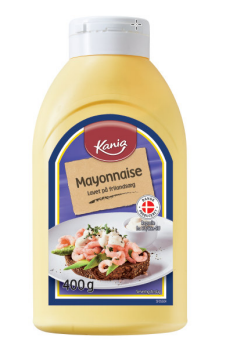
Lidl Denmark is recalling Kania mayonnaise, as growth of lactic acid bacteria has been detected in the product.
If you have the product, you should discard it or return it to the store where it was purchased.
Which food is recalled
Kania mayonnaise
Net content 400 g
Best-before date 27-02-2024
Where is the product sold
The product is sold in Lidl stores throughout the country.
Why is the product being recalled?
Growth of lactic acid bacteria makes the product unsuitable as food.
What should you do as a consumer?
The Danish Veterinary and Food Administration advises consumers to return the product to the store where it was purchased or to discard it.
Who recalls the product
Lidl Denmark K/S, Carl Blochs Gade 89, 8000 Aarhus C.
Harboes Bryggeri A/S is recalling a batch of Harboe Exotic Zero Sugar, as the development of lactic acid bacteria has been detected in the product. If you have the product, you should discard it or return it to the store where it was purchased.
Which food is recalled
Harboe Exotic ZERO Sugar
Net content: 1.5 L
Best before date: 29.05.2024
LOT no. 290524
EAN barcode no.: 5711018035742
Where is the product sold
The product is sold in: Rema1000 stores throughout the country
Why is the product being recalled?
Lactic acid bacteria make the product unsuitable as food.
What should you do as a consumer?
The Danish Veterinary and Food Administration advises consumers to return the product to the store where it was purchased, or to discard it.
Who recalls the product
Harboes Bryggeri A/S
Spegerborgvej 34
4230 Skælskør
Takumi Frozen Ground Tuna is being recalled because the product has high histamine levels, high total plate count, coliforms, and E. coli contamination. The serotype of the E. coli in the product is unknown. There is no mention of any illnesses reported to the company to date because this recall was posted on the FDA’s Enforcement Reports page, not the regular recall page. The recalling firm is Tokai Denpun USA Inc. of Redmond, Washington.
Posted in E.coli, FDA, food recall, Histamine, Pet Food Recall, product recall
17 November 2023: Lindsay Farm HB Ltd is recalling specific batches of its Lindsay Farm brand Organic Raw Milk (unpasteurised) as the product may contain Campylobacter.
| Product type | Raw (unpasteurised) drinking milk |
| Name of product (size) | Lindsay Farm brand Organic Raw Milk (unpasteurised) 2L |
| Batch marking | Lot number: 2310, 2410, 2510, 2610, 2710, 2810, 2910, 3010, 3110, 0111, 0211 |
| Date marking | Use by dates: 27.10.23, 28.10.23, 29.10.23, 30.10.23, 31.10.23, 01.11.23, 02.11.23, 03.11.23, 04.11.23, 05.11.23 |
| Package size and description | The product is sold in a plastic 2L bottle. |
| Distribution | The product is sold in the Hawke’s Bay region via home deliveries and the following registered depots:
The product has not been exported. |
| Notes | This recall does not affect any other batches of Lindsay Farm brand Organic raw milk (unpasteurised). |
If you are a retailer of the products in this recall, download a copy of the point of sale notice. You need to display it in your store for one month.
Point of sale notice [PDF, 95KB]
Customers are asked to check the lot number and Use by date printed on the bottle.
If you have purchased any of the affected product listed on this notice, do not consume it. Customers should return the product to their retailer for a full refund. Alternatively, consume after heating to 70°C and holding at this temperature for one minute. If you don’t have a thermometer, heat the milk until it nearly reaches a boil (or scald the milk) before drinking it.
There have been three reported cases of associated illness. If you have consumed any of this product and have any concerns about your health, seek medical advice.
Customers should return the product to their retailer for a full refund.
How to reduce the risk of illness if you drink raw unpasteurised milk
Campylobacter infection: symptoms and advice
If you have questions, contact Lindsay Farms HB Ltd:
Posted in Campylobacter, food recall, MPI, product recall, Raw Milk, Recall
Coop is recalling Coop spreadable liver pate with cucumber because there is a risk that it has not been sufficiently heat treated.
Pet food recalls for bacterial contamination are pretty common. And occasionally, there is an outbreak linked to those types of products. Many people wonder, how do people get sick from contaminated pet food?
On social media, there are often comments made about people feeding children dog food, or eating it themselves. That is not how these outbreaks happen.
Any type of pet food can be contaminated with pathogens. There have been recalls linked to raw frozen pet food, to canned pet food, and to dry kibble. Just like human food, pet food can be contaminated with pathogens like Salmonella, E. coli, and Listeria monocytogenes bacteria.
When pets eat contaminated food, several things can happen. The animal may not get sick at all. Or they may become carriers of the pathogen without showing any symptoms. Or the animal may get sick, with symptoms ranging from lethargy to a fever, vomiting, or diarrhea.
New Zealand Food Safety is advising the public not to collect or consume shellfish gathered from the Northland east coast because of paralytic shellfish toxins.
In addition, it has extended an existing shellfish biotoxin warning from Cape Kidnappers right up to East Cape.
“Routine tests on mussels from Houhora have shown levels of paralytic shellfish toxins over the safe limit,” says New Zealand Food Safety deputy director-general Vincent Arbuckle.
The warning extends from Cape Karikari north to Kokota (the Sandspit), just south of Parengarenga Harbour.
The current warning in Hawkes Bay has now been extended to extend from Cape Kidnappers right up to East Cape. Levels of paralytic shellfish toxins are increasing and the latest results from Tolaga Bay mussels have risen dramatically and are now 11 times over the safe limit.
As algal blooms increase in size, the levels of toxins in shellfish can reach higher levels.
“Please do not gather and eat shellfish from these affected areas because anyone doing so could get seriously sick.”
“Cooking the shellfish does not remove the toxin, so shellfish from these areas should not be eaten.”
See a map of the warning for Northland region
See a map of the warning for East Cape
Symptoms of paralytic shellfish poisoning usually appear within 10 minutes to 3 hours of eating and may include:
Pāua, crab and crayfish may still be eaten if the gut has been completely removed prior to cooking, as toxins accumulate in the gut. If the gut is not removed, its contents could contaminate the meat during the cooking process.
New Zealand Food Safety has had no notifications of associated illness.
If anyone becomes ill after eating shellfish from an area where a public health warning has been issued, phone Healthline for advice on 0800 61 11 16, or seek medical attention immediately. You are also advised to contact your nearest public health unit and keep any leftover shellfish in case it can be tested.
“New Zealand Food Safety is monitoring shellfish in the region and will notify the public of any changes to the situation,” says Mr Arbuckle.
Commercially harvested shellfish – sold in shops and supermarkets or exported – is subject to strict water and flesh monitoring programmes by New Zealand Food Safety to ensure they are safe to eat.
November 8, 2023
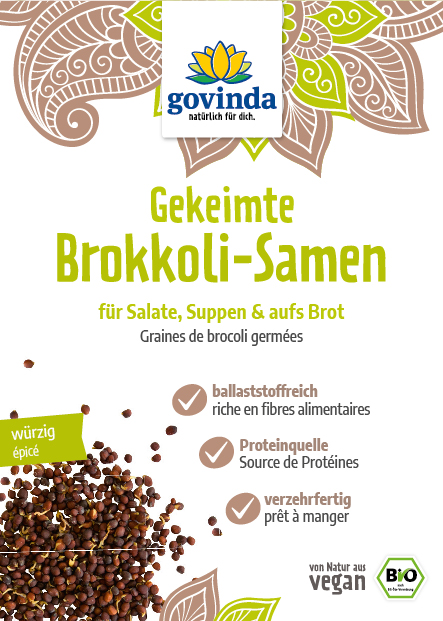
Govinda
Govinda Natur GmbH, Joseph-Monier-Str. 12, 67433 Neustadt an der Weinstrasse
Bacillus cereus

 FoodWorld