Category Archives: Norovirus

Canada – Norovirus prompts recall of raspberries cakes in Quebec

Outbreak News Today Norovirus Food Safety kswfoodworld

The Ministry of Agriculture, Fisheries and Food (MAPAQ) in Quebec announced this week (computer translated) the recall of certain products due to possible norovirus contamination.

The products that are the subject of this alert may have been prepared with lots of frozen raw raspberries from Chile that are being recalled by the Canadian Food Additives Agency. food inspection.These foods were available for sale until June 7, 2019 inclusive. They were sold in a chilled or frozen state or at room temperature, with or without a label.

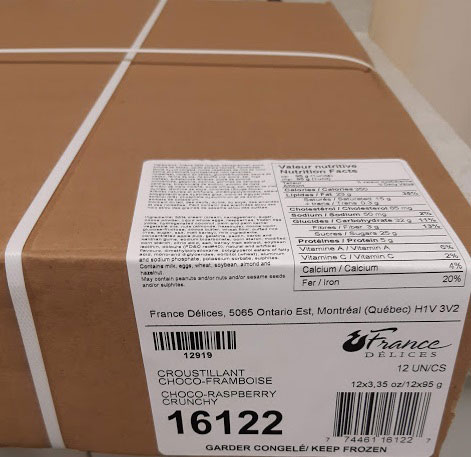
Canada -Food Recall Warning – France Délices brand Choco-Raspberry Crunchy recalled due to norovirus

CFIA

Recall details

Ottawa, June 4, 2019 – France Délices Inc. is recalling France Délices brand Choco-Raspberry Crunchy from the marketplace due to possible norovirus contamination of the raspberries used in this product. Consumers should not consume and retailers, should not sell, or serve the recalled product described below.

The following product has been sold in Ontario and Quebec from the following retailers:

Name Address
La maison du Kouign-Amman 101 Schneider Rd., Kanata, ON
Métro plus 875, Montée Masson, Mascouche, QC
Métro plus Élite St-Antoine 633, boul. des Laurentides, St-Antoine des Laurentides, QC
IGA Coteau du lac 100, Théophile Brassard, Coteau du Lac, QC
IGA Chaumont Bilodeau 1005, boul. Du Grand Héron, St-Jérôme, QC
IGA Extra Sept-Iles 1010, boul. Laure Uashat, Sept-Îles, QC
IGA St-Romuald 1060, boul. Guillaume-Couture, Lévis, QC

This product has been sold clerk-served from retail counters, with or without a label or coding, up to and including June 3, 2019. Consumers who are unsure if they have purchased the affected product are advised to contact their retailer.

Recalled products

Brand Name Common Name Size Code(s) on Product UPC
France Délices Choco-Raspberry Crunchy 95 g 12919 7 74461 16122 7

What you should do

If you think you became sick from consuming a recalled product, call your doctor.

Check to see if you have recalled products in your home. Recalled products should be thrown out or returned to the store where they were purchased.

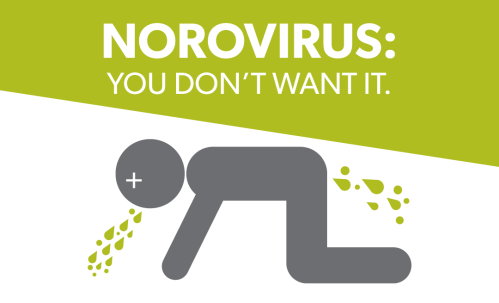
People with norovirus illness usually develop symptoms of gastroenteritis within 24 to 48 hours, but symptoms can start as early as 12 hours after exposure. The illness often begins suddenly. Even after having the illness, you can still become re-infected by norovirus. The main symptoms of norovirus illness are diarrhea, vomiting (children usually experience more vomiting than adults), nausea and stomach cramps. Other symptoms may include low-grade fever, headache, chills, muscle aches and fatigue (a general sense of tiredness).  Most people feel better within one or two days, with symptoms resolving on their own, and experience no long-term health effects. As with any illness causing diarrhea or vomiting, people who are ill should drink plenty of liquids to replace lost body fluids and prevent dehydration. In severe cases, patients may need to be hospitalized and given fluids intravenously.

Background

This recall was triggered by findings by the Canadian Food Inspection Agency (CFIA) during its investigation into a foodborne illness outbreak. The CFIA is conducting a food safety investigation, which may lead to the recall of other products. If other high-risk products are recalled, the CFIA will notify the public through updated Food Recall Warnings.

The CFIA is verifying that industry is removing recalled product from the marketplace.

Illnesses

There have been no reported illnesses associated with the consumption of this product.

More information

France Délices Inc.: Christine Fortin, cfortin@francedelices.com

For more information, consumers and industry can contact the CFIA by filling out the online feedback form.

Product photos

Printer ready version of photos

  • France Délices - Choco-Raspberry Crunchy - case
  • France Délices - Choco-Raspberry Crunchy

USA – FDA now tests frozen berries for Norovirus and Hepatitis A

Food Dive Black_Butte_blackberry

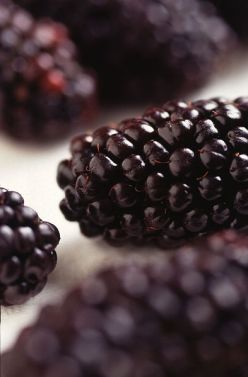
  • The U.S. Food and Drug Administration has been sampling frozen strawberries, frozen raspberries and frozen blackberries for the presence of norovirus and hepatitis A since last November.
  • The agency noted four foodborne illness outbreaks between 1997 and 2016 were linked to frozen berries — three caused by hepatitis A and one by norovirus. The three hepatitis A outbreaks sickened 405 people and caused 53 hospitalizations, while the norovirus outbreak sickened 136, FDA said. Other illness outbreaks linked to frozen berries have occurred in Europe and elsewhere, the agency added.
  • The testing will last about 18 months, FDA said, and involves domestic samples in retail packaging from processors, distribution centers, warehouses, and retail locations. Samples of imported frozen berries will be gathered from ports of entry, importer warehouses and other storage facilities where foreign goods are cleared for entry into the U.S. The agency plans to test 2,000 samples and post quarterly results online.


USA – Norovirus possibly to blame after about 60 fall ill at event

WRAL norovirus-1080x655

Health officials on the North Carolina coast say norovirus may be what caused nearly 60 people to get sick at a recent charity event.

The Dare County Department of Health and Human Services says on its webpage that there were about 250 people at the event in Manteo on May 3. The news release from the department also says that of the people who showed symptoms, three reported seeking medical attention.

Also, the department says the investigation is inconclusive given that only one sample was taken for testing and the result was negative for any specific foodborne bacteria.

UK – Challenges of investigating a large food-borne Norovirus outbreak across all branches of a restaurant group in the United Kingdom, October 2016

Eurosurveillance

During October and November 2016, over 1,000 customers and staff reported gastroenteritis after eating at all 23 branches of a restaurant group in the United Kingdom. The outbreak coincided with a new menu launch and norovirus was identified as the causative agent. We conducted four retrospective cohort studies; one among all restaurant staff and three in customers at four branches. We investigated the dishes consumed, reviewed recipes, interviewed chefs and inspected restaurants to identify common ingredients and preparation methods for implicated dishes. Investigations were complicated by three public health agencies concurrently conducting multiple analytical studies, the complex menu with many shared constituent ingredients and the high media attention. The likely source was a contaminated batch of a nationally distributed ingredient, but analytical studies were unable to implicate a single ingredient. The most likely vehicle was a new chipotle chilli product imported from outside the European Union, that was used uncooked in the implicated dishes. This outbreak exemplifies the possibility of rapid spread of infectious agents within a restaurant supply chain, following introduction of a contaminated ingredient. It underlines the importance of appropriate risk assessments and control measures being in place, particularly for new ingredients and ready-to-eat foods.

USA -FDA Sampling Frozen Berries for Harmful Viruses

FDA


Some people use frozen berries without first cooking them, increasing their risk of exposure to harmful viruses. The U.S. Food and Drug Administration reported three hepatitis A virus outbreaks and one norovirus outbreak linked to frozen berries in the United States from 1997 to 2016. The FDA began sampling frozen berries for each hazard as part of the agency’s efforts to protect consumers and ensure food safety.

The sampling assignment began in November and is estimated to last approximately 18 months. The agency is collecting domestic samples of frozen berries in retail packaging from processors, distribution centers, warehouses, and retail locations. The agency is also collecting import samples from ports of entry, importer warehouses, or other storage facilities where foreign goods are cleared for entry into the country. The FDA plans to collect and test 2,000 samples in all.

Frozen berries are used as ingredients in many foods without being cooked; cooking would reduce or eliminate potential contamination. Strawberries, raspberries and blackberries are delicate and may become contaminated with bacteria or viruses if handled by an infected worker who does not use appropriate hand hygiene, or if exposed to contaminated agricultural water or a contaminated surface, like a harvesting tote. Freezing preserves berries but generally does not kill viruses, which can survive at low temperatures.

If the FDA detects hepatitis A virus or norovirus in a sample, the agency will notify the firm of the finding(s) and work with the firm to take appropriate action to protect the public health. Upon detecting a positive test result, the FDA may also take actions such as placing a firm on an import alert, overseeing a recall, or issuing public warnings.

The FDA will post the sampling results on its FY 19-20 Frozen Berries Assignment page on a quarterly basis and will publish an analytical report once the assignment is complete.

USA – Vibrio Shigella E. coli Outbreak Linked to Raw Oysters in California

Food Poisoning Bulletin

A Vibrio Shigella E. coli and norovirus outbreak linked to raw oysters from Baja California Sur, Mexico has sickened at least 12 people in California, according to the California Department of Public Health (CDPH).

Those twelve patients reported illnesses in February, March, and April 2019 after consuming raw oysters that were sold by restaurants and retailers in Los Angeles, Orange, Santa Barbara, and San Diego counties. The raw oysters were sold throughout the state.

Lab testing was performed on isolates from eight cases. Officials identified Vibrio parahaemolyticus in three patients, Vibrio albensis in one, an unidentified species of Vibrio in one patient, Shigella flexneri serotype 1 in two patients, and norovirus. In addition, one of the people infected with Vibrio parahaemolyticus cases was co-infected with non-O157 Shiga toxin-producing E. coli bacteria.

Traceback evidence has shown that the oysters were harvested from Estero El Cardon. Authorities in Mexico have been notified about this outbreak and are investigating.

Research – Evaluation of Inactivating Norovirus, Hepatitis A, and Listeria monocytogenes on Raspberries by Sanitizer Spray

Journal of Food Protection

ABSTRACT

Reducing the risk of contamination with foodborne pathogens is paramount in maintaining safety of produce. The raspberry industry uses chlorine spray as a control measure before conveying freshly picked red raspberries into individually quick frozen units. However, the efficacy of sanitizer spray treatment to inactivate norovirus, hepatitis A virus (HAV), and Listeria monocytogenes on raspberries has not been characterized. In this study, a laboratory-scale spray bar device was fabricated to simulate industrial settings. Fresh raspberries were spot inoculated with murine norovirus (MNV, a norovirus surrogate), HAV, or L. monocytogenes and sprayed with 50 ppm of chlorine or 80 ppm of peroxyacetic acid (PAA). Surviving pathogens were enumerated after spray or postspray frozen storage at −20°C for 1 and 24 h. Chlorine and PAA spray treatments reduced MNV and L. monocytogenes from raspberries by 0.2 and 0.6 log but had no effect on HAV. During frozen storage after spray treatment, the residual PAA on the fruit surfaces further reduced MNV and L. monocytogenes, achieving a total reduction of approximately 0.6 and 3.0 log, respectively. HAV levels were not affected by frozen storage after PAA or chlorine spray treatment. The findings were supported by the sanitizer decay results showing that PAA decayed more slowly than active chlorine on raspberry surfaces. Submerging washes conducted as comparisons showed higher reduction of pathogens from raspberry surfaces than similar respective sanitizer spray treatments. The results suggest that PAA could contribute to raspberry postharvest sanitation, aiding in risk reduction of pathogen contamination prior to entering an individually quick frozen unit.

Research – Evaluation of Inactivating Norovirus, Hepatitis A, and Listeria monocytogenes on Raspberries by Sanitizer Spray

Journal of Food Protection

Reducing the risk of contamination with foodborne pathogens is paramount in maintaining safety of produce. The raspberry industry uses chlorine spray as a control measure before conveying freshly picked red raspberries into individually quick frozen units. However, the efficacy of sanitizer spray treatment to inactivate norovirus, hepatitis A virus (HAV), and Listeria monocytogenes on raspberries has not been characterized. In this study, a laboratory-scale spray bar device was fabricated to simulate industrial settings. Fresh raspberries were spot inoculated with murine norovirus (MNV, a norovirus surrogate), HAV, or L. monocytogenes and sprayed with 50 ppm of chlorine or 80 ppm of peroxyacetic acid (PAA). Surviving pathogens were enumerated after spray or postspray frozen storage at −20°C for 1 and 24 h. Chlorine and PAA spray treatments reduced MNV and L. monocytogenes from raspberries by 0.2 and 0.6 log but had no effect on HAV. During frozen storage after spray treatment, the residual PAA on the fruit surfaces further reduced MNV and L. monocytogenes, achieving a total reduction of approximately 0.6 and 3.0 log, respectively. HAV levels were not affected by frozen storage after PAA or chlorine spray treatment. The findings were supported by the sanitizer decay results showing that PAA decayed more slowly than active chlorine on raspberry surfaces. Submerging washes conducted as comparisons showed higher reduction of pathogens from raspberry surfaces than similar respective sanitizer spray treatments. The results suggest that PAA could contribute to raspberry postharvest sanitation, aiding in risk reduction of pathogen contamination prior to entering an individually quick frozen un

RASFF Alert – Norovirus – Frozen Red Currants – Oysters

RASFF-Logo

RASFF – norovirus (presence /25g) in frozen red currants from Poland in Belgium

RASFF – norovirus (GI; GII /2g) in oysters from the Netherlands in Belgium