Category Archives: Mould/Mold

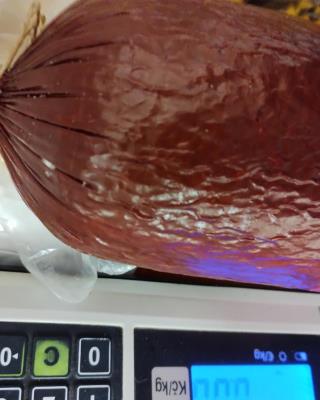
Czech Republic -MOZZARELLA, natural un-ripened semi-fat cheese – Visible Mould/Mold

Potravinynapranyri

Illustrative photo #2

Place of inspection:
Olomouc ( Polská 1201/1, 779 00 Olomouc )
ID: 26717701
Food group: Milk and milk products Cheese

MOZZARELLA, natural unripened semi-fat cheese
Category: Dangerous foods
Invalid parameter:

fungi visible to the eye

It was a raw material for the preparation of dishes. The sample was taken from the loaded package. There was mold visible to the naked eye on the surface of the food. Food is not considered safe if it shows signs of spoilage. Unsuitable storage temperatures of this product were not detected during the inspection.

Expiration date: 04/02/2024
Packaging: Unwrapped technological packaging
Quantity of the product in the package: 9.604 kg
Date of sample collection: 16/10/2023
Reference number: 23-000876-SZPI-CZ
The sample was detected by the official control of the State Agricultural and Food Inspection.
Research – Qatar team identifies way to inhibit mycotoxin growth in fish feed

Feed Navigator

Qatar based researchers say the findings of their study indicate that aquaculture feed imports from some Asian and European countries can be contaminated with moderate levels of mycotoxins.

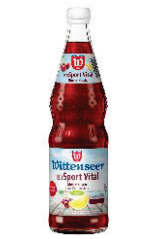
Germany – Wittenseer IsoSport Vital lemon-cherry – Visible Mold/Mould

Lebensmittelwarnung

Alert type: Groceries
Date of first publication:

November 20, 2023

Product name:

Wittenseer IsoSport Vital lemon-cherry

Product images:

Wittenseer Sport Vital.png
Manufacturer (distributor):

Wittenseer Quelle Mineralbrunnen GmbH 24361 Groß-Wittensee

Reason for warning:

A microbiological abnormality has been detected, which may be manifested by mold formation on the surface of the beverage or a noticeably different odor.

Packaging Unit: 0.7 liter bottle
Durability: 09/07/2024
Additional Information:

Reference is made to the attached customer information.

Click to access Verbraucherinformation_IsoSport_Vital_Zitrone_Kirsch.pdf

Research -Modeling the Thermal Inactivation of Ascospores from Heat-Resistant Molds in Pineapple Juice and Evaluating Disinfection Efficiency of Sodium Hypochlorite and Chlorine Dioxide

MDPI

Abstract

The contamination and spoilage of heat-treated fruit juices by heat-resistant mold ascospores present significant challenges to the food industry. Understanding effective strategies to mitigate this contamination is vital for ensuring the shelf-life and microbial safety of heat-treated fruit juices. This study investigated the thermal resistance of ascospores from different heat-resistant mold species, including Aspergillus laciniosusA. chevalieriA. denticulatusA. siamensisHamigera pallida, and Talaromyces macrosporus, isolated from pineapple and sugarcane field soils. Ascospores inactivation kinetics in pineapple juice under heat treatment (75–97 °C) were analyzed using log-linear and Weibull models. Among these species, A. laciniosus displayed the highest heat resistance (δ-value: 104.59 min at 85 °C), while A. siamensis exhibited the lowest (δ-value: 3.39 min at 80 °C). Furthermore, A. laciniosus, the most heat-resistant species, showed notable tolerance to sanitizers. The most effective inactivation was achieved using 1.0% (w/v) sodium hypochlorite for 15 min. Chlorine dioxide, however, was generally ineffective and even activated dormant ascospores in some cases. The combination of hot water (65 °C for 5 min) with sanitizer increased ascospore reduction in most species but did not achieve the 3-log reduction required by the European Standard N13697. This study revealed a correlation between ascospore resistance to heat and chlorine dioxide, offering significant findings for practical inactivation strategies

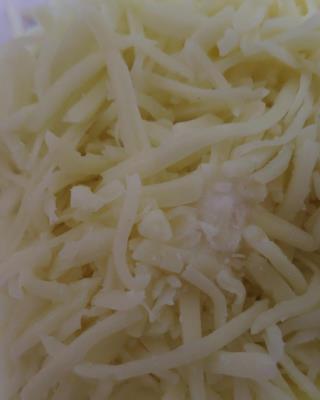
Czech Republic – Pilos Eidam – grated cheese – Visible Mold/Mould

Potravinynapranyri

Illustrative photo #7

Place of inspection:
Pardubice ( Belehradská 548, 530 09 Pardubice )
ID: 26178541
Food group: Milk and milk products Cheese

Pilos Eidam – grated cheese
Category: Dangerous foods
Invalid parameter:

fungi visible to the eye

In some of the inspected packages, mold colonies were present on the surface of the cheese under the intact packaging. Food is not considered safe if it shows signs of spoilage.

Unsuitable storage temperatures of this product were not detected during the inspection. The food did not have an expired minimum durability date.

Batch: A4 361, 26/11/2023
Best before date: 26/11/2023
Packaging: plastic bag sealed
Quantity of the product in the package: 200 g
Manufacturer: Milchwerke Oberfranken West eG, Sulzdorfer Strasse 7, 96484, Moeder
Country of origin:  Germany
Date of sample collection: 6/10/2023
Reference number: 23-000808-SZPI-CZ
The sample was detected by the official control of the State Agricultural and Food Inspection.
Czech Republic – Highlands – Visible Mold/Mould

Potravinynapranyri

Illustrative photo #2

Place of inspection:
Starý Mateřov ( Starý Mateřov 38, 530 02 Starý Mateřov )
ID: 27559033
Invalid parameter:

fungi visible to the eye

There was mold visible to the naked eye on the surface of the product. Food is not considered safe if it shows signs of spoilage. Unsuitable storage temperatures of this product were not detected during the inspection.

The food had an unknown expiration date.

Quantity of the product in the package: 1.054 kg
Date of sample collection: 26/09/2023
Reference number: 23-000838-SZPI-CZ
The sample was detected by the official control of the State Agricultural and Food Inspection.

RASFF Alerts – Ochratoxin A – Organic Ground Coffee – Dried Figs

RASFF

Too much Ochratoxin A in organic ground coffee from Kenya in Finland

RASFF

High content of ochratoxin A in dried figs from Turkey in Italy

RASFF Alerts – Yeasts and Moulds – Stirred Yoghurts

RASFF

Presence of yeasts and moulds in stirred and steamed yoghurts from France in Ireland and the UK

Biocontrol training in Pakistan helps farmers prevent harmful aflatoxins in chillies

KRISHAK JAGAT

Pakistan is the world’s fourth-largest producer of chillies. The country accounts for around 4-5% of global chilli production. Sindh province is where 85% of Pakistan’s chillies are grown, making it one of the biggest chilli-producing regions worldwide. The province is well-known for the town of Kunri, home of the world-famous Dundicut red chillies.

But here, chilli growers face significant agricultural challenges that threaten their livelihoods. One of the biggest problems they face is aflatoxin contamination of their crops.

CABI has teamed up with several organizations to address the issue including:

Pakistan Agricultural Research Council (PARC)
United States Agency for International Development (USAID)
United States Department of Agriculture (USDA)
Rafhan Maize Products Co. Ltd
The organizations are working together on an important project in Pakistan on regulatory harmonization for maximum residue limits and biopesticides. What sets this project apart is its focus on addressing aflatoxins. Uniquely, it explores the use of a unique biocontrol technology at farm level to reduce aflatoxins in red chillies.

Sweden – Plivit Trade recalls Klas corn flour and corn grits – Mycotoxins – Aflatoxin and Ochratoxin

Livsmedelsverket

Plivit Trade is recalling Klas finely ground cornmeal and polenta cornmeal with best-by dates 2024-03-13 and 2024-04-28.