Category Archives: mold

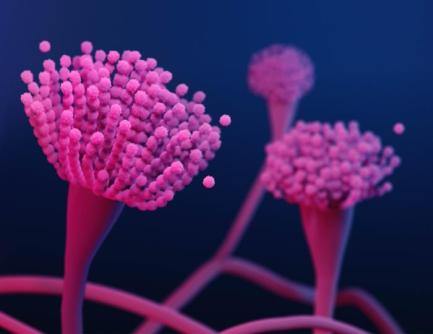
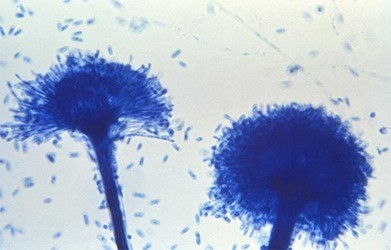
Research -Efficient Reduction of Food Related Mould Spores on Surfaces by Hydrogen Peroxide Mist

MDPI

CDC Mould

The aim of the study was to evaluate the fungicidal effect of a H2O2 mist generating system for disinfection of spores of six food-related moulds (Alternaria alternataAspergillus flavusGeotrichum candidumMucor plumbeusPaecilomyces variotii, and Penicillium solitum) dried on stainless steel. Exposure to H2O2 mist for 2 or 4 h lead to >3 log reduction in mould spores in the majority of the tests. The presence of the soils 2% skim milk or 3% BSA did not significantly alter the fungicidal effect, while the presence of raw meat juice had an adverse fungicidal effect against Penicillium and Mucor in two out of three tests. Fungicidal suspension tests with liquid H2O2 confirmed the effectiveness of H2O2 on reducing the mould spores. Both the surface test and the suspension test indicated that P. variotii is more resistant to H2O2 compared to the other moulds tested. The study shows the efficiency of H2O2 mist on reducing food-related mould spores on surfaces. View Full-Text
RASFF Alert – Moulds – Sesame Seeds

European Food Alerts

RASFF

sesame seeds from Nigeria, via Turkey infested with moulds in the Netherlands

Research – Aspergillus-Derived Mycotoxins in the Feed and Food Chain

Frontiers in Microbiology

kswfoodworld

Image CDC

Aspergillus-produced mycotoxins can enter the feed and food chain at many points in both pre-harvest and post-harvest. Although current climate changes seem to speed up the world-wide spread of mycotoxigenic fungi including the Aspergilli and also facilitate the production of these harmful secondary metabolites the factors governing these disadvantageous global processes are only partly understood or even have remained completely hidden until now. This Research Topic summarizes our knowledge on Aspergillus-derived mycotoxins especially focusing on three major areas of on-going research: (i) toxicological, medical, veterinary aspects, prevalence, detection, risk assessment, control strategies, (ii) ecology and biological control of mycotoxigenic Aspergilli in the fields, and (iii) pre-harvest and post-harvest management of mycotoxigenic Aspergilli and their mycotoxin production. We hope that the wealth of information generously provided by the Aspergillus mycotoxin research community will help the hard work of all those experts, who are active in this important field, and the papers collected here will be instructive and illuminating readings for students and the public as well.

RASFF Alerts – Moulds – Beer

European Food Alerts

RASFF

beer from Ireland infested with moulds in the UK

Research – 5 warning signs of mycotoxin contamination in feed

Farmers Weekly

kswfoodworld

Image CDC

Farmers are being warned to keep their eyes peeled for signs of contamination in feed after sampling has shown high mycotoxin risk levels.

UK-wide sampling carried out by Alltech has shown that 46% of total mixed rations (TMR) produced in spring-summer have a moderate to high mycotoxin risk.

“The most common types of mycotoxin found were the Type A Trichothecenes and the Penicilliums,” explains Bob Kendal, North England ruminant manager at Alltech.

“Penicilliums are found in silages and are of particular concern for ruminants. The mould starts life white in colour before developing a blue/grey/green colour and, as the name suggests, can have an antibiotic effect on rumen bacteria.

“This manifests itself as acidosis-like symptoms, dung consistency and sudden drops in milk.

“Type A Trichothecenes includes T-2 toxin which can have a serious effect on the gut of the cow and reduce intakes and performance.”

Research – Climate Change and Food Poisoning

The Counter

Fungal toxins known as mycotoxins, including some thought lost to history, are claiming new territory as the Earth warms.

RASFF Alert – Animal Feed -Mould – Dried Beet Pulp

European Food Alerts

RASFF

high count of moulds in dried beet pulp from Ukraine in Poland

UK – Diageo Great Britain recalls Guinness Draught 0.0% because of possible presence of mould

FSA

Diageo Great Britain has taken the precautionary step of recalling Guinness Draught 0.0%, (non-alcoholic), due to the possible presence of mould in the products.

Product details

Guinness Draught 0.0%
Pack size 440ml Can 6×4 pk
Best before 09 August 2021, 17 August 2021, 24 August 2021

Risk statement

This product may contain mould. Mould does not usually cause food poisoning, however, the FSA would advise against consuming visibly mouldy foods because the presence of mould might make the food unsafe.

Action taken by the company

Diageo Great Britain is recalling the above product. Point of sale notices will be displayed in all retail stores that are selling this product. These notices explain to customers why the products are being recalled and tell them what to do if they have bought the product. Please see the attached notice.

Our advice to consumers

If you have bought the above product do not consume it. Instead, return it to the store from where it was bought, for a full refund. Alternatively, contact the Diageo consumer careline on 0345 601 4558 or consumercare.gbandireland@diageo.com

RASFF Alerts – Animal Feed – Moulds – Dried beet Pulp

European Food Alerts

RASFF

dried beet pulp from Ukraine infested with moulds in Poland

RASFF

dried beet pulp from Ukraine infested with moulds in Poland

UK – Soho Florids UK recalls Potter’s Herbals Malt Extract with Cod Liver Oil because of possible presence of mould

FSA

Soho Florids UK Ltd is recalling Potter’s Herbals Malt extract with Cod Liver Oil as it may contain mould. The product has been sold in various retailers across the UK.

Product details

Potter’s Herbals Malt Extract with Cod Liver Oil
Pack size 650g
Batch code 3M01134, 3M01136, 3M01137
Best before 31 January 2023

Risk statement

This product may contain mould, which makes it unsafe to consume.

Action taken by the company

Soho Florids UK Ltd is recalling the above product. Point of sale notices will be displayed in all retail stores that are selling these products. These notices explain to customers why the products are being recalled and tell them what to do if they have bought the product. Please see the attached notice.

Our advice to consumers

If you have bought the above product do not consume it. Instead, return it to the store from where it was bought for a refund or replacement.