Category Archives: Microbiology

USA Research -CDC – Report on Levels of Yersinia in Pork

Food Safety News

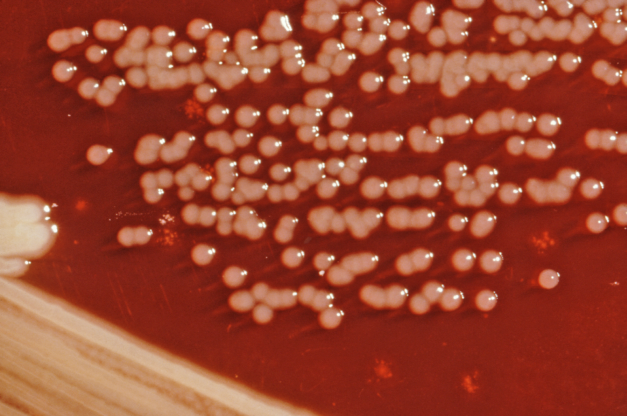
In a new study of raw pork chops and ground pork, Consumer Reports found 69 percent of samples were contaminated with Yersinia enterocolitica, according to a report published by the group today.

A lesser-known foodborne pathogen, Yersinia enterocolitica can cause fever, abdominal pain and diarrhea, lasting one to three weeks, according to the Centers for Disease Control and Prevention. There is approximately one confirmed infection per 100,000 people reported each year, but since these cases are severely under-reported, CDC estimates there are actually around 100,000 infections in the United States annually.

USA – Illinois MacDonalds Closed Salmonella Investigation

Food Safety News

Owners of a Bloomington, Illinois McDonalds voluntarily shut the establishment down last week after it was linked to a series of Salmonella infections.

Bob and Julie Dobski, who own 9 McDonalds franchises in the Bloomington-Normal area, were informed by health officials Wednesday night that the South Main Street location had been connected to a cluster of Salmonella illnesses. The owners chose to shut down the restaurant before Thanksgiving the following day.

Less than 10 Salmonella cases have been reported, according to Keri Simon, communications director for the McClean County Health Department, as reported by Pantagraph. People affected by the bacteria report eating at the restaurant between October 18 and November 11, according to the county health department, which is conducting the investigation along with the Illinois Department of Public Health.

Research – Factors Affecting Pathogens on Fruit and Vegetable Farms

ASMAEA

Produce related outbreaks have been traced back to the preharvest environment. A longitudinal study was conducted on five farms in New York State to characterize prevalence, persistence, and diversity of foodborne pathogens in fresh produce fields and to determine landscape and meteorological factors that predict their presence. Produce fields were sampled four times per year for two years. A total of 588 samples were analyzed for L. monocytogenes, Salmonella and Shiga toxin-producing E. coli (STEC). The prevalence measures of L. monocytogenes, Salmonella and STEC were 15.0, 4.6, and 2.7%, respectively. L. monocytogenes and Salmonella were detected more frequently in water samples, while STEC was detected with equal frequency across all sample types (soil, water, feces and drag swabs). L. monocytogenes sigB gene allelic types 57, 58 and 61, and Salmonella Cerro, were repeatedly isolated from water samples. Soil available water storage (AWS), temperature, and proximity to three land cover classes: water, roads and urban development, and pasture/hay grass, influenced the likelihood of detecting L. monocytogenes. Drainage class, AWS, and precipitation were identified as important factors in Salmonella detection. This information was used in a geographic information systems framework to hypothesize locations of environmental reservoirs where the prevalence of foodborne pathogens may be elevated. The map indicated that not all croplands are equally likely to contain environmental reservoirs of L. monocytogenes. These findings advance recommendations to minimize the risk of preharvest contamination by enhancing models of the environmental constraints on the survival and persistence of foodborne pathogens in fields.

USA – Illegal Prison Hooch – Clostridium botulinum

Food Poisoning Bulletin

Prison hooch, or homemade alcohol,  is the likely source of a botulism outbreak at an Arizona prison that sent seven inmates to intensive care. The seven inmates, all from Special Management Unit 1 of the Arizona State Prison Complex Eyman in Florence, were hospitalized over the weekend.

Botulism is not spread through person-to-person contact. Although it can develop in contaminated wounds or through IV drug use, it most often develops after eating or drinking food that is tainted with the toxin. Botulism poisoning  must be treated with a course of special anti-toxin, the stockpile of which is controlled by the Centers for Disease Control and Prevention (CDC


Australia – PSP Botany Bay – Sydney

News Com AU

A TOXIC algal bloom which potentially poisons a range of seafood has been detected in Sydney’s Botany Bay.

The NSW Department of Primary Industries said it had detected a species of algae which produces paralytic shellfish poisoning toxins.

It said it found toxins above safe levels for human consumption in shellfish from Botany Bay during routine monitoring on Friday.

The NSW Food Authority has warned people against eating oysters, mussels, cockles, clams or the gut of rock lobster or abalone taken from the bay or the Georges River.

European Alerts – Listeria, Salmonella, Hepatitis A, Bacillus cereus

RASFF – Listeria monocytogenes in Pate from Belgium

RASFF – Salmonella in Chilled Sausage in UK sourced in Italy

Denmark  – Suspected Hepatitis A in Strawberry Yoghurt in Germany

RASFF – Listeria monocytogenes in Raw Milk Cheese in Belgium sourced in France.

Greece – Organic Radish Seeds Bacillus cereus

Australia – Cruise Ship Virus Strikes Again – Norovirus

The Telegraph

BOARDING of the mega liner Voyager of the Seas was thrown into chaos yesterday following an outbreak of a gastrointestinal illness thought to be norovirus.

Some 135 passengers already aboard the ship, which arrived from New Zealand on Thursday, were struck by the illness, along with eight staff, a spokeswoman confirmed, adding this was about 4 per cent of the ship’s guests.

“Those affected by the short-lived illness have responded well to over the counter medication administered on board the ship”‘ Royal Carribbean said in a statement late yesterday.

Canada – Recall – Ham Sausages – Listeria monocytogenes

CFIA

The Canadian Food Inspection Agency (CFIA) and Capital Packers Inc. (EST 231) are warning the public not to consume Capital brand and Compliments brand Ham Sausages described below because the products may be contaminated with Listeria monocytogenes.

The following products are affected by this alert:

Brand Product Size UPC Code
Capital Ham Sausage 300 g 0 64946 51100 6 2012 DE 26
Compliments Ham Sausage 375 g 0 68820 10061 4 2012 DE 26

The CFIA has suspended the licence to operate at Establishment 231, Capital Packers Inc. effective today. The CFIA is conducting a food safety investigation and the public warning may be updated if additional food products are identified which are deemed to be a health risk.

These products may have been distributed nationally.

There have been no reported illnesses associated with the consumption of these products.

USA – Pet Food Recall – Salmonella

FDA

Carolina Prime Pet Inc., a manufacturer and distributor of dog treats, is voluntarily recalling the following product:

Priority Total Pet Care All Natural Bullstrips in a 5-count package
UPC: 0-21130-42080-3
Lot Code: 20082712 S 3195 and Lot Code: 20090312 S3195

The UPC can be located on the back label of each package. The lot Code is located on a sticker on the back of each bag of the 5 count product.

This lot of product has yielded a positive test for Salmonella when tested by the Colorado Dept. of Agriculture. Carolina Prime Pet is not aware of any reported cases of illness related to this product.

Salmonella can affect animals eating the products and there is risk to humans from handling contaminated pet products, especially if they have not thoroughly washed their hands after having contact with the products or any surfaces exposed to these products.

Research – Inhibition of Clostridium and Detection of Enterotoxigenic Staph.

Wiley Online

Abstract:  Inhibition of Clostridium perfringens spore germination and outgrowth in reduced sodium roast beef by a blend of buffered lemon juice concentrate and vinegar (MoStatin LV1) during abusive exponential cooling was evaluated. Roast beef containing salt (NaCl; 1%, 1.5%, or 2%, w/w), blend of sodium pyro- and poly-phosphates (0.3%), and MoStatin LV1 (0%, 2%, or 2.5%) was inoculated with a 3-strain C. perfringens spore cocktail to achieve final spore population of 2.5 to 3.0 log CFU/g. The inoculated products were heat treated and cooled exponentially from 54.4 to 4.4 °C within 6.5, 9, 12, 15, 18, or 21 h. Cooling of roast beef (2.0% NaCl) within 6.5 and 9 h resulted in <1.0 log CFU/g increase in C. perfringens spore germination and outgrowth, whereas reducing the salt concentration to 1.5% and 1.0% resulted in >1.0 log CFU/g increase for cooling times longer than 9 h (1.1 and 2.2 log CFU/g, respectively). Incorporation of MoStatin LV1 into the roast beef formulation minimized the C. perfringens spore germination and outgrowth to <1.0 log CFU/g, regardless of the salt concentration and the cooling time.

Practical Application:  Cooked, ready-to-eat meat products should be cooled rapidly to reduce the risk of Clostridium perfringens spore germination and outgrowth. Meat processors are reducing the sodium chloride content of the processed meats as a consequence of the dietary recommendations. Sodium chloride reduces the risk of C. perfringens spore germination and outgrowth in meat products. Antimicrobials that contribute minimally to the sodium content of the product should be incorporated into processed meats to assure food safety. Buffered lemon juice and vinegar can be incorporated into meat product formulations to reduce the risk of C. perfringens spore germination and outgrowth during abusive cooling.

Wiley Online

Abstract:  The aim of this study was to investigate the prevalence of enterotoxigenic Staphylococcus aureus in 122 samples, including 60 raw milk, 32 white cheese, 10 kashar cheese, 10 butter, and 10 ice cream samples obtained from Samsun province, Turkey. In this study, S. aureus was detected in 64 samples, including raw milk (45/60; 75%), white cheese (12/32; 37.5%), kashar cheese (3/10; 30%), butter (3/10; 30%), and ice cream (1/10; 10%) samples. A total of 81 isolates were identified as S. aureus by PCR with the presence of 16S rRNA and nuc genes. The presence of genes encoding the staphylococcal enterotoxins (SEs) SEA, SEB, SEC, and SED was detected by multiplex PCR. According to the analysis, seven isolates from the raw milk samples (7/51; 13.7%) were enterotoxigenic; five of them produced SEA (5/7; 71.4%), one produced SEB (1/7; 14.2%), and one produced SEA+SEB (1/7; 14.2%). Four isolates from the white cheese samples (4/21; 19%) produced the SEA (1/4; 25%), SEC (1/4; 25%), SED (1/4; 25%), and SEA+SED (1/4; 25%) toxins. Two isolates from the kashar cheese samples (2/4; 50%) were found to be enterotoxigenic; one produced SEA (1/2; 50%) and the other produced SED (1/2; 50%). One isolate from the butter samples (1/4; 25%) showed enterotoxigenic character (SEB, 1/1; 100%). The products were found to be potentially hazardous to public health because of the fact that levels of contamination were higher than 105–106 cfu/g ml in 39% (25/64, 17 raw milk, 7 white cheese, and 1 butter) of the analyzed samples.