Category Archives: Microbiology

New Zealand – Shellfish Biotoxin Alert – Port Underwood – South Island

MPI

South Island warning

Reason for alert Paralytic Shellfish Poisoning (PSP)

Date warning issued 31 May 2023
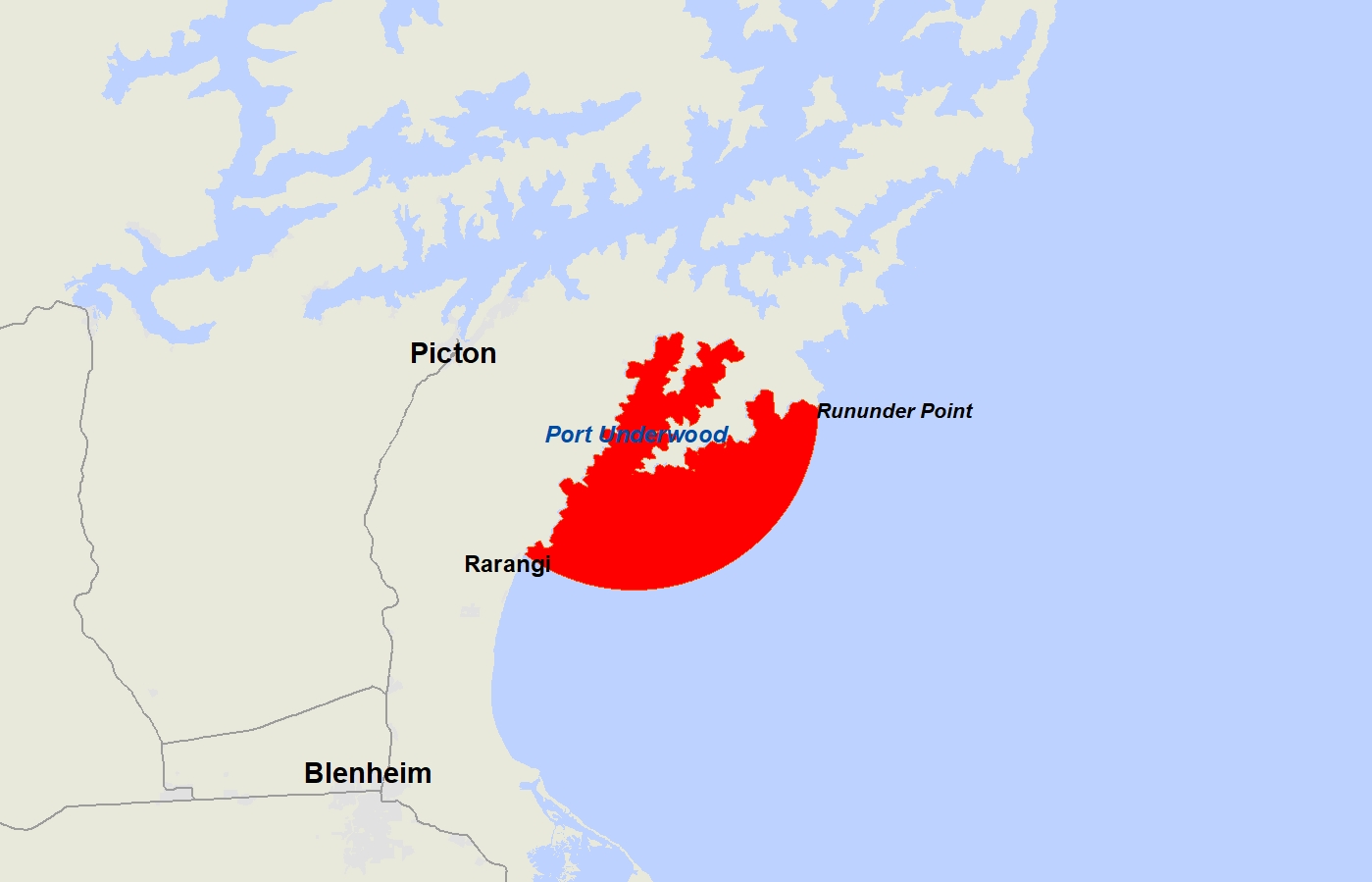
Affected area Port Underwood
Shellfish affected Mussels, oysters, tuatua, pipi, toheroa, cockles, scallops, catseyes, kina (sea urchin) and all other bivalve shellfish.

Note, cooking shellfish does not remove the toxin.

Pāua, crab and crayfish may still be eaten if the gut has been completely removed prior to cooking, as toxins accumulate in the gut. If the gut is not removed its contents could contaminate the meat during the cooking process.

Symptoms Symptoms typically appear between 10 minutes and 3 hours after ingestion and may include:

  • numbness and a tingling (prickly feeling) around the mouth, face, and extremities (hands and feet)
  • difficulty swallowing or breathing
  • dizziness
  • headache
  • nausea
  • vomiting
  • diarrhoea
  • paralysis and respiratory failure and in severe cases, death.
Other information Paralytic shellfish toxins have been detected in mussels throughout Port Underwood at levels well over the safe limit of 0.8mg/kg set by New Zealand Food Safety. Ongoing testing will continue and any changes will be communicated accordingly.

Map of the affected area

Map of affected area from Rarangi to Rununder Point, Port Underwood area in Marlborough.

India – Students fall ill due to food poisoning in Sedam, Bailhongal

Deccan Herald

As many as 52 students of Kittur Rani Chennamma Residential School in Kodla, Sedum taluk, and about 25 students residing in Backward Classes Pre-Metric Hostel for Boys at Harukoppa, Bailhongal taluk, took ill after consuming food.

USA – FDA – Retail Food Risk Factor Study

FDA

In 1998, the FDA National Retail Food Team initiated a three-phase, 10-year study to measure the occurrence of practices and behaviors commonly identified by the Centers for Disease Control and Prevention as contributing factors in foodborne illness outbreaks.

In 2013, the FDA National Retail Food Team initiated a new, 10-year study to measure the occurrence of practices and behaviors commonly identified by the Centers for Disease Control and Prevention as contributing factors in foodborne illness outbreaks. Initial data collections began in 2013 for select restaurant facility types, followed by data collection for select institutional foodservice facility types in 2014 and select retail food store facility types in 2015. The results of the initial data collection for each of the facility types will serve as the baseline measurement from which trends will be analyzed. Two additional data collection periods for each of the facility types are planned at 3-year intervals after the initial data collection for the purposes of analyzing trends.

Backgrounders

Canada/USA – Gastrointestinal Illness Outbreak on Viking Neptune Cruise Ship Sickens Over 12% of Guests

Cruise Law News

12.7% of the 838 passengers aboard the Viking Neptune cruise ship are experiencing abdominal cramps, vomiting and diarrhea, according to the Centers for Disease Control and Prevention (CDC). Nearly 2% of the crew are also experiencing these symptoms of gastrointestinal illness (GI). Cruise lines are required to report GI cases to the CDC whenever 3% or more of the passengers experience symptoms.

USA – Multiple states report infections from Cyclospora; source evades investigators

Food Safety News

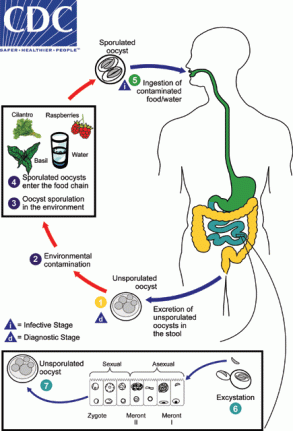
Cyclospora_LifeCycle201

The Centers for Disease Control and Prevention is reporting a multi-state outbreak of infections from the Cyclospora parasite that has sickened almost 100 people.

As of the agency’s most recent outbreak update, 97 people from 14 states have been confirmed infected by the microscopic parasite. Sixteen people have required hospitalization because their symptoms were so severe. Public health officials have not reported any deaths.

The total number of sick people has not yet been reported to the CDC because of the time it takes for testing and confirmation testing. Some individual case counts reported so far this year by state authorities include Colorado with 62 patients who ate at a single restaurant. Outbreak investigations are also underway in 15 other states.

Prior to the current update, the CDC first reported on the outbreak on May 25. The first date of onset of the infections was April 1. No specific food items have been identified as the source of the parasite.

USA – Man dies after contracting flesh-eating bacteria from raw oysters – Vibrio vulnificus

National Post

A Missouri man died after contracting a flesh-eating bacteria from eating raw oysters from a seafood stand, U.S. health officials said.

The 54-year-old man, whom authorities have not publicly identified, became infected after he ate oysters bought from The Fruit Stand & Seafood in Manchester, Mo., the St. Louis County Public Health Department said last week.

He died after being infected with the bacteria Vibrio vulnificus, which is contracted by consuming raw or undercooked oysters and other shellfish.

USA – FDA releases report on contamination in refrigerated dips and spreads

Food Safety News

The U.S. Food and Drug Administration has released the results of a recent sampling assignment that focused on refrigerated ready-to-eat (RTE) dips and spreads. Conducted from March 2021 to Jan. 2022, this assignment aimed to assess the presence of Salmonella and Listeria monocytogenes in these food products.

Refrigerated dips and spreads encompass a broad range of food products, including hummus, tahini, pimento cheese and yogurt-based items. Dips involve submerging a piece of food, such as a chip or vegetable, into a thinner consistency mixture, like salsa. On the other hand, spreads are typically applied with a knife onto other foods, like bread or crackers.

RTE foods can become contaminated through environmental pathogens or contaminated ingredients, making dips and spreads susceptible to bacterial growth if present. As people typically consume these products without a “kill step” like cooking, the presence of Listeria monocytogenes or Salmonella poses a significant public health risk, according to the FDA.

The presence of Listeria monocytogenes or Salmonella in dips and spreads poses significant risks to public health, leading to multiple recalls in recent years. Between 2017 and 2020, there were five hummus product recalls and six multi-commodity dip recalls because of contamination by these pathogens.

Norway searches for source of E. coli outbreak; Austrian outbreak under investigation

Food Safety News

Norwegian officials are investigating an E. coli outbreak that has affected half a dozen people.

The Norwegian Institute of Public Health (FHI) said six people, living in different parts of the country, are sick. E. coli O157:H7 with the same genetic profile has been detected in all patients.

Two people fell ill in October and November 2022, while the remaining four became sick in February, March and May this year. No-one has developed serious illness. They are between the ages of 14 and 49, and five are men.

Two patients live in Rogaland, while Viken, Trøndelag, Vestland, and Oslo all have one case each.

Meanwhile, several children have fallen ill with E. coli infections in a state of Austria beginning in late May.

In recent weeks, 11 children and young people, mostly from three childcare facilities in the Frastanz area, have contracted infections caused by Shiga toxin-producing E. coli (STEC). The serotype was not mentioned by officials.

At least two children developed HUS and another four were hospitalized, said officials in the province of Vorarlberg.

USA – Norovirus Outbreak linked to Oyster Shooters in Hawaii

Food Poison Journal

Food Borne Illness - Norovirus -CDC Photo

The Hawai‘i Department of Health (DOH) Food Safety Branch is issuing an alert regarding raw oysters exported from Dai One Food Co., Ltd., Republic of Korea (ROK), which may be potentially contaminated with norovirus.

DOH notified the United States Food and Drug Administration (FDA) of five illnesses from individuals who consumed raw oyster shooters at a restaurant in Hawai‘i on May 10, 2023. Trace-back information revealed the source for the implicated raw oysters was from a shipment by Dai One Food Co., Ltd., ROK. Samples collected were sent to the FDA to be tested for the presence of norovirus. The FDA released its findings on June 12, 2023, confirming  that norovirus GII was detected in one of the two samples collected.

Dai One Food Co. Ltd. has voluntarily recalled Individual Quick Freezing (IQF) raw oysters, harvested between February 2 and  4, 2022 and April 13 and 14, 2022, that were shipped from the ROK and distributed to restaurants and retailers in Hawai‘i, Georgia and Minnesota. The lot numbers affected are: D021031, D021041, and D020481.

USA – Listeria Leafy Green Outbreak sickened 19

Food Poison Journal

CDC, public health and regulatory officials in several states, and the U.S. Food and Drug Administration (FDA) investigated a multistate outbreak of Listeria monocytogenes infections. Epidemiologic data showed that leafy greens were a likely source of the outbreak. However, there was not enough other data to identify a specific type or producer of leafy greens.

As of June 13, 2023, a total of 19 people infected with the outbreak strain of Listeria were reported from 16 states. Sick people’s samples were collected from July 3, 2018, to March 31, 2023.

Public health officials collected many different types of information from sick people, including their age, race, ethnicity, other demographics, and the foods they ate in the month before they got sick. This information provided clues to help investigators identify the source of the outbreak.

Sick people ranged in age from less than 1 to 96 years, with a median age of 72, and 63% were female. Among 19 people with race information available, 17 people were White, 1 was African American/Black, and 1 reported “Other” race. Among 19 people with ethnicity information available, two people were Hispanic. Eighteen people were hospitalized, and no deaths were reported.