Category Archives: Microbiology

Belgium – Pasta Mici, chopped prepared (1kg) of Georges mark – Salmonella

AFSCA

In agreement with the AFSCA, the company LMCHOP is withdrawing from sale the product “Pasta de Mici” 1kg (prepared chopped) and is recalling it to consumers because of a possible presence of Salmonella.

LMCHOP asks its customers not to consume this product and to bring it back to the point of sale where it was purchased: Georges, Rue Ropsy Chaudron 24, 1070 Anderlecht.

Product description

– Product name: Pasta de Mici 1kg
– Brand: Georges
– Use by date (DLC) (“To be consumed until”): 01/09/2020
– Lot number: PDM280820
– Sale period: from 08/28/2020 to 08/30/2020
– Type of packaging: plastic container
– Weight: 1kg

The product was sold via Georges (rue Ropsy Chaudron 24, 1070 Anderlecht).

For any further information , please contact:
Mr. Lucas Hudders
Tel. : 052306421

New Zealand – Shellfish biotoxin alert – PSP

MPI

North Island warnings

West coast, South Head to Tirua Point (south of Kawhia)

Reason for alert Paralytic Shellfish Poisoning (PSP)

Date warning issued Extended on 2 September 2020

Media release

First issue: 12 August 2020

Media release

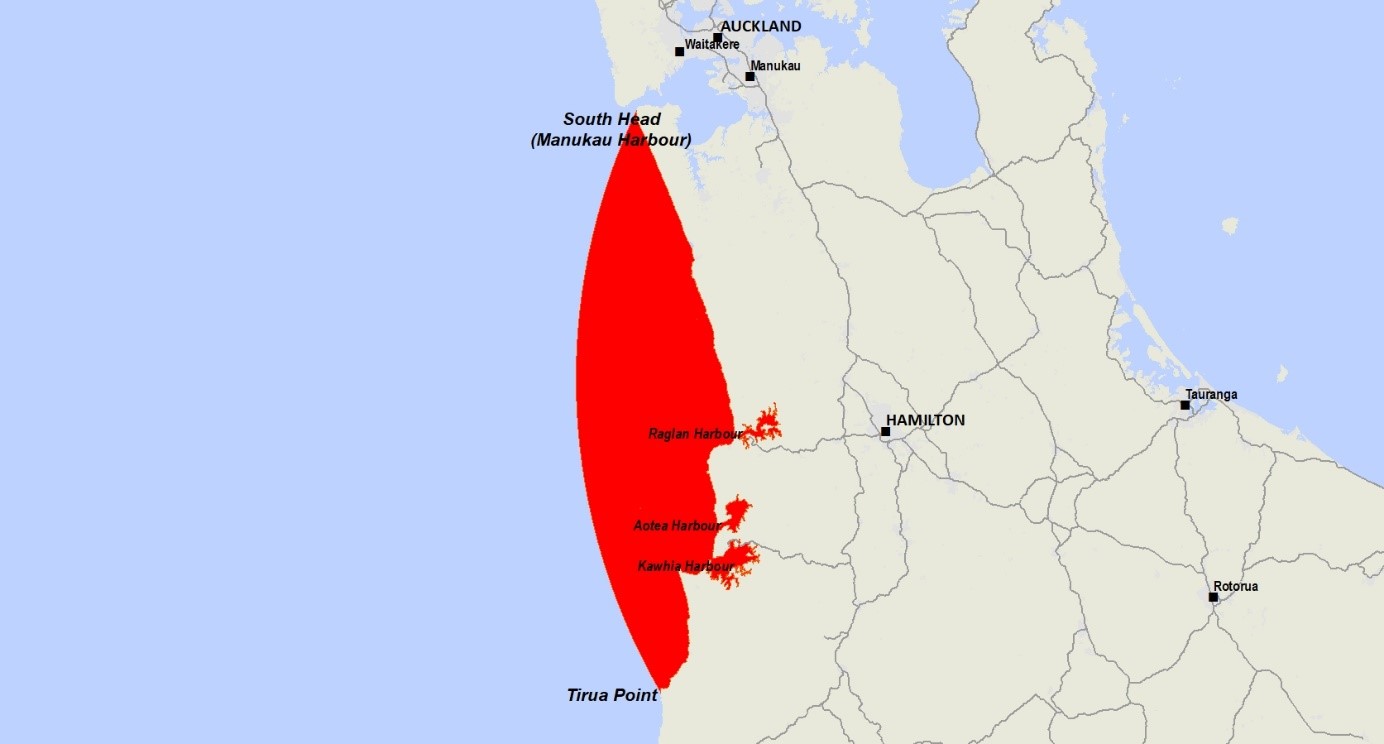
Affected area West Coast North Island – from South Head (Manukau Harbour entrance) to Tirua Point (south of Kawhia)
Shellfish affected Mussels, oysters, tuatua, pipi, toheroa, cockles, scallops, catseyes, kina (sea urchin) and all other bivalve shellfish.

Note, cooking shellfish does not remove the toxin.

Pāua, crab and crayfish may still be eaten if the gut has been completely removed prior to cooking, as toxins accumulate in the gut. If the gut is not removed its contents could contaminate the meat during the cooking process.

Symptoms Symptoms typically appear between 10 minutes and 3 hours after ingestion and may include:

  • numbness and a tingling (prickly feeling) around the mouth, face, and extremities (hands and feet)
  • difficulty swallowing or breathing
  • dizziness
  • headache
  • nausea
  • vomiting
  • diarrhoea
  • paralysis and respiratory failure and in severe cases, death.
Other information Paralytic shellfish toxins have been detected in shellfish at levels over the safe limit of 0.8mg/kg set by MPI. Ongoing testing will continue and any changes will be communicated accordingly.

Map of affected area

Map showing the affected area

New Zealand – Shellfish biotoxin alert extended for North Island west coast, including Raglan

MPI

The Ministry for Primary Industries today extended the current public health warning against collecting shellfish from the west coast of the North Island. The warning now extends from South Head (Manukau Harbour entrance) to Tirua Point (south of Kawhia Harbour).

Paralytic Shellfish Poisoning (PSP) toxins have been detected in shellfish from the Kawhia Harbour above the safe limit set by MPI.

The other public health warning for Hawke’s Bay remains in place.

Mussels, oysters, tuatua, pipi, toheroa, cockles, scallops, catseyes, kina (sea urchin) and all other bivalve shellfish should not be eaten.

Note, cooking shellfish does not remove the toxin.

Pāua, crab and crayfish may still be eaten if the gut has been completely removed prior to cooking, as toxins accumulate in the gut. If the gut is not removed its contents could contaminate the meat during the cooking process.

Symptoms typically appear between 10 minutes and 3 hours after ingestion and may include:

  • numbness and a tingling (prickly feeling) around the mouth, face, and extremities (hands and feet)
  • difficulty swallowing or breathing
  • dizziness
  • headache
  • nausea
  • vomiting
  • diarrhoea
  • paralysis and respiratory failure and in severe cases, death.

If anyone becomes ill after eating shellfish from an area where a public health warning has been issued, phone Healthline for advice on 0800 61 11 16, or seek medical attention immediately. You are also advised to contact your nearest public health unit and keep any leftover shellfish in case it can be tested.

Monitoring of toxin levels will continue and any changes will be communicated accordingly. Commercially harvested shellfish – sold in shops and supermarkets, or exported – is subject to strict water and flesh monitoring programmes by MPI to ensure they are safe to eat.

France – Salade & Compagnie Antibes Recipe SODEBO brand – Salmonella

ENCOUNTERED PROBLEM

Presence of salmonella

PROPOSED SOLUTION

People who hold this product are asked not to consume it and to return it to the point of sale where it was purchased for reimbursement.

https://www.oulah.fr/rappel-produit-salade-compagnie-recette-antibes-de-marque-sodebo/

France – Cavet brand organic white goat cheese – Salmonella

ENCOUNTERED PROBLEM

Presence of salmonella

PROPOSED SOLUTION

People who hold this product are asked not to consume it and to return it to the point of sale where it was purchased for reimbursement.

Foodborne illness caused by Salmonella results in gastrointestinal disturbances, diarrhea, vomiting and abdominal pain, often accompanied by fever; these symptoms may be more severe in young children, immunocompromised individuals and the elderly. The incubation period can range from 6 to 72 hours.
People who have consumed the products mentioned below and who have these symptoms are invited to consult their doctor, notifying him of this consumption.

https://www.oulah.fr/rappel-produit-chevre-blanc-bio-x2-de-marque-cavet/


Australia – MILKLAB and Blue Diamond almond milk – Pseudomonas spp

FSANZ

Freedom Foods is recalling their MILKLAB Almond Milk and Blue Diamond Almond Breeze Chocolate Almond Milk due to a potential microbial contamination.

This recall includes an earlier recall by RIO Coffee of MILKLAB Almond Milk with a Best Before date of 6 AUG 2021 in SA – this recall has been removed from the website.

MILKLAB Almond Milk has been available for sale nationally in various coffee shops and food service outlets.

Blue Diamond Almond Breeze Chocolate Almond Milk has been available for sale in NSW (Coles and Woolworths), QLD (Coles and Woolworths), SA (Coles), TAS (Coles), VIC (Coles and Woolworths) and WA (Coles and Woolworths).

Date markings:

MILKLAB
Almond Milk 1L
Best Before dates: 18/06/21, 01/07/21, 20/07/21, 29/07/21, 06/08/21

Blue Diamond
Almond Breeze
Chocolate Almond Milk 1L
Best Before date: 27/04/21

UHT almond milk brand milk lab and blue diamond almond breeze

Problem

The recall is due to potential microbial contamination (bacteria pseudomonas).

Food safety hazard

Food products with microbial contamination may cause illness if consumed.

Country of origin

Australia

What to do​

Any consumers concerned about their health should seek medical advice and should return the products to the place of purchase for a full refund.

For further information please contact:

Freedom Foods
1800 646 231
www.freedomfoods.com.au

​​

Related links:

Belgium – Seagull NV – Organic smoked trout fillets from Appetit, Boni Bio and Carrefour Bio. – Listeria monocytogenes

AFSCA

In agreement with the AFSCA, the company Seagull is withdrawing from sale the organic smoked trout fillets products of the Appetit, Boni Bio and Carrefour Bio brands and is recalling this to consumers because of the possible presence of Listeria Monocytogenes.

Seagull asks its customers not to consume these products and to bring them back to the point of sale where they were purchased and where they will be reimbursed.


Product description

– Product name: Organic smoked trout fillets
– Brand: Appetit Use
by date (DLC) (“To be consumed until”): 07/09/2020 09/09/2020 10/09/2020 11 /
09/2020 09/14/2020
– Lot number: 17180820 18190820 – Sales period: from 08/19/20 to 08/31/2020
– Type of packaging: transparent plastic tray
– Weight: 125g

The product was sold via Carrefour, Bioplanet and Match stores.

For any further information , contact:
Kris Debouck (Sales) Tel: +32 467 02 95 00 Email: info@seagull-appetit.com
Ilse Cloet (Quality department) Tel: +32 477 47 64 15 Email: quality@seagull-appetit.com

Boni Bio organic smoked trout fillets

– Product name
: Organic smoked trout fillets – Brand: Boni Bio
– Use-by date (DLC) (“To be consumed until”):
  10/09/2020
– Lot number: 17180820
– Sale period: from 08/19/20 to 08/31/2020
– Type of packaging: transparent plastic tray
– Weight: 125g

This product has been distributed in Bio-Planet stores.

For more information, customers can contact Colruyt Group Customer Service
on 0800 99 124.


Organic smoked trout fillets from the Carrefour Bio brand

– Product name
: Organic smoked trout fillets – Brand: Carrefour Bio
– Lots and expiry dates (DLC)
  (“To be consumed until”):
• LOT 18190820 DLC 09/14/20 & 09/11/20
• LOT 17180820 DLC 09/09/20
– EAN: 5400101057067
Type of packaging: transparent plastic tray
– Weight: 125g


This product was sold through certain Carrefour stores in Belgium.

For any further information, you can contact the Carrefour Belgium consumer service by dialing the free number 0800.9.10.11, from 8:30 a.m. to 8 p.m. on working days and from 9 a.m. to 5 p.m. on Saturdays.

USA – CDC update – Outbreak Investigation of Salmonella Enteritidis: Peaches (August 2020)

FDA

The FDA, along with CDC and state and local partners, is investigating an ongoing multistate outbreak of Salmonella Enteritidis infections potentially linked to peaches packed or supplied by Prima Wawona or Wawona Packing Company.

CDC reports that epidemiologic evidence indicates that peaches are the likely source of this outbreak. As of August 27, 2020, CDC is reporting a total of 78 cases across 12 states. FDA’s investigation to identify a source of contamination is ongoing.

Available recall information is included below and will be updated as more products are identified and recalled.

Recommendation

Advice for consumers, restaurants, and retailers: Consumers, restaurants, and retailers should not eat, sell, or serve recalled peaches packed or supplied by Prima Wawona.

Recalled bagged peaches packed or supplied by Prima Wawona from June 1, 2020 to August 19, 2020 should not be eaten and should be thrown away. Recalled loose/bulk peaches packed or supplied by Prima Wawona from June 1, 2020 to August 3, 2020 should not be eaten and should be thrown away.

Consumers who cannot identify the brand or remember the date of purchase, should throw the product away. Consumers who may have frozen peaches supplied by Prima Wawona should throw them away.

FDA recommends that anyone who received recalled peaches packed or supplied by Prima Wawona use extra vigilance in cleaning and sanitizing any surfaces and containers that may have come in contact with the produce to reduce the risk of cross-contamination. This includes cutting boards, slicers, countertops, refrigerators, and storage bins.

Consumers who have symptoms of Salmonella infection should contact their health care provider. Most people with salmonellosis develop diarrhea, fever, and abdominal cramps. More severe cases of salmonellosis may include a high fever, aches, headaches, lethargy, a rash, blood in the urine or stool, and in some cases may become fatal.

Suppliers and distributors: Suppliers, distributors, and others in the supply chain should not use, ship or sell recalled peaches packed or supplied by Prima Wawona.

Recalled bagged peaches packed or supplied by Prima Wawona from June 1, 2020 to August 19, 2020 should not be eaten and should be thrown away. Recalled loose/bulk peaches packed or supplied by Prima Wawona from June 1, 2020 to August 3, 2020 should not be eaten and should be thrown away.

Suppliers and distributors that re-packaged recalled peaches packed or supplied by Prima Wawona from should use extra vigilance in cleaning and sanitizing any surfaces and storage areas that may have come into contact with recalled peaches packed or supplied by bagged Prima Wawona. If there has been potential cross contamination or mixing of peaches from other sources with these recalled bagged products, then comingled products should be discarded.

Investigation Update

August 28, 2020

As of August 28, 2020, CanadaExternal Link DisclaimerSingaporeExternal Link Disclaimer, and New ZealandExternal Link Disclaimer have issued recalls of Prima Wawona peaches. Information received by FDA indicates that recalled Wawona peaches were shipped to foreign consignees in Australia, Canada, China, Costa Rica, Ecuador, El Salvador, Guatemala, Honduras, Mexico, Panama, the Philippines, Singapore, Taiwan, and the United Arab Emirates. FDA is sharing distribution information directly with foreign food safety authorities in these jurisdictions.

Additional information regarding the foreign distribution of recalled product is included in the table below.

FDA’s traceback investigation is working to identify the source of this ongoing outbreak, whether additional peaches are affected, and to determine if potentially contaminated product has been shipped to additional retailers.

Recall Information (Updated August 28, 2020)

Recalled Peaches

On August 22, 2020, Prima Wawona recalled bagged and bulk, or loose, peaches that they supplied to retailers nationwide.

The firm’s press states it is recalling “bulk/loose peaches distributed and sold from June 1 through August 3 and its bagged Wawona and Wawona Organic peaches distributed and sold from June 1 through August 19th because the products could possibly be contaminated with Salmonella.”

The bagged peaches were distributed and sold in supermarkets with the following product codes:

  • Wawona Peaches – 033383322001
  • Wawona Organic Peaches – 849315000400
  • Prima® Peaches – 766342325903
  • Organic Marketside Peaches – 849315000400
  • Kroger Peaches – 011110181749
  • Wegmans Peaches – 077890490488

For bagged peaches, the product codes may be found at the bottom of each package. All affected peaches may be found in stores nationwide.

Retailers that received recall product from Prima Wawona or Wawona Packing Company include, but are not limited to:

The bulk/loose peaches supplied by Prima Wawona are sold in grocery stores in a variety of formats, typically bins where consumers may select their own fruit and may have the following stickers with PLU numbers on them: 4037, 4038, 4044, 4401, 94037, 94038, 94044, 94401. Please note that not all peaches with these PLU codes are supplied by Prima Wawona. If you are unsure of the brand or variety of your loose peaches, you can contact your retailer or supplier, or throw them out.

Recalls have also been initiated by companies that sold peaches or products containing recalled peaches.

  • Russ Davis Wholesale
    • Recalling peach salsa and gift baskets made from recalled Prima Wawona peaches

Below is a list of consignees that the FDA had reason to believe received peaches from Prima Wawona that shipped or distributed to countries outside the United States. It is possible that this list may not include all such consignees who may have received the peaches. However, this list represents the best information currently available to the FDA:


Product Images

Outbreak Investigation of Salmonella Enteritidis in Bagged Peaches (August 2020) - Photos of Recalled Bagged Peaches

View larger images

Case Count Map Provided by CDC

Outbreak Investigation of Salmonella Enteritidis in Peaches (August 2020) - Case Count Map from CDC 8/27/2020

Canada – Notice not to consume microgreens sold by the company Les Jardins Picoudi – Salmonella

MAPAQ

The Ministry of Agriculture, Fisheries and Food (MAPAQ), in collaboration with the company Les Jardins Picoudi, in Saint-Robert , is warning the population not to consume the products indicated in the table below, as these foods may contain Salmonella bacteria .


Product name Formats CUP Targeted lot
“Broccoli microgreens” In addition to this, you need to know more about it.

35g

75g

813526000016
813526000115
In addition to this, you need to know more about it.

3233

“Arugula microgreens” 813526000061
813526000160
“Coriander microgreens” 813526000054
813526000153

The products that are the subject of this advisory were available for sale at several locations across the province . They were packaged in rectangular transparent plastic dishes and sold refrigerated. The label includes, in addition to the proper name of the products, the words “PICOUDI”.

The operator voluntarily withdraws the products in question. He agreed with MAPAQ to disseminate this advice as a precautionary measure. It should be noted that no case of illness associated with the consumption of these foods has been reported to MAPAQ to date.

People who have a unit of these products in their possession are therefore advised not to consume it. They must either return it to the establishment where they bought it or throw it away. Even if the products do not show any signs of spoilage or a suspicious odor, they are susceptible to contamination by Salmonella bacteria.

Consuming food contaminated with this bacteria can cause salmonellosis, a foodborne illness. In young children, the elderly and people with weakened immune systems, salmonellosis can cause very serious infections. In healthy people, it can manifest with symptoms such as high fever, chills, severe headache, vomiting, nausea, abdominal pain, or diarrhea, sometimes with blood in the stomachs. stool. Symptoms usually appear 6 to 72 hours after consuming a contaminated food or after contact with an animal carrying the bacteria. Symptoms usually last three to seven days.

Additional information

Source:

Media relations
Communications
Department Ministry of Agriculture, Fisheries
and Food
Tel. : 418 380-2100, extension 3512
www.mapaq.gouv.qc.ca

Sample product


Australia – Godel’s Chicken Wurst 200g – Listeria monocytogenes

FSANZ

Product information

Solomon Kosher Butcher Pty Ltd is conducting a recall of 200g Vacuum Packaged Godel’s Chicken Wurst. The product has been available for sale at Solomon Kosher Butcher, Kosher Kingdom, and Budget Rite in Doncaster VIC, and Krinsky’s Supermarket, Bondi NSW.

Date markings

Use by 8/9/20, 17/9/20

Godels chicken wurst

Problem

The recall is due to to a possible Listeria monocytogenes contamination.

Food safety hazard

Listeria monocytogenes may cause illness in pregnant women and their unborn babies, the elderly, and people with low immune
systems.

Country of origin

Australia

What to do​

Consumers should not eat this product. Any consumers concerned about their health should seek medical advice.  Customers should return the product to the place of purchase for a full cash refund.


For further information please contact:

Solomon Kosher Butcher Pty Ltd
(03) 9532 8855; www.solomon.com.au

Related links: