Category Archives: Microbiology

USA- Cat Food Recall -Listeria monocytogenes

FDA

NomNom Cat Chicken Cuisine 50gm, 70gm, 90gm, and 110gm bags 7meal bags per bundle – up to 8 bundles per month.

Lot Numbers : 18700, 18714, 18728, 18742, 18756, 18770 Product Numbers : CC5, CC7, CC9, CC11

105540lbs TotalDownstream Recall. Potential L. mono contamination due to ingredient used.

Research – Getting Inside Salmonella’s Survival Strategies

Technology Networks

kswfoodworld Salmonella

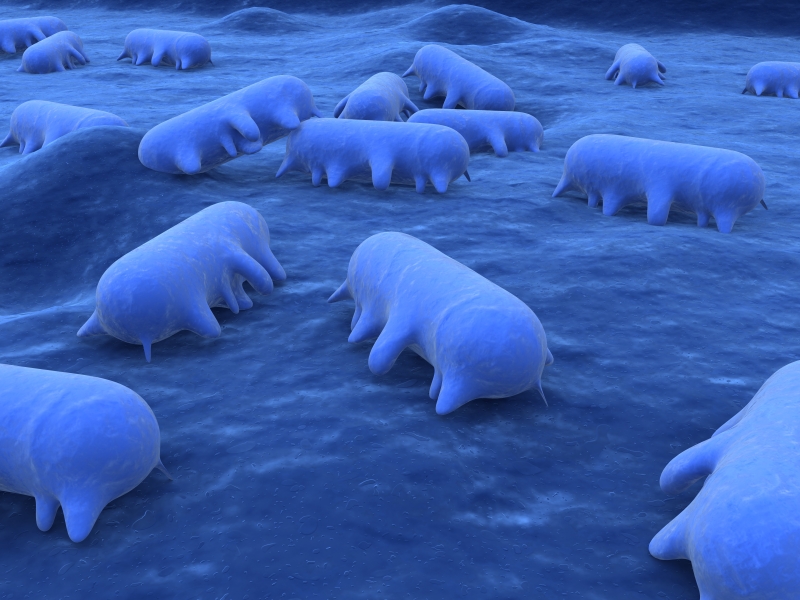
Our cells fight microbial invaders by engulfing them into membrane sacs – hostile environments in which pathogens are rapidly destroyed. However, the pathogen Salmonella enterica, which grows and reproduces inside our cells, has evolved ways to detoxify such hostile compartments, turning them into a comfortable home where Salmonella can survive and thrive.

A team of scientists led by EMBL group leader Nassos Typas has uncovered new details of Salmonella’s survival strategies. The researchers analysed protein interactions in Salmonella-infected cells to identify the diverse biological processes of the host cell that the bacterium uses. Salmonella targets and modifies cellular protein machineries and pathways, in which multiple proteins work together, with the help of so-called effector proteins, which it injects into host cells. Altogether, Salmonella is known to release more than 30 effector proteins into infected cells to hijack nutrients and protect itself. However, the functions of many of these proteins, and which host cell proteins they interact with, are largely unknown.

USA – FSIS Guideline for Controlling Campylobacter in Raw Poultry

FSIS USDA

GUIDELINE IDFSIS-GD-2021-0006
ISSUE DATEJuly 2021

Replaces: The Campylobacter part of the 2015 FSIS Guideline for Controlling Salmonella and Campylobacter in Raw Poultry

This guideline helps poultry establishments, including those that are small and very small, identify and implement pre- and post-harvest interventions to control Campylobacter as part of their HACCP system. Additionally, it helps poultry establishments utilizes microbial testing results to monitor the performance of the HACCP system and inform decision making. This guideline relates to 9 CFR 381, 416, and 417.

Disclaimer: The contents of this guidance document do not have the force and effect of law and are not meant to bind the public in any way. This document is intended only to provide clarity to the public regarding existing requirements under the law or agency policies.

Full Guideline

USA – FSIS Guideline for Controlling Salmonella in Raw Poultry

FSIS USDA

GUIDELINE IDFSIS-GD-2021-0005
ISSUE DATEJuly 2021
Replaces: The Salmonella part of the 2015 FSIS Guideline for Controlling Salmonella and Campylobacter in Raw Poultry

This guideline helps poultry establishments, including those that are small and very small, to identify and implement pre- and post-harvest interventions to control Salmonella as part of their HACCP system. Additionally, the guideline helps poultry establishments utilize microbial testing results to monitor the performance of the HACCP system and inform decision-making. This guideline relates to 9 CFR 381, 416, and 417.

Disclaimer: The contents of this guidance document do not have the force and effect of law and are not meant to bind the public in any way. This document is intended only to provide clarity to the public regarding existing requirements under the law or agency policies.

Full Guideline

USA – Minnesota DOH investigates Legionnaires’ disease associated with an Albert Lea hotel

Food Poison Journal

Legionella_Plate_01

State health officials investigating Legionnaires’ cases linked to Albert Lea hotel
Early evidence suggests source may be the spa; recent guests with undiagnosed symptoms should consult with their health care provider

Cases of Legionnaires’ disease associated with an Albert Lea hotel are prompting state health officials to warn anyone who stayed at the hotel in late June to seek medical care promptly if they are ill.

Minnesota Department of Health investigators have identified two laboratory-confirmed cases so far among people from unrelated groups who were at the Ramada by Wyndham Albert Lea and spent time in the pool/hot tub area around the last weekend of June.

Research- Predictive microbial modeling of E. faecium NRRL B-2354 inactivation during baking of a multi-component low-moisture food

Journal of Food Protection

Validating baking ovens as a microbial kill step, using thermal inactivation models, is desirable; however, traditional isothermal models may not be appropriate for these dynamic processes, yet they are being used by the food industry. Previous research indicates that the impact of additional process conditions, such as process humidity, should be considered when validating thermal processes for the control of microbial hazards in low-moisture foods. In this study, the predictive performance of traditional and modified thermal inactivation kinetic models accounting for process humidity were assessed for predicting bacterial inactivation of Enterococcus faecium NRRL B-2354 in a multi-ingredient composite food during baking. Ingredients (milk powder, protein powder, peanut butter, and whole wheat flour), individually inoculated to ~6 logCFU/g and equilibrated to a water activity of 0.25, were mixed to form a dough. An isothermal inactivation study was conducted for the dough to obtain traditional D- and z- values (n=63). In a separate experiment, cookies were baked under four dynamic heating conditions: 135℃/high humidity, 135℃/low humidity, 150℃/high humidity, and 150℃/low humidity. Process humidity measurements, time-temperature profiles for the product core, surface, and bulk air, and microbial survivor ratios were collected for the four conditions at six residence times (n=144). The traditional isothermal model had a poor root mean square error (RMSE) of 856.51 log (CFU/g), significantly overpredicting bacterial inactivation during the process. The modified model accounting for the dynamic time-temperature profile and process humidity data yielded a better predictive performance with a RMSE of 0.55 log CFU/g. The results demonstrate the importance of accounting for additional process parameters in baking inactivation models, and that model performance can be improved by utilizing model parameters obtained directly from industrial-scale experimental data.

Research – Sachet water consumption as a risk factor for cholera in urban settings: Findings from a case control study in Kinshasa, Democratic Republic of the Congo during the 2017–2018 outbreak

PLOS One

Food Illness

Cholera is a diarrheal disease caused by ingestion of the Vibrio cholerae bacterium. Outbreaks in urban areas are becoming increasingly frequent in Sub-Saharan Africa. Risk factors for cholera have been studied in rural settings but not sufficiently in urban areas. Understanding context-specific risk factors is key for successful outbreak response. During a cholera outbreak in Kinshasa, the Democratic Republic of the Congo we were able to identify a previously unknown behavioural risk factor of particular relevance in urban settings–the consumption of drinking water from plastic sachets. Water sachets are sold on the streets of all major cities in Sub-Saharan Africa. It requires biting off an edge and sucking out the water, and we think that external contamination of these sachets was an important transmission route in the Kinshasa outbreak. Water sachets are predominantly consumed by socio-economically disadvantaged groups who lack piped water supply in their homes and have poor access to sanitary infrastructure. This makes our findings particularly relevant because these are the very populations who are at increased risk of getting and transmitting cholera. Health messaging and response measures should include consumption of water sachets as a potential risk factor during future cholera outbreaks in urban low-resource settings.

Research – Strain variability in growth and thermal inactivation characteristics of Listeria monocytogenes strains after acid adaptation

Journal of Food Protection

Listeria kswfoodworld food safety food poisoning

Image CDC

Given the importance of strain variability to predictive microbiology and risk assessment, the present study aimed to quantify the magnitude of strain variability in growth and thermal inactivation kinetics behaviors after acid adaptation. Thirty-three Listeria monocytogenes strains were exposed to acid-adapted tryptic soy broth with yeast extract and nonacid-adapted TSB-YE (pH 7.0) for 20 hours. Then, the growth parameters of these adapted and non-adapted strains that grew in non-buffered TSB-YE at 25℃ were estimated. The tested strains were inactivated at 60°C in non-buffered broth to obtain the heat resistance parameters. The results revealed that strain variability was present in the growth and thermal inactivation characteristics. The maximum specific growth rate ( μ max ) ranged within 0.21-0.44 and 0.20-0.45 h -1 after acid and non-acid adaptation, respectively. The lag times ( λ ) were 0.69-2.56 and 0.24-3.36 hours for acid-adapted and non-acid adapted cells, respectively. The apparent D -values at 60°C ( D 60 -values) of the pathogen ranged within 0.56-3.93 and 0.52-3.63 minutes for the presence and absence of acid adaptation condition, respectively. Acid adaptation increased the magnitude of strain variability in the thermal inactivation characteristics of the organism ( P <0.05), with the coefficient of variation (CV) increasing to 0.17, while acid adaptation did not significantly influence the variabilities in the growth parameters of the tested strains ( P ≥0.05). Furthermore, the subsequent growth behaviors of all strains did not exhibit significant changes ( P >0.05) after exposure to acidic broth. However, the thermal resistance of most of the tested strains (25/33) increased ( P <0.05) after growing in acid-adapted broth. The relevant data generated in the present study can be used to describe the strain variability in predictive microbiology, and deeply understand the behavior responses of different strains to acid adaptation.

Research – Vapor Phase Hydroxyl- or Chlorine-radical Treatment for Inactivating Listeria monocytogenes on Mushrooms (Agaricus bisporus) Without Negatively Affecting Quality or Shelf-life

Journal of Food Protection

Processes based on generating vapor phase hydroxyl-radicals or chlorine-radicals were developed for inactivating Listeria monocytogenes on mushrooms without negatively affecting quality. Antimicrobial radicals were generated from the UV-C degradation of hydrogen peroxide or hypochlorite and ozone gas. Response Surface Modelling (RMS) was used to identify the interaction between the operating parameters for the hydroxyl-radical process; UV-C 254nm intensity, hydrogen peroxide concentration and ozone delivered. There was an inverse relationship between hydrogen peroxide concentration and UV-C intensity in terms of the log reduction of L. monocytogenes . The independent parameters for the chlorine-radical process were hypochlorite concentration, pH, and UV-C intensity. From predictive models, the optimal hydroxyl-radical treatment was found to be 5% v/v H 2 O 2 , 2.86 mW/cm 2 UV-C intensity (total UV-C dose 144 mJ/cm 2 ) and 16.5 mg ozone. The chlorine-radical optimal process parameters were 10 ppm hypochlorite (pH 3.0), ozone 11.0 mg and 4.60 mW/cm 2 UV-C intensity. When inoculated mushrooms were treated with the optimal hydroxyl-radical and chlorine-radical process the log CFU reduction of L. monocytogenes was found to be 2.42±0.42 and 2.61±0.30 log CFU respectively without any negative effects on mushroom quality (weight loss and Browning Index during 14 days storage at 4°C). The levels of L. monocytogenes inactivation were significantly greater compared to when the individual elements of the radical processes were applied and control using a 90 s dip in 1% v/v hydrogen peroxide. The study has demonstrated that both hydroxyl-radical and chlorine-radical vapor-phase treatments are both equally effective at inactivating L. monocytogenes on mushrooms and can be considered as a preventative control step.

Research – Shiga Toxin-Producing Escherichia coli (STEC) and STEC-Associated Virulence Genes in Raw Ground Pork in Canada

Journal of Food Protection

Shiga toxin-producing Escherichia coli (STEC) O157:H7/NM and some non-O157 STEC are foodborne pathogens. In response to pork-associated O157 STEC outbreaks in Canada, we investigated the occurrence of STEC in Canadian retail raw ground pork during the period of November 1, 2014 and March 31, 2016. Isolated STEC were characterized to determine the Shiga-toxin gene ( stx ) subtype and the presence of virulence genes encoding intimin ( eae ), and enterohemorrhagic E. coli hemolysin (hlyA) . O157 STEC and non-O157 STEC were isolated from 0.11% (1/879) and 2.24% (13/580) of the pork samples. STEC virulence gene profiles containing both eae and hlyA were found only in the O157 STEC ( stx 2a , eae , hlyA ) isolate. The eae gene was absent from all non-O157 STEC isolates. Of the 13 non-O157 STEC isolates, two virulence genes of stx 1a and hlyA were found in four (30.8%) O91:H14 STEC isolates, while one virulence gene of stx 2e, stx 1a , and stx 2a was identified in five (38.5%), two (15.4%) and one (7.7%) STEC isolates respectively of various serotypes. The remaining non-O157 STEC isolate carried stx 2 , but the subtype is unknown as this isolate could not be recovered for sequencing. O91:H14 STEC ( stx 1a, hlyA ) was previously reported in association with diarrhea illnesses, while the other non-O157 STEC isolates identified in this study are not known to be associated with severe human illnesses. Virulence gene profiles identified in this study indicate that the occurrence of non-O157 STEC capable of causing severe human illness is rare in Canadian retail pork. However, O157 STEC in ground pork can occasionally occur, therefore education regarding the potential risks associated with STEC contamination of pork would be beneficial for the public and those in the food industry in order to help reduce foodborne illnesses.