Category Archives: Microbiology

New Zealand – Animal Products Notice: National Microbiological Database Programme

MPI

Introduction

This introduction is not part of the Animal Products Notice, but is intended to indicate its general effect.

Purpose

This notice supplements the requirements of the Animal Product Regulations 2021 and sets requirements for microbiological sampling and testing of animal material and animal products intended for human consumption.

Background

The National Microbiological Database (NMD) Programme is a standardised microbiological sampling and testing programme to provide ongoing monitoring of microbiological process control across all industry participants.

Who should read this Animal Products Notice?

You should read this notice if you are: an operator who processes red meat or poultry intended for human consumption; or a recognised laboratory that tests red meat or poultry intended for human consumption

Why is this important?

A failure to comply with this notice may be an offence under section 135(1)(c) of the Animal Products Act 1999 and may result in further action by an animal products officer.
India – 120 students taken ill after food poisoning at Siddipet

The Hindu

As many as 120 students studying in the minority residential girls high school at Siddipet took ill on Monday evening. Many of them were shifted to the government hospital where they are undergoing treatment.

According to sources, after having lunch in the afternoon, some students started vomiting and had loose motions. For some time the issue was kept a secret and they tried to hush it up. However, as the situation went out of control, the students were shifted to government hospital for treatment.

UK – Retired retail manager, 63, died of Salmonella after eating four fried duck eggs he had bought at country show, inquest hears

Daily Mail

A retired retail manager sadly died from one of the worst salmonella infections a consultant had seen in his career after eating four duck eggs bought at a country show.

Niptoon Tavakoli, 65, died in hospital two months after he was taken ill in June 2019, an inquest jury heard today.

Mr Tavakoli’s wife Cheryl told Doncaster Coroner’s Court that they had bought six eggs from the Melton Mowbray Deli stall at Messingham Show, in North Lincolnshire, during a family day out on Sunday, June 2, 2019.

Research – Sink survey to investigate multidrug resistance pattern of common foodborne bacteria from wholesale chicken markets in Dhaka city of Bangladesh

Nature.com

Antimicrobial resistance (AMR) among foodborne bacteria is a well-known public health problem. A sink survey was conducted to determine the AMR pattern of common foodborne bacteria in cloacal swab of broiler chickens and sewage samples from five wholesale chicken markets of Dhaka city in Bangladesh. Bacteria were identified by culture-based and molecular methods, and subjected to antimicrobial susceptibility testing. Resistance genes were identified by multiplex PCR and sequencing. Multidrug resistance (MDR) was observed in 93.2% of E. coli, 100% of Salmonella spp., and 97.2% of S. aureus from cloacal swab samples. For sewage samples, 80% of E. coli, and 100% of Salmonella and S. aureus showed MDR. Noteworthy, 8.3% of S. aureus from cloacal swab samples showed possible extensively drug resistance. Antimicrobial resistance genes (beta-lactamase—blaTEM, blaSHV; quinolone resistance gene—qnrS) were detected in a number of E. coli and Salmonella isolates from cloacal swab and sewage samples. The methicillin resistance gene (mecA) was detected in 47.2% and 25% S. aureus from cloacal swab and sewage samples, respectively. The findings envisage the potential public health risk and environmental health hazard through spillover of common foodborne MDR bacteria.

Research – Peanut Butter Food Safety Concerns—Prevalence, Mitigation and Control of Salmonella spp., and Aflatoxins in Peanut Butter

MDPI

Peanut butter has a very large and continuously increasing global market. The food safety risks associated with its consumption are also likely to have impacts on a correspondingly large global population. In terms of prevalence and potential magnitude of impact, contamination by Salmonella spp., and aflatoxins, are the major food safety risks associated with peanut butter consumption. The inherent nature of the Salmonella spp., coupled with the unique chemical composition and structure of peanut butter, present serious technical challenges when inactivating Salmonella spp. in contaminated peanut butter. Thermal treatment, microwave, radiofrequency, irradiation, and high-pressure processing all are of limited efficacy in inactivating Salmonella spp. in contaminated peanut butter. The removal of aflatoxins in contaminated peanut butter is equally problematic and for all practical purposes almost impossible at the moment. Adopting good manufacturing hygiene practices from farm to table and avoiding the processing of contaminated peanuts are probably some of the few practically viable strategies for minimising these peanut butter food safety risks. The purpose of this review is to highlight the nature of food safety risks associated with peanut butter and to discuss the effectiveness of the initiatives that are aimed at minimising these risks.

USA – Possible Long Beach Meals on Wheels Hepatitis A Exposure

Food Poisoning Bulletin

A possible Long Beach Meals on Wheels hepatitis A exposure has occurred in California. The incident occurred because a volunteer who was helping package food was allegedly diagnosed with the illness. The exposures took place in “late May and June” 2022.

China – 200 kindergarten children suffered symptoms of food poisoning, parents want investigation

The BL

According to a report by China Economic Weekly on June 24, nearly 200 children at the “Jiedibao Wanke Golden Joy City Kindergarten” in Xi’an, Shaanxi Province, suffered symptoms of food poisoning on June 17 and needed medical attention. Some remained hospitalized for a week.

As reported by Chinanews.com, a Lianhu District Education Bureau staff member said that the illness was initially determined to be caused by a salmonella infection but should await official confirmation.

According to Wang, a parent of one child, more than 200 children at Jiedibao Wanke Kindergarten developed different degrees of food poisoning. The symptoms were high fever, nausea, vomiting, abdominal pain, and diarrhea. In the most severe cases, blood in the stool and coma.

Ireland – Potentially dangerous parasite in County Limerick water supply – Cryptosporidium

Limerick Post

DRINKING water supplies in Foynes have come under the microscope with the ongoing detection of a parasite that could pose a threat to human health.

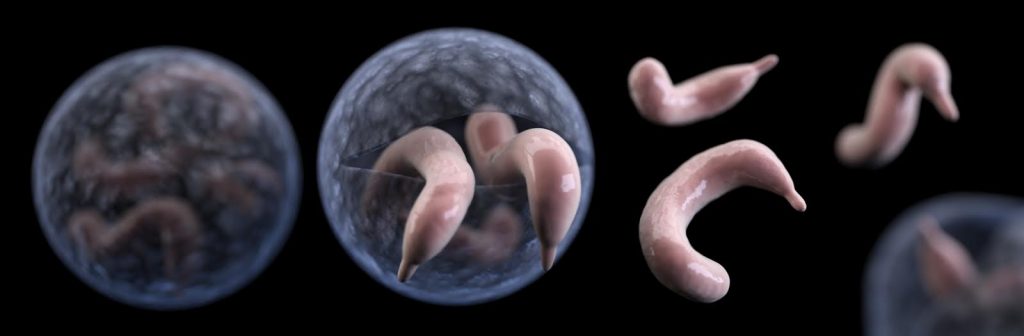
Cryptosporidium, a parasite found in human and animal faeces, has been detected in the Foynes/Shannon Estuary water treatment plant this year.

The Environmental Protection Agency said it was “very concerned” after it conducted an audit which detected two breaches of recommended limits of cryptosporidium at the plant on February 23 and April 13.

The EPA said that it was most likely due to “a deterioration in raw water quality combined with significant deficiencies and pressures on the treatment processes at the plant”.

The environmental watchdog said the incident was suitably escalated and managed to protect the health of the population of over 7,200 in the Foynes area who use the water supply.

USA – Is TikTox, Twitter and Reddit the new FDA and CDC as it relates to the Daily Harvest mystery?

Food Poison Journal

A lot of people say they have had liver complication and have had their gallbladders removed.

A number of people say they got sick after eating different Daily Harvest products, most commonly the recalled Leek and Lentil meals.

Doctors seem to have very few answers as to what is causing their illnesses.

TikTok:

https://www.tiktok.com/foryou?is_copy_url=1&is_from_webapp=v1 — TIkTok user posts about illness after eating Daily Harvest.

Twitter:

“I ate the Daily Harvest Lentil + Leek crumbles. I was lucky I didn’t end in the ER. I felt really sick: fever, headache, stomach ache, nausea and severe bouts of vomiting. I was not able to eat. I spent 2 days in bed recovering. Daily Harvest response is a joke” — @sandrav_nyc, June 23 (Twitter)

Reddit posts:

“Two weeks ago I tried the crumbles for the first time. That night, I had debilitating stomach pain, like nothing I had ever felt before. It was so bad I had to go to the ER as a last ditch effort to alleviate and manage the pain. After a CT scan, IV, meds, and a week on a bland diet I thought perhaps it was some sort of bug.

USA – 470 illnesses and potential liver function issues reports linked to Daily Harvest product

Food Safety News

Daily Harvest has received approximately 470 reports of illness or adverse reactions to their products, specifically their “French Lentil + Leek Crumbles.”

In response to consumer reports of gastrointestinal illness and potential liver function issues, Daily Harvest has recalled all French Lentil + Leek Crumbles.

From April 28 to June 17, 2022, approximately 28,000 units of the recalled product were distributed to consumers in the United States through online sales and direct delivery, as well as through retail sales at the Daily Harvest store in Chicago, IL, and a “pop-up” store in Los Angeles, CA.

Samples were also provided to a small number of consumers. Daily Harvest directly notified by email those consumers who were shipped the affected product, and other consumers for whom the company had contact information, and consumers were issued a credit for the recalled product.