
KSWFoodWorld
Category Archives: Microbiology Risk
Research – Manuscript type: Research Paper Development of a modelling tool to assess and reduce regulatory and recall risks for cold-smoked salmon due to Listeria monocytogenes contamination
Posted in Decontamination Microbial, Food Micro Blog, Food Microbiology, Food Microbiology Blog, Food Microbiology Research, Food Microbiology Testing, Listeria, Listeria monocytogenes, microbial contamination, Microbiological Risk Assessment, Microbiology, Microbiology Investigations, Microbiology Risk, Research
Research – Impact of COVID-19 non-pharmaceutical interventions on the extent of Norovirus contamination in oyster production areas in Ireland during winter 2020/21
A significant decrease in norovirus prevalence and concentration was observed in oyster production areas in Ireland during winter 2020/21. Oyster production areas impacted by human wastewater discharges that were under-going norovirus surveillance since 2018 were investigated. Samples collected in the winter seasons of 2018/19 and 2019/20, prior to when the COVID-19 pandemic interventions were applied, showed a prevalence of 94.3% and 96.6% respectively and geometric mean concentrations of 533 and 323 genome copies per gram (gcg -1 ) respectively. These values decreased significantly during the winter of 2020/21 (prevalence of 63.2% and geometric concentration of <LOQ) coinciding with the control measures to mitigate the transmission of SARS-CoV-2. Divergence between norovirus GI and GII prevalence and concentrations was observed over the three year monitoring period. Norovirus GII was the dominant genogroup detected in winter 2020/21 with over half of samples positive although concentrations detected were significantly lower than pre-pandemic winters with a geometric mean concentration of <LOQ.
Posted in COVID-19, Decontamination Microbial, Food Micro Blog, Food Microbiology, Food Microbiology Blog, Food Microbiology Research, Food Microbiology Testing, Food Virus, microbial contamination, Microbiological Risk Assessment, Microbiology, Microbiology Investigations, Microbiology Risk, Norovirus, Research, Virus
France – SALADE STRASBOURGEOISE 300g – Organoleptic Defect – Microbial Growth
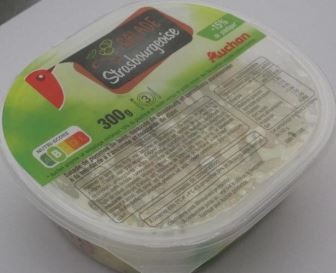
Identification information of the recalled product
- Product category Feed
- Product subcategory Others
- Product brand name Auchan
- Model names or references STRASBOURGEOISE SALAD AUCHAN 300g
- Identification of products
GTIN Lot Date 3596710491513 22 150 003 Use-by date 20/06/2022 - Packaging tray
- Marketing start/end date From 06/01/2022 to 06/07/2022
- Storage temperature Product to be stored in the refrigerator
- Health markEMB61138B
- Geographic area of sale Whole France
- Distributors Auchan and any brand selling Auchan-branded products
Practical information regarding the recall
- Reason for recall organoleptic defect probably due to microbial growth
- Risks incurred by the consumer Other biological contaminants
Organoleptic changes
Posted in Decontamination Microbial, food contamination, food handler, Food Hazard, Food Hygiene, Food Inspections, Food Micro Blog, Food Microbiology, Food Microbiology Blog, Food Microbiology Testing, food recall, Food Spoilage, Food Temperature Abuse, Food Testing, microbial contamination, Microbiological Risk Assessment, Microbiology, Microbiology Investigations, Microbiology Risk, Organoleptic Microbial, Recall
UK – Update: Waitrose recalls Waitrose Frozen Cooked & Peeled Jumbo King Prawns and Essential Frozen Cooked King Prawns because of possible presence of uncooked prawns
Waitrose is recalling Waitrose Frozen Cooked & Peeled Jumbo King Prawns and Essential Frozen Cooked King Prawns because they may contain raw, uncooked prawns. The possible presence of raw, uncooked prawns makes this product unsafe to eat.
Product details
| Waitrose Frozen Cooked & Peeled Jumbo King Prawns | |
|---|---|
| Pack size | 200g |
| Batch code | VN394 |
| Best before | end: All date codes up to and including June 2023 |
| Essential Frozen Cooked King Prawns | |
|---|---|
| Pack size | 250g |
| Batch code | VN394 |
| Best before | end: All date codes up to and including February 2024 |
Risk statement
The possible presence of raw, uncooked prawns in the products listed above.
Action taken by the company
Waitrose is recalling the above products. Point of sale notices will be displayed in all retail stores that are selling these products. These notices explain to customers why the products are being recalled and tell them what to do if they have bought the products. Please see the attached notice.
Our advice to consumers
If you have bought any of the above products do not eat them. Instead, return them to the store from where they were bought for a full refund.
Related alerts
Uganda – Uganda sets sights on reducing Aflatoxin burden
The government of Uganda has started a campaign to tackle the high levels of aflatoxin in food.
The call, supported by Oxfam, the Uganda National Bureau of Standards (UNBS), the Grain Council of Uganda and the International Institute for Tropical Agriculture, came ahead of World Food Safety Day this year.
Aflatoxins are mycotoxins produced by moulds and can affect produce that is not well-dried. High levels can also contaminate food crops like cereals, legumes, oil crops and others, posing a serious health risk to humans and livestock. Based on past research, consuming foods with high aflatoxin levels increases the risk of liver cancer and other related diseases.
High aflatoxin limits were also described as a “major barrier” to the export of Uganda’s agricultural produce to the East African region and internationally. Contamination can also cause crop loss, contributing to hunger.
The campaign is aimed at creating awareness and training all stakeholders in the value chain, from the farm to the final consumer, on how to handle food to avoid contamination.
Posted in Aflatoxin, Aspergillus Toxin, Decontamination Microbial, Food Micro Blog, Food Microbiology, Food Microbiology Blog, Food Microbiology Research, Food Microbiology Testing, microbial contamination, Microbiological Risk Assessment, Microbiology, Microbiology Investigations, Microbiology Risk, Mold Toxin, Mould Toxin, Mycotoxin, Research
Cambodia – Food safety on radar as law takes effect
Thol Sreyleak, 35, is a resident of O’Bek Ka’am commune of Phnom Penh’s Sen Sok district. The last time she got food poisoning was in May and it was so severe she was admitted to hospital. The experience made her family of four start thinking about making their diet safer as this was the third time Sreyleak had suffered from food poisoning.
The food poisoning incidents took a lot of time away from her daily business, so Sreyleak and her family to decided to join a project to find organic and safe vegetables at the market.
“I was poisoned and had to be hospitalised. The first time was cauliflower poisoning, the second was soybean poisoning and the last was durian poisoning. In the case of durian poisoning, I had abdominal pain, diarrhoea and vomiting until I was hospitalised and I spent $140,” she said.
After her experiences with poisoning, she worried about her health. What makes it even more difficult for her is that her stomach and intestines are weak to begin with and she would feel the pain immediately if she ate bad vegetables or fruits.
“Every day I have to eat very carefully. I’m really worried because foods [recognised as safe] are expensive. I do not know if there is any food that I can eat that isn’t harmful to my health. If I want safe foods, I have to go to markets selling naturally-grown produce, but the cost is high compared to my daily income and it is not affordable,” she said.
Due to concerns about the impact that food safety was having on people’s health in the country, the government has enacted legislation like the law on food safety and the law on plant protection and phytosanitation.
On June 8, the Law on Food Safety was promulgated by King Norodom Sihamoni after sailing through the National Assembly on May 11 and the Senate on May 18.
Consisting of 11 chapters and 43 articles, the law applies to food quality and safety management that covers all stages of the food production chain and food businesses in Cambodia.
The law sets out the framework and mechanisms for managing and ensuring the safety, quality, hygiene and legitimacy of food at all stages of the food production chain in order to provide health protection and food safety to consumers, ensuring an honest and healthy food trade.
Pen Sovicheat, undersecretary of state and spokesman for the Ministry of Commerce, said that market and street vendors were one of the ministry’s targets for promoting good hygiene and better quality to attract tourists.
The ministry considers promoting the sale of foods in the markets and on the streets that is hygienic, safe and of high-quality as the main priority.
Posted in Decontamination Microbial, Food Micro Blog, Food Microbiology, Food Microbiology Blog, Food Microbiology Research, Food Microbiology Testing, Food Safety, Food Safety Alert, Food Safety Management, food safety training, microbial contamination, Microbiological Risk Assessment, Microbiology, Microbiology Investigations, Microbiology Risk
Germany – Mama Africa, shrimps smoked – smoked shrimp – Microbiological Safety
Alert type: Food
Date of first publication: 06/17/2022
Product name:
Mama Africa, shrimps smoked – smoked shrimp
Manufacturer (distributor): Alimenti dal mondo – Italia srl
Reason for warning:
microbiological risk
Packaging Unit: 50g
Contact to the competent authorities:
Bavaria: poststelle@lgl.bayern.de
USA – Freshpet Voluntarily Recalls One Lot of Freshpet Select Fresh from the Kitchen Home Cooked Chicken Recipe 4.5-Pound Bags Due to Potential Salmonella Contamination
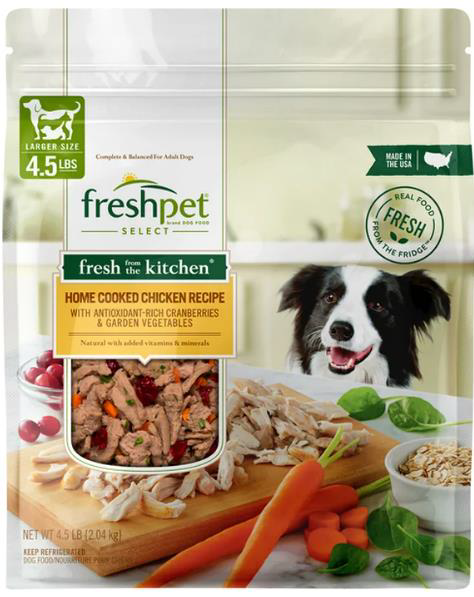
Freshpet Inc. is announcing a voluntary recall of a single lot of Freshpet Select Fresh From the Kitchen Home Cooked Chicken Recipe (4.5 lb. bag), with sell by date of 10/29/22, due to potential contamination with Salmonella.
Salmonella can affect animals eating the product and there is risk to humans, notably children, the elderly, and the immunocompromised, when handling contaminated products, especially if they have not thoroughly washed their hands after having contact with the products or surfaces exposed to these products.
Healthy people infected with Salmonella should monitor themselves for some or all of the following symptoms: nausea, vomiting, diarrhea or bloody diarrhea, abdominal cramping, and fever. Salmonella can result in more serious ailments, including arterial infections, endocarditis, arthritis, muscle pain, eye irritation, and urinary tract symptoms. Consumers exhibiting these signs after having contact with this product should contact their healthcare provider.
Dogs with Salmonella infections may be lethargic and have diarrhea or bloody diarrhea, fever, and vomiting. Some dogs will have only decreased appetite, fever, and abdominal pain. Infected but otherwise healthy dogs can be carriers and infect other animals or humans. If your dog has consumed the recalled product and has these symptoms, please contact your veterinarian.
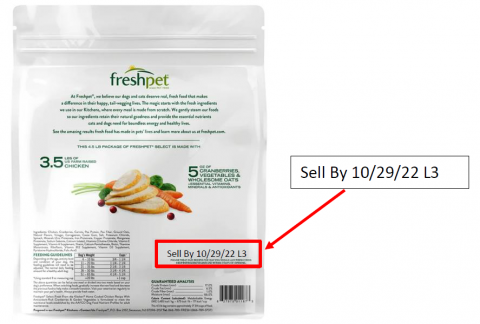
If pet parents have products matching the following description and sell by date in their possession, they should stop feeding it to their dogs and dispose of it immediately. Please call us if you have any of the recalled product, Freshpet Select Fresh From the Kitchen Home Cooked Chicken Recipe (4.5 lb. bag) with Sell by Date 10/29/22. The Sell by date, along with the UPC code, can be found on the bottom and back of each bag. Please see chart and product pictures below for details.
Our Freshpet Team had designated this single lot for destruction, but a small portion of the lot was inadvertently shipped to retailers in limited geographic markets in the last two weeks. No other Freshpet products or lot codes are impacted by this recall.
To date, Freshpet has received no reports of illness, injury, or adverse reaction. The lot may have sold at limited Walmart stores in Alabama and Georgia; and limited Target stores and other select retailers in Connecticut, Massachusetts, Maine, New Hampshire, New Jersey, New York, Pennsylvania, Puerto Rico, Rhode Island, Vermont, and West Virginia.
| Product Name | Retail UPC Code | Lot Code | Sell by Date |
|---|---|---|---|
| FRESHPET® SELECT FRESH FROM THE KITCHEN HOME COOKED RECIPE | 627975011673 | 10/29/22 | 10/29/22 L3 |
The safety of pets and pet parents and the quality of our products are of the greatest importance, and we value the trust placed in Freshpet.
Pet parents who have questions or would like to report adverse reactions should call 1.800.285.0563 Mon. through Fri., 9 am–9 pm (EDT) and Sat. through Sun. 9 am–1 pm (EDT) or visit https://freshpet.co/JUNE22External Link Disclaimer.
This recall is being conducted in cooperation with the U.S. Food and Drug Administration.
UK – Waitrose recalls Waitrose Frozen Cooked & Peeled Jumbo King Prawns and Essential Frozen Cooked King Prawns because of the possible presence of uncooked prawns
Waitrose is recalling Waitrose Frozen Cooked & Peeled Jumbo King Prawns and Essential Frozen Cooked King Prawns because they may contain raw, uncooked prawns. The possible presence of raw, uncooked prawns makes this product unsafe to eat.
Product details
| Waitrose Frozen Cooked & Peeled Jumbo King Prawns | |
|---|---|
| Pack size | 200g |
| Batch code | VN394 |
| Best before | end: All date codes up to and including February 2024 |
| Essential Frozen Cooked King Prawns | |
|---|---|
| Pack size | 250g |
| Batch code | VN394 |
| Best before | end: All date codes up to and including June 2023 |
Risk statement
The possible presence of raw, uncooked prawns in the products listed above.
Action taken by the company
Waitrose is recalling the above products. Point of sale notices will be displayed in all retail stores that are selling these products. These notices explain to customers why the products are being recalled and tell them what to do if they have bought the products. Please see the attached notice.
Our advice to consumers
If you have bought any of the above products do not eat them. Instead, return them to the store from where they were bought for a full refund.
Research – New Challenges for Detection and Control of Foodborne Pathogens: From Tools to People
Contamination of foods by human pathogenic microorganisms is a major concern to both food safety and public health. The changes in consumers’ demand, the globalization of the food trade, and the progress on food production practices and processing technologies all pose new challenges for food industries and regulatory agencies to ensure the safety in food products.
With regard to microbiological safety, bacteria and viruses are the most common foodborne pathogens associated with both sporadic cases and outbreaks.
However, bacterial and viral microorganisms differ in terms of their behaviour in food matrices, their stability in food-related environments (e.g., food-contact surfaces, irrigating and processing waters), and their response to food processing technologies and controlling measures. Current methods do not meet all relevant criteria for effective monitoring plans, the main limitations being their sensitivity, the high workload and time requirement, and the inability to differentiate between viable and non-viable microorganisms. Thus, specific and sensitive methods need to be developed for their detection and quantification in com-plex matrices, such as food, for tracking their occurrence along the food chain to determine the sources of contamination, and for ultimately estimating the risk for consumers.
To fill these gaps, this Special Issue comprises four original research articles and are view paper focusing on the implementation of novel analytical techniques and approaches to foodborne pathogens along the food chain.
Zand and colleagues [1] reviewed the most recent advances of the application of flowcytometry (FCM) and fluorescence in situ hybridization (FISH) for the rapid detection and characterization of microbial contamination. FCM allows for a culture-independent quantification of microbial cells, also providing information on their physiological and structural characteristics which are relevant to assess their viability status. FISH is a nucleic acid-based method mainly applied in the medical and diagnostic fields. While FCM has been successfully used to detect and monitor microorganisms in water, state-of-the-art FCM and FISH protocols for food matrices still show significant limitations. The main pitfalls include complex sample preparation steps; the use of toxic substances; their limits of detection, especially for FISH assays; and the equipment price. Because of all these aspects, FCM and FISH have not yet gained considerable interest in food safety area for the detection of microbial pathogens. Future studies should focus on potential optimisation strategies for FCM and FISH protocols in food samples and their validation, as well as on the development of automated lab-on-chip solutions.
Moving to explore next-generation sequencing (NGS) applications in the produce industry, Truchado et al. [2] contributed to identify potential contamination niches of Listeria monocytogenes in a frozen vegetable processing plant. NGS is a sequencing technology that offers ultra-high throughput, a scalable and fast technique that allows the authors to characterize the isolates by a whole-genome sequencing (WGS) of 3multi locus sequence typing (MLST). The WGS analysis revealed the presence of four different sequence types (ST) contaminating 18% of the samples, including food contact surfaces (FCS), non-food contact surfaces (n-FCS), and final product. These ST were further classified into four different virulence types (VT) according to multi-virulence locus sequence typing (MVLST). Interestingly, an isolate detected in non-food-contact surfaces(n-FCS) also contaminated the final product, highlighting the relevant role of n-FCS as reservoir of L.monocytogenes that reached the final product.
Staphylococcus aureus is a foodborne pathogen considered to be one of the etiological agents of food-related disease outbreaks. Leng et al. [3] supported this Special Issue with a study on its control using the skin mucus extract of Channa argus as a source of antimicrobial compounds. Of interest, untargeted metabolomics were applied to decipherits antibacterial mechanism against S. aureus. Results indicated that the extract had great inhibitory action on its growth by inducing the tricarboxylic acid cycle and amino acid biosynthesis, which are the primary metabolic pathways that affect the normal physiological functions of biofilms.
The present collection includes a second contribution on the control of S. aureus authored by Kim and colleagues [4] who developed a real-time PCR method (qPCR) for the rapid detection and quantification of pathogenic Staphylococcus species.
Four specific molecular targets were identified based on pan-genome analysis, and results showed 100% specificity for 100 non-target reference strains with a detection limit as low as 102CFU/mL. Thus, the proposed method allows an accurate and rapid monitoring of Staphylococcus species and may help control staphylococcal contamination of food.
Moving to human viral pathogens, Macaluso et al. [5] reported the results of an investigation aimed to characterize the occurrence of human enteric viruses in shellfish, a food item with relevant risk for consumers. The study included data collected over two years on the prevalence of enteric virus contamination along the shellfish production and distribution chain in Sicily, Italy. The findings based on quantitative reverse transcription polymerase chain reactions (RT-qPCRs), as gold-standard molecular technique, showed that almost 6% of samples were contaminated with at least one enteric virus such as norovirus, hepatitis A virus, and/or hepatitis E virus. The origin of contaminated shellfish was traced back to Spain and several municipalities in Italy. Such contribution highlights the relevance
of routine monitoring programs to prevent foodborne transmission of enteric viruses and
preserve the health of consumers.
In summary, this Special Issue compile several contributions focused on novel technologies, approaches, and strategies demonstrated to be effective in controlling microbial contamination in food. All the articles provide valuable information to monitor and/or reduce contamination in food, food industry settings, and along the food chain. On a final note, the collection emphasizes the relevance of ensuring food safety and limiting the risk of microbiological contamination along the food chain to protect consumers.

 FoodWorld