The EuroCigua project main objective is to characterize the risk of Ciguatera Poisoning (CP) in Europe including several specific objectives: to determine the incidence of ciguatera in Europe and the epidemiological characteristics of cases; to assess the presence of ciguatoxin in food and the environment in Europe and to develop and validate methods for the detection, quantification and confirmation of the presence of ciguatoxin contaminated specimens.
This report compiles the activities carried out during the EuroCigua project from the signing in April 2016 until December 2020. The present document corresponds to Deliverable No. 6: “Final Scientific Report” on Risk characterization of ciguatera food poisoning in Europe of the Specific Agreement no. 1 “MANAGEMENT AND SCIENTIFIC COORDINATION” within the Framework Partnership Agreement GP/EFSA/AFSCO/2015/03 “Risk characterization of ciguatera food poisoning in Europe”.
ECDC’s annual surveillance reports provide a wealth of epidemiological data to support decision-making at the national level. They are mainly intended for public health professionals and policymakers involved in disease prevention and control programmes.
Executive summary
For 2019, 29 EU/EEA countries reported 8 313 confirmed cases of Shiga toxin-producing Escherichia coli (STEC) infection.
The overall notification rate was 2.2 cases per 100 000 population.
After a stable period, the notification rate increased in 2018−2019.
The highest notification rates were reported in Denmark, Iceland, Ireland, Malta, and Norway.
The highest rate of confirmed cases was observed in 0–4-year-old children (10.3 cases per 100 000 population).
ECDC’s annual surveillance reports provide a wealth of epidemiological data to support decision-making at the national level. They are mainly intended for public health professionals and policymakers involved in disease prevention and control programmes.
Executive summary
Legionnaires’ disease remains an uncommon and mainly sporadic respiratory infection with an overall notification rate in 2019 for the EU/EEA of 2.2 cases per 100 000 population.
There is heterogeneity in notification rates between EU/EEA countries, with the highest rate reported by Slovenia (9.4 cases per 100 000 population).
The annual notification rate increased in recent years, from 1.4 in 2015 to 2.2 cases per 100 000 population in 2019.
There was a marginal decrease of less than 1% in the number of reported cases in 2019, compared with 2018.
Four countries (France, Germany, Italy, and Spain) accounted for 71% of all notified cases in 2019.
Males aged 65 years and above were most affected (8.4 cases per 100 000 population).
Only 10% of cases were culture-confirmed (10%) probably meaning that disease caused by Legionella species other than Legionella pneumophila is under-estimated.
Adding massive amounts of lactic starters to raw milk to manage the sanitary risk in the cheese-making process could be detrimental to microbial diversity. Adjusting the amount of the lactic starter used could be a key to manage these adverse impacts. In uncooked pressed cheeses, we investigated the impacts of varying the doses of a lactic starter (the recommended one, 1×, a 0.1× lower and a 2× higher) on acidification, growth of Staphylococcus aureus SA15 and Shiga-toxin-producing Escherichia coli (STEC) O26:H11 F43368, as well as on the bacterial community patterns. We observed a delayed acidification and an increase in the levels of pathogens with the 0.1× dose. This dose was associated with increased richness and evenness of cheese bacterial community and higher relative abundance of potential opportunistic bacteria or desirable species involved in cheese production. No effect of the increased lactic starter dose was observed. Given that sanitary criteria were paramount to our study, the increase in the pathogen levels observed at the 0.1× dose justified proscribing such a reduction in the tested cheese-making process. Despite this, the effects of adjusting the lactic starter dose on the balance of microbial populations of potential interest for cheese production deserve an in-depth evaluation. View Full-Text
Potential for underprocessing which could result in Clostridium botulinum contamination
Company Name:
Randall Foods Inc.
Brand Name:
Randall
Product Description:
Randall Beans
Company Announcement
Randall Foods, Inc. of Cincinnati, Ohio is recalling all its Randall-brand beans because of manufacturing deviations that may pose a potential health risk. The recall includes the following products:
Brand
Description
UPC
Batch/Lot Numbers
“Best By” Date
Randall
RANDALL GREAT NORTHERN BEANS 48OZ
070095000100
ALL
Prior to January 1 2025
Randall
RANDALL GREAT NORTHERN BEANS 24OZ
070095000117
ALL
Prior to January 1 2025
Randall
Randall
RANDALL GREAT NORTHERN BEANS 15.4OZ
RANDALL PINTO BEANS 48OZ
070095000131
070095000209
ALL
ALL
Prior to January 1 2025
Prior to January 1 2025
Randall
RANDALL PINTO BEANS 24OZ
070095000216
ALL
Prior to January 1 2025
Randall
RANDALL PINTO BEANS 15.4OZ
070095000230
ALL
Prior to January 1 2025
Randall
RANDALL MIXED BEANS 48OZ
070095000407
ALL
Prior to January 1 2025
Randall
RANDALL MIXED BEANS 24OZ
070095000414
ALL
Prior to January 1 2025
Randall
RANDALL MIXED BEANS 15.4OZ
070095000430
ALL
Prior to January 1 2025
Randall
RANDALL KIDNEY BEANS 48OZ
070095000308
ALL
Prior to January 1 2025
Randall
RANDALL KIDNEY BEANS 24OZ
070095000315
ALL
Prior to January 1 2025
Randall
RANDALL KIDNEY BEANS 15.4OZ
070095000339
ALL
Prior to January 1 2025
Randall
RANDALL NAVY BEANS 48OZ
070095000506
ALL
Prior to January 1 2025
Randall
RANDALL NAVY BEANS 15.4OZ
070095000537
ALL
Prior to January 1 2025
Randall
RANDALL BLACK BEANS 48OZ
070095000605
ALL
Prior to January 1 2025
Randall
RANDALL BLACK BEANS 24OZ
070095000612
ALL
Prior to January 1 2025
Randall
RANDALL BLACK BEANS 15.4OZ
070095000636
ALL
Prior to January 1 2025
Randall
RANDALL GARBANZO BEANS 24OZ
070095000711
ALL
Prior to January 1 2025
Randall
RANDALL GARBANZO BEANS 15.4OZ
070095000735
ALL
Prior to January 1 2025
Randall
RANDALL ULITMATE 4-BEAN MIX 48OZ
070095000902
ALL
Prior to January 1 2025
Randall
RANDALL ORGANIC GREAT NORTHERN BEANS 48OZ
070095005105
ALL
Prior to January 1 2025
The product is sold in 48oz, 24oz, and 15.4oz glass jars with tan labels with “Randall” at the label top. Approximately 1.6 million cases of affected products were distributed between March 1, 2019 and May 15, 2021 at retail locations in the following states: Alabama, Arkansas, Florida, Iowa, Illinois, Kansas, Kentucky, Michigan, Minnesota, Missouri, Nebraska, North Carolina, New York, Ohio, Oklahoma, Pennsylvania, South Dakota, Tennessee, Texas, Virginia, Wisconsin, and West Virginia.
The manufacturing deviations included a nonfunctioning temperature indicating device raising the possibility that the product was not effectively processed. Processing at temperatures below a required temperature could create a condition that could lead to premature spoilage or food borne illness; however, there have been no illnesses reported. The company is issuing this voluntary recall as a precaution.
Consumers who have purchased jars of Randall-brand beans, regardless of the “Best By” date, should return them to the place of purchase for a full refund. Consumers with questions may contact the company between 9 am and 5 pm at 1-513-793-6525.
Colonization of intestinal tract with the potential to exclude, displace, and inhibit enteric pathogens is principally dependent on the adhesion ability of probiotics. Therefore, probiotic efficacy is considered to be mainly determined by their adhesion ability. The current study reports the antagonistic effect of four lactic acid bacteria (LAB) on the adhesion profile of four diarrhoeagenic and one non‐diarrhoeagenic enteroaggregative Escherichia coli (EAEC). All the bacterial strains investigated adhered to the Caco‐2 cells. All the LAB tested competitively excluded, displaced, and inhibited at least three (non‐) diarrhoeagenic EAEC strains from adhesion (p < 0.05). In all, Lactobacillus plantarum, FS2 exhibited the strongest adhesion to the Caco‐2 cells, competitive exclusion (CE), displacement, and inhibition against most of the EAEC strains. Additionally, the competence to exclude, displace, and inhibit the EAEC from adhesion depended on both the pathogens and the LAB strains tested; signifying the participation of several mechanisms. Contrary to all the EAEC strains, gastro‐intestinal stress factors such as low pH (2.5) had no effect on the adhesion of the LAB. Unlike the gastro‐intestinal acidic conditions, bile salt conditioning (at pH 6.5) had no effect on the adhesion of both EAEC and LAB. In conclusion, all the LAB tested showed specific anti‐adherence effects including CE, displacement, and inhibition against the selected EAEC. The results indicate that all the LAB, particularly, the L. plantarum, FS2 had a good ability for exerting antagonistic effects against the selected EAEC for the prevention of gastrointestinal infection.
Safe food is a primary determinant of human health. It is a basic human right to have access to safe and healthy food. In seeking to guarantee this right, governments must ensure that available food meets safety standards.
This task is not easy as the world is now more interconnected, and food systems are changing faster than ever. Foods are produced, managed, delivered and even consumed in ways that could not have been anticipated two decades ago.
These factors call for a fresh global approach to improve food safety that aims to strengthen national food safety systems while improving international and national collaboration.
While recognizing that food safety is a shared responsibility among multiple stakeholders, countries must show leadership in adopting and implementing food safety policies which ensure that each stakeholder knows–and correctly plays –their part.
However, access to sufficient, safe, and wholesome food for all remains an elusive goal. Economic disparities within and across countries, including marked differences in the strength of national food safety systems and complex dynamics that operate within food systems, have significantly slowed progress towards achieving this goal.
The FDA, along with CDC and state and local partners, investigated a multistate outbreak of Listeriamonocytogenes infections linked to queso fresco cheeses made by El Abuelito Cheese, Inc. On 5/14/2021, the CDC announced that this outbreak is over.
Recommendation
Recalled Queso Fresco, Quesillo (Oaxaca, string cheese), or Requeson (ricotta) cheeses are past shelf life and should no longer be available.
FDA recommends that anyone who received recalled products use extra vigilance in cleaning and sanitizing any surfaces and containers that may have come in contact with these products to reduce the risk of cross-contamination. Listeria can survive in refrigerated temperatures and can easily spread to other foods and surfaces.
People who are pregnant, are age 65 or over, or have a weakened immune system should not eat any soft cheeses unless they are made with pasteurized milk. Consumers at higher risk for Listeria illness should be aware that although pasteurization of milk kills Listeria, soft cheeses made from pasteurized milk can still become contaminated and have caused Listeria outbreaks, including this one.
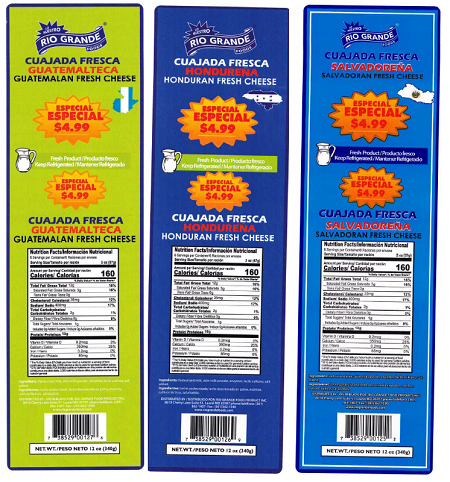
Product Images
Recall Information
On 2/19/2021, El Abuelito Cheese, Inc. announced their initial recall of products, and on 2/27/2021, they announced the expansion of their recall to cover additional products. The recall announcements include the full product list and descriptions.
Consumers, restaurants, and retailers should not eat, sell, or serve any recalled Queso Fresco, Quesillo (Oaxaca, string cheese), or Requeson (ricotta) cheeses.
The firm’s recall does not include any additional products with the El Abuelito Cheese, Inc. label because they are not manufactured or handled in the same facility; this includes El Abuelito Meat, Inc., panela cheese, cotija cheese, mole, crema centroamericana, and crema mexicana. Updates will be provided as they become available.
FDA has posted lists of retailers that may have received Hispanic-styles cheeses from the El Abuelito Cheese, Inc. facility in Paterson N.J. It is possible that these lists may not include all retailers who have received these cheeses; however, these lists represents the best information currently available to the FDA.
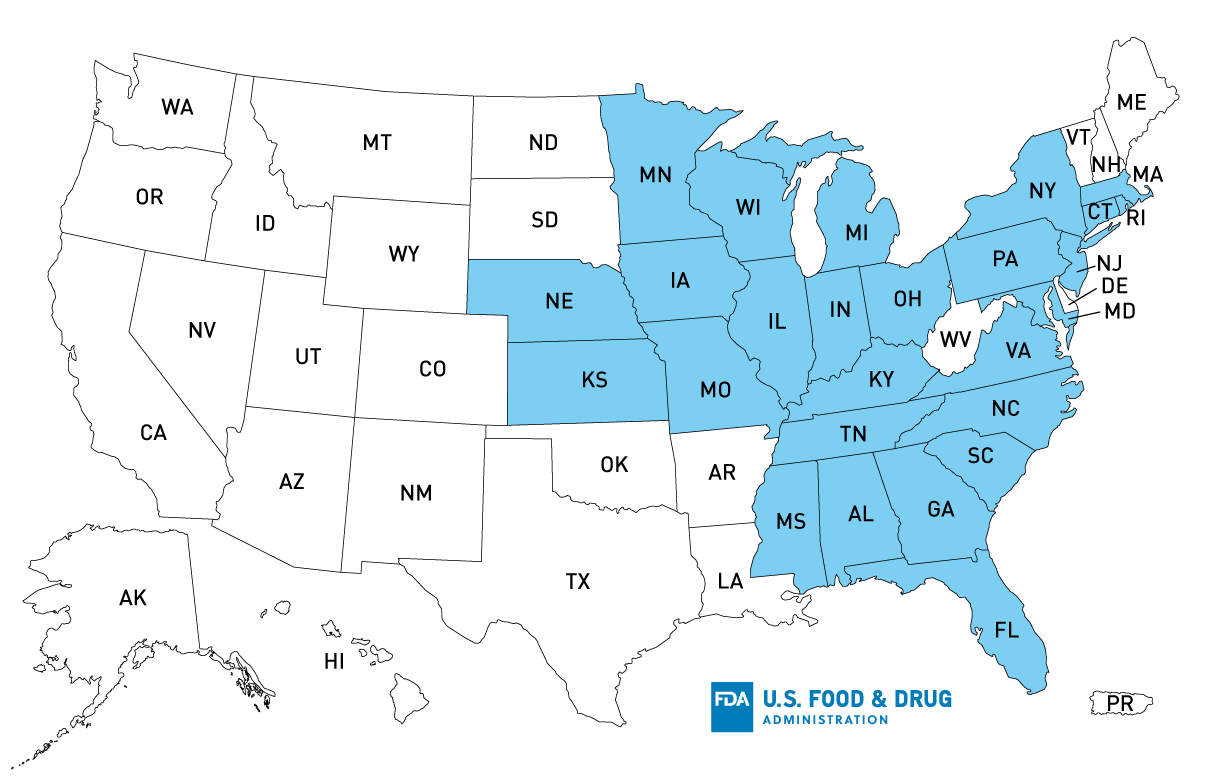
Map of U.S. Distribution of Recalled Queso Fresco, Quesillo, and Requeson Cheeses
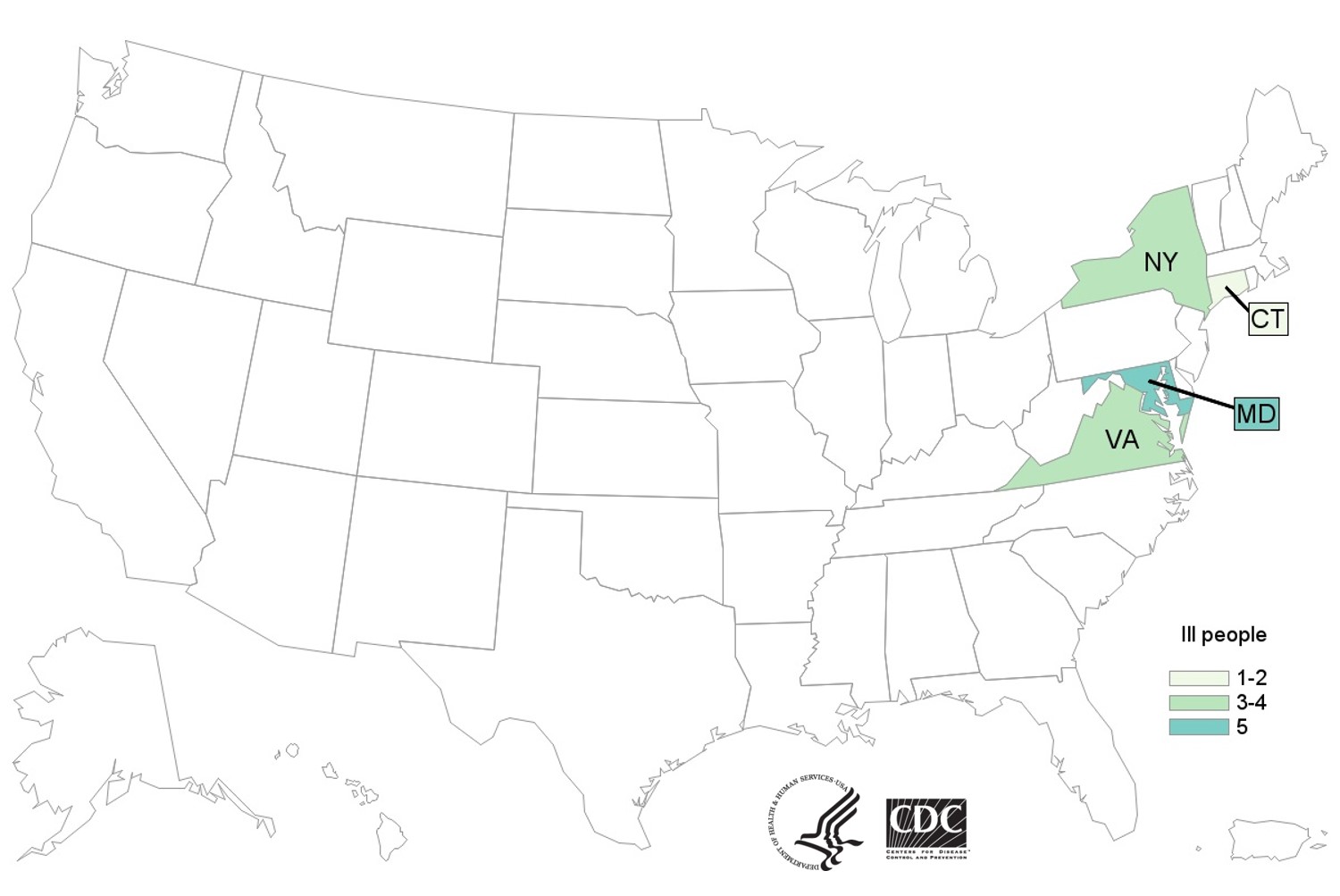
Case Count Map Provided by CDC
Case Counts
Total Illnesses: 13
Hospitalizations: 12
Deaths: 1
Last Illness Date: 3/17/2021
States with Cases: CT (1), MD (5), NY (4), and VA (3)
Product Distribution*: AL, CT, FL, GA, IA, IL, IN, KS, KY, MA, MD, MI, MN, MO, MS, NC, NJ, NY, NE, OH, PA, RI, SC, TN, VA, WI
*States with confirmed distribution; product could have been distributed further
This report includes the background, design, and results of data collection on the occurrence of foodborne illness risk factors in the United States in retail food store deli departments (hereafter referred to as delis) during 2015-2016. It is a baseline report representing the first data collection period of the FDA’s current 10-year study on trends in the occurrence of foodborne illness risk factors and food safety behaviors/practices in food service facilities. Data from the 2015-2016 collection will be used as a baseline to assess trends in the occurrence of risk factors in future data collections. Of the foodborne illness risk factors investigated in this study, inadequate cooking was best controlled. The two most commonly occurring out-of-compliance risk factors were improper holding time/temperature and poor personal hygiene. Food Safety Management Systems (FSMS) were the strongest predictor of the compliance status of data items. Establishments with well-developed FSMS had significantly fewer out-of-compliance food safety behaviors/practices than did those with “less developed” food safety management systems. Neither the presence of a Certified Food Protection Manager (CFPM) nor the multiple-unit status of establishments were significant predictors of having out-of-compliance data items when all factors studied were taken into account. These findings suggest that well-developed and documented FSMS are a useful tool in reducing the occurrence of foodborne illness risk factors.








 FoodWorld