Category Archives: Microbiological Risk Assessment

Research – Ecological niche adaptation of Salmonella Typhimurium U288 is associated with altered pathogenicity and reduced zoonotic potential

Nature.com

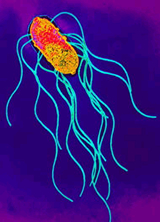
The emergence of new bacterial pathogens is a continuing challenge for agriculture and food safety. Salmonella Typhimurium is a major cause of foodborne illness worldwide, with pigs a major zoonotic reservoir. Two phylogenetically distinct variants, U288 and ST34, emerged in UK pigs around the same time but present different risk to food safety. Here we show using genomic epidemiology that ST34 accounts for over half of all S. Typhimurium infections in people while U288 less than 2%. That the U288 clade evolved in the recent past by acquiring AMR genes, indels in the virulence plasmid pU288-1, and accumulation of loss-of-function polymorphisms in coding sequences. U288 replicates more slowly and is more sensitive to desiccation than ST34 isolates and exhibited distinct pathogenicity in the murine model of colitis and in pigs. U288 infection was more disseminated in the lymph nodes while ST34 were recovered in greater numbers in the intestinal contents. These data are consistent with the evolution of S. Typhimurium U288 adaptation to pigs that may determine their reduced zoonotic potential.

UK – FSA shares how it is using data to monitor food risks

Food Safety News

A specialist from the Food Standards Agency (FSA) has revealed how the authority is using data science to identify emerging risks by using a variety of sources and analytics techniques.

The aim is to help develop a picture of the food system, its safety, authenticity, and risks and vulnerabilities, so issues can be better managed.

Speaking at IAFP Europe, Julie Pierce, director of openness, data and digital, said she had to persuade the FSA that putting funds and faith into data was a good idea.

“I started with a narrow question, answered it and then expanded it into other regions and commodities. We started off with the observation on the amount of aflatoxins in figs from Turkey. We noticed a seasonal variation in the number of alerts we were seeing and could determine the weather was impacting on the aflatoxin level,” she said.

“It was a relatively straightforward model that we built but it was relevant to those grappling with the real life issue. It proved to be relatively straightforward to extend the model beyond figs to other commodities like Bolivian Brazil nuts.”

Kenya – Kenya can’t regulate its way out of aflatoxin menace

Standard Media

Enforcement of food safety regulations is necessary but insufficient to solve this problem. Aflatoxin contamination must be addressed at its root, during production and on-farm storage.

Research by International Food Policy Research Institute and others points to some solutions including education, incentivising farmers and removing the middleman. Educating farmers about how to prevent aflatoxin leads to better practices, which can also improve the quality of grain.

Kenya must also make aflatoxin prevention technologies affordable. Most farmers dry their maize on old woven sisal bags, through which mold spores can permeate. Upgrading to impermeable tarps or drying sheets is a highly cost-effective approach to aflatoxin control, but still costs farmers more than used bags. The new KEBS standard for tarps used in agriculture, which is expected to increase the availability of lower-cost tarps, is an important step forward.

Research – Case–Control Study of Risk Factors for Acquired Hepatitis E Virus Infections in Blood Donors, United Kingdom, 2018–2019

CDC

Hepatitis E virus (HEV) is the most common cause of acute viral hepatitis in England. Substantial yearly increases of autochthonous infections were observed during 2003–2016 and again during 2017–2019. Previous studies associated acute HEV cases with consumption of processed pork products, we investigated risk factors for autochthonous HEV infections in the blood donor population in England. Study participants were 117 HEV RNA–positive blood donors and 564 HEV RNA–negative blood donors. No persons with positive results were vegetarian; 97.4% of persons with positive results reported eating pork products. Consuming bacon (OR 3.0, 95% CI 1.7–5.5; p<0.0001), cured pork meats (OR 3.5, 95% CI 2.2–5.4; p<0.0001), and pigs’ liver (OR 2.9, 95% CI 1.0–8.3; p = 0.04) were significantly associated with HEV infection. Our findings confirm previous links to pork products and suggest that appropriate animal husbandry is essential to reduce the risk for HEV infection.

Research – ANSES sets value to protect people from emerging toxin in shellfish

Food Safety News

A French agency has proposed a guideline value to protect consumers of shellfish from a group of marine biotoxins.

The French Agency for Food, Environmental and Occupational Health and Safety (ANSES) said brevetoxins (BTX) were first detected in mussels in Corsica in 2018. If ingested by humans, these toxins can cause neurological, gastrointestinal or cardiovascular symptoms.

After this finding a few years ago, ANSES was asked by the Directorate General for Food (DGAL) and Directorate General for Health (DGS) to propose a guideline value to protect the health of people who eat shellfish. The agency has published an opinion and report on the subject in French.

Based on reports of food poisoning in other countries, ANSES has set a guideline value to protect consumers of products such as oysters and mussels. This value is 180 µg/kg of shellfish flesh, expressed in BTX-3 equivalents, with BTX-3 being the form of brevetoxin used as the reference.

USA – New Mexico reports increase in Norovirus outbreaks

Outbreak News Today

norovirus-1080x655

The New Mexico Department of Health (NMDOH) is investigating multiple outbreaks of norovirus around the state. The Department is recommending precautions be taken, especially around the very young, the elderly and those at any age with weakened immune systems. They are at risk for more serious illness due to norovirus infection.

Denmark – Legionnaires’ disease in Denmark in 2020

SSI

Legionella_Plate_01    CDC legionella

278 cases of legionnaires’ disease were detected in Denmark in 2020. Of these, 94.6% had been infected in Denmark. That is the highest number ever.

The Statens Serum Institut (SSI) has issued the annual report on how many cases of Legionnaires’ disease (LS) were found in Denmark in 2020.

A total of 278 cases of LS, also known as legionella pneumonia, were detected. Of these, 165 were men (59.4%) and 113 women (40.6%).

Out of these, 39 patients died within 30 days after the disease had broken out or they had been hospitalized. It gives a mortality rate of 14%.

Almost 95% infected in Denmark

Out of the 278, 263 people were infected in Denmark. This corresponds to 94.6%. This is an increase of 25% compared to the average for the last three years, and thus the highest number ever.

“The increase in the number of infected in Denmark may be related to a higher test activity in 2020. It may be due to the fact that many hospitalized patients with suspected covid-19 have also been examined for legionella infection,” says head of department Søren Anker Uldum from SSI.

15 infected on travel

There are only 15 cases (5.4%) where people in 2020 were infected with LS when traveling abroad. In 9 cases, it was while traveling in Europe. 5 were infected while traveling in Asia and 1 traveling to the American continent.

The proportion of travel-related LS cases is usually 20-25%

“Due to the extensive travel restrictions in 2020 due to the Covid-19 pandemic, there has been very limited travel activity. This is probably the reason for the few travel-associated legionella cases in 2020 ”, says Søren Anker Uldum.

Read more

You can read more about Legionnaires’ disease here.

You can also see the annual statement for legionnaires’ disease in Denmark in 2020 here .

Research – Identification of Microorganisms from Several Surfaces by MALDI-TOF MS: P. aeruginosa Is Leading in Biofilm Formation

MDPI

New ecological trends and changes in consumer behavior are known to favor biofilm formation in household appliances, increasing the need for new antimicrobial materials and surfaces. Their development requires laboratory-cultivated biofilms, or biofilm model systems (BMS), which allow for accelerated growth and offer better understanding of the underlying formation mechanisms. Here, we identified bacterial strains in wildtype biofilms from a variety of materials from domestic appliances using matrix-assisted laser desorption/ionization-time of flight mass spectroscopy (MALDI-TOF-MS). Staphylococci and pseudomonads were identified by MALDI-TOF-MS as the main genera in the habitats and were analyzed for biofilm formation using various in vitro methods. Standard quantitative biofilm assays were combined with scanning electron microscopy (SEM) to characterize biofilm formation. While Pseudomonas putida, a published lead germ, was not identified in any of the collected samples, Pseudomonas aeruginosa was found to be the most dominant biofilm producer. Water-born Pseudomonads were dominantly found in compartments with water contact only, such as in detergent compartment and detergent enemata. Furthermore, materials in contact with the washing load are predominantly colonized with bacteria from the human. View Full-Text

Research – In-Plant Validation of Novel On-Site Ozone Generation Technology (Bio-Safe) Compared to Lactic Acid Beef Carcasses and Trim Using Natural Microbiota and Salmonella and E. coli O157:H7 Surrogate Enumeration

MDPI

The purpose of this study was to evaluate the antimicrobial efficacy of an aqueous ozone (Bio-Safe) treatment andtech lactic acid solutions on natural microbiota and E. coli O157:H7 and Salmonella surrogates on beef carcasses and trim in a commercial beef processing plant. For every repetition, 40 carcass and 40 trim swabs (500 cm2) were collected. Samples were taken using EZ-ReachTM swabs, and plated into aerobic plate count (APC), coliform, and E. coli PetrifilmTM for enumeration. In addition, a five-strain cocktail (MP-26) of E. coli surrogates was inoculated onto trim. For every trim surrogate repetition, 30 trim pieces were sampled after attachment and after ozone intervention. Samples were diluted and counts were determined using the TEMPO® system for E. coli enumeration. Ozone and lactic acid interventions significantly reduced (p < 0.003) bacterial counts in carcasses and trim samples. Moreover, lactic acid further reduced APC and coliforms in trim samples compared to ozone intervention (p < 0.009). In the surrogate trials, ozone significantly reduced (p < 0.001) surrogate concentration. Historical data from the plant revealed a reduction (p < 0.001) of presumptive E. coli O157:H7 in trim after a full year of ozone intervention implementation. The novel technology for ozone generation and application as an antimicrobial can become an alternative option that may also act synergistically with existing interventions, minimizing the risk of pathogens such as Salmonella and E. coli O157:H7. View Full-Text

Research -Genome sequencing reveals how salmonella carves out a niche in pork production

Phys Org

Salmonella kswfoodworld

Variants of concern (VOCs) and variants of interest (VOIs) have become familiar terms due to the current pandemic, but variants of familiar pathogens such as salmonella also present a threat to human and animal health.

To better understand the different threats these variants pose, a collaboration led by Professor Rob Kingsley from the Quadram Institute and Professor Mark Stevens from the Roslin Institute working with scientists from the Earlham Institute has focused on common variants of  present in  in the UK. Their findings, published recently in the journal Communications Biology, has shown that despite being extremely closely related, variants can have very different effects on the health of the pig and also on the risks they pose to .

Salmonella Typhimurium is one of the most common types of salmonella. It is a major cause of human gastroenteritis, notably from consuming undercooked pork products or as a result of cross-contamination of foods consumed raw. This bacterial pathogen is also a concern to the pork industry as it can affect the health, productivity and welfare of pigs. Salmonella Typhimurium is relatively common in pig herds globally, and processes implemented in abattoirs are designed to prevent contamination of meat destined for the food chain.