Category Archives: Microbiological Risk Assessment

Research – Survival of Escherichia coli and Listeria innocua on Lettuce after Irrigation with Contaminated Water in a Temperate Climate

MDPI

Microbial disease outbreaks related to fresh produce consumption, including leafy green vegetables, have increased in recent years. Where contamination occurs, pathogen persistence may represent a risk for consumers’ health. This study analysed the survival of E. coli and L. innocua on lettuce plants watered with contaminated irrigation water via a single irrigation event and within stored irrigation water. Separate lettuce plants (Lactuca sativa var. capitata) were irrigated with water spiked with Log10 7 cfu/mL of each of the two strains and survival assessed via direct enumeration, enrichment and qPCR. In parallel, individual 20 L water microcosms were spiked with Log10 7 cfu/mL of the individual strains and sampled at similar time points. Both strains were observed to survive on lettuce plants up to 28 days after inoculation. Direct quantification by culture methods showed a Log10 4 decrease in the concentration of E. coli 14 days after inoculation, and a Log10 3 decrease in the concentration of L. innocua 10 days after inoculation. E. coli was detected in water samples up to 7 days after inoculation and L. innocua was detected up to 28 days by direct enumeration. Both strains were recovered from enriched samples up to 28 days after inoculation. These results demonstrate that E. coli and L. innocua strains are able to persist on lettuce after a single contamination event up until the plants reach a harvestable state. Furthermore, the persistence of E. coli and L. innocua in water for up to 28 days after inoculation illustrates the potential for multiple plant contamination events from stored irrigation water, emphasising the importance of ensuring that irrigation water is of a high quality. View Full-Text
Information – Selecting and Serving Produce Safely

FDA

As you enjoy fresh produce, follow these safe handling tips to help protect yourself and your family.

Fruits and vegetables are an important part of a healthy diet. Your local markets carry a wide variety of nutritious fresh fruits and vegetables. However, harmful bacteria that may be in the soil or water where produce grows can come in contact with fruits and vegetables and contaminate them. Fresh produce may also become contaminated after it is harvested, such as during storage or preparation.

Eating contaminated produce can lead to foodborne illness, often called “food poisoning.” So as you enjoy fresh produce, follow these safe handling tips to help protect you and your family.

Research – Germany reveals insights from enlarged Campylobacter surveillance

Food Safety News

German experts have presented results so far from increased surveillance of Campylobacter infections.

In Germany, around 60,000 cases are reported every year. Mainly contaminated food of animal origin are identified or suspected as sources of infection.

Intensified molecular surveillance of Campylobacter from human infections at the National Reference Center (NRZ) for Salmonella and other Bacterial Enteric Pathogens at the Robert Koch-Institut (RKI) was set up in 2019.

In 2020, the NRZ received 1,299 Campylobacter isolates from human infections for surveillance and subtyping. There were 55,831 reported cases in the same year. More than 25 different laboratories contributed a diverse range of isolates. More than 80 percent were Campylobacter jejuni and 15 percent Campylobacter coli.

Information – Fruits and Vegetable Safety

Click to access fruit-veggie-safety-H.pdf

Research – Impact of Interventions on the Survival of Salmonella enterica I 4,[5],12:I:- in Pork

Journal of Food Protection

A mixed culture of different isolates of Salmonella serovar I 4,[5], 12:i:- was compared to a mixed culture of reference Salmonella serovars as well as non-pathogenic Escherichia coli surrogates.. The two groups of Salmonella were compared for their resistance to commonly used pork carcass interventions, survival in ground pork and thermal resistance in ground pork. There were no observed differences between the response of the two different groups of Salmonella serovars and the non-pathogenic E. coli surrogates within intervention type.  There were no observed differences in the recovery and survival of the two different groups of Salmonella serovars in pork which had been treated with interventions, ground and stored at 5 o C for two weeks. Finally, there were no observed differences in heat resistance between the two different groups of Salmonella serovars in ground pork which had been treated with interventions, ground and stored at 5 o C for two weeks. However, there were observed differences in heat resistance in both groups of Salmonella serovars associated with refrigerated storage. The heat resistance of both groups of Salmonella serovars decreased after refrigerated storage. The results of these experiments demonstrate that there were no observed differences between the responses of Salmonella serovar I 4,[5], 12:i:- when compared to the reference Salmonella serovars to commonly used interventions in the pork industry, and therefore do not present a unique challenge to the pork industry.

Research – High Occurrence of Shiga Toxin-Producing Escherichia coli in Raw Meat-Based Diets for Companion Animals—A Public Health Issue

MDPI

Feeding pets raw meat-based diets (RMBDs) is becoming increasingly popular but comes with a risk of pathogenic bacteria, including Shiga toxin-producing Escherichia coli (STEC). In humans, STEC may cause gastrointestinal illnesses, including diarrhea, hemorrhagic colitis (HC), and the hemolytic uremic syndrome (HUS). The aim of this study was to evaluate commercially available RMBDs with regard to the occurrence of STEC. Of 59 RMBD samples, 59% tested positive by real-time PCR for the presence of Shiga toxin genes stx1 and/or stx2. STECs were recovered from 41% of the 59 samples, and strains were subjected to serotyping and virulence gene profiling, using whole genome sequencing (WGS)-based methods. Of 28 strains, 29% carried stx2a or stx2d, which are linked to STEC with high pathogenic potential. Twenty different serotypes were identified, including STEC O26:H11, O91:H10, O91:H14, O145:H28, O146:H21, and O146:H28, which are within the most common non-O157 serogroups associated with human STEC-related illnesses worldwide. Considering the low infectious dose and potential severity of disease manifestations, the high occurrence of STEC in RMBDs poses an important health risk for persons handling raw pet food and persons with close contact to pets fed on RMBDs, and is of concern in the field of public health.

USA – CDC- Fruit and Vegetable Safety

CDC

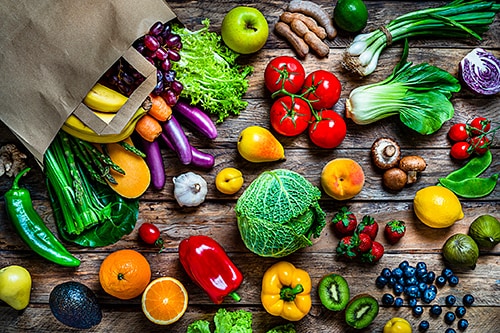
Grocery bag and food items on a wood table

Eating a diet with plenty of fruits and vegetables gives important health benefits. But it’s important to select and prepare them safely.

Fruits and vegetables add nutrients to your diet that help protect you from heart diseasestroke, and some cancers. In addition, choosing vegetables, fruits, nuts, and other produce over high-calorie foods can help you manage your weight.

Sometimes, raw fruits and vegetables contain harmful germs that can make you and your family sick, such as SalmonellaE. coli, and Listeria. CDC estimates that germs on fresh produce cause a large percentage of U.S. foodborne illnesses.

The safest produce is cooked; the next safest is washed. Enjoy uncooked fruits and vegetables while taking steps to avoid foodborne illness, also known as food poisoning.

Research – Global spread of Salmonella Enteritidis via centralized sourcing and international trade of poultry breeding stocks

Nature.com

kswfoodworld Salmonella

A pandemic of Salmonella enterica serotype Enteritidis emerged in the 1980s due to contaminated poultry products. How Salmonella Enteritidis rapidly swept through continents remains a historical puzzle as the pathogen continues to cause outbreaks and poultry supply becomes globalized. We hypothesize that international trade of infected breeding stocks causes global spread of the pathogen. By integrating over 30,000 Salmonella Enteritidis genomes from 98 countries during 1949–2020 and international trade of live poultry from the 1980s to the late 2010s, we present multifaceted evidence that converges on a high likelihood, global scale, and extended protraction of Salmonella Enteritidis dissemination via centralized sourcing and international trade of breeding stocks. We discovered recent, genetically near-identical isolates from domestically raised poultry in North and South America. We obtained phylodynamic characteristics of global Salmonella Enteritidis populations that lend spatiotemporal support for its dispersal from centralized origins during the pandemic. We identified concordant patterns of international trade of breeding stocks and quantitatively established a driving role of the trade in the geographic dispersal of Salmonella Enteritidis, suggesting that the centralized origins were infected breeding stocks. Here we demonstrate the value of integrative and hypothesis-driven data mining in unravelling otherwise difficult-to-probe pathogen dissemination from hidden origins.

Research – Mycotoxin – Europe sets new ergot alkaloids limits

EU

The European Commission is to introduce new rules around a type of mycotoxin in certain food products.

The limits are for ergot alkaloids in barley, wheat, spelt, rye and oats and processed cereal-based food for infants and young children.

There are also changes to the legislation for ergot sclerotia, which contain ergot alkaloids. Lower levels of ergot sclerotia can already be achieved in most cereals by use of good agricultural practices and by sorting and cleaning techniques.

Ingestion of ergot alkaloids can cause ergotism in humans and animals. This was common in humans centuries ago but is rare nowadays. It can cause hallucinations and in extreme cases loss of limbs. Other symptoms include abdominal pains, vomiting, burning sensations of the skin and insomnia.

Research – Implementation of a national waterborne disease outbreak surveillance system: overview and preliminary results, France, 2010 to 2019

Eurosurveillance

Waterborne disease outbreaks (WBDO) are still a public health issue worldwide [13]. They are generally caused by the microbiological contamination of tap water, and acute gastroenteritis (AGE) is the most common syndrome in affected people. Faced with this issue, many countries have implemented dedicated surveillance systems [1,35]. However, notification processes (voluntary or mandatory) vary, as do definitions for WBDO. Standardised information is collected including epidemiological, clinical and, occasionally, biological data, as well as data on the drinking water supply zone (WSZ) in question and operating and distribution incidents. A WSZ refers to a geographically defined area within which water intended for human consumption comes from one or more sources, and where water quality may be considered as approximately uniform. Although most surveillance systems are affected by under  detection, assessments all tend to highlight the same risk factors: rainy events leading to pollution and flooding of the water resource, microbiological vulnerability of the resource, operating incidents (disinfection failure, filtration incident) or a distribution incident (pipeline break, backflow of waste water to the drinking water supply) [6]. Moreover, contributing environmental factors may be aggravated by climate change, thereby increasing the health burden attributable to tap water [7,8].

In France, health authorities notify WBDO to Santé publique France (SpFrance, the French Public Health Agency). SpFrance then investigates the reported issue [912]. There is no standard declaration procedure for reporting WBDO. They are usually notified to health authorities through voluntary reporting by general practitioners or pharmacists following official drinking water monitoring results, or following consumer complaints (smell, taste, etc). Rarely, WBDO are also notified through the Food-borne Infectious Outbreak (FIO) mandatory surveillance system, which is also managed by SpFrance. The lack of a specific WBDO surveillance system leads to underestimation of their health impact. Studies based on improving sensitivity, by using health insurance data to record medicalised acute gastroenteritis (mAGE) cases, have proven both their utility in the study of infectious risk attributable to tap water, and their applicability in retrospective WBDO detection systems [1316].

In this context, SpFrance, in partnership with the Ministry of Health and regional health agencies (ARS), designed a national French WBDO surveillance system based on health insurance data. The 3-year start-up period to test the system commenced in April 2019. Its main objectives are (i) to facilitate the identification and management of WSZ that need to be secured and made safe to protect consumers’ health and (ii) to improve contamination prevention through increased knowledge of WBDO in France and associated risk factors. Furthermore, this new system will provide epidemiological indicators to better estimate the health impact of WBDO.

This article presents the structure and organisation of this new French WBDO surveillance system. We focus on the web-based application EpiGEH, which was specially developed for the system by SpFrance.