Mumbai: Over 30 students of an ashram school in Maharahstra’s Bhandara district were admitted to hospital after suspected food poisoning. The incident was reported at Yerali Ashram School in Tumsar town on Thursday. Talking to PTI, Bhandara district health officer Milind Somkuwar said, “Some students of the ashram school complained of vomiting, abdominal pain and fever on Thursday, after which a team of district health department examined 325 students residing in the school hostel.”
Ground beef was the only common food people reported eating. Of the people who remembered the type of ground beef they ate, most reported eating 80% lean ground beef before they got sick. Traceback information did not identify a common source of ground beef
The FDA is reporting that Pico de Gallo was behind a Salmonella outbreak that sickened almost 40 people.
Although investigators identified the cause of the outbreak, the Food and Drug Administration is not reporting what brand of Pico de Gallo was implicated. The agency reported that 37 people were sickened in the outbreak, but did not report where they live. The FDA first reported the outbreak on June 14.
“For the outbreak of Salmonella Paratyphi B var. L(+) tartrate+ the outbreak has ended and FDA’s investigation has closed. CDC, FDA, and state and local partners conducted epidemiologic and traceback investigations and identified Pico de Gallo as the source of the outbreak,” according to an FDA report released Wednesday.
The FDA reported that its investigators took samples of the product as well as environmental samples of the production facility, but all of the samples came back negative for the outbreak strain. The agency’s statement says there is no risk to consumers.
Norway has reported two cases that are part of a botulism outbreak in Spain, bringing the number of people affected to 11.
There is a link between patients and different packaged brands of Spanish omelet (tortilla de patata), which is made with potatoes and eggs, purchased in various supermarkets in different regions.
The Norwegian cases stayed in Barcelona between July 10 and 23.
Since May 2023, the Statens Serum Institut has registered 20 cases of the same type of Salmonella Enteritidis. The Statens Serum Institut, the Danish Veterinary and Food Administration and the Norwegian Food Institute DTU are investigating the disease outbreak. The outbreak is part of an international outbreak and imported chicken kebabs are suspected.
Potential Salmonella contamination and presence of rodent activity at the distribution center & temperature abuse
Company Name:
Inmar Supply Chain Solutions
Brand Name:
Numerous brand names
Product Description:
Numerous human food, animal (pet) food, medical devices, and drug products
Company Announcement
FOR IMMEDIATE RELEASE – Inmar Supply Chain Solutions, LLC (“Inmar”), is voluntarily recalling FDA regulated products* contained in pallets stored in Inmar’s Arlington, Texas facility between May 1, 2022, and June 30, 2023, the (“FDA Recalled Products”). The FDA Recalled Products were stored in this facility during a time when there may have been a pest control problem at the facility. In addition, because of recent unusually hot weather, the FDA Recalled Products may have been subjected to temperatures in excess of the storage condition instructions on the product labeling.
The Company has not received any customer complaints or reports of adverse events related to this recall.
Risk Statement: There are numerous hazards associated with rodents including the potential presence of Salmonella. Use or consumption of affected products may present risk of illness due to the potential presence of Salmonella, an organism which can cause serious and sometimes fatal infections in infants, young children, frail or elderly people, pregnant persons, persons with pre- existent pathology (e.g., patients with cancer undergoing chemotherapy treatments, organ transplant recipient, etc.) and others with weakened immune systems. Healthy persons infected with Salmonella often experience fever, diarrhea (which may be bloody), nausea, vomiting and abdominal pain. In rare circumstances, infection with Salmonella can result in the organism getting into the bloodstream and producing more severe illnesses such as arterial infections (i.e., infected aneurysms), endocarditis and arthritis. Additionally, products stored under temperatures in excess of storage conditions instructions in the product labeling could potentially lead to decreased product effectiveness.
The FDA Recalled Products were sold to salvage buyers. Inmar has notified those salvage buyers by email and notified them to destroy any FDA Recalled Product.
Consumers with questions regarding this recall can contact Chris.Yerzy@Inmar.com, Monday-Friday, 8 am – 4pm PST.
About Inmar:
Inmar has been a trusted partner and third-party logistics provider for over 30 years providing returns management, liquidation services, as well as the handling of product recalls for manufacturers and retailers. We are working closely with the FDA on this voluntary recall.
Adverse reactions or quality problems experienced with the use of this product may be reported to the FDA’s MedWatch Adverse Event Reporting program either online, by regular mail or by fax.
Regular Mail or Fax: Download form or call 1- 800-332-1088 to request a reporting form, then complete and return to the address on the pre-addressed form, or submit by fax to 1-800-FDA-0178
This recall is being conducted with the knowledge of the U.S. Food and Drug Administration.
*FDA regulated products include food, over the counter (“OTC”) human or animal drugs, over the counter medical devices, dietary supplements, and/or cosmetics, medical devices such as diapers, toothbrushes, feminine hygiene, condoms, etc.
Executive Summary
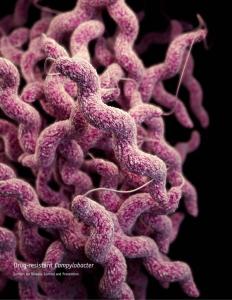
Campylobacter is the most common cause of bacterial gastroenteritis in the UK. Every
year there are an estimated 300,000 foodborne cases in the UK, of which more than half
are related to poultry meat.
Poultry is the main reservoir for Campylobacter and undercooked poultry presents a risk
to the consumer of becoming infected with Campylobacter, while thorough cooking kills
Campylobacter. Infection may also result as a consequence of cross-contamination
during preparation or storage of chicken.
Slaughterhouses are classified as either low-throughput (≤7.5 million birds per year) or
high-throughput (>7.5 million birds per year). Campylobacter levels are routinely
monitored in chicken carcases that are processed in high-throughput slaughterhouses.
Established process hygiene criteria (PHC) state the samples submitted by
slaughterhouses currently should not exceed 1,000 CFU/g Campylobacter in more than
30% of samples submitted. The microbiological criteria regulation is the same for high-
throughput and low-throughput slaughterhouses, however, testing is not currently carried
out in all low-throughput slaughterhouses due to the financial burden of routine testing.
This work was commissioned to assist the FSA to make a risk-based decision on
whether a tailored-made sampling regime for small-throughput slaughterhouses would be
appropriate.
We considered the whole pathway of the chicken from farm to fork using scientific
literature, data from own survey of Campylobacter in slaughterhouses, in addition to
business data and information regarding UK levels of infection from Campylobacter.
Overall, there was no significant difference between the proportion of highly
contaminated samples (>1,000 CFU/g) gathered from low and high-throughput
slaughterhouses. Using the number of chickens per year that are processed by low and
high-throughput slaughterhouses, we estimated that high-throughput slaughterhouses
contribute a significantly larger number of Campylobacter cases due to their volume.
Currently, most chicken on sale in the UK is produced in high-throughput plants. All else
being equal, small improvements to large plants will have a bigger impact on the overall
risk to the UK consumer population than large changes to a far smaller plants.
A number of uncertainties and evidence gaps were identified during this risk assessment.
We had no information as to the method in which the poultry were reared prior to arriving
at the slaughterhouse and are aware that evidence suggests that this can directly affect
Campylobacter levels at slaughter. Data on low-throughput abattoirs were only available
for a limited period of three months and at the end of slaughter. There was no information
available as to the onward processing of meat handled by slaughterhouses, and we
therefore assumed that low and high-throughput slaughterhouses contribute equally to
retail and hospitality etc. In addition, we assumed that only UK slaughtered chicken is
consumed in the UK.
In conclusion, with currently available data it is not possible to identify any difference
between the current per portion risk of Campylobacteriosis to consumers for low and
high-throughput slaughterhouses. We also conclude that the frequency of occurrence
of campylobacteriosis in the total UK population from chicken produced in low-
throughput slaughterhouses is medium and for high-throughput slaughterhouses, this is
high. The uncertainty associated with this frequency is medium. The risk assessment
concludes that the severity of Campylobacter infection is low, with low uncertainty.
This assumes that the proportion of the total domestic consumption of chicken meat
originating from low-throughput slaughterhouses does not change.
The current sampling regime requires samples to be taken once a week. If more than 15
out of 50 samples have high levels of Campylobacter, this is considered a failure and
mitigations need to be put in place. We predicted that if samples are taken once every
two weeks or once every 4 weeks instead, that would still allow us to identify some
slaughterhouses failing to comply with the 15/50 exceedance rate (71% and 57%,
respectively). However, identifying issues will take longer and may not detect some
failing slaughterhouses, and may affect behaviours in the plant, i.e. less frequent
sampling may affect standards during processing.
There is a lack of consistency in the application of sampling requirements in low-
throughput slaughterhouses and a lack of information on the corrective actions taken in
the event of an exceedance. Therefore, it is not possible to differentiate the effect on per-
portion risk of changes to current sampling requirements. However, due to the small
proportion of total poultry meat consumed in the UK that is produced at low-throughput
slaughterhouses, changes to the official sampling requirements at low-throughput
slaughterhouses are unlikely to result in a large change in the total number of cases of
campylobacteriosis in the UK population.



 FoodWorld