Category Archives: microbial contamination

USA – Foodborne illness source attribution estimates for 2017 for Salmonella, Escherichia coli O157, Listeria monocytogenes, and Campylobacter

CDC


Executive Summary
Each year in the United States an estimated 9 million people get sick, 56,000 are hospitalized, and 1,300 die of foodborne disease caused by known pathogens. These estimates help us understand the scope of this public health problem. However, to develop effective prevention measures, we need to understand the types of
foods contributing to the problem. The Interagency Food Safety Analytics Collaboration (IFSAC) is a tri-agency group created by the Centers for Disease Control and Prevention (CDC), the U.S. Food and Drug Administration (FDA), and the U.S. Department
of Agriculture’s Food Safety and Inspection Service (USDA-FSIS). IFSAC developed a method to estimate the sources of foodborne illness using outbreak data from 1998 through the most recent year for four priority pathogens: Salmonella, Escherichia coli O157, Listeria monocytogenes, and Campylobacter. IFSAC described this method and the estimates for 2012 in a report and at a public meeting. IFSAC derived the estimates for 2017 using the same method used for the 2012 estimates, with some modifications. The data came from 1,329 foodborne disease outbreaks that occurred from 1998 through 2017 and for which each confirmed or suspected implicated food fell into a single food category. The method relies most heavily on the most recent five years of outbreak data (2013 – 2017). Foods are categorized using a scheme IFSAC created to classify foods into 17 categories that closely align with the U.S. food regulatory agencies’ classification needs.

USA – Taher Voluntarily Recalls Veggie & Ranch Cups With Cauliflower Because of Possible Health Risk

FDA

Taher, Inc., in conjunction with Mann Packing Co., as part of a multi-state recall due to the potential risk of Listeria monocytogenes, in an abundance of caution is announcing a voluntary recall of vegetable cups served in select locations in Minnesota.

This recall impacts only the 7.5oz Fresh Seasons Kitchen Veggie & Ranch Cup containing cauliflower sold between October 30, 2019 and November 4, 2019 in select cafeterias and vending machines in Minnesota. The cup has a UPC number of 8 10106 020334 and a sell by date of November 11, 2019.

No illnesses or injuries have been reported to date in connection with either the Mann Packing Co. or Taher, Inc. voluntary recall. These products have been recalled out of an abundance of caution.

Customers who have questions about the recall can contact Taher, Inc. at 952-945-0505 or email communications@taher.com.


Company Contact Information

Consumers:
Taher
 952-945-0505
 communications@taher.com
Media:
Jill Teut
 612- 708-0350

Product Photos

Research -Searching potential candidates for development of protective cultures: Evaluation of two Lactobacillus strains to reduce Listeria monocytogenes in artificially contaminated milk

Wiley Online

Abstract

The aims of this work were (a) to select the minimum concentrations of two bacteriocin‐producing lactobacilli strains to reduce Listeria monocytogenes growth in whole milk, (b) to evaluate the individual and combined application of these chosen lactobacilli concentrations as protective culture in this food and, (c) to estimate if lactobacilli growth caused undesirable changes in the visible characteristics of milk. The selected minimum lactobacilli concentration with antilisterial activity was 106 CFU ml−1 for both lactobacilli. Although a high initial concentration of L. monocytogenes (104 CFU ml−1) was added to milk, a notable reduction on listerial counts (2–4 log CFU ml−1) was achieved in comparison to the control. These lactobacilli showed a good adaptability in milk reaching optimal counts and not causing undesirable visible changes. In conclusion, the use of these lactobacilli could be considered as a bio‐strategy potentially effective to limit the contamination by L. monocytogenes in certain milk‐derived products.

Research -Inactivation of Escherichia coli O157:H7, Salmonella typhimurium, and Listeria monocytogenes on cherry tomatoes and oranges by superheated steam

Science Direct

Abstract

This study was performed to compare the effectiveness of saturated steam and superheated steam for the inactivation of Escherichia coli O157:H7, Salmonella typhimurium, and Listeria monocytogenes on the surface of cherry tomatoes and oranges. It also determined the effect of the steam processes on the color, texture, Vitamin C content, and antioxidant capacity and changes in these parameters during chilled storage. Cherry tomatoes and oranges inoculated with the three foodborne pathogens were treated with saturated steam at 100 °C and superheated steam at 125, 150, 175, and 200 °C for various time intervals. After the cherry tomatoes and oranges were exposed to superheated steam at 200 °C for 3 or 20 s, all tested pathogens were reduced to below the detection limit (1 or 1.7 log, respectively) without significant changes in color, texture, vitamin C content, and antioxidant capacity (P > .05) at 4 °C for up to 9 days. Our results suggest that superheated steam treatment can be effective at decreasing pathogen populations when compared to saturated steam, without significant quality deterioration, and thus, this technique demonstrates great potential to improve the microbial safety of fresh produce.

USA – Notes from the Field: Botulism Type E After Consumption of Salt-Cured Fish — New Jersey, 2018

CDC

cdc clost spore

Image CDC

On October 25, 2018, at 2:15 a.m., a woman aged 30 years and her mother, aged 55 years, both of Egyptian descent, arrived at an emergency department in New Jersey in hypotensive shock after 16 hours of abdominal pain, vomiting, and diarrhea. The daughter also reported blurry vision and double vision (diplopia), shortness of breath, chest pain, and difficulty speaking. She appeared lethargic and had ophthalmoplegia and bilateral ptosis. Both women were admitted to the hospital. The mother improved after fluid resuscitation, but the daughter required vasopressor support in the intensive care unit. Although the mother did not have evidence of cranial nerve involvement on admission, during the next 24 hours, she developed dysphagia and autonomic dysfunction with syncope and orthostasis and was transferred to the intensive care unit as her symptoms progressively worsened similar to those of her daughter.

Two days before admission, both women had eaten fesikh, a traditional Egyptian fish dish of uneviscerated gray mullet that is fermented and salt-cured. Fesikh has been linked to foodborne botulism, including a large type E outbreak in Egypt in 1993 (1). The Egyptian Ministry of Health has since issued public health warnings regarding fesikh before Sham el-Nessim, the Egyptian holiday commemorating the beginning of spring, during which fesikh is commonly prepared and eaten.* Foodborne botulism outbreaks associated with fesikh and similar uneviscerated salt-cured fish have also occurred in North America (2); two outbreaks occurred among persons of Egyptian descent in New Jersey in 1992 (3) and 2005 (4).

Research -Synergistic effect of steam and lactic acid against Escherichia coli O157:H7, Salmonella Typhimurium, and Listeria monocytogenes biofilms on polyvinyl chloride and stainless steel

Science Direct

Abstract

This study was designed to investigate the individual and combined effects of steam and lactic acid (LA) on the inactivation of biofilms formed by Escherichia coli O157:H7, Salmonella Typhimurium, and Listeria monocytogenes on polyvinyl chloride (PVC) and stainless steel. Six day old biofilms were developed on PVC and stainless steel coupons by using a mixture of three strains each of three foodborne pathogens at 25 °C. After biofilm development, PVC and stainless steel coupons were treated with LA alone (immersed in 0.5% or 2% for 5 s, 15 s, and 30 s), steam alone (on both sides for 5, 10, and 20 s), and the combination of steam and LA. The numbers of biofilm cells of the three foodborne pathogens were significantly (p < 0.05) reduced as the amount of LA and duration of steam exposure increased. There was a synergistic effect of steam and LA on the viability of biofilm cells of the three pathogens. For all biofilm cells of the three foodborne pathogens, reduction levels of individual treatments ranged from 0.11 to 2.12 log CFU/coupon. The combination treatment of steam and LA achieved an additional 0.2 to 2.11 log reduction compared to the sum of individual treatments. After a combined treatment of immersion in 2% LA for 15 s or 30 s followed by exposure to steam for 20 s, biofilm cells of the three pathogens were reduced to below the detection limit (1.48 log). From the results of this study, bacterial populations of biofilms on PVC coupons did not receive the same thermal effect as on stainless steel coupons. Effectiveness of steam and LA may be attributed to the difference between Gram-negative and Gram-positive characteristics of the bacteria studied. The results of this study suggest that the combination of steam and LA has potential as a biofilm control intervention for food processing facilities.


Research – One-Step Analysis for Listeria monocytogenes Growth in Ready-to-Eat Braised Beef at Dynamic and Static Conditions

Journal of Food Protection

ABSTRACT

This study aimed to estimate the growth parameters of Listeria monocytogenes growth in ready-to-eat (RTE) braised beef by one-step dynamic and static kinetic analysis. The Baranyi model and cardinal parameters model were integrated into a dynamic and static model to estimate the kinetic parameters under one dynamic condition (−20 to 40.0°C) and eight static conditions (4, 8, 15, 20, 30, 35, 37, and 40°C). Based on the dynamic and static methods, the respective dynamic and static results for estimated growth boundaries of L. monocytogenes in RTE braised beef were from −2.5 and −2.7°C to 40.5 and 40.7°C with optimal specific growth rates of 1.078 and 0.913 per h at temperatures of 35.7 and 35.0°C. Temperature effects on the specific growth rate and lag period were developed and used to simulate the change of the physiological state of inocula during the bacterial growth. Subsequently, three additional dynamic temperature profiles were implemented for external validation. The root mean square error of the model developed by dynamic regression (0.19 log CFU/g) is slightly better than that of the model developed by static regression (0.23 log CFU/g). Comparing the validation results, one-step dynamic analysis might be a preferable method for prediction, especially when the growth approaches the stationary phase. Generally, both one-step dynamic and static analyses could be used to accurately predict L. monocytogenes growth in RTE braised beef under fluctuating temperatures.

HIGHLIGHTS
  • Growth of L. monocytogenes in RTE beef under dynamic and static conditions was studied.

  • L. monocytogenes growth parameters were obtained by different one-step analyses.

  • Secondary models were developed and used to simulate the physiological state.

  • External validations were applied in additional dynamic conditions.

USA – Elmira Legionnaires Outbreak

Outbreak News Today

CDC legionella

Image CDC

13 Elmira residents are recovering from Legionnaires’ disease.  The Chemung County Department of Health and the New York State Department of Health are investigating the Elmira Legionnaires Outbreak.  Legionnaires disease is a serious and often deadly lung disease.  Overall, 10% of Americans who develop Legionnaires disease die.

A cooling tower at Elmira Heat Treating may be the source of this Legionnaires outbreak.  Cooling towers are a common source of Legionnaires disease outbreaks. Elmira Heat Treating has three cooling towers.  One cooling tower tested positive for Legionnaires disease.

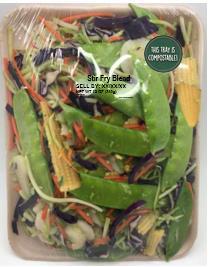
USA – Ghnw, LLC Voluntarily Recalls Mushroom Stir Fry Blend and Stir Fry Blend Because of Possible Health Risk in Oregon and Washington States

FDA

GHNW, LLC of Clackamas, OR is voluntarily recalling Mushroom Stir Fry Blend 10 oz. tray and Stir Fry Blend 16 oz. tray that were produced using Broccoli Slaw that is being recalled by Mann Packing Co., Inc. due to the potential to be contaminated with Listeria monocytogenes.

At this time, we are not aware of any illnesses linked by health officials to this recall. No other GHNW, LLC products are affected by this recall.

GHNW, LLC is issuing this recall out of an abundance of caution. The recalled products have “Sell By” dates of October 27, 2019 to November 8, 2019, which can be found printed in black ink on the front label of the product. The products affected were sold at QFC and/or Fred Meyer in Oregon and Washington State.

Consumers who believe that they are in possession of any of the products affected by this recall should dispose of the product in an appropriate waste container.

For any inquiries or comments, consumers with questions regarding this GHNW recall are welcome to call 888-449-9386, M-F, 9 am to 4 pm PST.

GHNW has notified its customers and this recall is being carried out with the knowledge of the US Food & Drug Administration.


Company Contact Information

Consumers:
 888-449-9386
Media:
Nelia Alamo
 916-208-6898

Product Photos

RASFF Alert – Animal Feed – Moulds – Sunflower Seed Meal

RASFF-Logo

RASFF – sunflower seed meal from Ukraine infested with moulds in Poland