Category Archives: microbial contamination

Ireland – Withdrawal of a Batch of Iceland Luxury 4 Hoisin Duck Quarter Pounder Burgers due to the Presence of Salmonella

FSAI

Wednesday, 28 April 2021

Summary
Category 1: For Action
Alert Notification: 2021.36
Product: Luxury 4 Hoisin Duck Quarter Pounders; pack size: 454g
Batch Code: Best before: 20/09/2022
Country Of Origin: United Kingdom

Message:

The above batch of frozen Iceland Luxury 4 Hoisin Duck Quarter Pounder burgers is being withdrawn due to the presence of Salmonella.  Point-of-sale product withdrawal notices will be displayed in Iceland stores.

Nature Of Danger:

People infected with Salmonella typically develop symptoms between 12 and 36 hours after infection, but this can range between 6 and 72 hours.  The most common symptom is diarrhoea, which can sometimes be bloody.  Other symptoms may include fever, headache and abdominal cramps.  The illness usually lasts 4 to 7 days. Diarrhoea can occasionally be severe enough to require hospital admission. The elderly, infants, and those with impaired immune systems are more likely to have a severe illness.

Action Required:

Manufacturers, wholesalers, distributors, caterers & retailers:

Retailers are requested to remove the implicated batch from sale and to display a point-of-sale product withdrawal notice in stores where the affected batch was sold.

Consumers:

Consumers are advised not to eat the implicated batch.

Iceland duck burgers

France – Product recall: ORGANIC rope Mussels raised in France from the L’ATELIER POISSONNERIE brand – E.coli

Oulah

Product recall: ORGANIC rope molds raised in France from the L'ATELIER POISSONNERIE brand

ENCOUNTERED PROBLEM

Presence of Escherichia coli

PROPOSED SOLUTION

People who hold the product in question are asked not to consume them – and more particularly young children, pregnant women, immunocompromised people and the elderly – and to return them to the point of sale where they were purchased.

People who have consumed it and who present symptoms such as diarrhea, abdominal pain or vomiting should consult their doctor as soon as possible, mentioning this consumption and the possible link with the bacterium Escherichia coli.

In the absence of symptoms within 10 days after consuming the affected products, there is no need to worry and consult a doctor.

The bacterium E. coli is naturally present among the digestive microflora of humans and warm-blooded animals. Some strains of E. coli are pathogenic, and can be responsible in humans for various disorders ranging from mild diarrhea to more serious forms such as hemorrhagic diarrhea or severe kidney damage such as HUS, mainly in young children.

FURTHER INFORMATION

▸ Barcode
3664335020170

▸ Lot
20210418

▸ DLC
04/26/2021

▸ Start date / End of marketing
From 04/21/2021 to 04/26/2021

▸ Health mark
FR 44.069.002 CE

▸ Distributors
E. Leclerc Stores

▸ Contact
customer service 0960445769

▸ Source
https://rappel.conso.gouv.fr/

Singapore – NTUSingapore, Singapore Food Agency, and A*STAR launch Future Ready Food Safety Hub(FRESH)to build Singapore’s capabilities in food safety science

Click to access ntu-singapore-singapore-food-agency-and-a-star-launch-future-ready-food-safety-hub-(fresh)-to-build-singapore-s-capabilities-in-food-safety-science.pdf

Belgium – Food supplements (various products) of the Husk brand – Salmonella

AFSCA

Communication from the AFSCA
Products: Food supplements (various products) of the Husk brand.
Problem: Possible presence of Salmonella.


The AFSCA is today recalling consumers of the Husk brand “Psyllium-Frøskaller”, ”Psyllium Mavebalance” and “FiberHUSK” food supplements .

This recall follows a notification via the RASFF system (European Food and Feed Rapid Alert System) concerning the possible presence of Salmonella in these products.

It was therefore decided to withdraw these products from sale and to recall them to consumers.

Product description

– Product category: food supplements
– Product name: Psyllium-Frøskaller ”,” Psyllium – Mavebalance ”and” FiberHUSK ”
– Brand: Husk
– Lots: all lots are affected
– DDM: all dates are affected
– Packaging: in powder or capsules, available in different quantities These products were sold online and via this point of sale in Belgium: – ScanShop Brussels, chaussée de Wavre 354 to 1040 Etterbeek For any further information , you can contact the AFSCA contact point for consumers: 0800 / 13.550 or pointdecontact@afsca.be .

France – Product recall: EARL Ferme de Reculefort lactic cow cheese – Listeria monocytogenes

Oulah

Product recall: EARL Ferme de Reculefort lactic cow cheese

ENCOUNTERED PROBLEM

Presence of Listeria monocytogenes

PROPOSED SOLUTION

People who may have this product are asked not to consume it and to return it to the point of sale where it was purchased.

People who have consumed this product and who have a fever, isolated or accompanied by headaches, are invited to consult their doctor, notifying him of this consumption.
Pregnant women should pay special attention to these symptoms, as well as immunocompromised people and the elderly. These symptoms may suggest listeriosis, a disease that can be serious and can take up to eight weeks to incubate.

FURTHER INFORMATION

▸ Lot
• Plain Aperifrom lot 88
• Flavored Aperifrom lot 88
• Dry and semi-dry lactic lot 88

▸ DDM
• 04/22/2021
• 04/20/2021


Bulk packaging (lactic acid and aperifrom), plastic tray (aperifrom)

▸ Start date / End of marketing
From 04/01/2021 to 04/08/2021


CE health mark FR 38 341 03


Market and farm distributors.
Rochetoirin, La Tour du Pin, Bourgoin Jailleu

▸ Consumer service contact
0474970183

▸ Source
https://rappel.conso.gouv.fr/

France – Product recall: unbranded dry turkey sausages – Listeria monocytogenes

Oulah

Product recall: unbranded dry turkey sausages

ENCOUNTERED PROBLEM

Presence of Listeria monocytogenes

PROPOSED SOLUTION

People who may have this product are asked not to consume it and to return it to the point of sale where it was purchased.

People who have consumed this product and who have a fever, isolated or accompanied by headaches, are invited to consult their doctor, notifying him of this consumption.
Pregnant women should pay special attention to these symptoms, as well as immunocompromised people and the elderly. These symptoms may suggest listeriosis, a disease that can be serious and can take up to eight weeks to incubate.

FURTHER INFORMATION

▸ Lot
0682117

▸ DLC
05/18/2021


Bulk packaging

▸ Start / end date of marketing
From 03/18/2021 to 04/20/2021

▸ Distributors
René MEYER company store Address: 2 route de Donnenheim, 67170 Wingersheim les quatre bans

▸ Consumer service contact
0388514926

▸ Source
https://rappel.conso.gouv.fr/

France – Product recall: MERICQ brand vacuum-packed MSC haddock fillet – Listeria monocytogenes

Oulah

Product recall: MERICQ brand vacuum-packed MSC haddock fillet

ENCOUNTERED PROBLEM

Presence of listeria monocytogenes

PROPOSED SOLUTION

People who may have this product are asked not to consume it and to return it to the point of sale where it was purchased.

People who have consumed this product and who have a fever, isolated or accompanied by headaches, are invited to consult their doctor, notifying him of this consumption.
Pregnant women should pay special attention to these symptoms, as well as immunocompromised people and the elderly. These symptoms may suggest listeriosis, a disease that can be serious and can take up to eight weeks to incubate.

FURTHER INFORMATION

▸ Lot
1620746

▸ DLC
04/20/2021

▸ Packaging
Vacuum tray

▸ Start date / End of marketing
04/10/2021

▸ Health mark
FR 47-091-046 CE

▸ Consumer service contact
MERICQ is at the disposal of consumers to answer their questions at the telephone number: 06.43.62.55.30

▸ Source
https://www.franprix.fr/

Ireland – HPSC provides advice for parents following large increase in incidence of Cryptosporidiosis

HPSC

crypto

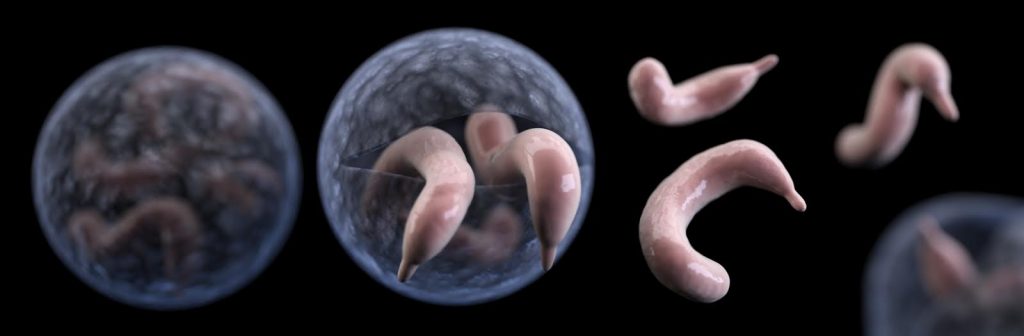
The HSE-Health Protection Surveillance Centre (HPSC) is providing advice to parents about preventing cryptosporidiosis following a large increase in a potentially serious tummy bug in children over the last few weeks.

Since the beginning of March, the number of cases of cryptosporidiosis has more than doubled in comparison to the average rates, especially in small children aged 1 to 4 years of age. When children spend time outdoors and in particular on farms, they are more likely to pick up this bug and it is important they wash their hands regularly with soap under warm running water.

Factsheet to assist parents

Hands should always be washed:

  • After using the toilet
  • Before eating
  • Before preparing food
  • After playing, working or being outside (especially on the farm)
  • After touching dirty outdoor clothes or boots
  • After touching pets, livestock and other animals

It is important to know that:

  • Alcohol hand gel will not kill the cryptosporidiosis bug – only soap and warm water will
  • Children should not eat food (including sweets and treats) out of doors especially on the farm, or in the open countryside, unless their hands have been cleaned
  • Raw (unpasteurised) milk can be contaminated with many harmful infectious diseases including cryptosporidiosis. Young children and pregnant women are at most risk.
  • If you have a private well, you should ensure that the water from it is safe. The EPA has advice on protecting your well

Symptoms:
Symptoms of cryptosporidiosis generally begin about a week after swallowing the bug, but can start after only a couple of days. The symptoms last about one week (but can last longer). People who are immunocompromised (whose body’s defence system is weak due to a medical condition or because of medication) can have severe symptoms if they catch cryptosporidiosis.

The most common symptom of cryptosporidiosis is watery diarrhoea. Other symptoms include:

  • Stomach cramps or pain
  • A temperature
  • Nausea
  • Vomiting

Some people with cryptosporidiosis will not get sick at all.

Cryptosporidiosis is spread when the bug passes from the person or animal in the stools or manure, and anything contaminated by the stools or manure (hands, touch surfaces, handles, food, water and outdoor surfaces) can lead to a person becoming infected.


Research – Survival of Salmonella and Shiga Toxin-producing Escherichia coli and Changes in Indigenous Microbiota During Fermentation of Kombucha Made from Home-brewing Kits

Journal of Food Protection

Survival and growth of Salmonella and Shiga toxin-producing Escherichia coli (STEC) in kombucha prepared from four brands of commercially available kombucha kits intended for use by home brewers were investigated. Changes in microbiota responsible for fermentation were also determined. An initial population of Salmonella (6.77 log CFU/mL) decreased to below the detection limit (0.30 log CFU/mL) within 10 d in kombucha prepared from two of the four test brands. Populations of 1.85 and 1.20 log CFU/mL were detected in two brands fermented for 14 d. An initial population of STEC (7.02 log CFU/mL) decreased to <0.30 log CFU/mL in two of the four brands within 14 d; 0.20 and 0.87 log CFU/mL were detected in kombucha prepared from the other two brands. Salmonella and STEC increased in populations within 1 d in three brands of base tea used to prepare kombucha, and were stable throughout 14 d of incubation. Both pathogens steadily declined in base tea prepared from one brand of kombucha kit. Inactivation of the pathogens occurred as the pH of kombuchas decreased, but a clear correlation between rates of inactivation and decrease in pH was not evident when comparing kombuchas prepared from the four kits. Growth and peak populations of mesophilic aerobic microorganisms, yeasts, lactic acid bacteria, and acetic acid bacteria varied, depending on the kombucha kit brand. There was not strong evidence to correlate the behavior of Salmonella and STEC with any of these groups of indigenous microbiota. Results of this study show that the ability of Salmonella and STEC to survive in kombucha and base tea used to prepare kombucha is dependent on inherent differences in commercially available kombucha kits intended for use in home settings. Strict application of hygienic practices with the goal of preventing contamination with Salmonella or STEC is essential for reducing the risk of illness associated the consumption of kombucha.

Research – Histamine Control in Raw and Processed Tuna: A Rapid Tool Based on NIR Spectroscopy

MDPI

The present study was designed to investigate whether near infrared (NIR) spectroscopy with minimal sample processing could be a suitable technique to rapidly measure histamine levels in raw and processed tuna fish. Calibration models based on orthogonal partial least square regression (OPLSR) were built to predict histamine in the range 10–1000 mg kg−1 using the 1000–2500 nm NIR spectra of artificially-contaminated fish. The two models were then validated using a new set of naturally contaminated samples in which histamine content was determined by conventional high-performance liquid chromatography (HPLC) analysis. As for calibration results, coefficient of determination (r2) > 0.98, root mean square of estimation (RMSEE) ≤ 5 mg kg−1 and root mean square of cross-validation (RMSECV) ≤ 6 mg kg−1 were achieved. Both models were optimal also in the validation stage, showing r2 values > 0.97, root mean square errors of prediction (RMSEP) ≤ 10 mg kg−1 and relative range error (RER) ≥ 25, with better results showed by the model for processed fish. The promising results achieved suggest NIR spectroscopy as an implemental analytical solution in fish industries and markets to effectively determine histamine amounts. View Full-Text