Category Archives: Hygiene

Research – Natural Gut Flora Protection Against E.coli O157

Science Daily

A cocktail of non-pathogenic bacteria naturally occurring in the digestive tract of healthy humans can protect against a potentially lethal E. coli infection in animal models according to research presented today at the 113th General Meeting of the American Society for Microbiology. The research, conducted by scientists at the University of Michigan Medical School in Ann Arbor, could have important implications for the prevention or even treatment of this disease.

Russia – Cream Puffs – Salmonella Outbreak

UPi.comSalmonella

CHELYABINSK, Russia, May 20 (UPI) — About 66  pounds of cream puffs were removed from stores in the Russian Urals city of  Chelyabinsk on Monday after a salmonella outbreak was reported there.

“The police have found 12 outlets selling these products. About 30 kilograms  [about 66 pounds] of cream puffs were removed from sale. A working group has  been set up to find other outlets. An investigation is under way,” a spokeswoman  for the Chelyabinsk region police department told ITAR-Tass.

ITAR-Tass said 36 people, including eight children, were hospitalized with  salmonella poisoning in Chelyabinsk, two in serious condition.

Local news sources said as many as 41 people have been sickened, ITAR-Tass  reported.

Read more:  http://www.upi.com/Top_News/World-News/2013/05/20/Salmonella-outbreak-reported-in-Chelyabinsk/UPI-40751369073409/#ixzz2TuXyckc7

Eygpt – Salmonella Mass Poisoning Al-Azhar University

AHRAMONLINESalm

Egypt’s Health Minister Mohamed Hamed said that salmonella bacteria was behind the second mass poisoning incident in Al-Azhar University in Cairo.

Hamed said in a press statement on Friday that the final report on the incident revealed that the bacteria contaminated the food, which left 180 students hospitalised on 29 April after eating in the dormitory.

The minister also stressed the importance of the personal hygiene of staff members involved in food preparation.

Earlier, on 1 April, over 500 students were hospitalised with food poisoning after eating on campus, which sparked protests.

Ireland – 6,000 People Affected by Cryptosporidium

The Irish Sun763px-Cryptosporidium_parvum_01

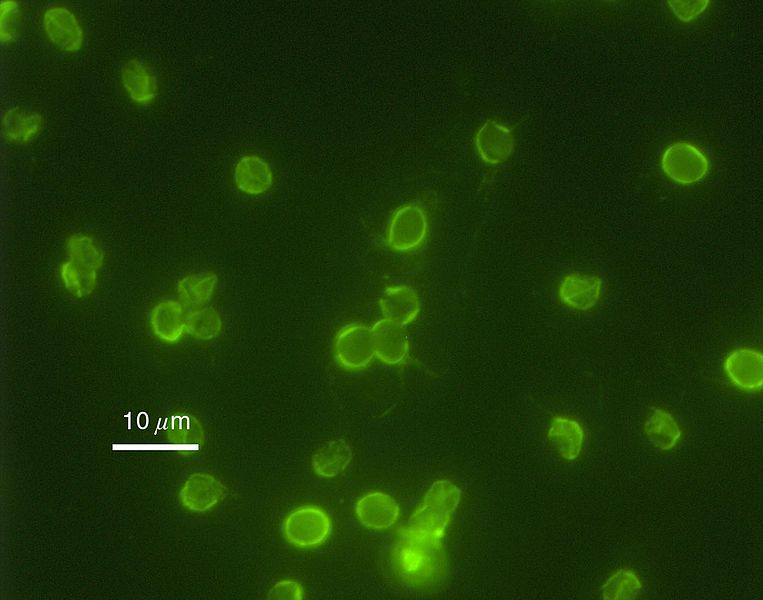
CONTAMINATED water has left 13 people with stomach  illnesses after two outbreaks of the parasitic disease crypto-sporidiosis.

Up to 6,000 people in Roscommon town and its surrounds have been affected by  the bug in the local water supply.

A “boil water notice” has been in place since April 25. The contamination can  lead to a gut infection caused by a parasite, which results in a diarrhoea-type  illness.

People living and working in the area have been advised by Roscommon County  Council and the HSE to boil all water for drinking, preparation of salads and  for use in brushing teeth.

Both bodies have set up an Incident Response Team to minimise the risk to the  public.

Sales of bottled water have shot up in the area amid concerns that the boil  water restriction could remain in place until the system gets the all-clear,  which could take several weeks.


UK – Prom Night – Norovirus

SKY Tyne and WearNorovirus

Two Northumbria University students who became ill after their graduation ball have tested positive for vomiting bug, norovirus.

Around 30 people complained of sickness after the event at the Assembly Rooms on May 10.

Experts from the North East Public Health England Centre are working with environmental health colleagues at Newcastle City Council to investigate the outbreak of diarrhoea and vomiting.

A spokesperson for Public Health England said: “Approximately 30 students who attended an event in Newcastle on 10 May have reported symptoms of illness.

“Two samples taken from students who were ill have tested positive for norovirus (also known as the winter vomiting bug) which is the most common cause of gastro-enteritis in England and Wales.”

Australia – Canberra Salmonella Outbreak Update

Today TonightSalmonella

The alleged restaurant The Copa Brazilian Churrasco in Canberra has taken down its sign, after 140 cases of food poisoning were reported by its diners.

At least 30 of the cases have pinpointed salmonella as the cause, according to laboratory tests.

The food poisoning occurred during Mother’s Day weekend this year.

Australia – Canberra Salmonella Outbreak Updates

ACT Government

The ACT Chief Health Officer, Dr Paul Kelly today said  that ACT Health are currently investigating an outbreak of Salmonella gastroenteritis linked to a local restaurant. Over 100 suspected cases of gastrointestinal illness have been reported among persons who ate at the restaurant. Twenty of these have had Salmonella confirmed by laboratory testing  Fifteen people have been hospitalised.

“ACT Health is working closely with the restaurant to determine the cause of the outbreak,” Dr Kelly said.

“Symptoms of Salmonella gastroenteritis include diarrhoea, abdominal pain, fever, nausea, vomiting and headaches. Sometimes diarrhoea can contain blood or mucus.

“Symptoms usually start 12-36 hours after a person becomes infected and usually last from 4-7 days.

“Many cases do not need medical treatment and resolve themselves. People experiencing symptoms of gastroenteritis should ensure they remain well hydrated by drinking fluids.

“People should seek medical attention if they experience severe abdominal pain, cannot eat or drink, vomit blood or have blood in their bowel movements, or experience a elevated fever.

If you are experiencing symptoms of gastroenteritis you should consult your general practitioner.

The Emergency Departments of both The Canberra Hospital and Calvary Hospital are treating a large number of cases and may experience delays in treating non-emergency cases. People should only seek treatment at The Canberra Hospital or Calvary Hospital if they feel they are experiencing a medical emergency.

Medical services are also available from

  • The Canberra After Hours Locum Service (CALMS) (fees apply). Bookings by phone 1300 422 567 after 6pm.
  • The Walk In Centre at Canberra Hospital. This is open from 7am-11pm with no bookings necessary.

Salmonella is spread when people eat food contaminated by the bacteria. This can happen if Salmonella is present in inadequately cooked food, or sometimes if food is contaminated by a person who has Salmonella infection.

People experiencing symptoms of Salmonella gastroenteritis should avoid preparing food (including working in food preparation or service) while they are unwell.

Further information is available on the ACT Health Website on

http://health.act.gov.au/publications-reports/fact-sheets/salmonella

The Canberra Times

The number of suspected salmonella cases is now more than 140, in the largest  outbreak of its kind ever seen in the ACT.

ACT chief health officer Paul Kelly said on Thursday afternoon that 30 of  these cases had been confirmed as salmonella and 15 people had been  hospitalised. Many more have been observed in emergency departments.

It forced the Canberra and Calvary hospitals to activate their emergency  response protocols on Tuesday evening, but by Wednesday afternoon, that had been  cancelled as the number of people presenting at the emergency departments  finally began falling.

The outbreak was confined to people who ate at the newly opened Copa  Brazilian Churrasco in Dickson on Saturday and Sunday.


USA – North Carolina Holiday Inn – Salmonella Outbreak

Food Posioning BulletinSalmonella

The Cumberland County Department of Public Health in North Carolina has announced a Salmonella outbreak among staff and patrons of the Holiday Inn Bordeaux in Fayetteville. The hotel has two restaurants: the All American Sports Bar and Grill and the Cafe Bordeaux. The facility also has a banquet kitchen.

Cumberland County Health Department Director Buck Wilson said, “we are actively working with the hotel and restaurant management and with state officials to resolve this as soon as possible.” The management of the hotel is fully cooperating with local and state authorities.

Research – Study Pinpoints Pathogens Causing Biggest Diarrhea Burden in Kids

CIDRAP

While many pathogens cause serious diarrhea in children in developing countries, four stand out as culprits in most of the infections, a finding that could drive new prevention strategies, an international research team reported today.

The group spent 3 years in seven developing countries, collecting health information, lab samples, and outcome data on 3,439 youngsters who had moderate-to-severe diarrhea. They published their findings today in an early online release from The Lancet.

On a global scale each year, diarrheal diseases kill about 800,000 children under age 5, most of them in sub-Saharan Africa and southern Asia, according to the report.

Though interventions such as rotavirus vaccines are starting to have an impact on deaths and disease incidence, scientific data to guide other strategies to curb the diseases are scarce, especially in regions where child deaths are the highest, the group wrote.

To fill the gap, the team focused their analysis on kids under age 5 who did and didn’t have moderate-to-severe diarrhea in selected cities in Bangladesh, Gambia, India, Kenya, Mali, Mozambique, and Pakistan. The study included 13,129 matched controls.

The researchers collected clinical and epidemiologic information, took anthropometric measurements, and took fecal samples to identify pathogens. For each child they made a follow-up home visit 60 days later to assess health status, clinical outcome, and growth measures.

Four pathogens were the most common causes of diarrhea across all sites: rotavirus, Cryptosporidium, enterotoxigenic Escherichia coli (ETEC) producing heat-stable toxin (ST), and Shigella, according to the study.


USA Research- USDA/FDA Report on Listeria in Retail Deli’s

FDA

The Draft Interagency Risk Assessment –

Listeria monocytogenes in Retail Delicatessens provides a scientific assessment of the risk of foodborne illness associated with consumption of ready-to-eat (RTE) foods commonly prepared and sold in the delicatessen (deli) of a retail food store and examines how that risk may be impacted by changes to common or recommended practices. This quantitative risk assessment (QRA) was conducted collaboratively by the Department of Health and Human Service (DHHS), Food and Drug Administration’s Center for Food Safety and Applied Nutrition (FDA/CFSAN), and United States Department of Agriculture’s (USDA) Food Safety and Inspection Service (FSIS), in consultation with the DHHS Centers for Disease Control and Prevention (CDC) and input from industry, academic institutions, and consumer advocacy group stakeholders. The White House Food Safety Work Group identified this risk assessment as a priority. It provides information useful to those responsible for implementing policies, programs and practices that target the prevention of listeriosis in the population.