Category Archives: foodborne outbreak

Canada – Public Health Notice: Outbreak of Salmonella infections linked to red onions imported from the United States

PHAC

August 2, 2020 – Update

Since July 30, there have been six additional illnesses reported in the ongoing Canadian investigation, including illnesses in Saskatchewan and Québec. There are now 120 confirmed cases in Canada. Investigators have determined that potentially contaminated red onions are coming from Thomson International Inc. of Bakersfield, California, United States of America (USA).

Although the investigation has determined that red onions are the likely source of the outbreak, Thomson International Inc. has recalled all varieties of onions that could have come in contact with potentially contaminated red onions, due to the risk of cross-contamination. Onion varieties includes red, white, yellow, and sweet yellow onions.

The Canadian Food Inspection Agency (CFIA) has issued food recall warnings for related products that came to Canada. Some of these products were possibly distributed nationally. Additional food recall warnings in Canada are possible. More information on recalled products is available on CFIA’s website.

Given this new information, and until more is known about the outbreak, do not eat, use, sell or serve any red, white, yellow, and sweet yellow onions from Thomson International Inc., Bakersfield, California, USA, or any products made with these onions. This advice applies to all individuals across Canada, as well as retailers, distributors, manufacturers and food service establishments such as hotels, restaurants, cafeterias, hospitals and nursing homes.

Onions grown in Canada are not affected by this advice.

Why should you take note

The Public Health Agency of Canada (PHAC) is collaborating with federal and provincial public health partners, the United States Centers for Disease Control and Prevention (U.S. CDC), and the U.S. Food and Drug Administration to investigate an outbreak of Salmonella infections occurring in seven provinces.

In Canada, based on the investigation findings to date, exposure to red onions imported from the USA has been identified as a likely source of the outbreak. Many of the ill individuals under investigation reported having eaten red onions before getting sick.

Through a collaborative investigation between public health and food safety partners in Canada and the U.S., traceback information has identified that the contaminated red onions are coming from Thomson International Inc. of Bakersfield, California, USA.

The CFIA has issued food recall warnings for related products that came to Canada. Some of these products were possibly distributed nationally. Additional food recall warnings in Canada are possible. More information is needed to determine the cause of contamination in red onions imported from Thomson International Inc. The outbreak is ongoing, as recent illnesses continue to be reported to the PHAC.

Given this new information, and until more is known about the outbreak, do not eat, use, sell or serve any red, yellow, white, and sweet yellow onions grown by Thomson International Inc. of Bakersfield, California, USA, or any products made with these onions. This advice applies to all individuals across Canada, as well as retailers, distributors, manufacturers and food service establishments such as hotels, restaurants, cafeterias, hospitals and nursing homes.

Onions grown in Canada are not affected by this advice.

As the investigation is ongoing, it is possible that additional sources could be identified, and additional food recall warnings related to this outbreak may be issued. This public health notice will be updated as the investigation evolves.

Investigation summary

As of August 2, 2020, there have been 120 confirmed cases of Salmonella Newport illness linked to this outbreak in the following provinces: British Columbia (43), Alberta (56), Saskatchewan (4), Manitoba (13), Ontario (2), Quebec (1) and Prince Edward Island (1).

Individuals became sick between mid-June and mid-July 2020. Seventeen individuals have been hospitalized. No deaths have been reported. Individuals who became ill are between 3 and 100 years of age. The majority of cases (56%) are female.

Individuals who became ill reported eating red onions at home, in menu items ordered at restaurants and in residential care settings.

The Canadian Food Inspection Agency (CFIA) is conducting a food safety investigation and has issued related food recall warnings. Additional food recall warnings in Canada are possible. More information on recalled products is available on CFIA’s website.

The U.S. CDC is also investigating an outbreak of Salmonella Newport illnesses that have a similar genetic fingerprint to illnesses reported in this outbreak. Investigators in Canada and the U.S. continue to collaborate to exchange information and identify commonalities in the outbreak information that may identify additional sources of illness or help to identify the cause of contamination in the red onions.

It is possible that more recent illnesses may be reported in the outbreak because there is a period of time between when a person becomes ill and when the illness is reported to public health officials. For this outbreak, the illness reporting period is between two and four weeks.

Who is most at risk

Anyone can become sick with a Salmonella infection, but children aged 5 years and under, older adults, pregnant women or people with weakened immune systems are at higher risk for contracting serious illness.

Most people who become ill from a Salmonella infection will recover fully after a few days. It is possible for some people to be infected with the bacteria and to not get sick or show any symptoms, but to still be able to spread the infection to others.

What should you do to protect your health

Do not eat, use, sell or serve any red, white, yellow, and sweet yellow onions from Thomson International Inc., of Bakersfield, California, USA, or any products made with these onions. This advice applies to all individuals across Canada, as well as retailers, distributors, manufacturers and food service establishments such as hotels, restaurants, cafeterias, hospitals and nursing homes.

Advice to consumers

Individuals are asked to check their homes for red, white, yellow, and sweet varieties, including whole, sliced, or chopped onions, and any prepared foods that contain onions as an ingredient, such as premade salads, sandwiches, wraps, salsas or dips.

  • If you have onions at home:
    • Look for a label showing where the onion was grown. It may be printed on the package or on a sticker.
    • If the packaging or sticker shows that it is from Thomson International Inc., don’t eat it. Throw it away and wash your hands.
    • If it isn’t labeled, don’t eat it. Throw it away and wash your hands.
    • If you don’t know whether the onion found in a premade salad, sandwich, wrap, salsa or dip contains onions from Thomson International Inc., don’t eat it. Throw it away and wash your hands.
    • Wash and sanitize any surfaces that may have come in contact with onions or their packaging, such as countertops, fridge drawers, pantry shelves, knives, and cutting boards.
  • If you buy onions at grocery or convenience stores:
    • Make sure they are not selling onions from Thomson International Inc., or serving fresh foods prepared with them.
    • If you can’t confirm that the onion in stores is not from Thomson International Inc., don’t buy it.
  • If you order salad or any other food items containing onions at a restaurant or food establishment:
    • Ask the staff whether their onions come from Thomson International Inc. If they did, or they don’t know, don’t eat it.
  • Do not eat any recalled food products. Check to see if you have recalled food products at home. If you do, throw them out and wash your hands.
  • If you have been diagnosed with a Salmonella infection or any other gastrointestinal illness, do not cook food for other people.
  • Contact your local public health authority to report any food safety concerns at restaurants or grocery stores, or if you suspect food poisoning from a restaurant or other food establishments.

Advice to restaurants, retailers, suppliers and distributors

  • Check the label on bags or boxes of onions, or ask their suppliers about the source of their onions.
  • Do not ship or sell onions from Thomson International Inc. of Bakersfield, California, USA, or any products made with these onions.
  • Clean and sanitize all surfaces and storage bins that onions may have come in contact with, including cutting boards, countertops, slicers, utensils, and containers used to store or transport them.

Symptoms

Symptoms of a Salmonella infection, called salmonellosis, typically start 6 to 72 hours after exposure to Salmonella bacteria from an infected animal, person or contaminated product.

Symptoms include:

  • fever
  • chills
  • diarrhea
  • abdominal cramps
  • headache
  • nausea
  • vomiting

These symptoms usually last for 4 to 7 days. In healthy people, salmonellosis often clears up without treatment, but sometimes antibiotics may be required. In some cases, severe illness may occur and hospitalization may be required. People who are infected with Salmonella bacteria can be infectious from several days to several weeks. People who experience symptoms, or who have underlying medical conditions, should contact their health care provider if they suspect they have a Salmonella infection.

What is the Government of Canada doing

The Government of Canada is committed to protecting the health of Canadians from enteric disease outbreaks.

The Public Health Agency of Canada leads the human health investigation into an outbreak and is in regular contact with its federal, provincial and territorial partners to monitor the situation and to collaborate on steps to address an outbreak.

Health Canada provides food-related health risk assessments to determine whether the presence of a certain substance or microorganism poses a health risk to consumers.

The Canadian Food Inspection Agency conducts food safety investigations into the possible food source of an outbreak.

The Government of Canada will continue to update Canadians if new information related to this investigation becomes available.

Epidemiological information

Figure 1 is an epidemiological curve for this outbreak, which shows the numbers of new cases by week. Outbreak investigators use this information to show when illnesses begin, when they peak and when they trail off. It can take several weeks from the time a person becomes ill to when the illness is reported and testing confirms a link to the outbreak. Data are available for 119 cases.
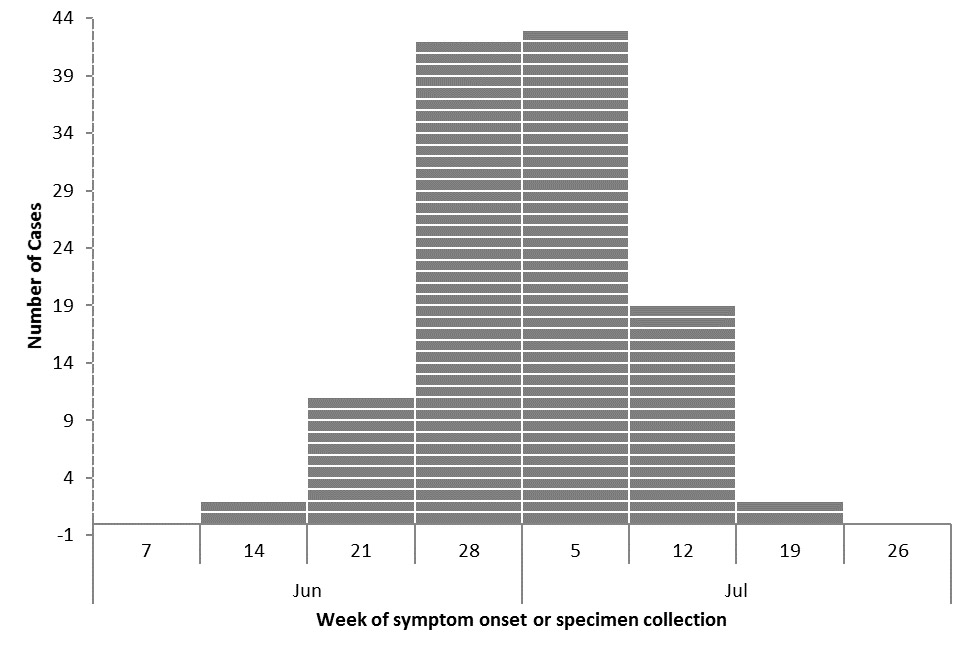
Figure 1: Number of people infected with Salmonella Newport

Figure 1: Number of people infected with Salmonella Newport

Figure 1 – Text Description

Additional information

Media contact

Public Health Agency of Canada
Media Relations
613-957-2983

Public inquiries

Call toll-free: 1-866-225-0709
Email: info@hc-sc.gc.ca

Investigation history

 Public Health Notice: July 30, 2020
Public Health Notice: July 24, 2020
Report a problem or mistake on this page
Date modified:


USA – Outbreak of Salmonella Newport Infections Linked to Red Onions

CDC

Advice to Consumers, Restaurants, and Retailers
Illustration of a clipboard with check marks on it.
At A Glance
Photo of red onions.

Do not eat, serve, or sell any onions from Thomson International Inc. or products made with these onions. Onion types include red, white, yellow, and sweet varieties.

  • At home, check your refrigerator and kitchen for any of these onions or fresh foods made with them.
    • Check the package or look for a sticker on an onion to see if it is from Thomson International, Inc. If it is, don’t eat it. Throw it away.
    • If you can’t tell where your onions are from, don’t eat them. Throw them away.
    • If you made any foods with onions and you don’t know where they are from, do not eat them. Throw them away, even if no one got sick.
    • Wash and sanitize any surfaces that may have come in contact with onions or their packaging, such as countertops, refrigerator drawers, knives, and cutting boards.
  • When you eat out or shop for food, check with restaurants and grocery stores to make sure they are not serving or selling onions from Thomson International Inc., or fresh foods prepared with them.
    • If they don’t know where their onions are from, don’t buy the product.
    • People sickened in this outbreak reported eating raw onions in freshly prepared foods, including salads, sandwiches, wraps, salsas, and dips.

Advice to Restaurants, Retailers, and Suppliers

  • Restaurants and retailers should not serve or sell any onions from Thomson International, Inc., or food prepared with these onions.
    • If you don’t know where your onions are from, don’t serve or sell them.
    • Clean and sanitize all surfaces that onions have come in contact with, including cutting boards, countertops, slicers, utensils, and storage bins.
  • Suppliers, distributors, and others in the supply chain should not ship or sell any onions from Thomson International, Inc.
    • Suppliers and distributors that repackage raw onions should clean and sanitize any surfaces and storage bins that may have come in contact with recalled onions.

Take these steps if you have symptoms of a Salmonella infection:

  • Talk to your healthcare provider.
  • Write down what you ate in the week before you started to get sick.
  • Report your illness to your local health department.
    • The health department will likely call you for an interview to ask you about foods you ate in the week before you got sick.
  • Assist public health investigators by answering their questions when they contact you.
Symptoms of Salmonella Infection
Illustration of a person with stomach pain.
  • Most people infected with Salmonella develop diarrhea, fever, and stomach cramps 6 hours to 6 days after being exposed to the bacteria.
  • The illness usually lasts 4 to 7 days, and most people recover without treatment.
  • In some people, the illness may be so severe that the patient needs to be hospitalized. Salmonella infection may spread from the intestines to the bloodstream and then to other places in the body.
  • Children younger than 5 years, adults 65 years and older, and people with weakened immune systems are more likely to have a severe illness.
  • For more information, see Symptoms of Salmonella Infection.
Latest Outbreak Information
Illustration of a megaphone.
  • Since our last update on July 24, 2020, an additional 184 ill people have been reported in this outbreak, including 37 from 11 new states: Alaska, Colorado, Indiana, Kansas, Kentucky, Maryland, Nevada, New York, Pennsylvania, South Carolina, and Texas.
  • A total of 396 people infected with the outbreak strain of Salmonella Newport have been reported from 34 states.
    • Fifty-nine hospitalizations have been reported. No deaths have been reported.
  • Epidemiologic and traceback information showed that red onions are the likely source of this outbreak.
    • The traceback information collected identified Thomson International, Inc. of Bakersfield, CA as a likely source of red onions in this outbreak. Due to the way onions are grown and harvested, other types of onions, such as white, yellow, or sweet, may also be contaminated.
    • Additional traceback is ongoing to determine if other onions are linked to the outbreak.
  • The Public Health Agency of Canada (PHAC)external icon is investigating an outbreak of Salmonella Newport infections, which is related by whole genome sequencing to this outbreak in the United States. Canada has identified red onions imported from the United States as a likely source of its outbreak.
  • This investigation is ongoing. CDC will provide more information as it becomes available.
Investigation Details

July 31, 2020

Since the last update on July 24, 2020, an additional 184 ill people have been reported in this outbreak, including 37 from 11 new states: Alaska, Colorado, Indiana, Kansas, Kentucky, Maryland, Nevada, New York, Pennsylvania, South Carolina, Texas.

As of July 29, 2020, a total of 396 people infected with the outbreak strain of Salmonella Newporthave been reported from 34 states. A list of the states and the number of cases in each can be found on the Map of Reported Cases page.

Illnesses started on dates ranging from June 19, 2020, to July 12, 2020. Ill people range in age from less than 1 to 102 years, with a median age of 39. Fifty-two percent of ill people are female. Of 236 ill people with information available, 59 hospitalizations have been reported. No deaths have been reported.

Illnesses might not yet be reported due to the time it takes between when a person becomes ill and when the illness is reported. This takes an average of 2 to 4 weeks. Please see the Timeline for Reporting Cases of Salmonella Infection for more details.

Whole genome sequencing analysis of 48 isolates from ill people did not predict any antibiotic resistance. Standard antibiotic susceptibility testing by CDC’s National Antimicrobial Resistance Monitoring System (NARMS) laboratory is underway.

Whole genome sequencing analysis shows that an outbreak of Salmonella Newport infections in Canada is related genetically to this outbreak in the United States. This means that people in both of these outbreaks likely share a common source of infection.

Investigation of the Outbreak

On July 10, 2020, CDC PulseNet identified an outbreak of 13 Salmonella Newport infections in three states. Since being identified, the outbreak has rapidly grown to a total of 396 infections in 34 states.

State and local public health officials are interviewing ill people to determine what they ate and other exposures in the week before their illness started.

Many ill people were identified as part of illness clusters. An illness cluster is defined as two or more people who do not live in the same household who report eating at the same restaurant location, attending a common event, or shopping at the same location of a grocery store in the week before becoming ill. Investigating illness clusters can provide critical clues about the source of an outbreak. If several unrelated ill people ate or shopped at the same location of a restaurant or store within several days of each other, it suggests that the contaminated food item was served or sold there. Twenty-two illness clusters have been identified in seven states. Information from these clusters shows that many ill people ate red onions. The traceback information collected from these illness clusters identified Thomson International, Inc. of Bakersfield, CA as a likely source of red onions. Due to the way onions are grown and harvested, other onion types, such as, white, yellow or sweet may also be contaminated. Additional traceback is ongoing to determine if other onions are linked to the outbreak.

The Public Health Agency of Canada (PHAC)external icon is investigating an outbreak of Salmonella Newport infections, which is related by whole genome sequencing to this outbreak in the United States.

On July 30, Public Health Agency of Canada’s outbreak investigation identified U.S. red onions as a likely source of their outbreak.

Consumers, restaurants, and retailers should not eat, serve, or sell any onions from Thomson International, Inc. of Bakersfield, CA.

CDC will provide updates when more information is available.

USA – Backyard Poultry Salmonella Outbreak Sickens 938 in 48 States

Food Poisoning Bulletin

The backyard poultry Salmonella outbreak has now sickened at least 938 people in 48 states, according to the Centers for Disease Control and Prevention (CDC). One hundred fifty-one people are hospitalized because they are so sick. One person who lived in Oklahoma has died. That is an increase of 473 more cases since the last update in late June 2020.

Backyard Poultry Salmonella Outbreak Sickens 938 in 48 States

Norway – Norway records slight decline in foodborne outbreaks

Food Safety News

The number of foodborne outbreaks in Norway declined slightly this past year from 2018, according to the country’s public health agency.

In 2019, 223 outbreaks from all sources were reported with 5,401 cases of disease. This was the same level of outbreaks as in 2018, but there was an increase in cases because of a large waterborne outbreak in Askøy municipality in 2019.

Campylobacter jejuni was detected in patients and drinking water in June 2019. In total, 2,000 patients were estimated. Contamination was suspected to have been caused after heavy rainfall.

The number of notified foodborne outbreaks decreased from 52 in 2018. The Norwegian Institute of Public Health (Folkehelseinstituttet) reported that 46 outbreaks were because of suspected food or waterborne infections in 2019. They affected more than 2,700 people with a range of two to 2,000. More than 150 outbreaks were registered in health institutions and 20 were classed as “other.”

RASFF Alert -Foodborne Outbreak -Listeria monocytogenes – Chilled Mozzarella

RASFF-Logo

RASFF –  foodborne outbreak suspected to be caused by Listeria monocytogenes in chilled mozzarella in block from Italy in Malta

RASFF Alert – Foodborne Outbreak – Salmonella – frozen chicken nuggets

RASFF-Logo

RASFF – foodborne outbreak suspected to be caused by Salmonella (presence /25g) in frozen chicken nuggets from Poland in the UK

USA – Could the Oregon Salmonella Outbreak Be Part of Larger Outbreak?

Food Poisoning Bulletin

Salmonella kswfoodworld

Image CDC

Earlier this week we told you about and Oregon Salmonella outbreak that was potentially associated with Si Casa Flores restaurant in Grants Pass, Oregon. According to a report by KOBI5, the food and environmental tests did not find any of that pathogen. This could be because the food that caused the problem has been eaten or discarded, or that the ill persons have another potential source in common.

The Josephine County Public Health Department also told that station that the outbreak could be part of a larger Salmonella Newport outbreak that has sickened at least 125 people in 15 states.

USA – 641 CASES OF CYCLOSPORA REPORTED IN US: NEW OUTBREAK LINKED TO SALAD PRODUCT

Inventiva

More than 640 people in 11 US states have been diagnosed with Cyclospora, with the outbreak possibly related to bagged salad products. The bagged salads included iceberg lettuce, red cabbage, and carrots. Symptoms of cyclosporiasis, a disease caused by a microscopic parasite, include lack of appetite and weight loss, bloating, nausea, low-grade fever, weakness, and diarrhea. Cases have been recorded in almost a dozen states between May and this month. Of those infected with the multi-state outbreak of Cyclospora, 37 were hospitalized, the Food and Drug Administration said. There were no confirmed deaths.

The outbreak is being investigated by the FDA, the CDC, and the state and local authorities. Cyclospora infections may be linked to salad products manufactured by Fresh Express containing iceberg lettuce, red cabbage, and carrots and distributed in several regions of the United States.

USA – Mystery Salmonella Outbreak sickens 212 in 23 States

Food Poison Journal

Since the last update on July 21, 2020, an additional 87 ill people have been reported in this outbreak.

Now, a total of 212 people infected with the outbreak strain of Salmonella Newport have been reported from 23 states.

31 hospitalizations have been reported. No deaths have been reported.

A specific food, grocery store, or restaurant chain has not been identified as the source of this outbreak.

CDC is not advising that consumers avoid eating any specific foods, or that retailers stop selling any specific foods.

This investigation is ongoing. CDC will provide more information as it becomes available.

Canada – Mystery Salmonella Outbreaks Sickens 59 in 5 Canadian Provinces

Food Poison Journal

According to Canadian Health officials, as of July 24, 2020, there have been 59 confirmed cases of Salmonella Newport illness linked to this outbreak in the following provinces: British Columbia (23), Alberta (31), Manitoba (3), Ontario (1), and Prince Edward Island (1). Individuals became sick between mid-June and mid-July 2020. Information is available for 28 illnesses. Out of 28 people, six individuals have been hospitalized. No deaths have been reported. Individuals who became ill are between 11 and 77 years of age. The majority of cases (54%) are female.

The United States Centers for Disease Control and Prevention (U.S. CDC) is also investigating an outbreak of Salmonella Newport illnesses that have a similar genetic fingerprint to illnesses reported in this outbreak. In the U.S., a total of 212 people infected with the outbreak strain of Salmonella Newport have been reported from 23 states. 31 hospitalizations have been reported. No deaths have been reported.