Category Archives: Foodborne Illness

Research – Salmonellosis

Sante Publique

Non-typhoidal salmonellosis is an infectious disease caused by salmonella that infects the digestive tract. It is usually characterized by gastrointestinal disorders.

UK – One death and 7 HUS cases in UK E. coli outbreak

Food Safety News

One person has died in an E. coli outbreak in the United Kingdom linked to salad leaves.

The UK Health Security Agency (UKHSA) identified two people in England who died within 28 days of being infected with the outbreak strain. Based on information from health service clinicians, only one death is likely linked to STEC infection. Both individuals had underlying medical conditions and the deaths were in May.

UKHSA also revealed the incident is a re-emergence of an STEC cluster investigated in 2023, where no source could be confirmed.

Research – Botulism: a mimic for brainstem strokes and Miller Fisher syndrome

MJA

Clinical record

A 61‐year‐old man with moderate stroke risk factors, including hypertension and hyperlipidaemia, presented with rapidly progressive ptosis, diplopia, ataxia and dysarthria. No infective prodrome or suspected food poisoning was initially disclosed. Given this presentation, brainstem stroke was the primary differential diagnosis.

On Day 2, he developed vomiting, dysphagia and severe respiratory distress, requiring intubation. He subsequently developed complete ophthalmoplegia, descending flaccid paralysis and required ventilation. A differential diagnosis of Miller Fisher syndrome was then considered. Sequential intravenous immunoglobulin and plasma exchanges were minimally effective. Cerebrospinal fluid analysis was unremarkable with no raised protein levels. Test results for anti‐ganglioside antibodies, including anti‐GQ1‐b (both IgG and IgM), were negative. Nerve conduction studies and electromyogram (performed on Day 4) results confirmed a generalised, predominantly motor neuropathy (Box 1 and Box 2). Results from the magnetic resonance imaging (MRI) scan of the brain and spine/plexus with contrast were normal.

Box 1

Day 4 results from the nerve conduction study and electromyogram suggesting a severe motor predominant neuropathy with relative sensory sparing (likely too early to appreciate muscle denervation)

Box 2

Day 88 results from the nerve conduction study and electromyogram showing persisting generalised reduction in upper and lower limb motor amplitudes, (although improving), with relative sparing of sensory responses

Further history on Day 15 revealed that the patient had consumed foul‐tasting almond milk 12–36 hours prior to symptom onset. The differentials then expanded to include botulism. Following consultation with the infectious diseases department, further tests were requested. Clostridium botulinum culture and test results for toxin A‐G nucleic acid were negative on retained milk sample and stool. The results from the C. botulinum direct toxin test using the mouse bioassay (pooled antitoxin A, B and E) demonstrated the presence of botulinum toxin in a retained sample of the milk. The FilmArray BioThreat Panel (BioFire Defense) test on a retained sample of milk detected botulinum toxin A nucleic acid. After guidance from infectious diseases and public health authorities on Day 16, the patient was administered botulin antitoxin obtained from the National Medical Stockpile. The implicated milk product was subsequently recalled. The patient was weaned off mechanical ventilation five months after admission to the intensive care unit.


USA- FDA Core Investigations of Foodborne Illness Outbreaks

FDA

What’s New

  • For the outbreak of Salmonella Typhimurium illnesses (ref #1234) linked to a not yet identified product, the case count has increased from 47 to 53. FDA has initiated traceback.
  • For the investigation of illnesses (ref #1233) linked to Diamond Shruumz-brand Chocolate Bars, Cones, and Gummies, the advisory has been updated to include additional illnesses and investigation updates. 
  • For the outbreak of Listeria monocytogenes illnesses (ref #1232) linked to a not yet identified product, FDA has initiated an inspection and sample collection.

Date
Posted

Ref

Pathogen
or
Cause of
Illness

Product(s)
Linked to
Illnesses

(if any)

Total
Case
Count


Status

6/19/

2024

1234

Salmonella
Typhimurium

Not Yet
Identified

53

Active

6/12/

2024

1233

Not Yet
Identified

Chocolate,
Gummies,
Cones 

See
Advisory

Active

6/5/

2024

1229

Salmonella
Braenderup

Not Yet
Identified

185

Active

5/22/

2024

1232

Listeria
monocytogenes

Not Yet
Identified

2

Active

5/22/

2024

1227

Salmonella
Africana

Not Yet
Identified

196

Active

4/17/

2024

1221

E. coli
O157:H7

Organic
Walnuts

See
Advisory

Active

Research – Salmonella climbs to leading cause of outbreaks in Denmark

Food Safety News

kswfoodworld salmonella

Salmonella infections overtook norovirus to become Denmark’s top cause of outbreaks in 2023.

Data from the National Food Institute at the Technical University of Denmark, the Danish Veterinary and Food Administration, and Statens Serum Institut shows Salmonella outbreaks increased from 11 2022 to 18 in 2023. Norovirus caused 13 outbreaks compared to 14 in 2022.

Campylobacter continues to be the most common bacterial foodborne illness, with 5,186 cases in 2023. Salmonella cases increased for the fourth year in a row, to 1,207 from 899 in 2022. For both pathogens, the numbers moved towards levels seen before the COVID-19 pandemic.

Nigeria – How unregistered tiger nut drink caused Cholera outbreak in Lagos

Nigerian Tribune Online

The  Lagos State Government has linked a spike in cholera cases in the Eti-Osa Local Government Area to unregistered tiger nut drinks consumed by affected individuals.Food Illness

Upon investigating the surge in cases in Eti-Osa, the government conducted a survey, which revealed that the common factor among patients was the consumption of tiger nut drinks.

Research – Prolonged multi-country outbreak of Listeria monocytogenes ST173 linked to consumption of fish products 2012-2024

EFSA

Abstract

Between 2012 and 2024, a prolonged outbreak of 73 cases of L. monocytogenes ST173 infections (‘My2’ -cluster) has been ongoing in Belgium (5), Czechia (1), Germany (39), Finland (2), Italy (1), the Netherlands (20), and the United Kingdom (UK) (5). Fourteen deaths have been recorded as associated with this outbreak. Males aged over 60 years represent the most affected population group. Most patients with available information from case interviews report consuming various fish products before illness. Among 73 cases, an ongoing ‘My2’ sub-cluster 1 was identified with 38 cases reported in six EU countries and the UK.

The ‘My2’ sub-cluster 1 includes 83 non-human isolates, of which 48 are food isolates and six are environmental isolates with traceability data corresponding to 37 fish products (different typologies) and 12 fish manufacturers (located in six EU countries and one third country). The epidemiological and traceability information did not allow identification of a single common point or food business operator in the traceability of all products. Five countries reported the implementation of control measures.

The whole genome analysis (WGS) analysis, the tracing evidence, and the detection in fish products between 2017 and 2024 suggest that the strain has been geographically spread in Europe for several years, most likely originated from a past single source high up in the production chain, and has been established in different fish processing plants. Overall, the evidence supports the hypothesis of fish products as the vehicle of infections.

Given the detection of the outbreak strain in multiple types of fish products and its wide circulation in the EU/EEA fish production chain, new cases are likely to be reported. Corrective measures should be implemented in the plants where the contamination is detected, and further investigations should be carried out to identify the point of entry and prevent possible re-contamination.

Grand Hyatt Hong Kong linked to 15 food poisoning cases involving tainted ice cream

SCMP

Health authorities have identified eight linked food poisoning clusters involving 15 people who ate vanilla ice cream at three restaurants at the Grand Hyatt hotel in Hong Kong earlier this month.

The Centre for Health Protection said on Friday that the clusters included three earlier linked to the same hotel in Wan Chai, where all the affected people fell ill after eating the ice cream at the three venues on June 1 and 2.

“They developed abdominal pain, fever, nausea, vomiting and diarrhoea about 15 to 65 hours after consuming the food concerned,” it said.

“The stool specimens of six affected people were positive for Salmonella upon laboratory testing. Four of the Salmonella isolates belong to the same group of Salmonella enteritidis,” it said.

“In view of the epidemiological investigations and test results, the affected people’ symptoms were very likely related to consumption of the concerned ice cream provided by the hotel.”

UK E. coli O145 Outbreak hits 256 sick

Food Poison Journal

As of 18 June, there have been a further 45 cases associated with the recent outbreak of STEC O145 since the last update (14 June), bringing the total number of confirmed cases to 256 in the UK. All currently confirmed cases had symptom onset dates before 31 May. Although the rate of cases has now slowed, we expect the figure to rise as NHS laboratories refer specimens to UKHSA for genomic sequencing which can link cases to this outbreak strain.

Confirmed case totals:

  • 168 in England
  • 56 in Scotland
  • 29 in Wales
  • 3 in Northern Ireland (evidence suggests that they acquired their infection in England)

Based on information from 227 cases to date, 38% were admitted to hospital.

Investigations have highlighted pre-packaged sandwich products containing lettuce as the likely source of the outbreak.

USA- CDC – Salmonella Outbreak Linked to Fresh Basil is Over

CDC

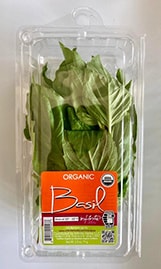
Basil product photo

Fast Facts
  • Illnesses: 36
  • Hospitalizations: 4
  • Deaths: 0
  • States: 14
  • Recall: Yes
  • Investigation status: Closed

Epidemiologic and traceback data showed that Infinite Herbs brand organic basil might have been contaminated with Salmonella and made people sick. Recalled basil is no longer available for sale and the use-by dates have passed.

Always follow the four food safety steps to prevent getting sick from Salmonella:

  • Clean: Wash your hands, utensils, and surfaces often.
  • Separate: Keep food that won’t be cooked separate from raw meat, poultry, and seafood.
  • Cook: Use a food thermometer to make sure you have cooked your food to a temperature high enough to kill germs.
  • Chill: Refrigerate perishable food (food that goes bad) within 2 hours. If the food is exposed to temperatures above 90°F (like a hot car or picnic), refrigerate it within 1 hour. Thaw food in the refrigerator, not on the counter.