Category Archives: foodborne disease

Canada -Health unit pinpoints bacteria in Strathroy Portuguese Club food poisoning -Clostridium perfringens

Global News

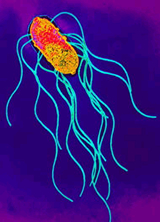
CDC Clost perf

Image CDC

The investigation gathered food samples from the event and stool samples from those who attended.

In lab reports, Clostridium perfringens enterotoxin turned up in two stool samples and Clostridium perfringens was found in a sample of roast beef — the former is what the latter bacteria turns into once digested.

“We did take other food samples… it was only the roast beef that came back growing bacteria,” said Mary Lou Albanese, the manager of infectious disease for the MLHU.

Albanese added that the bacteria is quick-moving, often making people ill within 12 hours after ingesting.


Research – Estimate of the annual burden of foodborne illness in nondeployed active duty US Army Service Members: five major pathogens, 2010–2015

Cambridge.org

In this study, we estimate the burden of foodborne illness (FBI) caused by five major pathogens among nondeployed US Army service members. The US Army is a unique population that is globally distributed, has its own food procurement system and a food protection system dedicated to the prevention of both unintentional and intentional contamination of food. To our knowledge, the burden of FBI caused by specific pathogens among the US Army population has not been determined. We used data from a 2015 US Army population survey, a 2015 US Army laboratory survey and data from FoodNet to create inputs for two model structures. Model type 1 scaled up case counts of Campylobacter jejuniShigella spp., Salmonella enterica non-typhoidal and STEC non-O157 ascertained from the Disease Reporting System internet database from 2010 to 2015. Model type 2 scaled down cases of self-reported acute gastrointestinal illness (AGI) to estimate the annual burden of Norovirus illness. We estimate that these five pathogens caused 45 600 (5%–95% range, 30 300–64 000) annual illnesses among nondeployed active duty US Army Service members. Of these pathogens, Norovirus, Campylobacter jejuni and Salmonella enterica non-typhoidal were responsible for the most illness. There is a tremendous burden of AGI and FBI caused by five major pathogens among US Army Soldiers, which can have a tremendous impact on readiness of the force. The US Army has a robust food protection program in place, but without a specific active FBI surveillance system across the Department of Defence, we will never have the ability to measure the effectiveness of modern, targeted, interventions aimed at the reduction of specific foodborne pathogens.

Kenya – 18 Nyabururu Girls High School students treated for food poisoning

Daily Nation

At least 18 students from Nyabururu Girls High School have been in and out of the Nyangena Hospital in Kisii town over suspected food poisoning since Thursday.

On Saturday, the school circulated a message to all parents seeking to dispel fake news spread on social media that more than 100 students had been taken sick.

“Dear parent, kindly ignore malicious news circulating on social media that all girls are admitted in hospital. There are only seven girls who were admitted and discharged over various ailment, their parents were informed.”

But students who secretly informed their parents of their ill health after borrowing phones from other patients said they had been cautioned against informing anyone of their state.

Research – Study: Food-borne diseases cost India $15 billion a year

Times of India

NEW DELHI: Unsafe food still costs India as high as $15 billion annually, even though it has almost halved from $28  billion estimated last year, a recent World Bank report says underlining the “unnecessarily high” economic burden caused by food borne diseases.


RASFF – UK – Foodborne outbreak

RASFF-Logo

RASFF –  foodborne outbreak suspected to be caused by too low acidity (due to absence of vinegar) of avocado oil mayonnaise from the United Kingdom in the UK

Malaysia – 86 Kuala Kangsar Vocational College students get food poisoning

SG News

IPOH, Feb 19 — Eighty-six trainees from the Kuala Kangsar Vocational College suffered food poisoning, believed to from eating at their hostel’s kitchen.

Perak Health Director Datuk Dr Ding Lay Ming said his department received an incident report on February 17.

“Around 86 trainees out of the total 562 were exposed to the food poisoning. The affected victims are aged between 16 and 19,” she said in a statement.

Dr Ding said that six victims were admitted at the Hospital Kuala Kangsar and their condition is now stable. The rest received outpatient treatment.

Victims suffered symptoms such as stomach pain, vomiting, diarrhoea and fever, she said.

Dr Ding said that the cause of the poisoning is still under investigation and several samples were taken for testing at the Makmal Kesihatan Awam here.

Mongolia – Mongolia to suspend KFC outlets for inquiry after food poisoning reports

Reuters

ULAANBAATAR (Reuters) – A Mongolian regulator said it will suspend operations at KFC restaurants temporarily to conduct inquiries, as 42 people were hospitalized and hundreds showed food poisoning symptoms after eating at one of the outlets of the fast-food chain.

The incident occurred at the Zaisan outlet in Ulaanbaatar last week due to its contaminated water supply, the city’s Metropolitan Professional Inspection Agency said, adding that 247 people had reported symptoms such as diarrhea and vomiting.

France – More babies infected with Salmonella in outbreak linked to rice milk formula

Food Safety News Salmonella kswfoodworld

French authorities are investigating more than a dozen cases of Salmonella infection in babies less than 19 months old. The illnesses are linked to a rice milk formula made in Spain.

Of the 14 babies involved in the investigation, the French National Public Health Agency (Santé publique France) reports five have been confirmed and nine are under investigation. Seven of the babies were hospitalized for salmonellosis but have since recovered.

Luxembourg and Belgium have reported one case each linked to the outbreak.

Research – Zoonotic Source Attribution of Salmonella enterica Serotype Typhimurium Using Genomic Surveillance Data, United States

CDC

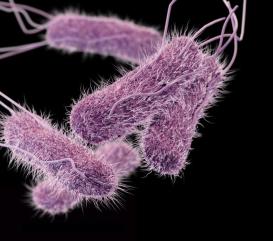
Salmonellaa

Image CDC

Increasingly, routine surveillance and monitoring of foodborne pathogens using whole-genome sequencing is creating opportunities to study foodborne illness epidemiology beyond routine outbreak investigations and case–control studies. Using a global phylogeny of Salmonella entericaserotype Typhimurium, we found that major livestock sources of the pathogen in the United States can be predicted through whole-genome sequencing data. Relatively steady rates of sequence divergence in livestock lineages enabled the inference of their recent origins. Elevated accumulation of lineage-specific pseudogenes after divergence from generalist populations and possible metabolic acclimation in a representative swine isolate indicates possible emergence of host adaptation. We developed and retrospectively applied a machine learning Random Forest classifier for genomic source prediction of Salmonella Typhimurium that correctly attributed 7 of 8 major zoonotic outbreaks in the United States during 1998–2013. We further identified 50 key genetic features that were sufficient for robust livestock source prediction.

Canada – Raw Chicken Salmonella Outbreak in Canada Grows to 529 Sick

Food Poisoning Bulletin


A raw chicken Salmonella outbreak in Canada has grown to include 529 laboratory-confirmed illnesses. Ninety people have been hospitalized, and three people have died. However, Salmonella was not the case of death for two of those patients, and it was not determined whether this illness contributed to the death of the third person.