Category Archives: Food Virus

USA – More Cyclospora and Hepatitis A Cases

Food Poisoning Bulletin

The Cyclospora outbreak that has been reported by health departments in several midwestern states may have sickened as many as 183 people. The Iowa Department of Public Health released new information today saying their case count is up to 87. In Nebraska, 54 people are sick, and Texas has 37 cases of the parasitic disease so far this year; of those, 29 in north Texas were reported just this week.

Food Poisoning Bulletin

As of July 17, 2013, 149 people are now sick in the hepatitis A outbreak linked to Townsend Farms Organic Antioxidant Blend frozen berry and pomegranate mix. Sixty-five people have been hospitalized in this outbreak with acute hepatitis A. No deaths have been reported.

Research – Norovirus Transmission

Cambridge Journals OnlineNorwalk_Caspid

Causal mechanisms of norovirus outbreaks are often not revealed. Understanding the transmission route (e.g. foodborne, waterborne, or environmental) and vehicle (e.g. shellfish or recreational water) of a norovirus outbreak, however, is of great public health importance; this information can facilitate interventions for an ongoing outbreak and regulatory action to limit future outbreaks. Towards this goal, we conducted a systematic review to examine whether published outbreak information was associated with the implicated transmission route or vehicle. Genogroup distribution was associated with transmission route and food vehicle, but attack rate and the presence of GII.4 strain were not associated with transmission route, food vehicle, or water vehicle. Attack rate, genogroup distribution, and GII.4 strain distribution also varied by other outbreak characteristics (e.g. setting, season, hemisphere). These relationships suggest that different genogroups exploit different environmental conditions and thereby can be used to predict the likelihood of various transmission routes or vehicles

Cambridge Journals Online

Ireland – Hepatitis A in Frozen Berries

ECDCecdclogo

The ongoing outbreak of Hepatitis A virus (HAV) infection that has affected travellers to Italy from Germany, the Netherlands and Poland, as well as local residents in Italy, may now be affecting Ireland.

Three cases of HAV have been reported in Ireland, although none of the three has any travel history to Italy. Nor have they had any contact with other HAV cases. Isolates of the virus from the three Irish cases reveal an identical sequence to that found in the Italian outbreak.

Onset of illness in the Irish cases was April 2013. Additional case finding activity is currently underway. Exposure of cases in both Italy and Ireland suggests that the same contaminated vehicle of infection has been available in at least these two countries. In Italy, mixed frozen berries have been indicated as the most likely vehicle of infection by epidemiological, microbiological and environmental investigations. In late May, an Italian distributor withdrew mixed frozen berries from the market following identification of a package contaminated with virus identical to the outbreak strain.

The most recent cases in the ongoing HAV infection outbreak have been reported by Italy. The onset of symptoms in these cases was recorded in June 2013. Due to the long shelf life of frozen berries and to the average length of approximately one month for incubation of HAV, more cases are expected to be reported.

While there is evidence pointing towards mixed frozen berries as the vehicle of infection, the specific berry type has not yet been identified. The point of contamination remains unknown at this time and as a result it is not yet possible to exclude the occurrence of associated cases in other EU Member States.

Information – Managing Norovirus in Childcare Facilities

ECDCecdclogo

Norovirus, which has epidemiological characteristics that promote a high rate of infectivity and transmission, remains one of the most common causes of childhood gastroenteritis. A new technical report from ECDC provides guidance on steps that can be taken to better prevent and control outbreaks.

The Prevention of Norovirus Infection in Schools and Childcare Facilities report offers guidance to EU Member States regarding the efficacy of different ways to manage the spread of the virus. It also reviews findings related to the prevention and control of outbreaks of gastroenteritis in schools and childcare facilities.

Much of the guidance has been synthesised from numerous other international guideline documents, which have been formed by expert consensus. There is limited primary research on the efficacy of interventions for the prevention and control of norovirus.

Primary prevention measures include effective hand hygiene, frequent cleaning of childcare environments, especially toilet facilities, and adherence to robust food hygiene standards. The effectiveness of each measure is discussed more fully in the report.

This technical report was open to public consultation between 12 July and 31 August 2012. The responses to the consultation were taken into account and the report revised accordingly.

REPORT LINK

Research – Norovirus – Surfaces – Handlers – DIsinfectants

Ingenta ConnectEurofins

Human infective noroviruses (NoVs) are a worldwide leading cause of foodborne illness and are frequently spread via infected food handlers preparing and manipulating food products such as deli sandwiches. The objective of the current study was to determine the efficiencies whereby NoV could be transferred between surfaces associated with the preparation of manually prepared foods such as deli sandwiches. Nonfood surfaces included gloves and stainless steel discs, and boiled ham, lettuce, and a sandwich bun were the ingredients of the deli sandwich. Both NoV GII.4 and the murine NoV 1 (MNV-1, a cultivable human NoV surrogate) were included in the presented study. Transfer of NoV GII.4 and MNV-1 between surfaces was performed by pressing an inoculated donor surface against an acceptor surface. To evaluate the effect of subsequent contact, donor surfaces were pressed a second time to an identical acceptor surface. Subsequently, NoV GII.4 and MNV-1 were detected using real-time reverse transcription PCR assays and plaque assays, respectively. Transfer of both viruses from gloves to stainless steel was inefficient, and virus transfer from food products to stainless steel occurred with more variability for NoV GII.4 than for MNV-1. Virus transfer from the stainless steel discs to the gloves was substantially more efficient than from the gloves to the stainless steel. NoV GII.4 and MNV-1 transfer from food products to the gloves occurred with varying efficiencies, although this variation was more evident for NoV GII.4. The MNV-1 inoculum was significantly less efficiently transferred to the acceptor surface at the second contact, which was not the case for NoV GII.4. The obtained transfer efficiency data may provide insights into the transfer of NoV during preparation of foods and can be included in risk assessment models describing the transmission of NoVs in this context.

Ingenta Connect

Human noroviruses (HuNoVs) are the most common cause of acute viral gastroenteritis worldwide and are a leading cause of foodborne disease. Their environmental persistence and purported resistance to disinfection undoubtedly contribute to their success as foodborne disease agents. The purpose of this study was to compare the efficacy of three commonly used disinfectant active ingredients against representative HuNoV strains and cultivable surrogates. Ethanol (50, 70, and 90%), sodium hypochlorite (5, 75, 250, 500, and 1,000 ppm), and a quaternary ammonium compound blend (at 0.1×, 1.0×, and 10× concentrations) were evaluated against two norovirus (NoV) genogroup II strains (GII.2 and GII.4) and two surrogates (feline calicivirus [FCV] and murine norovirus [MNV-1]). Virucidal suspension assays (30-s exposure) were conducted in accordance with ASTM International standard E-1052. Virus inactivation was quantified using reverse transcription quantitative PCR targeting the ORFI-ORFII junction (HuNoV), the RNA polymerase region (MNV-1), or the ORFI region (FCV); infectivity assays were also performed for MNV-1 and FCV. The two HuNoV strains and FCV were relatively resistant to ethanol (<0.5 log inactivation) irrespective of concentration, but MNV-1 was much more susceptible (log inactivation, ∼2.0 log at higher ethanol concentrations). Both HuNoV strains were more resistant to hypochlorite than were either of the animal surrogates, with the human strains requiring ≥500 ppm of hypochlorite to achieve statistically significant reduction (≥3.0 log) in virus concentration. All four viruses were resistant to inactivation (<0.5-log reduction) using the quaternary ammonium compound formulation at all concentrations tested. This study is novel in that it clearly demonstrates the relative ineffectiveness of common active disinfectant ingredients against HuNoV and highlights the fact that the cultivable surrogates do not always mimic HuNoV strains.

World Update – Hepatitis A in Frozen Berries

Food Safety News

Almost 600 Sick from Hepatitis A in Frozen Berries in 3 outbreaks in the USA, Northern Italy and Northern Europe

As the case count for Hepatitis A linked to Townsend Farms Organic Antioxidant Blend reaches 140, outbreaks in Northern Italy and Northern Europe have sickened 352 and 103 respectively. All linked to frozen mixed berries.

RASFF Alerts -Salmonella – Poultry – STEC – Deer Meat- Norovirus – Oysters- Ochratoxin – Raisins – Afaltoxin – Groundnuts

RASFF -Salmonella Minnesota (presence /25g) in frozen chicken meat (Gallus gallus) from Brazil in Spain

RASFF -Shigatoxin-producing Escherichia coli (E. coli  VT2 and EAE positive) in frozen deer meat from Austria in Italy

RASFF – Shigatoxin-producing Escherichia coli (VT2, EAE positive) in frozen deer meat from Austria in Italy

RASFF – Norovirus (G I) in oysters from France in Italy

RASFF – Ochratoxin A (111.65 µg/kg – ppb) in raisins from South Africa in Poland

RASFF – Aflatoxins (B1 = 5.9 µg/kg – ppb) in groundnuts from China in the Netherlands


Australia – Norovirus and Gastroenteritis Advice

Australian GovernmentNorwalk_Caspid

Guidelines for the public health management of gastroenteritis outbreaks due to
norovirus or suspected viral agents in Australia

Better Health Channel

Gastroenteritis (gastro) is an illness triggered by the infection and inflammation of the digestive system. Symptoms include abdominal cramps, diarrhoea and vomiting. Some of the causes include viruses, bacteria, bacterial toxins, parasites, particular chemicals and some drugs. The main complication of gastroenteritis is dehydration, but this can be prevented if the fluid lost in vomit and diarrhoea is replaced.

USA – Turkish Pomegranate Seeds Seized -Hepatitis A

Food Poisoning BulletinAfghan_pomegranates

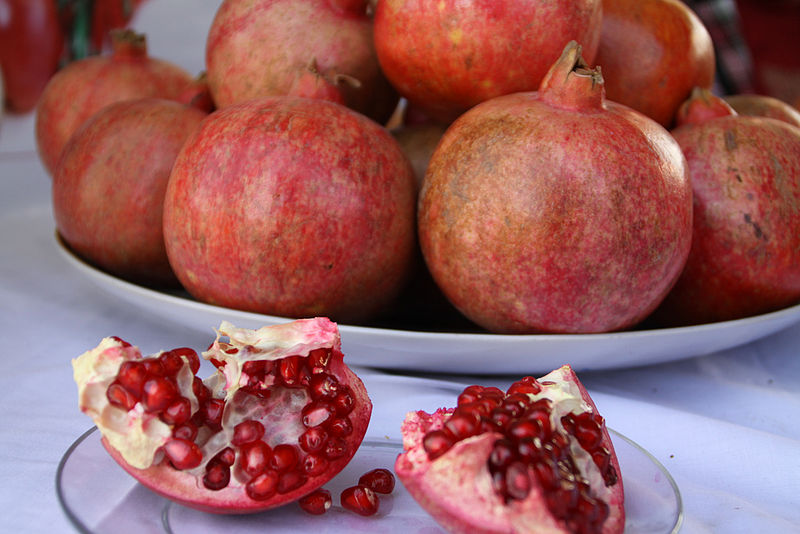
The FDA is detaining shipments of pomegranate seeds from Goknur Gida Maddeleri Ithalat thracat Tic (Goknur Foodstuffs Import Export Trading) of Turkey when they are offered for import into the country. This action is from the investigation into the hepatitis A outbreak linked to Townsend Farms Organic Antioxidant Blend frozen berry and pomegranate mix sold at Costco stores. That outbreak has sickened 127 people in eight states as of June 27, 2013


USA – Townsend Farms – Berry -Hepatitis A

Food Poisoning JournalClose up 3d render of an influenza-like virus isolated on white

Townsend Farms, Inc. of Fairview, Oregon, out of an abundance of caution and in cooperation with the FDA is expanding its voluntary recall efforts and is now recalling Townsend Farms Organic Antioxidant Blend, 3 lb. bag with UPC 0 78414 40444 8. The recall codes are located on the back of the package with the words “BEST BY” followed by the code T122114 sequentially through T053115, followed by a letter. All letter designations are included in the voluntary recall. The voluntary recall is occurring because of a potential hepatitis A contamination. The voluntary recall efforts are based on epidemiological and trace-back evidence resulting from an ongoing outbreak investigation conducted by the FDA and the CDC. Photos of the package are attached.

Hepatitis A is a contagious liver disease that results from exposure to the hepatitis A virus, including from food. It can range from a mild illness lasting a few weeks to a serious illness lasting several months. Illness generally occurs within 15 to 50 days of exposure and includes fatigue, abdominal pain, jaundice, abnormal liver tests, dark urine and pale stool. Hepatitis A vaccination can prevent illness if given within two weeks of exposure to a contaminated food. In rare cases, particularly consumers who have a pre-existing severe illness or are immune-compromised, hepatitis A infection can progress to liver failure.

Food Safety News

The Hepatitis A outbreak linked to frozen mixed berries continues to grow. On Friday, the Centers for Disease Control and Prevention said five more illnesses have been confirmed as part of the outbreak, bringing the total to 127 ill in 8 states, and the U.S. Food and Drug Administration said it thinks it has identified a common shipment of pomegranate seeds from Turkey that may have been to blame.

According to CDC, all of the confirmed victims became ill after eating Townsend Farms Organic Anti-oxidant Blend, a frozen berry blend sold across the country in Costco stores. Harris Teeter also sold the now recalled product, but so far no illnesses have been linked to the retailer.