Category Archives: Food Virus

RASFF Alerts – DSP – Mussels – Hepatitis A- Frozen Berries – E.coli – Clams – Mussels

RASFF -Diarrhoeic Shellfish Poisoning (DSP) toxins – okadaic acid (188 µg/kg – ppb) in chilled mussels (Mytlius Galloprovincialis) from Spain in Italy

RASFF -hepatitis A virus in frozen mixed berries processed in Italy, with raw material from Poland, Serbia, Chile, Bulgaria, Sweden and Bosnia and Herzegovina in Italy

RASFF -high count of Escherichia coli (5400 MPN/100g) in clams (Venus verrucosa) from Greece in Italy

RASFF -too high count of Escherichia coli (3500 MPN/100g) in chilled mussels from France

RASFF -too high count of Escherichia coli (9200; 2400 MPN/100g) in chilled mussels (Mytilus galloprovincialis) from Spain in Italy

Research – Norovirus Survival on Sprouted Seeds

American Society for Microbiologyalfalfa
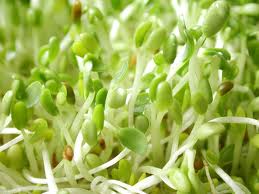
Human norovirus (huNoV) and hepatitis A virus (HAV) have been involved in several produce-associated outbreaks and identified as major food-borne viral etiologies. In this study, the survival of huNoV surrogates (murine norovirus [MNV] and Tulane virus [TV]) and HAV was investigated on alfalfa seeds during storage and postgermination. Alfalfa seeds were inoculated with MNV, TV, or HAV with titers of 6.46 ± 0.06 log PFU/g, 3.87 ± 0.38 log PFU/g, or 7.01 ± 0.07 log 50% tissue culture infectious doses  (TCID50)/g, respectively. Inoculated seeds were stored for up to 50 days at 22°C and sampled during that storage period on days 0, 2, 5, 10, and 15. Following storage, virus presence was monitored over a 1-week germination period. Viruses remained infectious after 50 days, with titers of 1.61 ± 0.19 log PFU/g, 0.85 ± 0.21 log PFU/g, and 3.43 ± 0.21 log TCID50/g for MNV, TV, and HAV, respectively. HAV demonstrated greater persistence than MNV and TV, without a statistically significant  reduction over 20 days (<1 log TCID50/g); however, relatively high levels of genomic copies of all viruses persisted over the testing time period. Low titers of  viruses were found on sprouts and were located in all tissues as well as in sprout-spent water sampled on days 1, 3, and 6  following seed planting. Results revealed the persistence of viruses in seeds for a prolonged period of time, and perhaps  of greater importance these data suggest the ease of which virus may transfer from seeds to sprouts and spent water during  germination. These findings highlight the importance of sanitation and prevention procedures before and during germination.

RASFF Alerts – Hepatitis A – Frozen Berries

RASFF -hepatitis A virus in frozen berries mix from Bosnia and Herzegovina, produced in Italy, with raw material from Poland, Serbia, Bulgaria and Chile

RASFF -hepatitis A virus (presence /g) in frozen blackberries from Romania in italy

USA- Hepatitis A – Townsend Farms and Hawaii Restaurant NYC

Food Poisoinng Journal

As of September 20, 2013, 162 people have been confirmed to have become ill from hepatitis A after eating ‘Townsend Farms Organic Antioxidant Blend’ in 10 states: Arizona (23), California (79), Colorado (28), Hawaii (8), New Hampshire (1), New Jersey (1), New Mexico (11), Nevada (6), Utah (3), and Wisconsin (2). [Note: The cases reported from Wisconsin resulted from exposure to the product in California, the cases reported from New Hampshire reported fruit exposure during travel to Nevada, and the case reported in New Jersey was a household contact of a confirmed case from Colorado.] Currently, 6 of the confirmed cases are household contacts of confirmed cases (secondary cases).

Food Poisoning Journal

In response to cases of hepatitis A infections in an employee and four customers at New Hawaii Sea restaurant, located at 1475 Williamsbridge Road in the Bronx, the New York City Health Department is urging customers who ate at the restaurant, either in-store, through catering or delivery, between September 7th and September 19th to receive hepatitis A vaccine as soon as possible. Any leftover food from this restaurant should also be discarded. Any person who ate at New Hawaii Sea, either in-store, through catering or delivery, between September 7th and September 19th is considered at risk and is recommended to receive hepatitis A vaccine as soon as possible. Any person who ate food from this restaurant before September 7th should be evaluated if they have symptoms suggestive of infection. The Health Department is working with the restaurant to ensure that all the food handlers are vaccinated.

Chile – Norovirus Outbreak 3000 Sick

BarfBlogNorwalk_Caspid

The city of Ovalle in Chile’s Coquimbo region suffered a massive outbreak of norovirus in the first week of September, infecting 3,000-plus residents, due to insufficient chlorine levels in the potable water supplied by water utility Aguas del Valle, according to a release by the regional health authority Seremi.

UK – Hepatitis E can be Food Borne

Mail Online

One in ten sausages may carry the hepatitis virus: Cases of rare deadly  strain have rocketed 40% in a year.Once  considered very rare, cases have risen by nearly 40 per cent in a  year, 1 in 50 of  those infected will die, rising to one in five pregnant women.

Sausages  most dangerous pork product – they contain liver  meat


RASFF Alerts – Hepatitis A – Forzen Berries

RASFF -Hepatitis A virus (presence) in mix of frozen berries from Italy, with raw material from Chile, Poland, Serbia and Sweden in italy

RASFF -Hepatitis A virus in frozen berries from Germany in Italy

USA – Norovirus Restaurant Outbreak ?

Food Safety News

Grant County Health Department officials are waiting on state lab test results to determine whether norovirus was behind the outbreak of more than two dozen people who were sickened in John Day, OR, this past week.

According to an Aug. 5 story in the Blue Mountain Eagle, health officials suspected that the illness could have been transmitted between July 27 and Aug. 3 at the Snaffle Bit Restaurant. The owner of the restaurant was reportedly cooperating with the county and taking steps to prevent any other illness outbreaks.

FSA Letter on EU Discussions on Norovirus Controls in Shellfish

Dear Interested Party                                                                      30 July 2013


Norovirus in shellfish – an update on status of EU negotiations


Following my letter dated 08 May 2013 I would like to provide you with an update on the EU discussion on norovirus controls in shellfish.

The EU Commission gathered views from Member States at a Working Group meeting on 27th June 2013.  Following detailed and constructive discussions, during which many different views were expressed, it was agreed that no limits should be set at this stage due to the limitations of the current methodology and the gaps in current knowledge about norovirus. However, it was agreed that there is a need to address food safety risks associated with norovirus in raw shellfish and the Commission, together with Member States, will continue to explore risk management options, identifying areas where harmonised practices could be introduced.  There was also support for a harmonised EU baseline study, as recommended by EFSA, to help fill gaps in the data that have been identified.

The FSA is continuing to explore the feasibility and effectiveness of alternative approaches which could be applied, such as buffer zones and alert systems to facilitate active management of harvesting.  I would welcome any evidence based information and/or suggestions in the coming months to inform these considerations.

USA – Hepatitis and Cyclospora Updates

Food Posioning Bulletin

The multi-state hepatitis A outbreak linked to Townsend Farms Organic Antioxidant Blend frozen berry and pomegranate mix sold at Costco stores has grown to include 151 sickened. Sixty-six people have been hospitalized in this outbreak. No deaths have been reported.

Food Poisoning Bulletin

A multi-state Cyclospora outbreak has sickened at least 267 people and hospitalized eight of them, according to federal and state health authorities involved in a collaborative investigation. The rare parasite has infected at least 127 people Iowa, 68 people in Nebraska, 65 people in Texas, 4 people in Wisconsin, 2 people in Illinois and 1 person in Kansas.