Category Archives: Food Virus

USA – Norovirus outbreak linked to Seattle area restaurant

Outbreak News Today

Eurofins

Seattle-King County Public Health reports investigating an outbreak of norovirus-like illness associated with vomiting, diarrhea, abdominal pain, and chills at Rock Wood Fired Pizza in Renton, an inner-ring suburb of Seattle.

Since February 22, 2022, 9 people from 2 separate meal parties reported becoming ill after eating food from the Rock Wood Fired Pizza between February 19 and 20, 2022.

Environmental Health Investigators visited the restaurant on February 23, 2022. Investigators did not find any risk factors that are known to contribute to the spread of norovirus. The restaurant closed on February 23, 2022, to complete a thorough cleaning and disinfection. All ready-to-eat foods were discarded for those processed before the restaurant was disinfected.

Environmental Health investigators revisited the restaurant on February 24 and confirmed proper cleaning and disinfection was completed. The restaurant was reopened on February 24, 2022.

Research – Introduction to the Special Issue: Microbiological Safety and Quality of Foods

MDPI

Recent shifts in food production, processing and distribution, linked to the globalization of the food trade and the need to meet new consumers habits, are continuously challenging global food systems. Every effort is being made to ensure healthy and safe, food that is crucial to guarantee public health and wellbeing.
Despite the advancements in food safety management, foodborne diseases (FBD) still remain an important problem worldwide, with a significant negative impact on human health and countries’ economies and development. It has been determined that food unsafe for consumption causes 600 million cases of FBD every year, and 25% of all foods produced globally are lost due to microbial spoilage. Serious outbreaks have occurred, involving both developing and industrialized countries, showing how food safety is a transnational challenge and that a strong joint commitment between food safety authorities is needed.
Despite this awareness, the full extent of the impact of food contamination is still unknown. Foodborne contaminants are numerous, including viruses and bacteria, parasites, chemicals, toxins and allergens that cause a wide range of conditions. Globally, FBD caused by bacteria are more common than those caused by viruses and parasites. [1]. Moreover, between one-third and one-half of all human infectious diseases have a zoonotic origin. Among bacteria, Campylobacter, followed by Salmonella, are the major etiological agents of FBD, while, among viruses, norovirus is the foremost enteric pathogen of foodborne disease worldwide [2].
The most common foodborne parasites instead are protozoa such as Cryptosporidium spp., Giardia intestinalis and Toxoplasma gondii; roundworms such as Trichinella spp. and Anisakis spp.; and tapeworms such as Diphyllobothrium spp. and Taenia spp. [3]. In particular, Anisakiasis is an emerging zoonosis caused by the fish parasitic nematode Anisakis. Humans are accidental hosts that become infected by eating raw or undercooked fish that contain viable Anisakis spp. larvae.
The major determinants for the incidence of FBD are unsafe raw food, abused temperature, inadequate storage, improper handling, undercooking and cross contamination [4]. Food from animal sources, fresh produce and ready-to-eat (RTE) foods are the most at risk. In particular, RTE foods are an emerging issue concerning food safety. Furthermore, they have been demonstrated to contain antimicrobial-resistant strains. Since these products are consumed without any further treatment, they could serve as a vector for the spread of antibiotic-resistant microorganisms, posing a significant threat to public health [5].
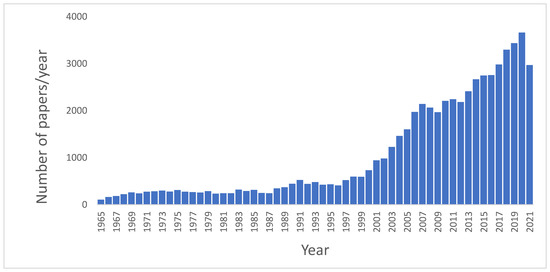
The importance of these topics is documented by the increasing number of papers published related to Food Safety. In a basic search using PubMed database, from 1945 to 2021, selecting as the search topic “Microbiological food safety”, a total of 54,210 results were obtained.
Although the first articles concerning microbiological food safety date from 1946, and since then a dozen articles appear in the following years, it is not until 1965 that a significant number of articles are published every year. Figure 1 shows the evolution of the number of papers per year (from 1965 to 2021) published regarding Microbiological food safety. As can be seen in this figure, approximately 80% of these papers have been published in the last 20 years, and the number continues to rise, revealing an increasing and ever-present interest towards the topic addressed in this Special Issue.
Foods 11 00673 g001 550

RASFF Alerts – Norovirus – French Oysters

RASFF

Norovirus in French oysters in Italy

RASFF

Norovirus in oysters in Germany and Italy

Canada – Certain Raw BC Oysters recalled due to Norovirus

CFIA

Summary

Product
Raw BC Oysters
Issue
Food – Microbial Contamination – Norovirus
What to do

Do not use, sell, serve or distribute the affected product.

Audience
Hotels, restaurants and institutions.

Issue

Certain Raw BC Oysters recalled due to norovirus.

The recalled product has been sold in British Columbia.

Additional information

Details
Media and public

Research – Norovirus behind a third of outbreaks in Finland

Food Safety News

Food Borne Illness - Norovirus -CDC Photo

Norovirus was the main cause of foodborne outbreaks in Finland from 2017 to 2019, according to figures published recently by the Finnish Food Authority (Ruokavirasto).

About 2,900 people were reported to have fallen ill in 162 foodborne outbreaks with 110 hospitalizations and nine deaths.

Norovirus caused 57 foodborne outbreaks including two in 2018 through meals at medical and elderly care institutions with 292 and 110 cases. The most commonly reported vectors were fish and fish products, including shellfish and mussels. These caused 14 outbreaks.

Turkey – Norovirus behind mass hospitalizations in Turkey’s Bilecik – Water Contamination

Daily Sabah

Authorities announced that norovirus is the culprit behind the hospitalization of hundreds of people in the western province of Bilecik in recent weeks. An investigation found out that the virus, whose symptoms include vomiting, diarrhea and stomachache, originated from city’s drinking water. Health Ministry crews discovered that unfiltered water from a spring had contaminated drinking water supplies to the city of more than 228,000 people.

Canada – Hepatitis A scare at Saskatchewan Tim Hortons

Food Poison Journal

The Saskatchewan Health Authority (SHA) is alerting the public to a risk of exposure to Hepatitis A from a food service employee at a restaurant located in Emerald Park, SK.

The SHA (Regina area) is conducting an investigation and follow-up of a case of Hepatitis A in a food handler who assisted with all meal preparation at Tim Hortons (20 Great Plains Road, Emerald Park, Saskatchewan).  The period of potential exposure for patrons of this restaurant is January 27 through February 10, 2022.  

This restaurant is located along a major trans-Canada travel route frequently used by travelers. Anyone who may have eaten at this restaurant during the dates listed should contact HealthLine at 811 for additional information.

RASFF Alerts – Norovirus – Oysters – Razor Clams

RASFF

Norovirus in oysters – Belgium and Netherlands

RASFF

Norovirus GI in razor clams from the Netherlands in Spain

Research – Hepatitis E virus defies alcohol-based hand disinfectants

Science Daily

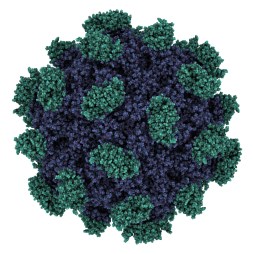
Hepatitis E virus capsid structure. HEV infection causes viral h

The hepatitis E virus (HEV) can cause serious liver inflammation and is the most common cause of acute virus-mediated hepatitis worldwide. Infection can be prevented through appropriate hygiene measures. Scientists from TWINCORE, Centre for Experimental and Clinical Infection Research, the Hannover Medical School (MHH) and the Ruhr Universität Bochum (RUB), together with partners from industry, have investigated the effectiveness of various common hand disinfectants against HEV. They were able to show that most formulations do not completely inactivate the virus.

In Germany and Europe, HEV has its natural reservoir in pigs. The infection can spread from animals to humans, which is called a zoonosis. This often happens through incompletely heated or raw meat products such as minced meat. In tropical regions of the world, infections occur via contaminated water, sometimes causing large outbreaks. “Some of these infections could possibly be prevented with the right hygiene measures,” says Dr. Patrick Behrendt, physician in the Department of Gastroenterology, Hepatology and Endocrinology at the MHH and head of the junior research group “Translational Virology” at TWINCORE. This includes, above all, correct hygienic hand disinfection in everyday clinical practice when dealing with hepatitis E patients and infected animals.

Together with the team of Professor Eike Steinmann, head of the Department of Molecular and Medical Virology at RUB, Behrendt has investigated whether common hand disinfectants can render the virus harmless. “We tested the effect of the alcohols ethanol and propanol, both individually and in the mixing ratios recommended by the WHO, and also commercial hand disinfectants,” says Steinmann. “However, only one product that contained another component was effective.”

Australia – Western Australia records alarming spike in gastro cases – Norovirus – Rotavirus

news.com

Western Australia has recorded an alarming surge in gastro cases over the summer, with the spread of rotavirus “spiking dramatically” in the latter half of 2021.

544 cases of rotavirus were detected in the Perth metro area, compared to 175 the year before. Group chair of the WA branch of the Australian Medical Association, Simon Torvaldson, says the outbreak could have spread much further than case numbers suggest.

A total of 163 rotavirus cases were recorded in November alone, dwarfing the 18 detected cases for the same month in 2020.

Norovirus was the most common cause of viral gastroenteritis, with symptoms including a quick onset of nausea, vomiting and diarrhoea that lasts 2-3 days.

Other symptoms include fever, abdominal pain, headaches and muscle aches.

“A lot of people with milder gastro will simply tough it out without seeing a doctor,” he told ABC Radio.

“And to be honest, other than helping you with the symptoms and making sure you stay as hydrated as possible, there is little that doctors can do.”

The new data came after another noted spike in viral gastroenteritis cases in Victorian childcare centres in late 2021.

Cases surged over the eight-month period leading up to October, with the number of outbreaks climbing to more than three times higher than the average for the same period in past years.

Data obtained by NCA NewsWire shows there have been 554 outbreaks in childcare centres from January 1 this year up until August 23.