Category Archives: Food Safety

UK – GB Poultry recalls Battered Chicken Goujons because they contain Salmonella

FSA

GB Poultry are recalling GB Poultry Battered Chicken Goujons because Salmonella has been found in the product.

Product details

GB Poultry Battered Chicken Goujons
Pack size 350g, 400g, 3kg
Batch code SFRD22PL
Use by 9 June 2022 and 10 June 2022

Risk statement

The presence of salmonella in the product listed above.

Symptoms caused by salmonella usually include fever, diarrhoea and abdominal cramps.

Action taken by the company

GB Poultry is recalling the above product. Point of sale notices will be displayed in all retail stores that are selling this product. These notices explain to customers why the product is being recalled and tell them what to do if they have bought the product. Please see the attached notice.

Our advice to consumers

If you have bought any of the above product do not eat it. Instead, return it to the store from where it was bought for a full refund.

UK – UK establishes new food safety network

EFOOD ALERT

The United Kingdom’s Food Standards Agency (FSA) has entered into a partnership with the country’s Biotechnology and Biological Sciences Research Council (BBSRC) and the Quadram Institute, a private non-profit company, to form a new Food Safety Research Network.

The FSA and BBSRC have invested a combined £1.6 million in the network, which will be hosted by Quadram.

Quadram describes itself as a state-of-the-art facility for bioscience and clinical research.

“[T]he network will ensure that the FSA is well-placed to tackle the challenges of foodborne illnesses by bringing together experts from government, industry and academia to address current and emerging issues of food safety in the UK,” said the FSA’s Chief Scientific Adviser, Professor Robin May.

According to the FSA, there are an estimated 2.4 million cases of foodborne illness a year in the UK, or roughly 35 cases per 1000 population. The annual cost of these illnesses is estimated to be £9 billion (with £6 billion from unknown causes).

Research – Modeling the growth of Salmonella on sliced cucumbers as a function of temperature and relative humidity

Journal of Food Protection

Recent multistate outbreaks of salmonellosis linked to fresh cucumbers underscore the importance of understanding Salmonella behavior on cucumbers under different storage conditions. No validated models which describe the impact of environmental factors on growth of Salmonella on sliced cucumbers currently exist. This study developed mathematical models to predict the growth of Salmonella on sliced cucumbers at different temperature and relative humidity (RH) conditions. Sliced cucumbers were inoculated with four-strain cocktail of Salmonella and placed in desiccators containing saturated salt solution to create controlled RH environments (~15, 50, 100% RH) at 7, 14, and 21°C for up to 120 h. Predictive models were developed using Baranyi and Roberts equation as a primary model and estimated kinetic parameters were fitted into a square root (or Ratkowsky) equation for secondary models. The maximum growth rates for Salmonella on sliced cucumbers depended on temperature but not RH. The square root model for Salmonella growth was SQRT(μ) = 0.0297 * (T – 6.5185), with a high R 2 value (0.98). The models in this study will be useful for future microbial risk assessments and predictions of Salmonella behavior in the cucumbers to manage the risk of Salmonella on sliced cucumbers.

USA – General Mills recalls certain dipz products over Salmonella concerns

Food Safety News

General Mills of Golden Valley, MN is recalling certain “dipz” Lunch Blox products because of potential Salmonella contamination.

The products were distributed in California, Georgia, Louisiana, Michigan, Missouri, New Hampshire, New Jersey, New York, Oregon, Pennsylvania and Texas.

See the list at the link above.

USA – New E. coli O157:H7 Outbreak Added to FDA CORE Investigation Table

Food Poisoning Bulletin

A new E. coli O157:H7 outbreak has been added to the FDA’s CORE Outbreak Investigation Table. At least 10 people are sick. We do not know the states where the ill persons live, their age range, illness onset dates, or if anyone has been hospitalized. Traceback has been initiated, but no recall has been issued, there has been no on-site inspection or sample collection, and no analysis of any product has started. This new E. coli O157:H7 outbreak is probably associated with an FDA-regulated food.

USA – Fudge in Minnesota recalled over Salmonella concerns

Food Safety News

Klein Foods, Inc. of Marshall, MN is recalling Chocolate Peanut Butter Fudge because of potential Salmonella contamination.

The products were distributed in Minnesota.

See link above for the product list.

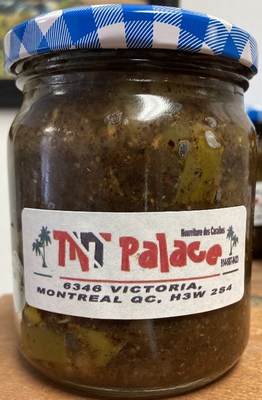
Quebec – Notice not to consume mixed mangoes, packaged in glass jars and sold by the company TNT Palace – Food Safety

Quebec

Mango mix (CNW Group/Ministry of Agriculture, Fisheries and Food)

The Ministry of Agriculture, Fisheries and Food (MAPAQ), in collaboration with the Food Inspection Division of the City of Montreal and the company TNT Palace, located at 6346 Victoria Avenue , Montreal, is warning the public not to consume the product listed in the table below because it has not been packaged in a way to ensure its safety.

Product name     

Format  

Affected batch

 Mix of mangoes      

Unity  

Units sold until
June 9, 2022

The product that is the subject of this warning was offered for sale until June 9, 2022 at the establishment named above. The product was packaged in glass jars with blue and white lids and sold at room temperature. The product label bears the words ‘TNT Palace’ and ‘Caribbean Food’.

The operator is voluntarily recalling the product in question. It has agreed with MAPAQ and the Food Inspection Division of the City of Montreal to distribute this warning as a precautionary measure. In addition, people who have this product in their possession are advised not to consume it. They must return it to the establishment where they bought it or throw it away. Even if the affected product shows no signs of tampering or suspicious odors, its consumption may represent a health risk. It should be noted that no case of illness associated with the consumption of this food has been reported to MAPAQ to date.

Research – Cronobacter Infection and Infants

CDC

Getting sick from Cronobacter does not happen often, but infections in infants can be deadly. Cronobacter infections in infants less than 12 months old are often linked to powdered infant formula. If your baby is fed with powdered infant formula, you can take steps to protect your baby from sickness.

Cronobacter sakazakii is a germ found naturally in the environment.

These germs can live in dry foods, such as:

  • Powdered infant formula
  • Powdered milk
  • Herbal teas
  • Starches

Rare but Serious Illness in Infants

Cronobacter infections are rare, but they can be deadly in newborns. Infections in infants usually occur in the first days or weeks of life. About two to four cases are reported to CDC every year, but this figure may not reflect the true number of illnesses. That’s because most hospitals and laboratories are not required to report Cronobacter infections to health departments.

Cronobacter germs can cause a dangerous blood infection (sepsis). They can also make the linings surrounding the brain and spinal cord swell (meningitis).

Infants who are more likely to get sick include:

  • Infants 2 months and younger. These infants are most likely to develop meningitis if they get sick from Cronobacter.
  • Infants born prematurely.
  • Infants with weakened immune systems. Babies with this condition can’t fight germs as well because of illness or medical treatment, such as chemotherapy for cancer.

Cronobacter illness in infants will usually start with a fever and poor feeding, excessive crying, or very low energy.  Some infants may also have seizures. You should take an infant with these symptoms to a medical provider as soon as possible.

Cronobacter infection can also be serious for:

  • People 65 years and older.
  • People who have immune systems weakened due to illnesses or conditions, such as HIV, organ transplants, or cancer.
Powdered formula is not sterile and might have germs in it.

Powdered infant formula can be contaminated in homes or in processing facilities that make it.

In the home:

You can accidentally get Cronobacter in powdered formula after you open the container. Cronobacter can live on surfaces in your home, such as a kitchen counter or sinks, and in water. Cronobacter could get into powdered formula if you place formula lids or scoops on contaminated surfaces and later touch the formula. It can also get into formula if you mix the formula with contaminated water or in a contaminated bottle.

In a processing facility:

Cronobacter can also get into powdered infant formula in a processing facility in these ways:

  • If the manufacturer uses contaminated ingredients to make the formula.
  • If the formula powder touches a contaminated surface.

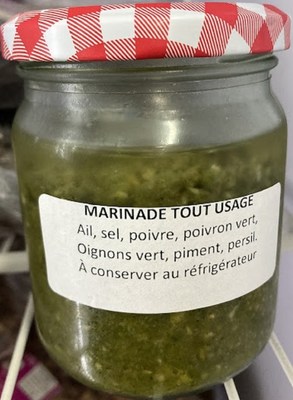
Quebec – Notice not to consume all-purpose marinade, packaged in glass jars and sold by Marché Afriquebi – food safety concern

Quebec

All Purpose Marinade (CNW Group/Ministry of Agriculture, Fisheries and Food)

The Ministry of Agriculture, Fisheries and Food (MAPAQ), in collaboration with the Food Inspection Division of the City of Montreal and the company Marché Afriquebi, located at 6871, avenue Victoria , in Montreal, advises the public not to consume the product indicated in the table below, because it has not been prepared and packaged in such a way as to ensure its safety.

Product name   

Format  

Affected batch

“ALL PURPOSE MARINADE”   

Unity  

Units sold until
June 8, 2022

The product that is the subject of this warning was offered for sale until June 8, 2022 at the establishment designated above and in certain establishments in the Montreal area. The product was packaged in glass jars with a red and white lid, and sold refrigerated. The product label includes, in addition to its name, the list of ingredients.

The operator is voluntarily recalling the products in question. It has agreed with MAPAQ and the Food Inspection Division of the City of Montreal to distribute this warning as a precautionary measure. In addition, people who have this product in their possession are advised not to consume it. They must return it to the establishment where they bought it or throw it away. Even if the affected product shows no signs of tampering or suspicious odors, its consumption may represent a health risk. It should be noted that no case of illness associated with the consumption of this food has been reported to MAPAQ to date.

Israel – Frozen corn kernels – Frozen broccoli -Listeria monocytogenes

GovIL

Telfrost recalls Frozen corn kernels (Expiration date 01/03/24) and Frozen broccoli (800g; Expiration date 11/02/23) due to Listeria monocytogenes contamination.