Category Archives: Food Safety Regulations

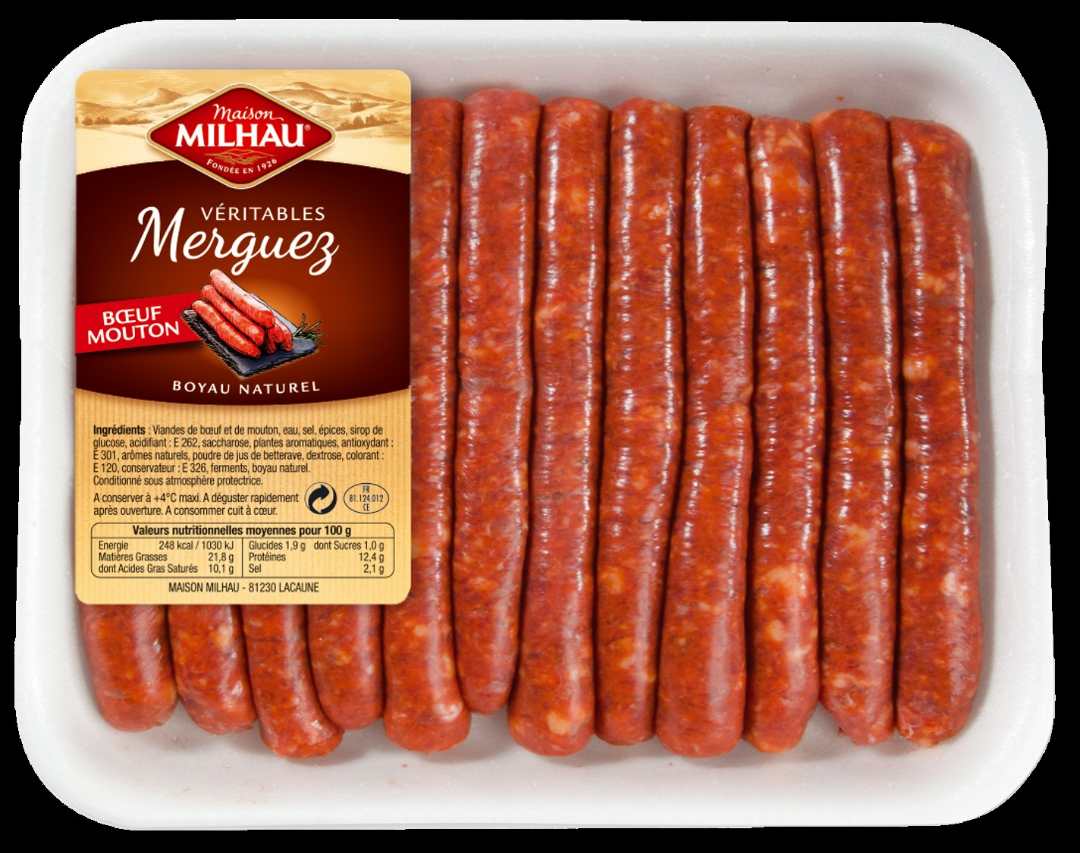
France – Real Merguez – Salmonella

Gov france

Identification information of the recalled product

  • Product category Feed
  • Product subcategory Meats
  • Product brand name Milhau House
  • Model names or references Real Merguez 300grs Real Merguez 600grs Real Merguez PM
  • Identification of products
    Batch Date
    055301 / 055308 / 055311 / 058321 / 058303 Use-by date between 07/03/2023 and 13/03/2023
  • Products List List_PDF_products_concerned.pdfAttachment
  • Packaging Plastic tray
  • Marketing start/end date From 02/24/2023 to 03/27/2023
  • Storage temperature Product to be stored in the refrigerator
  • Health mark FR 81 124 012 EC
  • Geographic area of ​​sale Regions: Occitania
  • Distributors Socamil, Hyper U, Intermarché, Netto, Super U, Sodibag, Roussaly, Auchan, Carrefour, SAS le Friboul
  • List of points of sale List_of_sales_points.pdf

Practical information regarding the recall

  • Reason for recall Salmonella detection in 10 grs
  • Risks incurred by the consumer Salmonella spp (causative agent of salmonellosis)

Austria – Goat cheese products Privatkäserei Hinke – Illness

AGES

Privatkäserei Hinke is recalling products

Based on feedback from a customer who reported health problems related to the consumption of one of our raw milk cheeses, we are recalling all of the products we make as a precaution.

The following products are affected:

  • Natural goat cheese
  • Goat cream cheese with pepper and currants
  • Goat rolli with chives
  • Goat cream with fruits

the one on Friday 3.3. in Baden at the pleasure market and on Saturday 4.3. were sold in Vienna at the Naschmarkt, Karmelitermarkt and Kutschkermarkt. Other batches are not affected.

This is purely a precautionary measure, no contamination has yet been detected but investigations are ongoing.

We ask our customers not to consume the products mentioned.

You are welcome to bring the affected goods back to our market stalls, of course you will also receive a replacement without an invoice.

We are happy to answer questions on the telephone number 0699/10048571 or by email to office@hinke.at

original recall

Research – Safe Food Australia – A guide to the Food Safety Standards 

FSANZ

​​​​​​Last updated: February 2023​

Safe Food Australia coverSafe Food Australia is a guide to the four mand​atory food safety standards:

  • Standard 3.1.1 Interpretation and Application
  • Standard 3.2.2 Food Safety Practices and General Requirements
  • Standard 3.2.2A Food Safety Management Tools​
  • Standard 3.2.3 Food Premises and Equipment.

The guide is for government agencies who are responsible for enforcing the standards. Food businesses may also find it offers helpful information about the standards and food safety issues.

Fourth Edition, February 2023

Download the complete Safe Food Australia guide (PDF 7 mb)

​​New content!​

​Standard 3.2.2A is a new food safety standard for food service, caterer and related retail businesses, becoming enforceable in December 2023. It contains requirements for food handler training, a food safety supervisor, and evidence that specific food handling activities are being adequately managed. Businesses will need to implement either two or three of these tools depending on their food handling activities.

InfoBites for food businesses

We’ve also developed some short factsheets to help you understand the food safety standards, by topic. See our InfoBites.

Denmark – Unwanted bacterial growth in mayonnaise

DVFA

Stryhns Gruppen A/S is recalling Mayonnaise, Neutral, due to the risk of unwanted bacterial growth, which makes the mayonnaise unsuitable as food.

The mayonnaise is sold in ABC Low Price stores in Jutland and on Funen.

Consumers should discard the product or return it to the store where it was purchased.

Recalled foods , Published: March 6, 2023

What Food

Net weight: 400g
Best before date: 08.06.2023
EAN barcode: 5701295292686
Sold in : ABC low-cost stores in Jutland and on Funen
Why
The company has measured an excessively high pH value in the product. A high pH value means that there is a risk of the growth of unwanted bacteria in the mayonnaise, and the product can have a different smell and taste, which makes it unsuitable as food.
What should you do as a consumer?
The Danish Veterinary and Food Administration advises consumers to return the product to the store where it was purchased or to discard it. 
Who is recalling this product
Stryhns Gruppen A/S
Vester Kirkevej 13-19
4000 Roskilde

Czech Republic – Meat Product – Visible Mould/Mold

Potravinynapranyri

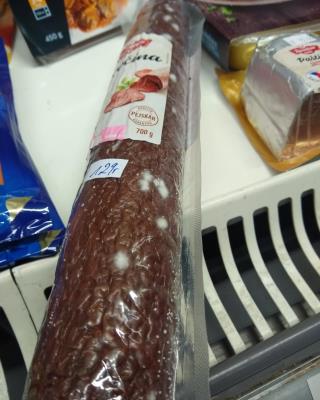
Illustrative photo #1

Illustrative photo #2

Place of inspection:
Dobruška ( Za Universitou 997, 51801 Dobruška )
ID: 75541092
Invalid parameter:

fungi visible to the eye

There were colonies of mold on the surface of the food under the intact packaging. Food is not considered safe if it shows signs of spoilage.

Unsuitable storage temperatures of this product were not detected during the inspection. The food did not have an expired minimum durability date.

Batch: L75333
Best before date: 28.01.23
Packaging: plastic packaging
Quantity of the product in the package: 700 g
Manufacturer: PEJSKAR & Co., Ltd. sro, Kostelecká 894/61, Prague 9 – Čakovice 196 00
Date of sample collection: 10/1/2023
Reference number: 23-000089-SZPI-CZ
The sample was detected by the official control of the State Agricultural and Food Inspection.

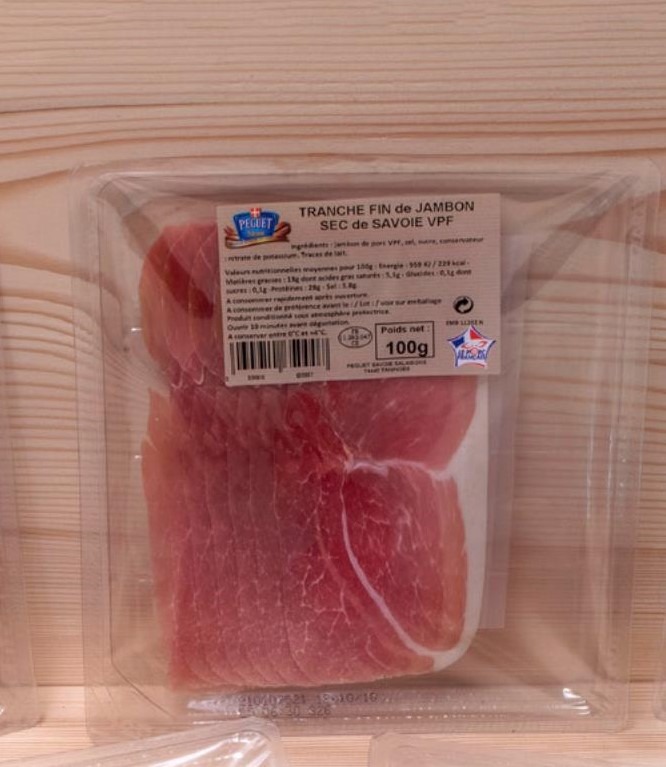
France – THIN SLICE SMOKED SAVOY HAM VPF 100G – Salmonella

Gov france

Identification information of the recalled product

  • Product category Feed
  • Product subcategory Others
  • Product brand name PEGUET SAVOY
  • Model names or references100G
  • Identification of products
    GTIN Batch Date
    3034910651004 210159079 Date of minimum durability 06/14/2023
  • Products List List_Recall_product.pdf Attachment
  • Packaging 100G
  • Marketing start/end date From 02/25/2023 to 03/03/2023
  • Storage temperature Product to be stored in the refrigerator
  • Health mark EN 11.262.047 EC
  • Geographic area of ​​sale Whole France
  • Distributors SCHIEVER, SHERPA

Practical information regarding the recall

  • Reason for recall Presence of Listeria monocytogenes
  • Risks incurred by the consumer Listeria monocytogenes (causative agent of listeriosis)

 Italy – Salametto Milano type – Salmlonella

Brand : Salumeo

Name : Salametto Milano type

Reason for reporting : Recall due to microbiological risk

Publication date : 6 March 2023

Documentation

Documentation

France – Organic compote gourds without added sugar 4x90g – Mycotoxin – Patulin

Gov france

Identification information of the recalled product

  • Product category Feed
  • Product subcategory Sweet products
  • Product brand name U ORGANIC
  • Model names or references Organic strawberry apple gourds without added sugar 4x90g Apricot apple gourds without added sugar 4x90g Apple gourds without added sugar 4x90g Apple gourds without added sugar 12x90g
  • Identification of products
    GTIN Batch Date
    3256226396817 L9450 Date of minimum durability 31/10/2023
    3256226396848 L9423 Date of minimum durability 31/10/2023
    3256226396831 L9282 Date of minimum durability 31/10/2023
    3256226396862 L9283 Date of minimum durability 31/10/2023
  • Packaging Gourds 90 g
  • Storage temperature Product to be stored in the refrigerator
  • Health mark EMB84080E
  • Geographic area of ​​sale Whole France
  • Distributor s U-stores

Practical information regarding the recall

  • Reason for recall Physico-chemical risk
  • Risks incurred by the consumer Patulin

Research IMPERATIVES FOR IMPROVEMENT OF FOOD SAFETY IN FRUIT AND VEGETABLE VALUE CHAINSIN VIET NAM

ADB

Key Findings
 
Production of fruits and vegetables in Viet Nam has been changing, which is driven by consumer preferences, urbanization, demographics, and rising incomes. Yet, they are produced with high usage of chemical fertilizers and pesticides. Consumers, in general, particularly in Ha Noi, buy most of their fruits and vegetables from traditional wet markets. Produce sold in these markets are not certified and not traceable to farms. Many wet markets in Ha Noi suffer from insu ̄cient infrastructure.
 
Waste management is unhygienic, and there is no clear separation between the areas selling fruits and vegetables and those selling animals and animal products.
 
Researchers from Vietnam National University of Agriculture (VNUA) collected biological samples of mustard greens, cucumber, and dragon fruit from farms, wholesale markets, and retail markets and analyzed them for Salmonella and Escherichia coli (E. coli) at the Department of Food Processing Technology at VNUA. Their analysis shows that foodborne pathogens are a particular concern for leafy vegetables. About 31% of the mustard greens samples collected from farms had E. coli loads above maximum permissible levels, 67% for samples collected from wholesale markets, and 82% from retail markets.
 
The increase of pathogenic loads across the value chains—from farm to retail—can be traced from lack of hygienic practices in handling of fruits and vegetables by all players.
 
Samples of dragon fruit, mustard greens, and cucumber were also analyzed for five commonly used chemical pesticides, two heavy metals, and nitrate. Pesticide residue analysis was performed at the National Institute for Food Control, while the other contaminants were analyzed at the Department of Food Processing Technology at VNUA.
 
Out the three types of produce sampled, pesticide residue above permissible levels was found only in cucumber. No samples had heavy metals and nitrate concentrations above maximum permissible levels. A banned active ingredient was detected in only one type of produce, mustard greens (in one of 20 samples), and was not found in dragon fruit or cucumber.
 
Chemical pesticide contamination in fruits and vegetables is a key concern of consumers and other stakeholders.
 
Foodborne pathogens are generally perceived as a smaller concern because consumers believe they can manage this risk through food preparation methods, which is a misconception as foodborne pathogens are the most important health risks for Vietnamese consumers (World Bank 2016 ).
 
The Government of Viet Nam has designated particular areas for “safe vegetable production.” These areas currently account for about 40% of Ha Noi’s vegetable area of 12,000 hectares. Vegetable farmers in these areas have been encouraged to form producer cooperatives. The government regularly tests soil and water quality and also tests vegetable produce for pesticide residues once a year. Livestock farming is not allowed in these areas to reduce the risk of cross-contamination.
 
These actions contribute to improving the food safety of vegetables to some extent. But they do help government agencies to better support smallholder vegetable farmers and monitor the quality of the produce.
 
Over the past decade, Viet Nam has revised its food safety laws and regulations, and the existing frameworks are mainly in line with international standards (Vu and Anh 2016 ). The country has a National Food Safety Committee, but there is no central food safety agency. Responsibilities are divided over three ministries (agriculture, commerce, and health), which results in some contradictions and confusion in enacting food safety-related regulations and acts among these ministries.
 
The implementing capacity of government organizations is rather limited. Authorities in charge of food safety seem to remain focused on inspection and control of end products, but not much on preventing contamination in production and marketing processes.


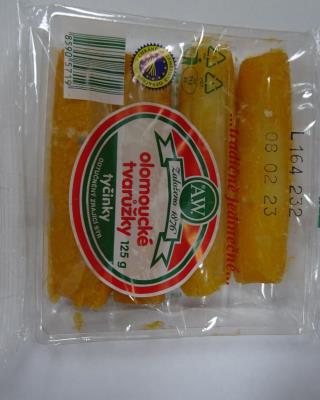
Czech Republic – Olomouc cottage cheese sticks, defatted ripening cheese, 125g – Mold/Mould

Potravinynapranyri

Illustrative photo #1

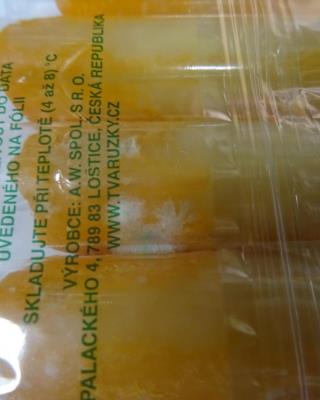
Illustrative photo #10

Place of inspection:
Hodonín ( Dolní Valy 3739/4, 695 01 Hodonín )
ID: 13690558
Food group: Milk and milk products Cheese

Olomouc cottage cheese sticks, defatted ripening cheese, 125g
Category: Dangerous foods
Invalid parameter:

fungi visible to the eye

The appearance of blue-green mold colonies was detected on the surface of the cheese under the packaging.

Food is not considered safe if it shows signs of spoilage.

The food did not have an expired minimum shelf life date, during the inspection no unsatisfactory storage temperatures of this product were found.

Batch: L 164 232
Best before date: 08 02 2023
Quantity of the product in the package: 0.125 kg
Manufacturer: AW spol.sro, Palackého 4, 789 83 Loštice
Date of sample collection: 30/01/2023
Reference number: 23-000095-SZPI-CZ
The sample was detected by the official control of the State Agricultural and Food Inspection.