Category Archives: Food Poisoning

USA – Illinois MacDonalds Closed Salmonella Investigation

Food Safety News

Owners of a Bloomington, Illinois McDonalds voluntarily shut the establishment down last week after it was linked to a series of Salmonella infections.

Bob and Julie Dobski, who own 9 McDonalds franchises in the Bloomington-Normal area, were informed by health officials Wednesday night that the South Main Street location had been connected to a cluster of Salmonella illnesses. The owners chose to shut down the restaurant before Thanksgiving the following day.

Less than 10 Salmonella cases have been reported, according to Keri Simon, communications director for the McClean County Health Department, as reported by Pantagraph. People affected by the bacteria report eating at the restaurant between October 18 and November 11, according to the county health department, which is conducting the investigation along with the Illinois Department of Public Health.

Research – Factors Affecting Pathogens on Fruit and Vegetable Farms

ASMAEA

Produce related outbreaks have been traced back to the preharvest environment. A longitudinal study was conducted on five farms in New York State to characterize prevalence, persistence, and diversity of foodborne pathogens in fresh produce fields and to determine landscape and meteorological factors that predict their presence. Produce fields were sampled four times per year for two years. A total of 588 samples were analyzed for L. monocytogenes, Salmonella and Shiga toxin-producing E. coli (STEC). The prevalence measures of L. monocytogenes, Salmonella and STEC were 15.0, 4.6, and 2.7%, respectively. L. monocytogenes and Salmonella were detected more frequently in water samples, while STEC was detected with equal frequency across all sample types (soil, water, feces and drag swabs). L. monocytogenes sigB gene allelic types 57, 58 and 61, and Salmonella Cerro, were repeatedly isolated from water samples. Soil available water storage (AWS), temperature, and proximity to three land cover classes: water, roads and urban development, and pasture/hay grass, influenced the likelihood of detecting L. monocytogenes. Drainage class, AWS, and precipitation were identified as important factors in Salmonella detection. This information was used in a geographic information systems framework to hypothesize locations of environmental reservoirs where the prevalence of foodborne pathogens may be elevated. The map indicated that not all croplands are equally likely to contain environmental reservoirs of L. monocytogenes. These findings advance recommendations to minimize the risk of preharvest contamination by enhancing models of the environmental constraints on the survival and persistence of foodborne pathogens in fields.

USA – Illegal Prison Hooch – Clostridium botulinum

Food Poisoning Bulletin

Prison hooch, or homemade alcohol,  is the likely source of a botulism outbreak at an Arizona prison that sent seven inmates to intensive care. The seven inmates, all from Special Management Unit 1 of the Arizona State Prison Complex Eyman in Florence, were hospitalized over the weekend.

Botulism is not spread through person-to-person contact. Although it can develop in contaminated wounds or through IV drug use, it most often develops after eating or drinking food that is tainted with the toxin. Botulism poisoning  must be treated with a course of special anti-toxin, the stockpile of which is controlled by the Centers for Disease Control and Prevention (CDC


Australia – Cruise Ship Virus Strikes Again – Norovirus

The Telegraph

BOARDING of the mega liner Voyager of the Seas was thrown into chaos yesterday following an outbreak of a gastrointestinal illness thought to be norovirus.

Some 135 passengers already aboard the ship, which arrived from New Zealand on Thursday, were struck by the illness, along with eight staff, a spokeswoman confirmed, adding this was about 4 per cent of the ship’s guests.

“Those affected by the short-lived illness have responded well to over the counter medication administered on board the ship”‘ Royal Carribbean said in a statement late yesterday.

Research – Inhibition of Clostridium and Detection of Enterotoxigenic Staph.

Wiley Online

Abstract:  Inhibition of Clostridium perfringens spore germination and outgrowth in reduced sodium roast beef by a blend of buffered lemon juice concentrate and vinegar (MoStatin LV1) during abusive exponential cooling was evaluated. Roast beef containing salt (NaCl; 1%, 1.5%, or 2%, w/w), blend of sodium pyro- and poly-phosphates (0.3%), and MoStatin LV1 (0%, 2%, or 2.5%) was inoculated with a 3-strain C. perfringens spore cocktail to achieve final spore population of 2.5 to 3.0 log CFU/g. The inoculated products were heat treated and cooled exponentially from 54.4 to 4.4 °C within 6.5, 9, 12, 15, 18, or 21 h. Cooling of roast beef (2.0% NaCl) within 6.5 and 9 h resulted in <1.0 log CFU/g increase in C. perfringens spore germination and outgrowth, whereas reducing the salt concentration to 1.5% and 1.0% resulted in >1.0 log CFU/g increase for cooling times longer than 9 h (1.1 and 2.2 log CFU/g, respectively). Incorporation of MoStatin LV1 into the roast beef formulation minimized the C. perfringens spore germination and outgrowth to <1.0 log CFU/g, regardless of the salt concentration and the cooling time.

Practical Application:  Cooked, ready-to-eat meat products should be cooled rapidly to reduce the risk of Clostridium perfringens spore germination and outgrowth. Meat processors are reducing the sodium chloride content of the processed meats as a consequence of the dietary recommendations. Sodium chloride reduces the risk of C. perfringens spore germination and outgrowth in meat products. Antimicrobials that contribute minimally to the sodium content of the product should be incorporated into processed meats to assure food safety. Buffered lemon juice and vinegar can be incorporated into meat product formulations to reduce the risk of C. perfringens spore germination and outgrowth during abusive cooling.

Wiley Online

Abstract:  The aim of this study was to investigate the prevalence of enterotoxigenic Staphylococcus aureus in 122 samples, including 60 raw milk, 32 white cheese, 10 kashar cheese, 10 butter, and 10 ice cream samples obtained from Samsun province, Turkey. In this study, S. aureus was detected in 64 samples, including raw milk (45/60; 75%), white cheese (12/32; 37.5%), kashar cheese (3/10; 30%), butter (3/10; 30%), and ice cream (1/10; 10%) samples. A total of 81 isolates were identified as S. aureus by PCR with the presence of 16S rRNA and nuc genes. The presence of genes encoding the staphylococcal enterotoxins (SEs) SEA, SEB, SEC, and SED was detected by multiplex PCR. According to the analysis, seven isolates from the raw milk samples (7/51; 13.7%) were enterotoxigenic; five of them produced SEA (5/7; 71.4%), one produced SEB (1/7; 14.2%), and one produced SEA+SEB (1/7; 14.2%). Four isolates from the white cheese samples (4/21; 19%) produced the SEA (1/4; 25%), SEC (1/4; 25%), SED (1/4; 25%), and SEA+SED (1/4; 25%) toxins. Two isolates from the kashar cheese samples (2/4; 50%) were found to be enterotoxigenic; one produced SEA (1/2; 50%) and the other produced SED (1/2; 50%). One isolate from the butter samples (1/4; 25%) showed enterotoxigenic character (SEB, 1/1; 100%). The products were found to be potentially hazardous to public health because of the fact that levels of contamination were higher than 105–106 cfu/g ml in 39% (25/64, 17 raw milk, 7 white cheese, and 1 butter) of the analyzed samples.

Food Poisoning as a Murder Weapon?

Food Safety News

The full article can be found through the link above and is a interesting read.

Homicide data maintained by the Federal Bureau of Investigation (FBI) shows only 11 cases involving any kind of poisoning in 2010, a year when 12,996 murders occurred in the U.S. Guns, knives, blunt objects and just plain old force are the murder weapons of choice in America.

Last week, however, charges against a suspect in the grisly murder of 18-year-old University of Florida student Christian Aquilar were amended to include poisoning that some reports say involves food or water as the transmission method.

UK/Germany/Netherlands – Increase in Cryptosporidium Notifications in 2012

ECDC

An increase in Cryptodsporidim notifications has been observed in the UK, Netherlands and Germany since August 2012 that is likely to be real and not due to surveillance or notifcations artifacts.

The available information from investigations in the United Kingdom, the Netherlands and Germany indicates that there is not a single, common source, but rather a combination of several causes. These may include climatic drivers, such as the increased rainfall in the summer of 2012 in these countries or a widely distributed commonly consumed product. There is however no evidence for it at this stage and further investigations are ongoing.

 The overall threat for the European Union/European Economic Area (EU/EEA) is considered to be low.

 EU/EEA Member States should be alert to an increase in cases as observed in the United Kingdom, the Netherlands and Germany, particularly in relation to immunocompromised and other at-risk groups as they may present with a more severe manifestation of cryptosporidiosis.


Australia – Tasmanian Scallops PSP and Unsafe Poultry

AFNSalmonella Campylobacter

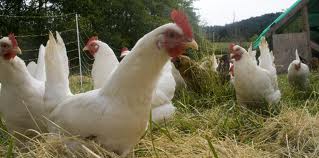
The Food Safety Information Council has released concerning national survey data this week that shows 60% of home cooks in Australia are putting themselves at additional risk of food poisoning from chicken.

The data showed that 60 per cent were at risk from washing whole poultry before it was cooked, which can spread bacteria around the kitchen. A further 16% of those surveyed incorrectly tasted chicken to see if it was cooked properly rather than using a safe meat thermometer.

The focus on cross-contamination of meats by the Food Safety Information Council (FSIC) comes as yesterday marked the start of Australian Food Safety Week. The FSIC week is specifically focusing on chicken and those most affected by food poisoning with the theme “vulnerable populations.”

Food Safety Information Council Chairman, Dr Michael Eyles said that chicken, as Australia’s most popular meat, was consumed by 8 in every ten home cooks.

”Home cooks are probably following what their parents or grandparents did in the past by washing poultry, not to mention probably patting it dry with a tea towel. Washing poultry splashes these bacteria around the kitchen cross contaminating sinks, taps, your hands, utensils, chopping boards and foods that aren’t going to be cooked like salads or desserts,” Dr Eyles said.

“Chicken is a healthy, convenient meal [but] other poultry is also becoming popular with just under half of those surveyed cooking whole turkey and 37% whole duck but these, too, are being washed before cooking, with 68% washing turkey and 74% duck,” he added.

According to a Food Standards Australia New Zealand survey referenced by the Food Safety Information Council, 84 per cent of raw chicken carcasses tested positive to the food poisoning bacteria Campylobacter and 22 per cent to Salmonella.

News Com Au

SCALLOPS from the east coast of Tasmania have joined the area’s mussels in being banned following a toxic algal bloom.

A scallop fishery in the White Rock area has been closed after the same paralytic shellfish toxin (PST) found in Spring Bay Seafood’s mussels was detected in samples taken on November 2.

“PST levels in tested scallops are currently either close to or slightly over the permitted level, but it’s possible the level will increase before it goes back down again,” a health department warning said.

The affected shellfish don’t look or taste different and the toxin is not destroyed by cooking or freezing, but there have been no reports of illness.

European Alerts – Salmonella, Listeria, Vibrio

RASFF – Salmonella in Frozen Beef Fat in Italy sourced in Lithuania

RASFF – Salmonella in Mussels in Italy sourced in Spain.

RASFF – Listeria monocytogenes in Radish Sprouts in Germany sourced in Italy.

RASFF– Listeria welshimeri in Alfalfa Sprouts in Germany sourced in the Netherlands

RASFF – Salmonella, Vibrio parahaemolyticus, Vibrio vulnificans in Frozen Shrimps in Denmark sourced in Panama

Denmark – Salmonella in Salad in Denmark 


UK – Restaurant Implicated in Campylobacter Cases

The Telegraph

Two customers at Blanc Brasserie, in Covent Garden, London, were left ill after eating pink lamb’s liver which was not cooked thoroughly enough, a court has been told. The restaurant has now been banned from serving the dish, after failing to heed a warning from council environmental health officers, Westminster Magistrates’ Court heard. The food had “presented an imminent risk of injury to health because the process of cooking”, the court was told. Blanc Brasseries will now pay £3,103 in costs and have confirmed they will comply with the order, as a spokeswoman said they were unable to cook the liver to council standards without compromising on taste.

“Brasserie Bar Co has not contested the EHO enforcement and will no longer serve liver in any of its restaurants,” she said.