Category Archives: Food Poisoning

Japan – 28 suffer food poisoning at MOS Burger restaurants E.coli O121

Mainichi 

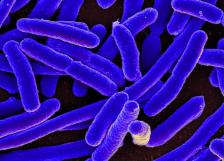
CDC E.coli

TOKYO (Kyodo) — A total of 28 people have suffered food poisoning after dining at MOS Burger restaurants in Tokyo and other locations in Japan, the operator and other sources said.

Twelve of the 28 were infected with the same O-121 strain of E. coli bacteria, the Ministry of Health, Labor and Welfare said Friday.

Those affected had dined at 19 restaurants in eight prefectures in eastern and central Japan between Aug. 10 and 23, the operator, MOS Food Services Inc., said.

One of the restaurants in Ueda, Nagano Prefecture, suspended operations for three days through last Wednesday following an order from a local public health office, the company said.

“It is highly likely that (the illness) was caused by foodstuffs supplied (to the restaurants) by the headquarters of the chain,” it said.

Hong Kong – Food Alert -Not to consume a kind of pancake imported from Japan with possible presence of mould

CFS Mold Mould Mycotoxin kswfoodworld

Issue Date 15.9.2018
Source of Information Agri-Food and Veterinary Authority of Singapore
Food Product Prepackaged pancake imported from Japan
Product Name and Description Product name: Mini Dorayaki – Red Bean Jam Pancake

Brand: Muji

Country of Origin: Japan

Packing: 135 grams per pack

Expiry dates: September 12 to December 5, 2018

Reason For Issuing Alert The Centre for Food Safety (CFS), through its routine Food Incident Surveillance System, noted an announcement by the Agri-Food and Veterinary Authority of Singapore that Muji (Singapore) is recalling the above-mentioned batch of pancake due to the possible presence of mould in the package of the product.
Action Taken by the Centre for Food Safety
  • Upon learning of the incident, the CFS immediately followed up with Muji (Hong Kong) Company Limited. According to information provided by the company, it had imported the affected product which was put on sale at its outlets. The company has already removed from shelves and stopped sale of the affected product earlier, and initiated a recall.
  •  The CFS will continue to follow up on the incident and take appropriate action.
Advice to the Trade Stop using or selling the product concerned immediately if they possess them.
Advice to Consumers Not to consume the affected products if they have bought any.
Further Information
  • CFS Press Release
  •  Members of the public may call the company’s hotline at 2694 9309 during office hours for enquiries about the recall.

Research – Escherichia coli ST131-H22 as a Foodborne Uropathogen

MBIO

ABSTRACT

Escherichia coli sequence type 131 (ST131) has emerged rapidly to become the most prevalent extraintestinal pathogenic E. coli clones in circulation today. Previous investigations appeared to exonerate retail meat as a source of human exposure to ST131; however, these studies focused mainly on extensively multidrug-resistant ST131 strains, which typically carry allele 30 of the fimH type 1 fimbrial adhesin gene (ST131-H30). To estimate the frequency of extraintestinal human infections arising from foodborne ST131 strains without bias toward particular sublineages or phenotypes, we conducted a 1-year prospective study of E. coli from meat products and clinical cultures in Flagstaff, Arizona. We characterized all isolates by multilocus sequence typing, fimH typing, and core genome phylogenetic analyses, and we screened isolates for avian-associated ColV plasmids as an indication of poultry adaptation. E. coli was isolated from 79.8% of the 2,452 meat samples and 72.4% of the 1,735 culture-positive clinical samples. Twenty-seven meat isolates were ST131 and belonged almost exclusively (n = 25) to the ST131-H22 lineage. All but 1 of the 25 H22 meat isolates were from poultry products, and all but 2 carried poultry-associated ColV plasmids. Of the 1,188 contemporaneous human clinical E. coli isolates, 24 were ST131-H22, one-quarter of which occurred in the same high-resolution phylogenetic clades as the ST131-H22 meat isolates and carried ColV plasmids. Molecular clock analysis of an international ST131-H22 genome collection suggested that ColV plasmids have been acquired at least six times since the 1940s and that poultry-to-human transmission is not limited to the United States.

IMPORTANCE E. coli ST131 is an important extraintestinal pathogen that can colonize the gastrointestinal tracts of humans and food animals. Here, we combined detection of accessory traits associated with avian adaptation (ColV plasmids) with high-resolution phylogenetics to quantify the portion of human infections caused by ST131 strains of food animal origin. Our results suggest that one ST131 sublineage—ST131-H22—has become established in poultry populations around the world and that meat may serve as a vehicle for human exposure and infection. ST131-H22 is just one of many E. coli lineages that may be transmitted from food animals to humans. Additional studies that combine detection of host-associated accessory elements with phylogenetics may allow us to quantify the total fraction of human extraintestinal infections attributable to food animal E. coli strains.

Research – An Evaluation of the Hygiene Practices of European Street Food Vendors and a Preliminary Estimation of Food Safety for Consumers, Conducted in Paris

Journal of Food Protection

The aim of this study was to evaluate hygiene conditions and practices in selected street food facilities in Paris, France. One hundred twenty mobile food establishments were studied: kiosks, 66 (55%); stands, 32 (26.7%); and food trucks, 22 (18.3%). Inspection of street food vendors and short interviews with staff using a specially designed checklist revealed that none of them were entirely hygienic. The hygiene conditions of the facilities themselves were the most satisfactory (77% of them were up to standard), but hygiene was less so for production and distribution processes (65% were satisfactory) and personal hygiene (67% were satisfactory). A significant (P ≤ 0.05) correlation between the general hygiene status and the hygiene conditions of the production and distribution processes (r = 0.86) and the hygiene practices of workers (r = 0.86) was found. The instances of noncompliance that were found may affect the safety of street-vended food. Because of its increasing popularity, it is important to correct poor hygiene practices. It is very important to identify common instances of noncompliance for street food facilities and to develop real remedial actions. Procedures to control the hygiene of street food vendors should also be developed. The checklist, which was specially designed to evaluate street vendor outlets, could also be used to pre-assess the hygiene conditions of production by those responsible for food hygiene. Furthermore, it could serve as a checklist for self-assessment (internal audit) by the vendors themselves and be adopted as a consumer education tool, to increase awareness of food hygiene of a catering facility.

RASFF Alert – E.coli – Chilled Mussels

RASFF-Logo

RASFF-too high count of Escherichia coli (up to 1300 MPN/100g) in chilled mussels from Italy in Italy

Zimbabwe – 20 dead, 2,300 suspected cases as Zimbabwe cholera outbreak spreads

Outbreak News Today 

CDC Vibrio

The Zimbabwean Ministry of Health and Child care has declared the ongoing cholera outbreak in the capital Harare a state of national emergency as the death toll rose to 20.

Over 2,300 suspected cases have been reported in Harare since the outbreak was confirmed on September 1. The number of infected is expected to rise countrywide following the confirmation of several new cases and at least one death in four other provinces outside the capital.

Health and Child Care Minister Dr Obadiah Moyo said all the new cases reported in Masvingo, Manicaland, Midlands and Mashonaland Central provinces have been traced back to the outbreak in Harare.

“We are declaring a cholera emergency for Harare. This will enable us to contain cholera and typhoid in the city as quickly as possible. We do not want further deaths, and if we do not create this disaster emergency situation, we will continue losing lives,” he said.

Dr Moyo blamed the Harare City Council for triggering the cholera outbreak by neglecting burst sewerage reticulation pipes over the past two months, leading to faecal contamination of underground water sources.

UK – Egypt – E. coli ’caused Egypt hotel couple’s deaths’

BBC News

E. coli caused the deaths of a British couple who died after falling ill at a holiday resort in Egypt, the country’s authorities have said.

John Cooper, 69, and his wife Susan, 63, from Burnley, died in the Red Sea city of Hurghada on 21 August .

In an official statement, the Egyptian general prosecutor said post-mortem examinations showed E. coli bacteria was a factor in both deaths.

But the couple’s daughter described the findings as “absolute rubbish”.

Kelly Ormerod, who was at the Steigenberger Aqua Magic hotel with her parents, told the BBC she did not believe the symptoms her parents showed were consistent with E. coli infection .

She added further post-mortem examinations of her parents’ bodies would be carried out in the UK, on direction from the Home Office.

Ukraine – Ukraine reports 8th botulism death of 2018 – Clostridium botulinum

Outbreak News Today 

CDC Clost Spore

The Ukraine Ministry of Health reported an additional botulism death in a man from the Kherson region, the eighth botulism fatality of the year.

The probable cause of botulism is smoked homemade fish, which he and his wife eaten the day before. The woman is currently hospitalized for her illness in a severe resuscitation unit.

The Ministry of Health once again emphasizes that with the slightest suspicion of botulism, urgent medical attention should be sought. The success of treatment depends on early diagnosis and proper treatment, which in most cases is accompanied by the introduction of botulinum antitoxin.

Research – USA – Microbiological Testing Program for Escherichia coli O157:H7 and non-O157 Shiga toxin-producing Escherichia coli (STEC)

FSIS USDA USDA

FSIS considers raw, non-intact beef products or the components of these products found to have six Shiga toxin-producing Escherichia coli (STEC) to be adulterated, in addition to E. coli O157:H7. (Refer to the Federal Register notice Shiga Toxin-Producing Escherichia coli in Certain Raw Beef Products | PDF). These six non-O157 STECs are O26, O45, O103, O111, O121, and O145.

On June 4, 2012, FSIS began verification testing for these non-O157 STEC in domestic and imported beef manufacturing trimmings from cattle slaughtered on or after June 4, 2012. Beef manufacturing trimmings collected from cattle slaughtered before June 4, 2012, or that contain other components such as cheek meat are analyzed for E. coli O157:H7 only.

Australia – Spike in Salmonella Oranienburg cases linked to alfalfa sprouts

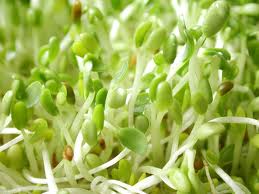
Outbreak News Today alfalfa

Officials with the Government of South Australia (SA Health) are warning the public not to eat a number of alfalfa sprout products produced by Adelaide business Sunshine Sprouts, after several people became ill with Salmonella Oranienburg.

SA Health’s Acting Executive Director Public Health Services, Dr Chris Lease, said there had been spike in cases of Salmonella Oranienburg, with eight confirmed cases in the past month, compared with eight for all of last year.

“As part of the investigation into these cases, 116 alfalfa sprout products were sampled as two cases had reported eating these types of products.  Results received this morning identified that Salmonella Oranienburg was present in three of these samples,” Dr Lease said.

“A number of Sunshine Sprouts alfalfa sprouts products have already been voluntarily recalled and we are advising anyone who has purchased the affected products not to eat them, and to return them to the place of purchase for a refund or throw them away.