Category Archives: Food Poisoning

RASFF Alert – E.coli – Live Scallops

RASFF-Logo

RASFF – too high count of Escherichia coli in live scallops from France in the Netherlands

RASFF Alerts – Aflatoxin – Roasted Red Rice Flour – Shelled Nuts – Dried Figs – Groundnut Kernels – Roasted Hazelnut Kernels

RASFF-Logo

RASFF – aflatoxins (B1 = 15.6; Tot. = 19.0 µg/kg – ppb) in roasted red rice flour from Sri Lanka in Switzerland

RASFF – aflatoxins (B1 = 12.89; Tot. = 14.42 mg/kg – ppm) in shelled nuts from Turkey in Italy

RASFF – aflatoxins (B1 = 13.8 µg/kg – ppb) in dried figs from Turkey in the UK

RASFF – aflatoxins (B1 = 6; Tot. = 26 µg/kg – ppb) in dried figs from Turkey in Slovenia

RASFF – aflatoxins (4.4 µg/kg – ppb) in groundnut kernels from Brazil in Spain

RASFF – aflatoxins (Tot. = 33.2 µg/kg – ppb) in dried figs from Turkey in Germany

RASFF – aflatoxins (B1 = 22.5; Tot. = 25.5 µg/kg – ppb) in roasted hazelnut kernels from Georgia in Bulgaria

RASFF – aflatoxins (B1 = 17.5; Tot. = 39.4 µg/kg – ppb) in dried figs from Turkey in Denmark

India – Aflatoxin M1 – FSSAI may bring animal feed under its purview in view of Aflatoxin M1

FNBNEWS

FSSAI is actively considering to bring the subject of ‘animal feed’ under its purview, after the findings of the ‘National Milk Quality Survey,’ which found presence of Aflatoxin M1, a cancer causing toxin in many milk samples.

The FSSAI has made a recommendation to Ministry of Health in this regard to consider amendment into the FSS Act to bring the subject of ‘Animal Feed’ under FSSAI’s ambit.

The Ministry of Health is learnt to have accepted the proposal, which will bring the amendment for the approval of Parliament soon.

Nearly 6 per cent samples of milk out of 6,432 were tested positive for presence of Aflatoxin M1. The toxin is produced by a fungi which is found in certain animal feed including maize, peanuts and cotton seeds.

The residue of Aflatoxin M1 remains present in milk which is a cause of worry and therefore the apex food regulator wants a control over the animal feed to reduce the chances of aflatoxin passing into milk.


USA -Food Safety Tips for Your Holiday Turkey

CDC

Handling poultry (chickens and turkey) incorrectly and undercooking it are the most common problems that lead to foodborne disease outbreaks linked to poultry.1 Follow these four tips to help you safely prepare your next holiday turkey meal.

1. Thaw Your Turkey Safely

Thaw turkeys external icon one of these ways:

  • In the refrigerator in a container,
  • In a leak-proof plastic bag in a sink of cold water (change the water every 30 minutes), or
  • In the microwave, following the microwave oven manufacturer’s instructions.
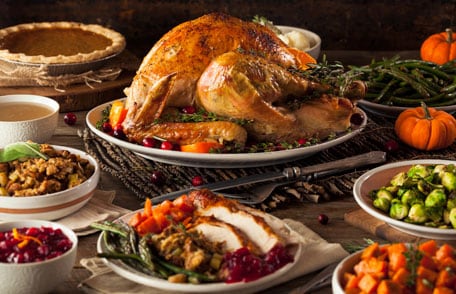
Thanksgiving dinner

Never thaw your turkey by leaving it out on the counter. A thawing turkey must defrost at a safe temperature. When the turkey is left out at room temperature for more than 2 hours, its temperature becomes unsafe. Bacteria can grow rapidly in the “danger zone” between 40°F and 140°F.

2. Handle Your Turkey the Right Way

Raw poultry can contaminate anything it touches with harmful bacteria. Follow the four steps to food safety—clean, separate, cook, and chill—to prevent the spread of bacteria to your food, family, and friends.

3. Cook Stuffing Thoroughly

Cooking stuffing separately from the turkey in a casserole dish makes it easy to be sure it is thoroughly cooked. If you cook stuffing in the turkey, put the stuffing in the turkey just before cooking.

With either cooking method, use a food thermometer to make sure the stuffing’s center reaches 165°F. Bacteria can survive in stuffing that has not reached 165°F and may then cause food poisoning. If you cook stuffing in the turkey, wait 20 minutes after taking the bird out of the oven before removing the stuffing; this allows it to cook a little more. Learn more about how to prepare stuffing safelyexternal icon.

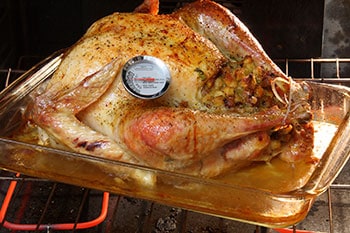
Turkey cooking in oven

Use a food thermometer to check for a safe internal temperature.

4. Cook Your Turkey Thoroughly

Set the oven temperature to at least 325°F. Place the completely thawed turkey in a roasting pan that is 2 to 2-1/2 inches deep. Cooking timesexternal icon will vary depending on the weight of the turkey. Use a food thermometer to make sure the turkey has reached a safe internal temperature of 165°F. Check by inserting a food thermometer into the center of the stuffing and the thickest portions of the breast, thigh, and wing joint. Even if your turkey has a pop-up temperature indicator, you should still use a food thermometer to check that it is safely cooked.

Let the turkey stand 20 minutes before removing all stuffing from the cavity and carving the meat. Learn more about safe minimum cooking temperaturesexternal icon and how to use a food thermometerexternal icon for turkey and other foods.

Take Care of Leftovers

The bacteria Clostridium perfringens grows in cooked foods left at room temperature. It is the second most common bacterial cause of food poisoning. The major symptoms are vomiting and abdominal cramps within 6 to 24 hours after eating.

  • Clostridium perfringens outbreaks occur most often in November and December.2
  • Many of these outbreaks have been linked to foods commonly served during the holidays, such as turkey and roast beef.

Refrigerate leftovers at 40°F or colder as soon as possible and within two hours of preparation to prevent food poisoning. Slice or divide big cuts of meat, such as a roast turkey, into small quantities for refrigeration so they will cool quickly. Reheat all leftovers to at least 165°F before serving.

Kenya – What Must Be Done to Get Toxin Out of Kenya’s Food Supply – Aflatoxin

All Africa

An exposé in Kenya has revealed that there are high amounts of a poisonous substance, known as aflatoxin, in many of Kenya’s popular maize flour brands. This is particularly worrying as maize flour is a staple food for most Kenyans. Part of the problem is in how maize is processed and distributed in the country. Vivian Hoffmann shares her insights on this and what must be done to prevent it.

What are aflatoxins and how do they get into our food?

Aflatoxins are toxic chemicals produced by a fungus, Aspergillus flavus. The fungus occurs naturally in soils, but under hot, dry conditions, it can grow and spread to a variety of crops. Maize and groundnut are two crops that are especially susceptible to contamination with aflatoxins.

While aflatoxin is a known carcinogen, and can be fatal to people in large doses, some of the other potential health impacts of consuming moderate amounts of aflatoxin over long periods of time are less well understood.

USA -Investigation of E. coli O157:H7 Outbreak Linked to Romaine from Salinas, California, November 2019

FDA

November 26, 2019

Recommendation

FDA, CDC, and state health authorities are investigating an outbreak of illnesses caused by E. coli O157:H7 in the United States. Epidemiologic, laboratory, and traceback evidence indicates that romaine lettuce from the Salinas, California growing region is a likely source of this outbreak. The CDC is reporting an increase in the case count to 67 and that the most recent illness onset date is November 14, 2019.

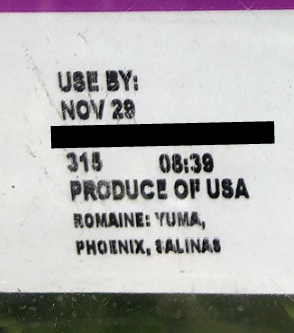
Romaine from Salinas, California Label Enjoy By December 2, 2019


Romaine from Salinas, California Label Use By November 29, 2019

Consumers: Consumers should not eat romaine lettuce harvested from Salinas, California. Additionally, consumers should not eat products identified in the recall announced by the USDA on November 21, 2019.

Romaine lettuce may be voluntarily labeled with a harvest region. If this voluntary label indicates that the romaine lettuce was grown in “Salinas” (whether alone or with the name of another location) do not eat it. Throw it away or return it to the place of purchase.  If romaine lettuce does not have information about harvest region or does not indicate that it has been grown indoors (i.e., hydroponically- and greenhouse-grown), throw it away or return it to the place of purchase. Consumers ordering salad containing romaine at a restaurant or at a salad bar should ask the staff whether the romaine came from Salinas.  If it did, or they do not know, do not eat it.

At this time, romaine lettuce that was harvested outside of the Salinas region has not been implicated in this outbreak investigation. Hydroponically- and greenhouse-grown romaine, which is voluntarily labeled as “indoor grown,” from any region does not appear to be related to the current outbreak. There is no recommendation for consumers to avoid using romaine harvested from these other sources.

Restaurants and Retailers: Restaurants and retailers should not serve or sell romaine harvested from Salinas, California.  If you do not know the source of your romaine lettuce, and if you cannot obtain that information from your supplier, you should not serve, nor sell it.

Suppliers and Distributors: Suppliers, distributors and others in the supply chain should not ship or sell romaine harvested in Salinas, California. If the source of the romaine lettuce is unknown, you should not ship, nor sell the product.

For Restaurants, Retailers, Suppliers and Distributors: Currently, the FDA does not have enough traceback information to identify the specific source of the contamination that would allow us to request a targeted recall from specific growers. At this stage in the investigation, the most efficient way to ensure that contaminated romaine is off the market would be for industry to voluntarily withdraw product grown in Salinas, and to withhold distribution of Salinas romaine for the remainder of the growing season in Salinas. FDA has made this request of industry.

At this time, romaine lettuce that was harvested outside of the Salinas region has not been implicated in this outbreak investigation. Hydroponically- and greenhouse-grown romaine, which is voluntarily labeled as “indoor grown,” from any region does not appear to be related to the current outbreak. There is no recommendation for consumers or retailers to avoid using romaine harvested from these other sources.

Background

According to the CDC, as of November 25, 2019, 67 people infected with the outbreak strain of E. coli O157:H7 have been reported from 19 states. The case patients report that illnesses started on dates ranging from September 24, 2019 to November 14, 2019.

The Maryland Department of Health identified E. coli O157:H7 in an unopened package of Ready Pac Bistro® Chicken Caesar Salad collected from an ill person’s home in Maryland. Analysis of this salad, through Whole Genome Sequencing (WGS), has linked strain E. coli O157:H7 to three Maryland cases and the multi-state outbreak.

The FDA and state partners are conducting a traceback investigation to trace romaine exposures to the source. Preliminary information indicates that ill people in Maryland were exposed to romaine lettuce harvested in Salinas, California.

FDA has deployed investigators to the farms in question to try to determine the source and extent of the contamination. More information will be forthcoming as the investigation proceeds.

Additionally, state partners are conducting laboratory analyses of romaine lettuce samples from case patients potentially linked to the outbreak.

The Salinas region as defined by the United Fresh Produce Association and the Produce Marketing Association Romaine Taskforce ReportExternal Link Disclaimer includes: Santa Cruz, Santa Clara, San Benito, and Monterey counties in California.

Genetic analysis of the E. coli O157:H7 strains from patients in this current outbreak are similar to strains of E. coli O157:H7 associated with a previous outbreak from the Fall of 2017 and the Fall of 2018 that affected consumers in both Canada and the U.S. The 2017 outbreak of E. coli O157:H7 was associated with leafy greens in the U.S. and romaine in Canada. The 2018 outbreak of E. coli O157:H7 was associated with romaine in both countries.

USA-Northern Fisheries LTD. Voluntary Expanded Tuna Recall Press Release

FDA

Northern Fisheries LTD of Little Compton, RI, has expanded their voluntary recall of frozen, wild-caught yellowfin Tuna Medallions (product of Vietnam) to include product sold directly to consumers. This recall is due to potentially elevated levels of histamine. Elevated levels of histamines can produce an allergic reaction called scombroid fish poisoning that may result in symptoms that can generally appear within minutes to several hours after eating the affected fish.

The most common symptoms of histamine or scombroid fish poisoning are tingling or burning sensation in the mouth, facial swelling, rash, hives and itchy skin, nausea, vomiting or diarrhea; these symptoms usually resolve within several hours without medical intervention. However, each individual may experience symptoms differently. If symptoms are severe an individual should seek immediate medical attention for treatment.

These tuna products were sold to customers in: CT, MI, MN, RI and WI.

ALL LOTS WITH PRODUCTION DATE: 06/13/2019 UPC Code: 815838020638

Production date and UPC Code can be found on back of the Tuna King Brand rider card.

BRAND DESCRIPTION PRODUCTION DATE: NORTHERN
LOT #
UPC CODE
Tuna King Tuna Medallions 2-3oz 10x1lb 06/13/2019 0058797 815838020638

Customers who received products with the listed Production Date of: 06/13/2019 should not consume them and should discard them immediately.

Customers with questions or concerns may contact Northern Fisheries LTD by calling (401) 592-0600, Monday through Friday, 9 a.m. to 5 p.m., Eastern Time or email.

northfish@northfishltd.com

India -High Aflatoxin level in milk

All About Feed

After a Food Safety and Standards Authority of India’s (FSSAI) report revealed a cancer-causing substance Aflatoxin M1 in milk samples, the government in the southern Indian state of Tamil Nadu decided to form a high-level committee that will look into this.

The committee comprising officials from the state food safety, health, and animal husbandry departments, Tamil Nadu Co-operative Milk Producers’ Federation Limited, Tamil Nadu Veterinary, and Animal Sciences University (TANUVAS) and some research agencies will study the report and will also take samples to find out the reasons and how the toxin managed to enter in the animal food chain.

Canada – Canada reports US Romaine Lettuce may have sickened at least one Citizen – E.coli O157

Food Poison Journal Eurofins Food Testing UK

Although an outbreak is not occurring in Canada, the Public Health Agency of Canada (PHAC) has identified one Canadian illness with a similar genetic fingerprint to illnesses reported in the U.S. investigation.

The Canadian Food Inspection Agency (CFIA) has confirmed that romaine lettuce from the affected areas reported in the U.S. investigation is imported to Canada at this time of year. The CFIA has taken measures to protect consumers and is implementing new actions at the border to ensure that any affected romaine lettuce products are no longer being imported into Canada.

As a result of the U.S. outbreak investigation and its link to product on the Canadian market, the Public Health Agency of Canada is advising Canadians to follow the U.S. CDC’s public health advice, which advises consumers to not eat, and retailers and food service establishments to not sell or serve, any romaine lettuce harvested from the Salinas, California growing region in the U.S. Romaine lettuce harvested in Canada is not affected by this advice.

Hong Kong -Not to consume romaine lettuce produced in Salinas, California, US – E.coli O157

CFS

Issue Date 23.11.2019
Source of Information US authorities
Food Product Romaine lettuce produced in the US
Product Name and Description Product name: baby spring mix
Brand: organicgirl
Place of origin: Salinas, California, US
Net weight: 5 ounces /142 grams
Reason For Issuing Alert
  • The CFS, through its Food Incident Surveillance System, noted a notice from the US Food and Drug Administration about the investigation of an outbreak of E. coli infections that was likely linked to the consumption of romaine lettuce produced in Salinas, California, which was suspected to be contaminated with E. coli O157:H7.
  • For the sake of prudence, the CFS has immediately suspended the import into and sale within Hong Kong of romaine lettuce produced in the area concerned.
Action Taken by the Centre for Food Safety
  • CFS has informed the US authorities concerned of the import suspension and alerted the trade to the incident.
  • The Centre will continue to follow up on the incident and take appropriate action.
Advice to the Trade
  • Stop using or selling the affected batches of the products immediately if they possess them.
Advice to Consumers
  • Not to consume the affected batches of the products if they have purchased any.
Further Information The CFS press release

Members of the public may call the hotline of the importer at 2299 1133 during office hours for enquiries about the recall.