
Category Archives: Food Pathogen

RASFF Alerts – Salmonella – Sesame Seeds – Chicken Chip Nuggets – Beef and Turkey Kebab – Hazlenuts – Live Oysters – Pistachios – Chicken Meat – Almonds – Chicken Livers – Chicken Cuts

RASFF-Logo

RASFF – Salmonella (1 out of 5 samples /25g) in sesame seeds from Nigeria in Poland

RASFF – Salmonella enterica ser. Infantis (prsence /25g) in frozen chicken chips nuggets from Germany in Italy

RASFF – Salmonella (presence /25g) in frozen beef and turkey kebab from Slovenia in Italy

RASFF – Salmonella (presence /25g) in sesame seeds from India in Greece

RASFF – Salmonella (presence /25g) in hazelnuts from Georgia in Germany

RASFF – Salmonella enterica ser. Napoli (presence /25g) in live oysters from France in Italy

RASFF – Salmonella (O:3,10,19 /25g) in halva with pistachios from Syria, via the Netherlands in Germany

RASFF – Salmonella enterica ser. Infantis (presence /25g) and Campylobacter jejuni (presence /25g) in frozen chicken meat from Poland in Finland

RASFF – Salmonella (present /250g) in almond kernels from the United States in Germany

RASFF – Salmonella (presence /25g) in almonds from Spain in Germany

RASFF – Salmonella (presence /25g) in hazelnuts from Georgia in Germany

RASFF – Salmonella enterica ser. Kisil (presence in 1 out of 5 samples /25g) in hulled sesame seeds from India in Greece

RASFF – Salmonella enterica ser. Typhimurium monophasic (1 ,4, [5], 12:i:-) (presence /25g) in chilled chicken livers from France in France

RASFF – Salmonella enterica ser. Infantis (presence /25g) in chilled chicken cuts from Poland in Bulgaria
RASFF Alerts – Listeria monocytogenes – Camembert – Fresh Cheese and Tomato Skewers – Raw Goats Milk Cheese – Chilled Meat Product

RASFF-Logo

RASFF – Listeria monocytogenes (<10 CFU/g) in chilled camembert cheese from France in France

RASFF – Listeria monocytogenes (<10 CFU/g) in fresh cheese and tomato skewers from Poland in France

RASFF – Listeria monocytogenes (<100 CFU/g) in raw milk goat’s cheese from France in France

RASFF – Listeria monocytogenes in chilled meat product from Germany in Germany

RASFF Alert – Foodborne Outbreak – Suspected Norovirus in the UK – Oysters

RASFF-Logo

RASFF – foodborne outbreak suspected (norovirus) to be caused by live oysters from the United Kingdom in the UK

RASFF Alerts – Norovirus – Oysters – Blue Berries

RASFF-Logo

RASFF – norovirus (presence /25g) in frozen blue berries from South America, via the Netherlands in Belgium

RASFF – norovirus in live oysters (Cassostrea gigas) from France in Italy

RASFF – norovirus (suspicion) in live oysters from France in the Netherlands

RASFF – norovirus (GI, GII) in live oysters from France in Italy

RASFF – norovirus (GI, GII /2g) in live oysters from France in Italy

RASFF – foodborne outbreak suspected (norovirus) to be caused by live oysters from the United Kingdom in the UK

RASFF – withdrawal of live bivalve molluscs harvested in France because of possible contamination with norovirus in France

RASFF – norovirus (GII /2g) in live oysters (Crassostrea gigas) from France in Italy

Europe -Listeriosis – Annual Epidemiological Report for 2017

ECDC

Listeriosis – Annual Epidemiological Report for 2017

Surveillance report

Publication series: Annual Epidemiological Report on Communicable Diseases in Europe
Time period covered: This report is based on data for 2017 retrieved from The European Surveillance System (TESSy) on 11 September 2018.

For 2017, 30 countries reported 2 502 confirmed listeriosis cases in the EU/EEA. The EU/EEA age-standardised notification rate was 0.42 cases per 100 000 population. The highest rate was detected among people over 64 years of age (1.7 cases per 100 000 population). The annual number of listeriosis cases in the EU/EEA shows an increasing trend.

Europe – Yersiniosis – Annual Epidemiological Report for 2017

ECDC

kswfoodworld.com

Image CDC

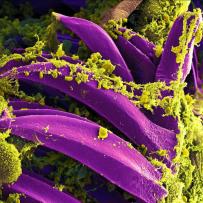
For 2017, 28 countries reported 6 890 confirmed yersiniosis cases in the EU/EEA. The overall notification rate was 1.8 per 100 000 population and remained stable from 2013–2017. The highest rate was detected in 0–4 year-old children (7.7 per 100 000 population). The highest rates were reported by Finland, Lithuania and the Czech Republic.

Download

Europe -Salmonellosis – Annual Epidemiological Report for 2017

ECDC

Salmonellosis is the second most commonly reported gastrointestinal infection and an important cause of foodborne outbreaks in the EU/EEA. In 2017, 92 649 laboratory-confirmed cases were reported of which 156 were fatal. The EU/EEA notification rate was 19.6 cases per 100 000 population. Salmonellosis notification rates have stabilised in the last five years after a long period marked by a declining trend. The notification rate was highest in young children 0−4 years with 94.1 cases per 100 000 population, eight times higher than in adults 25–64 years.

Download

Research – Stressed-out dust is sharing antibiotic resistance genes

Northwestern

First study to show indoor dust bacteria have transferrable antibiotic resistance genes.

A new Northwestern University study is the first to find that bacteria living in household dust can spread antibiotic resistance genes. Although most bacteria are harmless, the researchers believe these genes could potentially spread to pathogens, making infections more difficult to treat.

“This evidence, in and of itself, doesn’t mean that antibiotic resistance is getting worse,” said Northwestern’s Erica Hartmann, who led the study. “It’s just one more risk factor. It’s one more thing that we need to be careful about.”

Canada – Duck rillettes sold in Montreal butcher shop may be contaminated by Listeria bacteria

CTV News listeria

MONTREAL — “Homemade style” duck rillettes produced and sold at Boucherie du Marche (224 Place du Marche-du-Nord) are being recalled due to possible contamination by the bacteria Listeria monocytogenes.

Anyone who has purchased the product – sold in a 175-g container with a best-before date of Jan. 29, 2020 and containing a label that also reads “Boucherie du Marche – Depuis 1994” – is being warned not to consume it, but to either return it to the shop or throw it away, even if it does not smell or appear suspicious.

The rillettes in question were sold up to Jan. 28, 2020, inclusively.

The recall notes that no cases of listeriosis have been linked to the product being recalled.


Argentina/ Iceland -Botulism suspected in Argentina, confirmed in Iceland

Food Safety News

Authorities in Argentina are investigating two suspected cases of foodborne botulism linked to a brand of pickled wild boar.

The National Administration of Drugs, Foods and Medical Devices (ANMAT) reported those ill are associated with eating “Escabeche de jabalí” 400-gram of the “Fatto in casa” brand with a date of July 1, 2020, produced by Norma Coatti.

A 27-year-old woman and a 30-year-old man are affected and both needed hospital treatment.

Meanwhile, a case of botulism has been confirmed in Iceland for the first time since 1983.

The Public Health Institute of Iceland (Landlaeknir) revealed an adult began experiencing symptoms on 12 January with poisoning confirmed a week later.

Local health authorities, the Icelandic Food and Veterinary Authrority (Matvælastofnun) and Matis, a government owned, non-profit, research company, are trying to find the source of the poisoning with no evidence as yet pointing toward food available on the market.