Donna Tami Ltd. recalls Tamiz brand White Ceramic Almonds (150g; Expiration date 3/8/21) due to Listeria monocytogenes contamination.
KSWFoodWorld

Donna Tami Ltd. recalls Tamiz brand White Ceramic Almonds (150g; Expiration date 3/8/21) due to Listeria monocytogenes contamination.

| GTIN | Lot | Dated |
|---|---|---|
| 3257985003435 | 311627 | Use-by date 09/07/2021 |

| GTIN | Lot | Dated |
|---|---|---|
| 3324030012282 | 2120730 | Use-by date 08/16/2021 |
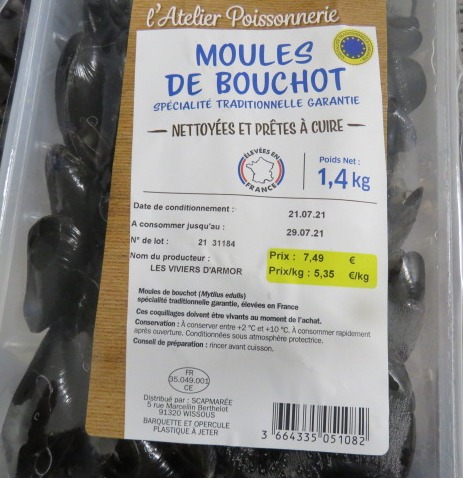
| GTIN | Lot | Dated |
|---|---|---|
| 3664335051082 | 21 31251 | Use-by date 08/04/2021 |
Camembert de Normandie AOP St. Hilaire aux lait cru, 250 g
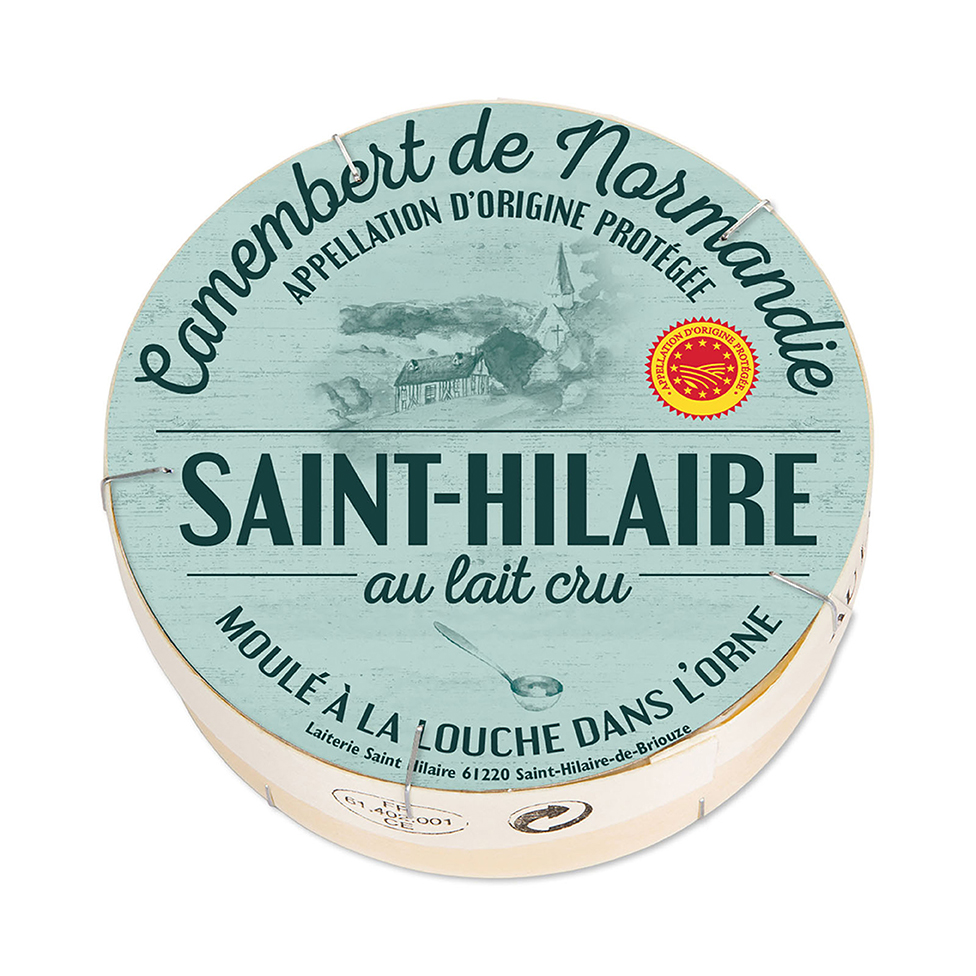
Gillot SAS
Manufacturer: Gillot SAS (France)
Detection of harmful bacteria (E.coli, stx1 gene, STEC)
Reference is made to the enclosed consumer information.
Baden-Württemberg:poststelle@mlr.bwl.de
| Press releases and information | |
|---|---|
| title | Attachment or web link |
|
Consumer information
|
|
Camembert de Normandie AOP Marie Harel au lait cru, 250 g Trademark: Marie Harel

Gillot SAS
due to suspected contamination with undesired bacteria (Escherichia coli, STX1-Gen, STEC) these products will be withdrawn from sale
Baden-Württemberg: poststelle@mlr.bwl.de
| Press releases and information | |
|---|---|
| title | Attachment or web link |
|
Customer information
|
|
Posted in E.coli, escherichia coli, food contamination, Food Hazard, Food Hygiene, Food Inspections, Food Micro Blog, Food Microbiology, Food Microbiology Blog, Food Microbiology Testing, Food Pathogen, Food Poisoning, food recall, Food Safety, Food Safety Alert, Food Testing, Food Toxin, STEC, STEC E.coli, STX 1
Ottawa, August 4, 2021 – The food recall warning issued on August 3, 2021 has been updated to include additional information on how the affected product may have been sold. This additional information was identified during the Canadian Food Inspection Agency’s (CFIA) food safety investigation.
Industry is recalling repackaged Cahill’s brand Original Irish Porter Cheese from the marketplace due to Listeria monocytogenes. Consumers should not consume the recalled products.
Cahill’s brand Original Irish Porter Cheese, 2.27 kg, UPC 00034463010160, Code 22-JA-13 21125, may have been sold by various retailers either clerk-served or in smaller packages with or without a label that may not bear the same brand or product name.
Consumers who are unsure if they have purchased the affected products are advised to contact their retailer.
If you think you became sick from consuming a recalled product, call your doctor.
Check to see if you have the recalled products in your home. Recalled products should be thrown out or returned to the store where they were purchased.
Food contaminated with Listeria monocytogenes may not look or smell spoiled but can still make you sick. Symptoms can include vomiting, nausea, persistent fever, muscle aches, severe headache and neck stiffness. Pregnant women, the elderly and people with weakened immune systems are particularly at risk. Although infected pregnant women may experience only mild, flu-like symptoms, the infection can lead to premature delivery, infection of the newborn or even stillbirth. In severe cases of illness, people may die.
This recall was triggered by the company. The CFIA is conducting a food safety investigation, which may lead to the recall of other products. If other high-risk products are recalled, the CFIA will notify the public through updated Food Recall Warnings.
The CFIA is verifying that industry is removing the recalled products from the marketplace.
There have been no reported illnesses associated with the consumption of these products.
Printer ready version of photos
A project in the United Kingdom has received funding for the surveillance of foodborne pathogens and antimicrobial resistance.
Pathogen Surveillance in Agriculture, Food and the Environment (PATH-SAFE) involves the Food Standards Agency (FSA); Food Standards Scotland (FSS); Department of Environment, Food and Rural Affairs (Defra); Department of Health and Social Care (DHSC); Public Health England (PHE); and the Environment Agency.
The aim is to establish the infrastructure and sampling frameworks needed to monitor the source and spread of foodborne pathogens and antimicrobial resistance (AMR) genes between the environment, animals, food and people.
Posted in antimicrobial resistance, Antimicrobials, Food Micro Blog, Food Microbiology, Food Microbiology Blog, Food Microbiology Research, Food Microbiology Testing, Food Pathogen, microbial contamination, Microbiological Risk Assessment, Microbiology, Microbiology Investigations, Pathogen, pathogenic, Research
The Public Health Agency of Canada (PHAC) is collaborating with provincial public health partners, the Canadian Food Inspection Agency (CFIA) and Health Canada to investigate an outbreak of Hepatitis A infections occurring in Québec and Nova Scotia. The outbreak appears to be ongoing, as recent illnesses continue to be reported to PHAC.
Based on the investigation findings to date, exposure to frozen mangoes has been identified as a likely source of the outbreak. Two of the individuals who became sick reported consuming frozen mangoes before their illnesses occurred. Leftover frozen mangoes were collected from the homes of ill individuals and tested positive for Hepatitis A.
The CFIA has issued a food recall warning for various frozen mangoes sold under various brands. The recalled products have been distributed in Saskatchewan, Manitoba, Ontario, Québec, New Brunswick, Nova Scotia, Prince Edward Island, Newfoundland and Labrador, and may have been distributed in other provinces and territories. More information on the recalled products is available on CFIA’s website.
Canadians are advised not to eat any recalled food products. If you suspect you have been exposed to recalled products, or have symptoms consistent for Hepatitis A, see your health care provider immediately. Vaccination can prevent the onset of symptoms if given within 14 days of exposure. This notice contains more advice on how to avoid getting sick.
This public health notice will be updated as the investigation evolves.
As of July 31, 2021, there are three laboratory-confirmed cases of Hepatitis A illness being investigated in the following provinces: Québec (2), and Nova Scotia (1). Individuals became sick between late March 2021 and mid June 2021. No hospitalizations or deaths have been reported. Individuals who became ill are between 23 and 63 years of age. The majority of cases (67%) are female.
The CFIA is continuing its food safety investigation, which may lead to the recall of other products. If other high-risk products are recalled, the CFIA will notify the public through updated food recall warnings.
It is possible that more recent illnesses may be reported in the outbreak because there is a period of time between when a person becomes ill and when the illness is reported to public health officials. For this outbreak, the illness reporting period is between two and six weeks.
Hepatitis A infections can occur among people of all ages; however, although rare, the severity of illness increases with age. Those with underlying liver disease are also at increased risk for severe illness.
If you have been exposed to Hepatitis A it is possible to spread the virus to other people before you experience any symptoms.
Not everyone who is infected will have symptoms. Symptoms are more likely to occur in adults than in children. Symptoms of hepatitis A include:
After you have been exposed to hepatitis A, symptoms typically appear 14 to 28 days later, but may occur up to 50 days later.
Symptoms usually last less than two months. Mild symptoms may last only one or two weeks, while severe symptoms can last up to nine months.
The Government of Canada is committed to protecting the health of Canadians from enteric disease outbreaks.
The Public Health Agency of Canada leads the human health investigation into an outbreak and is in regular contact with its federal, provincial and territorial partners to monitor the situation and to collaborate on steps to address an outbreak.
Health Canada provides food-related health risk assessments to determine whether the presence of a certain substance or microorganism poses a health risk to consumers.
The Canadian Food Inspection Agency conducts food safety investigations into the possible food source of an outbreak.
Figure 1 is an epidemiological curve for this outbreak, which shows the numbers of new cases by week. Outbreak investigators use this information to show when illnesses begin when they peak and when they trail off. It can take several weeks from the time a person becomes ill to when the illness is reported and testing confirms a link to the outbreak. Data are available for 3 cases.

Public Health Agency of Canada
Media Relations
613-957-2983
hc.media.sc@canada.ca
Call toll-free: 1-866-225-0709
Email: info@hc-sc.gc.ca
Posted in food bourne outbreak, food contamination, food handler, Food Hazard, Food Hygiene, Food Illness, Food Inspections, Food Micro Blog, Food Microbiology, Food Microbiology Blog, Food Microbiology Testing, Food Pathogen, food recall, Food Safety, Food Safety Alert, Food Testing, Food Virus, foodborne outbreak, foodbourne outbreak, Hepatitis A, outbreak, Virus
Recall of Cora
Product: Bouchot mussels from the “Les Viviers d’Armor” brand.
Problem: Presence of Escherichia Coli.
As part of a check carried out by our supplier, the presence of Escherichia coli was detected in the Bouchot mussels of the “Les Viviers d’Armor” brand.
 Health stamp: FR 35.049.001 CE
Brand: Les viviers d’Armor
Batch number: 21-31251 Use-by
date (DLC): 04/08/2021
Weight: 1.4 kg
The product has been distributed via Cora La Louvière (7100), Châtelineau (6200), Hornu (7301), Rocourt (4000).
CORA has decided, in agreement with the AFSCA (Federal Agency for the Safety of the Food Chain), to withdraw this product from sale. Customers who have purchased this product are asked not to consume it and return it to the point of sale, where they will be reimbursed.
People who have consumed the above-mentioned product and who present symptoms of gastrointestinal disorders are invited to consult their doctor, notifying him of this consumption as well as the place and date of purchase.
In the meantime, the product has been removed from the shelves of all stores and a ‘Customer reminder’ poster is displayed in our points of sale.
We sincerely apologize to our customers for this inconvenience and assure them that the most effective measures will be taken to avoid this type of incident.
Les Viviers d’Armor remains available to provide you with any additional information if necessary, by email to qualite@kerber.fr or by phone at +33 (0) 2.99.89.56.86


